Festivals and celebrationsEuropeChristian
Badnjak
In its own language: Badnji dan
A Christmas Eve oak log burned in the hearth across Croatia to welcome the holiday.

The badnjak is a ceremonial log burned on Christmas Eve in Croatia. Families cut an oak tree with ritual prayers and bring it home to light in the fireplace. The fire stays lit through the night to honor Jesus Christ and bless the household for the coming year.
When is Badnjak marked?
Badnjak is kept as part of Christmas Eve, which is on Thursday, 24 December 2026.
The badnjak is a central part of Croatian Christmas traditions. It involves cutting and burning a special log in the family home on Christmas Eve. This practice connects modern families to old Slavic roots and Christian faith. People keep the fire burning all night to symbolize warmth, protection, and the birth of Jesus Christ.
Etymology and origins
The word badnjak comes from old Slavic terms meaning awake or watchful. This refers to staying up all night to tend the fire while waiting for Christmas morning. Scholars believe the custom began as a pagan Indo-European rite that later merged with Christianity. The burning log represents the fire shepherds made for baby Jesus in Bethlehem. It also stands for the cross of Christ and his resurrection. In some areas, people view the ashes as a way to remember deceased family members.
Preparation rituals
On the morning of December 24, a male family member goes into the forest to find an oak tree. He prays before cutting it down. Other woods like beech or olive are used if oak is unavailable. The father brings the log home and greets the family with traditional wishes. Women often decorate the wood with ribbons and flowers. At dusk, the log enters the house. Family members sprinkle it with wine, grain, or holy water depending on their region. The father lights the fire and recites prayers.
Celebration and food
The day involves decorating homes with greenery like holly and ivy. Wheat seeds sown earlier grow into decorations for the table. A bundle of straw is spread under the dining area to recall the manger. Christmas Eve is a fasting day, so supper is light. Many families eat cod fish with salad. After the meal, relatives sit near the fire. They share dried fruits, nuts, and honey throughout the season. The log burns all night, with family members taking turns to ensure it does not go out.
How Badnjak is kept
Families prepare by cutting an oak log on Christmas Eve morning. The father brings it home after praying. Women decorate the wood with ribbons. In the evening, the log enters the house and is sprinkled with wine or holy water. The father lights the fire while reciting creeds. Family members take turns keeping the flame alive through the night. Ashes may be scattered in fields for good crops.
When and where
It occurs on December 24, starting in the evening and continuing through Christmas Day. The date is fixed in the Gregorian calendar for Roman Catholics.
This tradition is strongest in rural Croatia. Urban homes rarely practice it due to safety rules and lack of fireplaces. Some cities use symbolic logs instead. Regional variations exist in Dalmatia, Slavonia, and Istria.
What Badnjak means
The burning log symbolizes the warmth given to Jesus and Mary. It represents the cross and Christ's triumph over sin. The rising smoke and ashes connect living families to their ancestors. Keeping the fire lit ensures health and fertility for the household and fields.

Days Badnjak is marked
Questions people ask about Badnjak
When is Badnjak marked?
Badnjak is kept as part of Christmas Eve, which is on Thursday, 24 December 2026.
What is the badnjak?
It is a ceremonial oak log burned in the hearth on Christmas Eve. It serves as a central ritual for Croatian families to welcome the holiday and honor religious traditions.
Why do families stay awake?
People remain awake to tend the fire and wait for the arrival of Jesus Christ. The name itself means awake or watchful, reflecting this all-night vigil.
See also
 PysankaA wax-resist egg decorating tradition kept by Slavic communities for Easter and spring renewal.
 KoliadaA traditional winter caroling and solstice festival kept across Slavic Europe
 PolaznikThe first visitor to cross the threshold at Christmas, read as a sign of the year to come
 ZaduszkiA Polish day of prayer for the dead on 2 November, kept with candles at the graves
Good reading and sources
The facts on this page come from the Wikipedia article "Badnjak (Croatian)", written by its contributors and used under the CC BY-SA 4.0 licence, and from its Wikidata record (CC0). EveryParampara rewrote the text in its own words, with AI assistance, and compares every page with the article to make sure no passage is copied. It may be reused under the same CC BY-SA 4.0 licence with a link back.
It may contain mistakes. Traditions differ from one family, village and community to the next, and the people who keep them know them best. If something is wrong, tell us. Last refreshed 2026-10-06.
More from Croatia
All the traditions of Croatia
🇺🇦 Kyiv, Ukraine and 7 morePysankaписанка
A wax-resist egg decorating tradition kept by Slavic communities for Easter and spring renewal.Festival
🇺🇦 Ukraine and 7 moreKoliadaКоляда
A traditional winter caroling and solstice festival kept across Slavic EuropeFestival
 🇬🇷 Greece and 5 moreName day
A calendar tradition where people celebrate the feast day of the saint after whom they are named.Festival
🇬🇷 Greece and 5 moreName day
A calendar tradition where people celebrate the feast day of the saint after whom they are named.Festival
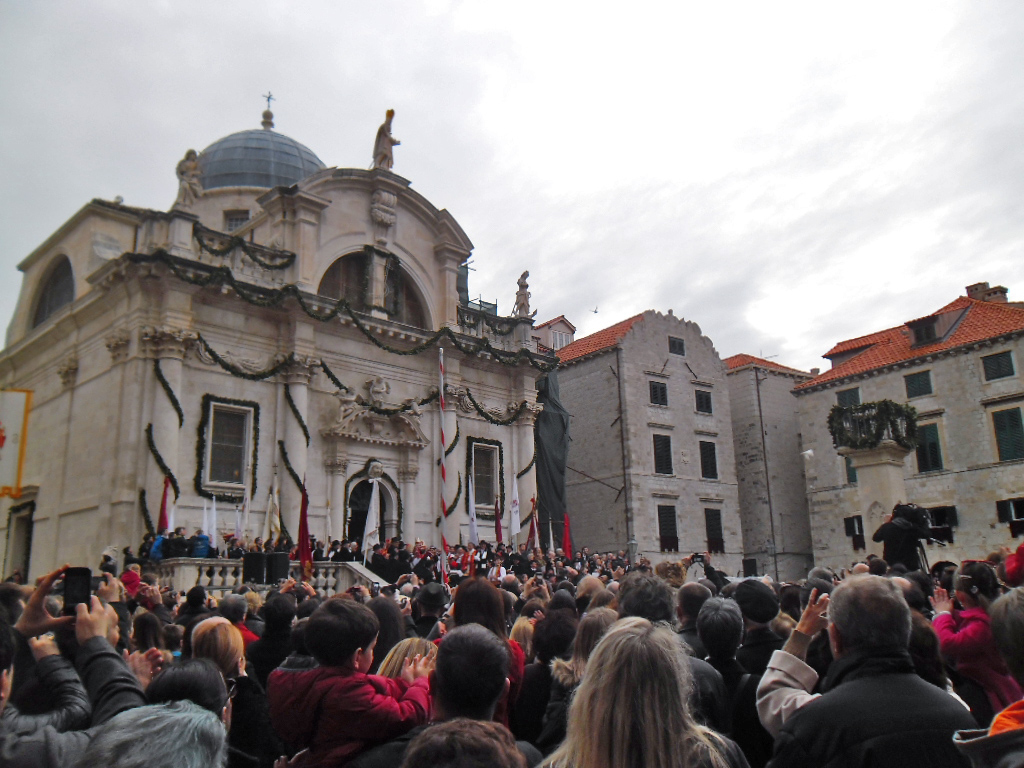 🇭🇷 Dubrovnik, Croatia and 1 moreFestivity of Saint BlaiseFesta Svetog Vlaha
An annual patron saint festival in Dubrovnik with processions, relics and dovesFestival
🇭🇷 Dubrovnik, Croatia and 1 moreFestivity of Saint BlaiseFesta Svetog Vlaha
An annual patron saint festival in Dubrovnik with processions, relics and dovesFestival
The same idea elsewhere
New Year compared 🇮🇳 Ayodhya, India and 7 moreDiwaliदीपावली (Dīpāvalī)
A five-day festival of lights celebrated across India and its diaspora to mark the victory of light over darkness.Festival · Feasts and festival meals
🇮🇳 Ayodhya, India and 7 moreDiwaliदीपावली (Dīpāvalī)
A five-day festival of lights celebrated across India and its diaspora to mark the victory of light over darkness.Festival · Feasts and festival meals
 🇮🇷 Iran and 7 moreNowruzنوروز
The Iranian new year at the March equinox, kept with fire, greenery and picnicsSeasonal
🇮🇷 Iran and 7 moreNowruzنوروز
The Iranian new year at the March equinox, kept with fire, greenery and picnicsSeasonal
 🇮🇱 Jerusalem, Israel and 1 moreHanukkahחֲנֻכָּה
An eight-day Jewish festival marking the rededication of the Second Temple in Jerusalem and the miracle of a single day'Festival
🇮🇱 Jerusalem, Israel and 1 moreHanukkahחֲנֻכָּה
An eight-day Jewish festival marking the rededication of the Second Temple in Jerusalem and the miracle of a single day'Festival
 🇮🇳 Mathura, India and 5 moreHoliहोली (Hindi)
A spring festival of colours and bonfires that marks the end of winter and the triumph of good over evil.Festival
🇮🇳 Mathura, India and 5 moreHoliहोली (Hindi)
A spring festival of colours and bonfires that marks the end of winter and the triumph of good over evil.Festival