Crafts and makingEuropeChristianPagan and ancient
Egg decorating
Decorating eggs with dye, wax and carving, kept at Easter, Nowruz and spring

Egg decorating is the craft of turning a bird's shell into a patterned or carved object, by dyeing, painting, scratching or cutting it. It is kept in many countries, most strongly in eastern Europe, at Nowruz, at Easter and at other spring holidays, and the oldest known examples are around 60,000 years old.
When is Egg decorating marked?
Egg decorating is kept as part of Parsi New Year, which is on Sunday, 15 August 2027.
An egg has a smooth, oval shell that invites a brush, a knife or a dye bath, and for thousands of years people have used it as a surface to work on. Eggs also stand for life, renewal and protection in many belief systems. Decorating them is both a craft and a custom, kept at Easter, at the Persian New Year and at spring festivals.
What it is
Decorating an egg means treating its shell as a small canvas: dyeing it, painting it, scratching lines into it, cutting shapes away or covering it with other materials. Almost any bird's egg will do, and decorators tend to favour the bigger, tougher ones because they survive handling better. The appeal rests on two things. An egg is a neat, rounded object that is pleasant to hold and work on. And in folklore and myth across the world it has long stood for new life, for healing and for protection, which is why so many cultures reached for it independently.
Origins and history
The oldest decorated shells known come from Diepkloof Rock Shelter in South Africa. They carry engraved hatched patterns and are dated to about 60,000 years ago. Europe's earliest find so far is an egg buried beside a young girl at what is now Worms in Germany, from the 5th century, when eggs had no link yet with Easter. Carving emu shells in Australia goes back to the nineteenth century. Writers on the subject have suggested that the Christian Easter egg may descend from Persian spring decorating that travelled through Slavic lands, though the decorating habit itself could be older than Nowruz. The Russian court jeweller Peter Carl Fabergé also made gold and gemstone eggs for the Romanov family.
Working the shell
Goose, duck and hen eggs are usually emptied before anything else happens: a hole is made at each end and the contents are blown out, leaving a hollow shell. The decorator then carves, dyes, paints or glues material onto it. In eastern and central Europe the favoured methods include wax resist, batik, applique, scratch-work and cutting. Emu and ostrich shells are thick enough to be carved whole, and on an emu egg the mottled dark green outside contrasts with the paler layer just beneath it. Modern makers etch or carve their art eggs, or cover them in paper, cloth or polymer clay, often in bright spring colours.
Where it is kept
Decorating eggs is a living practice above all in eastern and central Europe, with Ukraine, Poland and Romania standing out, and in Romania's Bucovina region the painted eggs are fine enough for museums to display them. Persian families decorate together at Nowruz and set the eggs in a bowl, and Turkic peoples who keep that holiday have closely related dyeing customs. In Egypt boiled eggs are coloured for Sham el-Nessim, a spring holiday kept by Egyptians whatever their religion. In Australia, kalti paarti carving on emu shells is associated most strongly with Aboriginal art.
Today and change
Egg art now has a vocabulary of its own: artists speak of art eggs, made to be looked at, and the International Egg Art Guild works to promote the craft. In the United States, exhibitions in many states give artists somewhere to show their pieces, and traders in egging supplies set up beside them. At Easter, one egg picked out in each state is put on display at the White House in Washington. Older customs continue as well. Hungarian egg shoeing fits miniature horseshoes to goose eggs, and the record is 1,119 on a single ostrich egg.
How Egg decorating is kept
Someone who decorates an egg begins by choosing the shell. Hen, duck or goose eggs are commonly blown, which means piercing both ends and emptying them. The hollow shell is then coloured or cut. Dyeing is the simplest route. Lines drawn in wax before the dye bath stay pale, a method used widely in eastern Europe. Others scratch or carve through the outer layers, or fix paper, cloth or clay to the surface. Families sometimes work together, as Persian households do at Nowruz, and set the finished eggs out in a bowl. At Greek Easter, red eggs are tapped against one another in a game.
When and where
There is no single season for the craft, but its best-known occasions fall in spring. Nowruz decorating happens at the spring equinox, the Persian New Year. Christian decorating belongs to Easter, and in Egypt Sham el-Nessim comes on the Monday after the Eastern Christian Easter. Pace Egging in northern England was done on Easter Day itself.
The custom appears on every inhabited continent. It is strongest in eastern and central Europe, above all in Ukraine, Poland and Romania, and in Iran and other places that keep Nowruz. Egypt, Australia, Greece, Germany and the United States all have their own forms. In Australia, emu shell carving is associated most strongly with Aboriginal artists.
What Egg decorating means
For many of the people who keep it, the egg carries meaning before a single mark is made on it. In myths and folklore around the world it stands for life and rebirth, and also for healing and protection, and it turns up in stories about how the world began. That is why decorating it has felt natural to cultures with no contact between them. Christians read the red-dyed egg as a sign of Christ's blood. For Persians and others at Nowruz, the decorated egg belongs to spring and the return of growth.


Days Egg decorating is marked
Questions people ask about Egg decorating
When is Egg decorating marked?
Egg decorating is kept as part of Parsi New Year, which is on Sunday, 15 August 2027.
What is egg decorating?
It is the craft of turning a bird's shell into something to look at. People dye, paint, carve, etch or cover eggs, working on the shell itself. The oldest decorated shells known, found in South Africa, are about 60,000 years old.
Where is it strongest today?
In eastern and central Europe, with Ukraine, Poland and Romania especially known for it, and in Iran and other countries that keep Nowruz. Egypt, Greece, Australia and the United States each have their own forms.
Why do people decorate eggs at all?
The egg has long been read as a sign of life, rebirth, healing and protection in folklore and myth worldwide, so it was a natural object to ornament. The craft also grew up alongside spring festivals and Easter.
What is kalti paarti?
It is the Australian practice of carving emu eggs, dating to the nineteenth century. Artists scrape and cut through the shell's outer layers, so that tones of blue, green, brown and grey appear. It is associated most strongly with Aboriginal art.
See also
 KhachkarA carved stone cross raised as a memorial, a grave marker and a prayer in stone
 Dymkovo toysPainted clay people, animals and whistles, shaped by women in Dymkovo near Kirov
 Saint Casimir's FairA spring craft market and folk celebration across the historic streets of Vilnius
 Ukrainian embroideryA stitched folk art of Ukraine, worked into shirts, cloths and church furnishings
Good reading and sources
- The Ancient Art of Decorating EggsLibrary of Congress, Article
- The Ancient Art of Decorating EggsLibrary of Congress, Article
- Egg decorating on WikipediaEncyclopedia
- More photos on Wikimedia CommonsPhotos and video
- Wikidata recordOpen data
The facts on this page come from the Wikipedia article "Egg decorating", written by its contributors and used under the CC BY-SA 4.0 licence, and from its Wikidata record (CC0). EveryParampara rewrote the text in its own words, with AI assistance, and compares every page with the article to make sure no passage is copied. It may be reused under the same CC BY-SA 4.0 licence with a link back.
It may contain mistakes. Traditions differ from one family, village and community to the next, and the people who keep them know them best. If something is wrong, tell us. Last refreshed 2026-10-05.
More from Ukraine
All the traditions of Ukraine
🇺🇦 Kyiv, Ukraine and 1 moreUkrainian embroideryвишивка (vyshyvka)
A stitched folk art of Ukraine, worked into shirts, cloths and church furnishingsCraft
 🇷🇺 Russia and 2 moreMaslenitsaМасленица
A seven-day Eastern Slavic festival of pancakes and bonfires marking the end of winter before Lent.Festival · Breakfast
🇷🇺 Russia and 2 moreMaslenitsaМасленица
A seven-day Eastern Slavic festival of pancakes and bonfires marking the end of winter before Lent.Festival · Breakfast
 🇺🇦 Ukraine and 5 moreKupala Night
A summer solstice folk festival marked by bonfires, water rituals and herbal gatherings across Eastern Europe.Festival
🇺🇦 Ukraine and 5 moreKupala Night
A summer solstice folk festival marked by bonfires, water rituals and herbal gatherings across Eastern Europe.Festival
 🇺🇦 Kyiv, UkraineChristmas in UkraineРіздво (Rizdvo)
A Ukrainian Christmas celebration with a twelve-dish vegan supper on Christmas Eve and observance on January 6 or DecembFestival · Supper
🇺🇦 Kyiv, UkraineChristmas in UkraineРіздво (Rizdvo)
A Ukrainian Christmas celebration with a twelve-dish vegan supper on Christmas Eve and observance on January 6 or DecembFestival · Supper
The same idea elsewhere
New Year compared 🇰🇷 Jeju, South KoreaGut굿
Sacred rites of song, dance, and spirit communion performed by Korean shamansSpiritual
🇰🇷 Jeju, South KoreaGut굿
Sacred rites of song, dance, and spirit communion performed by Korean shamansSpiritual
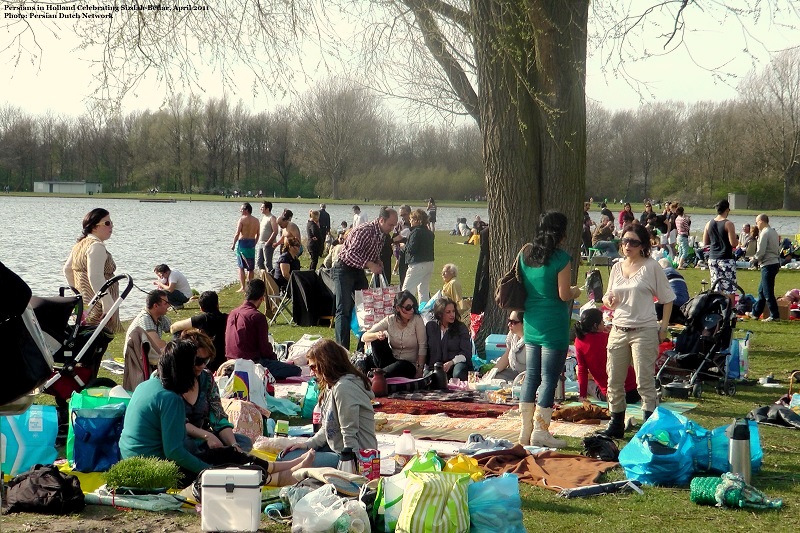 🇮🇷 Iran and 4 moreSizdah Bedarسیزدهبدر
An open-air picnic holiday concluding the Iranian New Year celebrationsFestival
🇮🇷 Iran and 4 moreSizdah Bedarسیزدهبدر
An open-air picnic holiday concluding the Iranian New Year celebrationsFestival
 🇮🇷 Iran and 7 moreNowruzنوروز
The Iranian new year at the March equinox, kept with fire, greenery and picnicsSeasonal
🇮🇷 Iran and 7 moreNowruzنوروز
The Iranian new year at the March equinox, kept with fire, greenery and picnicsSeasonal
 🇮🇳 Mathura, India and 5 moreHoliहोली (Hindi)
A spring festival of colours and bonfires that marks the end of winter and the triumph of good over evil.Festival
🇮🇳 Mathura, India and 5 moreHoliहोली (Hindi)
A spring festival of colours and bonfires that marks the end of winter and the triumph of good over evil.Festival