Customs of food and drinkEuropeChristian
Barmbrack
In its own language: bairín breac
A sweet Irish fruit loaf with charms baked in, eaten at Halloween and on New Year's Eve

Barmbrack is a sweet bread from Ireland, made with dried fruit and sold in flat rounds. It carries two household customs: a Halloween loaf with small objects baked inside, read for what the coming year holds, and a New Year's Eve loaf thrown at the door to keep hunger out.
When is Barmbrack marked?
Barmbrack is kept as part of Halloween in North America, which is on Saturday, 31 October 2026.
Barmbrack is a sweet Irish bread, speckled with dried fruit and sold in flat rounds. At Halloween it carries small objects baked into the dough, and whoever finds one in their slice reads their year ahead from it. In many parts of Ireland a brack also belonged to New Year's Eve, when it was thrown against the door to keep hunger away.
What it is
Barmbrack is a fruit bread, round and flattened rather than tall. Its dough sits between sandwich bread and cake: sweeter than the first, lighter than the second. Dried fruit gives it flavour and a chewy texture, and most recipes call for that fruit to sit overnight in cold tea or in whiskey before it goes into the dough. Bakers raise the loaf with baking powder or with yeast. It is usually eaten sliced and toasted, spread with butter, beside a cup of tea. Loaves for Halloween were once decorated on top with shapes of birds or animals.
The name
Bairín breac is the Irish form, and it can also be written as two separate words. Bairín means a loaf and breac means speckled, so the whole name describes a loaf with flecks in it, much as the Welsh bara brith does. The first part of the English word may point somewhere else: barm is the froth that rises on fermenting ale, and it was once used as a raising agent in Irish baking. Bicarbonate of soda only became common in Ireland in the early years of the 19th century, so barm did that work before it. Brack is the short form people use in everyday speech.
Halloween loaves
The Halloween brack was a fortune-telling game as much as a food. Objects went into the dough before baking, and a slice could hold one of them. A ring promised a wedding before the year was out. A coin pointed to wealth, a thimble to a single life, a bean to a future with little money, and a pea to a year without any marriage at all. A stick or a rag carried harder fortunes. Some loaves also held a medallion, often of the Virgin Mary, for a religious calling. Bracks have been made for sale in Ireland since the late 19th century; those sold for Halloween now keep only a toy ring, because food safety rules leave out the other items.
New Year's Eve
In many parts of Ireland the brack had a second duty, on the last day of the year. A woman of the household baked a large one. When evening came, the man of the household bit three pieces from it and threw them at the front door, calling on the Holy Spirit as he did so, so that poverty and starvation would stay outside. The family then gathered and ate what was left of the broken cake. A version recorded in the west of County Limerick had the brack knocked against the door three times, with different words each time.
In song and story
Barmbrack turns up in Irish writing and music. Van Morrison names it in 'A Sense of Wonder', in a list of foods. James Joyce puts four large bracks on a side table in the opening of 'Clay', a story in Dubliners: they look whole, but close up they are already cut into thick slices for tea. Edna O'Brien mentions brack in 'The Country Girls'. Lady Gregory used to carry barmbrack from her estate at Coole, in County Galway, to the Abbey Theatre in Dublin when she went there for rehearsals.
How Barmbrack is kept
At Halloween, a brack is baked with small objects hidden in the dough. It is sliced and shared, and everyone watches what lands on their plate, because each find carries a meaning for the coming year. Loaves made for shops now hold only a toy ring. On the last day of the year, in many parts of Ireland, a woman of the household baked a large brack; the man of the household took three bites, threw them at the front door while calling on the Holy Spirit, and the family then ate the remains. In the west of County Limerick the brack itself was knocked on the door instead.
When and where
Brack is tied to Halloween in Ireland, and loaves made for that market appear in the shops each year. The custom also belongs to New Year's Eve, the last day of the year, when households in many areas baked a large one. Otherwise it is eaten at tea through the year, whenever it is on sale.
Barmbrack is an Irish bread and its customs belong to Ireland. The Halloween loaves were made in homes and, from the late 19th century, sold in shops across the country. The New Year's Eve rite was kept in many areas, with one version recorded in the west of County Limerick. In Dublin, Lady Gregory brought barmbrack from County Galway to the Abbey Theatre.
What Barmbrack means
The objects hidden in a Halloween brack turn one shared loaf into a reading of the year ahead. A ring speaks of marriage, a coin of money, a pea of a year without a wedding, and a thimble of a single life; a bean, a stick or a rag carry the harder outcomes. On New Year's Eve the loaf worked as protection: thrown at the door so that poverty and starvation would not come into the home.
Days Barmbrack is marked
Questions people ask about Barmbrack
When is Barmbrack marked?
Barmbrack is kept as part of Halloween in North America, which is on Saturday, 31 October 2026.
What is barmbrack?
It is a sweet Irish bread with dried fruit through it, raised with yeast or with baking powder and sold in flat rounds. At Halloween it is the loaf that carries small objects, and the one you find in your slice is read as a sign of the year ahead.
What is baked inside it?
Older loaves held a ring, a coin, a pea, a bean, a thimble, a stick or a piece of cloth, each with its own meaning for whoever found it. Food safety rules mean shop bracks today keep only a toy ring.
Where does the name come from?
The Irish name bairín breac joins the words for a loaf and for speckled, which describes the fruit flecked through the dough. The English 'barm' may come from the froth of fermenting ale, once used as a raising agent in Irish baking.
Is barmbrack only eaten at festivals?
No. It is sold and eaten through the year, often toasted with butter beside a cup of tea. The two occasions it is most tied to are Halloween and New Year's Eve.
See also
 April Fools' DayAn annual day of lighthearted pranks, hoaxes and teasing kept on the first of April
 Brigid's crossA cross of woven rushes or straw, made for Saint Brigid's Day on the first of February
 Jack-o'-lanternA carved pumpkin lantern lit with a candle to brighten and protect Halloween nights
 MummingA medieval European custom of masked house-to-house visits, performances and seasonal revelry.
Good reading and sources
- Barmbrack on WikipediaEncyclopedia
- More photos on Wikimedia CommonsPhotos and video
- Wikidata recordOpen data
The facts on this page come from the Wikipedia article "Barmbrack", written by its contributors and used under the CC BY-SA 4.0 licence, and from its Wikidata record (CC0). EveryParampara rewrote the text in its own words, with AI assistance, and compares every page with the article to make sure no passage is copied. It may be reused under the same CC BY-SA 4.0 licence with a link back.
It may contain mistakes. Traditions differ from one family, village and community to the next, and the people who keep them know them best. If something is wrong, tell us. Last refreshed 2026-10-05.
More from Ireland
All the traditions of Ireland 🇮🇪 Galway, IrelandGalway International Oyster Festival
An annual autumn gathering in Galway honouring native oysters with shucking contestsTable custom · Feasts and festival meals
🇬🇧 United Kingdom and 5 moreApril Fools' Day
An annual day of lighthearted pranks, hoaxes and teasing kept on the first of AprilFestival
🇬🇧 United Kingdom and 3 moreMumming
A medieval European custom of masked house-to-house visits, performances and seasonal revelry.Festival
🇮🇪 Galway, IrelandGalway International Oyster Festival
An annual autumn gathering in Galway honouring native oysters with shucking contestsTable custom · Feasts and festival meals
🇬🇧 United Kingdom and 5 moreApril Fools' Day
An annual day of lighthearted pranks, hoaxes and teasing kept on the first of AprilFestival
🇬🇧 United Kingdom and 3 moreMumming
A medieval European custom of masked house-to-house visits, performances and seasonal revelry.Festival
 🇺🇸 United States and 2 moreSweat lodge
A purification ceremony kept by Indigenous peoples of the Americas using a heated hut and steam.Spiritual
🇺🇸 United States and 2 moreSweat lodge
A purification ceremony kept by Indigenous peoples of the Americas using a heated hut and steam.Spiritual
The same idea elsewhere
New Year compared 🇮🇩 IndonesiaOgoh-ogohᬳᭀᬕᭀᬄᬳᭀᬕᭀᬄ
Giant handcrafted statues paraded and burned on the eve of the Balinese Saka New YearFestival
🇮🇩 IndonesiaOgoh-ogohᬳᭀᬕᭀᬄᬳᭀᬕᭀᬄ
Giant handcrafted statues paraded and burned on the eve of the Balinese Saka New YearFestival
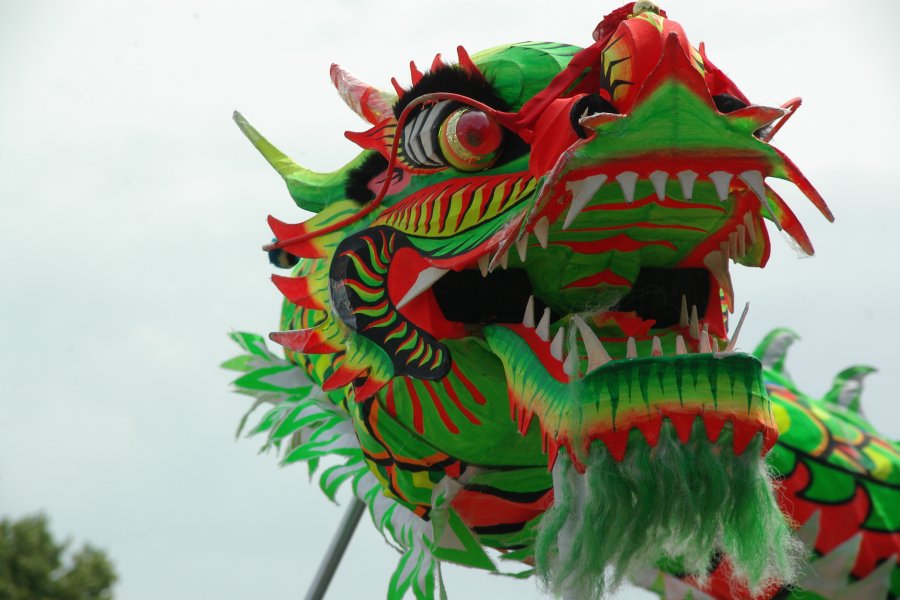 🇨🇳 China and 3 moreDragon dance舞龍 / 舞龙
A long dragon puppet on poles, danced by a team at Chinese New Year and other festivalsPerformance
🇨🇳 China and 3 moreDragon dance舞龍 / 舞龙
A long dragon puppet on poles, danced by a team at Chinese New Year and other festivalsPerformance
 🇰🇷 Jeju, South KoreaGut굿
Sacred rites of song, dance, and spirit communion performed by Korean shamansSpiritual
🇰🇷 Jeju, South KoreaGut굿
Sacred rites of song, dance, and spirit communion performed by Korean shamansSpiritual
 🇨🇳 China and 5 moreLion dance舞獅
A dynamic ritual dance featuring costumed lions, drums and martial acrobaticsPerformance
🇨🇳 China and 5 moreLion dance舞獅
A dynamic ritual dance featuring costumed lions, drums and martial acrobaticsPerformance