Festivals and celebrationsSoutheast AsiaHindu
Ogoh-ogoh
In its own language: ᬳᭀᬕᭀᬄᬳᭀᬕᭀᬄ
Giant handcrafted statues paraded and burned on the eve of the Balinese Saka New Year

Ogoh-ogoh is a Balinese Hindu tradition where neighborhood groups build giant, monstrous statues and parade them through the streets on the eve of Nyepi. Carried to lively gamelan music and shaken to appear alive, the figures represent negative forces and are burned at night to cleanse the community for the new year.
When is Ogoh-ogoh marked?
Ogoh-ogoh is kept as part of Nyepi, which is on Tuesday, 9 March 2027.
Ogoh-ogoh is a Balinese Hindu ritual art form celebrated on the eve of Nyepi, the Saka New Year. Neighborhood groups spend weeks crafting towering, menacing figures from bamboo and paper that represent destructive forces and human vices. On the night before the day of absolute silence, communities carry these giant effigies through village streets, shaking them vigorously before burning them to banish misfortune and restore balance.
Making the effigies
Statue building takes place in the banjar, the neighborhood civic association. For weeks or months leading up to the new year, local youths collaborate on the design and construction. Builders weave split bamboo and rattan over wooden bases, shaping fierce demons, mythical beasts, or characters from Hindu epics and shadow puppetry. Layers of paper cover the framework before painters add vivid details, fangs, and bulging eyes. In earlier decades, artists sometimes substituted lightweight styrofoam, but regional rules now ban synthetic foam to protect health and the environment. Some modern groups even incorporate hidden mechanical levers or hydraulic systems to make the arms, heads, and torsos move during the procession.
Origins and evolution
Large effigies have deep roots in Balinese ceremonial life, though the modern street parade developed relatively recently. Earlier customs featured towering figures in royal cremation pageants, sacred scarecrows placed in rice fields to ward off pests, and giant puppets known as Barong Landung. In the 1970s, young people in Denpasar began making straw and paper figures called onggokan to accompany the customary cleansing rites on New Year's Eve. The practice gained momentum in the 1980s when Nyepi was recognized as an Indonesian national holiday and provincial leaders encouraged local banjar groups to parade. By the 1990s, the event had expanded into island-wide competitive exhibitions, turning a modest neighborhood ritual into a showcase of Balinese craftsmanship.
Sound and movement
The name ogoh-ogoh comes from the Balinese verb ogah, which means to shake. Teams of carriers lift each statue on a grid of bamboo poles, jogging forward and abruptly turning at major road junctions. By bouncing and rocking the frame in unison, the bearers make the giant limbs dance and sway, creating the dramatic illusion of an animated demon. Processions are powered by the thunderous, driving pulse of gamelan baleganjur, a traditional ensemble composed of gongs, drums, and cymbals. Community leaders and local regulations discourage electronic speakers and recorded tracks, ensuring that live acoustic music maintains the ritual atmosphere and spiritual charisma of the parade.
Cleansing the village
The parade forms the climax of Pangrupukan, a broader set of purification rituals aimed at soothing disruptive spirits before the new year begins. Earlier in the day, households perform offerings, bang slit drums, light torches of dried coconut leaves, and scatter aromatic spices around compound grounds to drive out lurking malice. The evening procession gathers these scattered disturbances together within the forms of the monsters. Carrying them through the community corners draws the negative energy away from residential dwellings. The final cremation of the effigies at the village burial grounds permanently destroys these collected evils, paving the way for the total stillness and introspection required during Nyepi.
How Ogoh-ogoh is kept
Preparations begin in the banjar, the local neighborhood hall, where youth groups assemble giant figures using bamboo frames, papier-mache, and paint. On the evening of Pangrupukan, teams hoist the heavy platforms onto their shoulders. They march along designated routes, spinning and shaking the statues at crossroads to make them seem alive. Walking alongside the bearers, percussion troupes play energetic rhythms on gamelan baleganjur instruments. After circling the neighborhood, participants carry the statues to the village cemetery field, where they set the effigies on fire to complete the ritual purification.
When and where
The parade takes place on Pangrupukan, which is the final evening of the Balinese lunar year. This night precedes Nyepi, the annual day of quiet contemplation marking the Saka New Year. The festival date is calculated according to the traditional Balinese calendar during the ninth lunar month, known as Sasih Kesanga.
The custom is strongest across the island of Bali, where nearly every neighborhood crafts its own effigy. Outside Bali, Hindu communities host similar processions in Indonesian provinces including East Java, West Nusa Tenggara, Lampung, East Kalimantan, and South Sulawesi, often inviting neighbors of all religious backgrounds to join the celebration.
What Ogoh-ogoh means
The statues primarily portray Butakala, supernatural entities that inhabit lower realms and embody human greed, anger, and chaotic universal energies. Parading and shaking these frightful figures draws out the unseen negativity lingering in homes and crossroads. Setting them alight at the cemetery serves as a collective act of spiritual renewal, expelling destructive forces so the community enters the new year with clarity and peace.



Days Ogoh-ogoh is marked
Questions people ask about Ogoh-ogoh
When is Ogoh-ogoh marked?
Ogoh-ogoh is kept as part of Nyepi, which is on Tuesday, 9 March 2027.
What is an ogoh-ogoh?
An ogoh-ogoh is a giant handcrafted sculpture representing demonic spirits, mythological creatures, or human flaws. Built from bamboo and paper by neighborhood groups, it is paraded through Balinese streets to collect negative energies before being burned.
Why are the statues burned after the parade?
The effigies symbolize human vices and disruptive cosmic forces. Burning them in the village cemetery field after the evening parade symbolically destroys those negative qualities, cleansing the environment so the community enters the new year renewed.
What instruments accompany the procession?
The procession is accompanied by gamelan baleganjur, a dynamic traditional ensemble using gongs, drums, and handheld cymbals. Electronic sound systems are restricted by local authorities to preserve the traditional musical atmosphere and spiritual presence of the ritual.
See also
 Kartika PurnimaA full moon festival of lights and holy baths celebrated by Hindus, Sikhs, and Jains across South Asia.
 Chinese New Year's EveA reunion day for ethnic Chinese families before the Lunar New Year, marked by feasts, rituals, and staying up late.
 SekatenA week-long Javanese royal festival and market honouring the birth of the Prophet
 Bau NyaleAn annual night-time gathering on Lombok to collect spawning sea worms from the shore
Good reading and sources
- Ogoh-ogoh on WikipediaEncyclopedia
- More photos on Wikimedia CommonsPhotos and video
- Wikidata recordOpen data
The facts on this page come from the Wikipedia article "Ogoh-ogoh", written by its contributors and used under the CC BY-SA 4.0 licence, and from its Wikidata record (CC0). EveryParampara rewrote the text in its own words, with AI assistance, and compares every page with the article to make sure no passage is copied. It may be reused under the same CC BY-SA 4.0 licence with a link back.
It may contain mistakes. Traditions differ from one family, village and community to the next, and the people who keep them know them best. If something is wrong, tell us. Last refreshed 2026-10-04.
More from Indonesia
All the traditions of Indonesia 🇪🇬 Egypt and 5 moreMawlidمولد (Mawlid)
An annual festival marking the birth of the Prophet Muhammad, marked by poetry, processions and feasts.Festival · Feasts and festival meals
🇮🇳 Varanasi, India and 2 moreKartika Purnimaकार्त्तिकपूर्णिमा (Kārttikapūrṇimā)
A full moon festival of lights and holy baths celebrated by Hindus, Sikhs, and Jains across South Asia.Festival
🇨🇳 China and 5 moreChinese New Year's Evechúxī
A reunion day for ethnic Chinese families before the Lunar New Year, marked by feasts, rituals, and staying up late.Festival · Dinner
🇮🇩 Yogyakarta, IndonesiaSekatenꦱꦼꦏꦠꦺꦤ꧀
A week-long Javanese royal festival and market honouring the birth of the ProphetFestival
🇪🇬 Egypt and 5 moreMawlidمولد (Mawlid)
An annual festival marking the birth of the Prophet Muhammad, marked by poetry, processions and feasts.Festival · Feasts and festival meals
🇮🇳 Varanasi, India and 2 moreKartika Purnimaकार्त्तिकपूर्णिमा (Kārttikapūrṇimā)
A full moon festival of lights and holy baths celebrated by Hindus, Sikhs, and Jains across South Asia.Festival
🇨🇳 China and 5 moreChinese New Year's Evechúxī
A reunion day for ethnic Chinese families before the Lunar New Year, marked by feasts, rituals, and staying up late.Festival · Dinner
🇮🇩 Yogyakarta, IndonesiaSekatenꦱꦼꦏꦠꦺꦤ꧀
A week-long Javanese royal festival and market honouring the birth of the ProphetFestival
The same idea elsewhere
New Year compared 🇨🇳 China and 5 moreLion dance舞獅
A dynamic ritual dance featuring costumed lions, drums and martial acrobaticsPerformance
🇨🇳 China and 5 moreLion dance舞獅
A dynamic ritual dance featuring costumed lions, drums and martial acrobaticsPerformance
 🇰🇷 Jeju, South KoreaGut굿
Sacred rites of song, dance, and spirit communion performed by Korean shamansSpiritual
🇰🇷 Jeju, South KoreaGut굿
Sacred rites of song, dance, and spirit communion performed by Korean shamansSpiritual
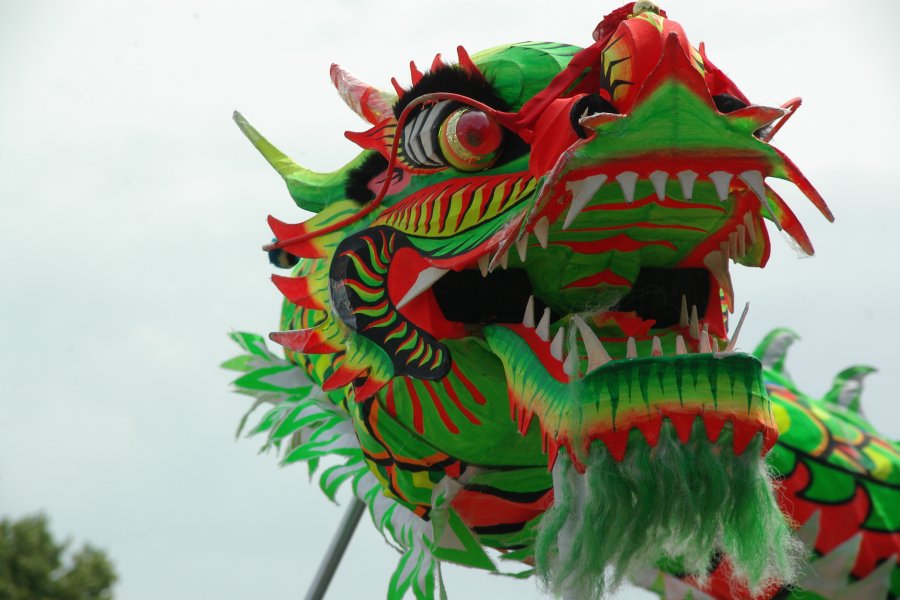 🇨🇳 China and 3 moreDragon dance舞龍 / 舞龙
A long dragon puppet on poles, danced by a team at Chinese New Year and other festivalsPerformance
🇨🇳 China and 3 moreDragon dance舞龍 / 舞龙
A long dragon puppet on poles, danced by a team at Chinese New Year and other festivalsPerformance
 🇨🇳 Shanghai, China and 1 moreJiaozi餃子
Crescent Chinese dumplings filled with meat or vegetables, eaten for fortune and feastsTable custom · Breakfast
🇨🇳 Shanghai, China and 1 moreJiaozi餃子
Crescent Chinese dumplings filled with meat or vegetables, eaten for fortune and feastsTable custom · Breakfast