Spiritual and religiousCentral Asia and the CaucasusChristian
Blessing of the Throats
A Christian prayer rite touching throats with crossed candles for protection from illness

Christian worshippers receive a prayer of protection over their throats, usually with crossed candles held against the neck. The annual rite honours Saint Blaise, an early physician and bishop remembered for healing a choking child.
When is Blessing of the Throats marked?
Blessing of the Throats is kept as part of Candlemas, which is on Tuesday, 2 February 2027.
The Blessing of the Throats is a Christian prayer rite asking for physical health and safety from ailments. Ministers hold two candles, often tied in an X shape with a red ribbon, beside each person's neck while reciting a prayer of intercession. Rooted in medieval devotion to Saint Blaise, the ceremony remains a familiar winter custom in Roman Catholic, Eastern Catholic, and Anglican congregations across several countries.
Origins and early accounts
Devotion centres on Saint Blaise, a healer who served as a Christian leader in Sebaste, located in what is now Sivas, Turkey. Accounts recorded that he saved a young boy who was choking on a fishbone. One story says Blaise laid hands upon the child; another claims he crossed two candles near the child's neck. While imprisoned for his faith, Blaise received visits from an elderly woman who brought him food and tapers to brighten his dark cell after he saved her pig from a wolf. By the Middle Ages, appeals to Blaise for relief from sickness had become widespread.
The candle ritual
During or following a church service, a priest, deacon, or appointed layperson approaches each believer. The minister holds two tapers, traditionally blessed on Candlemas the previous day, against or near the throat. As the candles rest against the neck, the minister recites a blessing asking God to deliver the person from throat disorders and all other sickness through Saint Blaise's prayers. If candles are not used individually for everyone, the presider may extend hands over the entire congregation while saying the prayer.
Regional variations
Local congregations observe unique adaptations of the ceremony. In German communities, the candles are frequently ignited during the prayer. Eastern Orthodox parishes celebrate the rite around mid-February according to their calendar. Armenian Catholic churches often anoint the neck with oil using a candle or cotton tip. In parts of Spain and Mexico, attendees receive a protective ribbon to wear around the neck for nine days. At San Carlo ai Catinari in Rome, clergy apply a mounted relic in place of candles.
How Blessing of the Throats is kept
Worshippers gather in church during or near the saint's memorial day. A minister takes two candles fastened together in a cross, sometimes bound with a red cord symbolising martyrdom. Each person steps forward, and the candles are rested against or held directly over the throat. The minister speaks a formal prayer seeking deliverance from throat trouble and general sickness. In some Eastern Catholic parishes, oil replaces the candles, while in other regions, congregations receive blessed ribbons to keep around their necks.
When and where
The rite is traditionally held on the third day of February. Congregations often offer it on the prior evening during Candlemas or on the nearest Sunday when larger crowds attend services. Eastern Orthodox communities observe it on February 11.
Parishes throughout the Catholic Church, parts of the Anglican Communion, and certain Eastern churches carry out the custom. It appears in churches across Europe, the Americas, and parts of the Middle East.
What Blessing of the Throats means
The crossed tapers recall both the cross of Christ and the lights brought to Saint Blaise during his imprisonment. A red ribbon bound around the wax signifies martyrdom and sacrifice. The prayer itself reflects trust in saintly intercession for physical healing, especially against respiratory or throat trouble, turning an everyday fear of choking into an act of communal faith.
Days Blessing of the Throats is marked
Questions people ask about Blessing of the Throats
When is Blessing of the Throats marked?
Blessing of the Throats is kept as part of Candlemas, which is on Tuesday, 2 February 2027.
What is the Blessing of the Throats?
It is a Christian sacramental rite in which clergy or lay leaders ask God to protect worshippers from throat troubles and all other sickness through the intercession of Saint Blaise.
Why are candles used during the blessing?
The crossed tapers recall stories of Saint Blaise holding candles near a choking boy's neck, as well as the candles brought to his prison cell by a woman he helped.
How do different countries mark the custom?
In Germany, candles are often lit, while Spanish and Mexican communities may distribute ribbons to wear for nine days. Armenian Catholic parishes use oil to anoint the neck.
See also
 CandlemasA Christian feast of candle blessings marking the end of the Christmas season
 BotafumeiroA giant swinging censer of brass and silver that fills the Santiago de Compostela Cathedral with incense during solemn f
 Sweat lodgeA purification ceremony kept by Indigenous peoples of the Americas using a heated hut and steam.
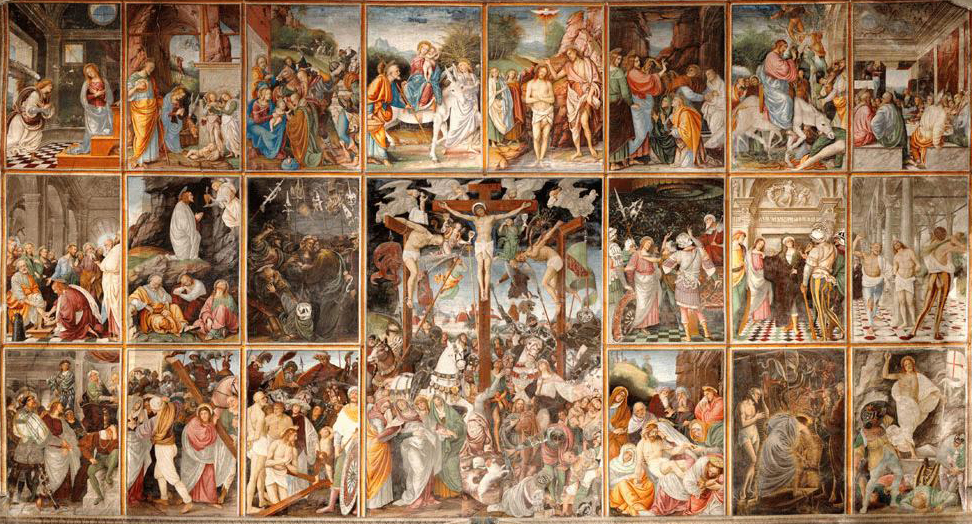 Presentation of Jesus at the TempleA February feast of candles and welcome, kept forty days after Christmas
Good reading and sources
- Blessing of the Throats on WikipediaEncyclopedia
- More photos on Wikimedia CommonsPhotos and video
- Wikidata recordOpen data
The facts on this page come from the Wikipedia article "Blessing of the Throats", written by its contributors and used under the CC BY-SA 4.0 licence, and from its Wikidata record (CC0). EveryParampara rewrote the text in its own words, with AI assistance, and compares every page with the article to make sure no passage is copied. It may be reused under the same CC BY-SA 4.0 licence with a link back.
It may contain mistakes. Traditions differ from one family, village and community to the next, and the people who keep them know them best. If something is wrong, tell us. Last refreshed 2026-10-06.
More from Armenia
All the traditions of Armenia
🇮🇱 Jerusalem, Israel and 5 morePresentation of Jesus at the TempleIn praesentatione Domini
A February feast of candles and welcome, kept forty days after ChristmasSpiritual
 🇦🇲 Armenia and 1 moreTrndezտրնդեզ
An Armenian fire feast forty days after Christmas, kept with bonfires and shared sweetsSpiritual · Feasts and festival meals
🇦🇲 Armenia and 1 moreTrndezտրնդեզ
An Armenian fire feast forty days after Christmas, kept with bonfires and shared sweetsSpiritual · Feasts and festival meals
 🇦🇲 Yerevan, Armenia and 6 moreArmenian Genocide Remembrance DayՄեծ Եղեռնի զոհերի հիշատակի օր
An annual day of mourning and remembrance for the victims of the 1915 Armenian Genocide.Spiritual
🇦🇲 Yerevan, Armenia and 6 moreArmenian Genocide Remembrance DayՄեծ Եղեռնի զոհերի հիշատակի օր
An annual day of mourning and remembrance for the victims of the 1915 Armenian Genocide.Spiritual
 🇪🇹 Ethiopia and 5 moreNativity Fast
A forty-day Christian period of abstinence and prayer observed in preparation for Christmas.Spiritual
🇪🇹 Ethiopia and 5 moreNativity Fast
A forty-day Christian period of abstinence and prayer observed in preparation for Christmas.Spiritual
The same idea elsewhere
Healing, luck and protection compared 🇮🇹 Rome, Italy and 4 moreValentine's Day
A Christian feast day and cultural celebration of love kept on February 14 in many countries.Festival
🇮🇹 Rome, Italy and 4 moreValentine's Day
A Christian feast day and cultural celebration of love kept on February 14 in many countries.Festival
 🇩🇪 Germany and 5 moreChristmas tree
A decorated evergreen or artificial tree placed indoors to mark the Christmas season.Festival
🇫🇷 France and 5 moreCandlemas
A Christian feast of candle blessings marking the end of the Christmas seasonSpiritual
🇩🇪 Germany and 5 moreChristmas tree
A decorated evergreen or artificial tree placed indoors to mark the Christmas season.Festival
🇫🇷 France and 5 moreCandlemas
A Christian feast of candle blessings marking the end of the Christmas seasonSpiritual
 🇮🇪 Ireland and 2 moreJack-o'-lantern
A carved pumpkin lantern lit with a candle to brighten and protect Halloween nightsFolklore
🇮🇪 Ireland and 2 moreJack-o'-lantern
A carved pumpkin lantern lit with a candle to brighten and protect Halloween nightsFolklore