Festivals and celebrationsSoutheast AsiaBuddhistHindu
Bon Om Touk
In its own language: បុណ្យអុំទូក
A three-day Cambodian festival of dragon boat races, floating lanterns and moon offerings

Bon Om Touk is an annual three-day Cambodian celebration that marks the reversal of the Tonle Sap River and the close of the monsoon rains. Millions gather along the riverbanks in late October or November to watch royal boat races, launch luminous river floats, and share flattened rice under the full moon.
When is Bon Om Touk marked?
Bon Om Touk is kept as part of Mid-Autumn Festival, which is on Wednesday, 15 September 2027.
Bon Om Touk brings millions of people together each autumn to mark the end of the rainy season and honour Cambodia's waterways. Across three days of festivities, crowds line the riverbanks to cheer longboat crews, view glowing barges launched at dusk, and pay homage to the moon. The gathering honours the life-giving flow of the rivers, ancient naval victories, and the guardian spirits believed to watch over the waters.
Races on the river
Dragon boat competitions form the centrepiece of the opening day along the riverfront. Each narrow racing craft is painted with protective eyes at the bow so the vessel resembles a living dragon. A woman dances at the front of the craft to embody the boat spirit or its guardian, while a coxswain shouts cadence to keep dozens of rowers moving in unison. These spirited regattas recall Cambodia's historic naval strength, including a twelfth-century victory under King Jayavarman VII on the Tonle Sap lake against Cham forces. At the close of the tournament, the king presents awards to the winning teams.
Floating lanterns at dusk
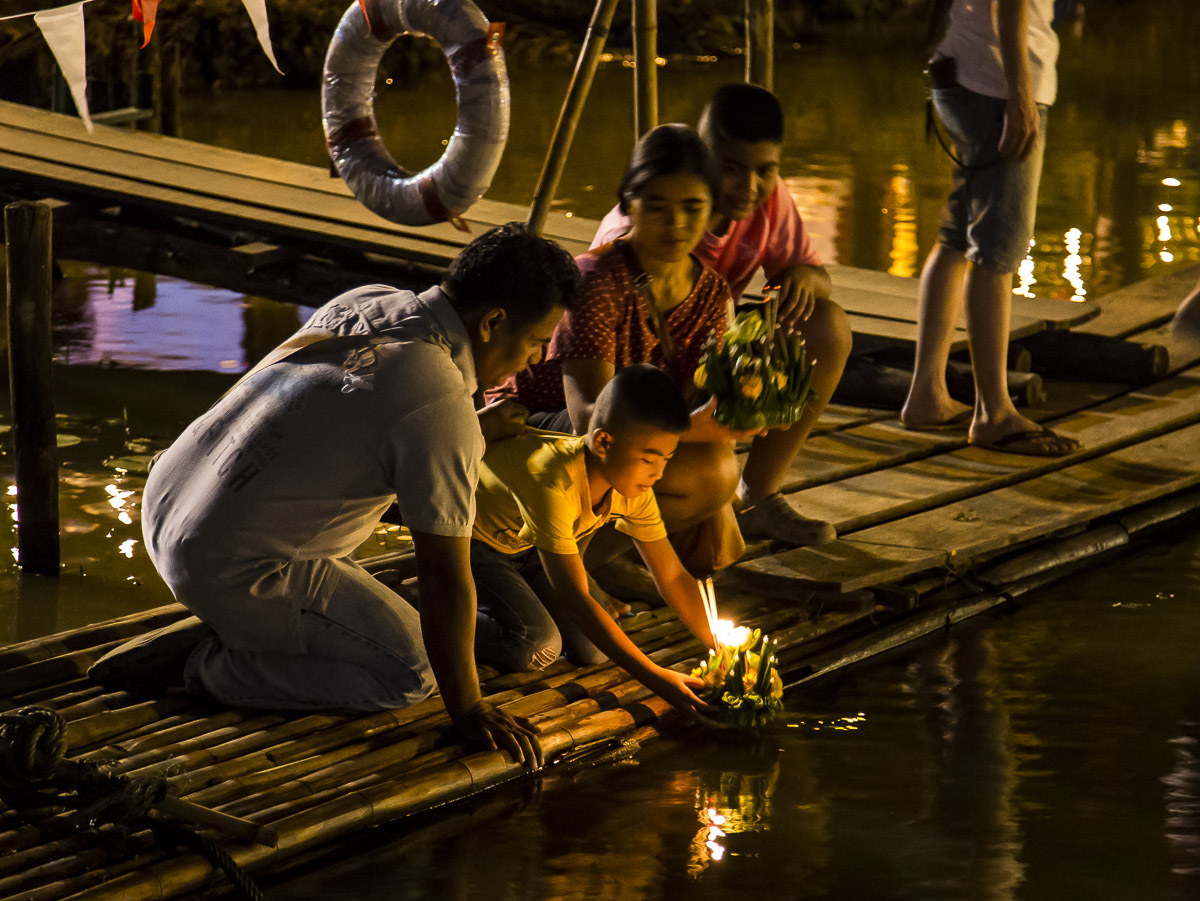
When evening falls, government ministries and institutions release illuminated floats into the water during the Bondet Bratib ceremony. Glowing displays lit with colourful lamps drift down the river while fireworks burst overhead. This ritual expresses gratitude to Preah Mae Kongkea, the water goddess derived from the Hindu Ganga tradition, who is revered as the mother of all rivers, streams, and lakes. Cambodian participants thank her for providing fish, soil sediments, and water for agriculture. Buddhist observers also dedicate floating lamps to the sacred tooth relics of the Buddha, seeking merit and national prosperity on the auspicious night of the full moon.
Honouring the full moon
The second night centres on Sampeah Preah Khae, the worship of the moon, alongside the sharing of a special dish called Og Ambok. Shortly after midnight, when the full moon reaches its peak, families light incense and pray to Preah Purthisat and Lord Indra. Communities pound fresh harvest rice in wooden mortars until the grains flatten into flakes, discarding the husks before blending the cereal with ripe bananas and coconut juice. In a lighthearted ritual game, participants feed mouthfuls of this mixture to one another, laughing together and celebrating the legend of the rabbit seen on the moon.
How Bon Om Touk is kept
The festival unfolds across three distinct days of civic and spiritual events. Festivities open with energetic boat races along the river, accompanied by bow dancers and cheering crowds. At nightfall, massive decorative barges illuminated with bright lights glide along the water while fireworks light up the sky. On the second night, gatherings stay awake past midnight to venerate the moon, pound toasted rice into ambok, and share fruit. The final day concludes the regatta with a ceremonial ribbon cutting and royal prizes for the swiftest rowing teams.
When and where
The celebration takes place every year over three days in late October or November during the full moon. It aligns with the lunar Mid-Autumn period, marking both the conclusion of the rainy season and the rare natural reversal in the flow of the Tonle Sap River.
The largest gatherings happen along the Sisowath Quay riverfront in Phnom Penh, where millions converge before the Royal Palace. Celebrations also take place across Cambodian provinces and within Khmer communities in southern Vietnam.
What Bon Om Touk means
Bon Om Touk celebrates the indispensable role of water in Khmer life. By offering prayers and lanterns to the water goddess Preah Mae Kongkea, communities express thanks for bountiful fish catches and rich agricultural soil. The boat races honour historical naval triumphs that defended the realm, while midnight moon rites celebrate Buddhist relics and celestial legends of renewal.
On the table
- Ambok
- Bananas
- Coconut juice


Days Bon Om Touk is marked
Questions people ask about Bon Om Touk
When is Bon Om Touk marked?
Bon Om Touk is kept as part of Mid-Autumn Festival, which is on Wednesday, 15 September 2027.
What is Bon Om Touk?
Bon Om Touk is Cambodia's annual Water and Moon Festival. Over three days, it features river boat races, floating lanterns, midnight moon worship, and the sharing of a traditional flattened rice treat known as ambok.
Where and when does the festival take place?
The festival occurs annually for three days during the full moon of late October or November. Its grandest events unfold along the riverbanks of Phnom Penh in front of the Royal Palace.
Why are the racing boats painted with eyes?
Racing boats are painted with eyes at the bow to bring the vessels to life, giving them the appearance of floating dragons. Crews also host a bow dancer to represent the boat's protective spirit.
What is Og Ambok?
Og Ambok is a ceremonial dish made from freshly fried paddy rice that is pounded in a mortar until flattened. The husks are removed, and the flakes are mixed with bananas and coconut juice to eat under the full moon.
See also
 KathinaA Buddhist season of offering new robes and gifts to monks after the rains retreat
 Royal Ploughing CeremonyA royal agricultural rite opening the rice season across mainland Southeast Asia
 VesakA day to honor the birth, awakening, and passing of the Buddha, kept by Buddhists across Asia.
 Mid-Autumn FestivalAn annual harvest festival celebrating family reunions, full moons and mooncakes
Good reading and sources
- Cambodian stampede: Phnom Penh counts the cost of water festival disasterThe Guardian, Article
- Cambodian stampede: Phnom Penh counts the cost of water festival disasterThe Guardian, Article
- Bon Om Touk on WikipediaEncyclopedia
- More photos on Wikimedia CommonsPhotos and video
- Wikidata recordOpen data
The facts on this page come from the Wikipedia article "Bon Om Touk", written by its contributors and used under the CC BY-SA 4.0 licence, and from its Wikidata record (CC0). EveryParampara rewrote the text in its own words, with AI assistance, and compares every page with the article to make sure no passage is copied. It may be reused under the same CC BY-SA 4.0 licence with a link back.
It may contain mistakes. Traditions differ from one family, village and community to the next, and the people who keep them know them best. If something is wrong, tell us. Last refreshed 2026-10-04.
More from Cambodia
All the traditions of Cambodia
🇨🇳 China and 5 moreMid-Autumn Festival中秋節
An annual harvest festival celebrating family reunions, full moons and mooncakesFestival · Sweets given and shared
 🇹🇭 Chiang Mai, Thailand and 5 moreLoy Krathongลอยกระทง
A Thai festival of floating leaf baskets on rivers to honor water and release negativity.Festival
🇹🇭 Chiang Mai, Thailand and 5 moreLoy Krathongลอยกระทง
A Thai festival of floating leaf baskets on rivers to honor water and release negativity.Festival
 🇹🇭 Thailand and 4 moreVessantara JatakaVessantara Jātaka
A Buddhist festival celebrating the last life of the Buddha as a generous prince.Festival
🇹🇭 Thailand and 4 moreVessantara JatakaVessantara Jātaka
A Buddhist festival celebrating the last life of the Buddha as a generous prince.Festival
 🇰🇭 CambodiaApsara Danceរបាំទេពអប្សរា
A classical Cambodian court dance inspired by the stone carvings of AngkorPerformance
🇰🇭 CambodiaApsara Danceរបាំទេពអប្សរា
A classical Cambodian court dance inspired by the stone carvings of AngkorPerformance
The same idea elsewhere
Royalty and coronation compared 🇮🇱 IsraelRosh Hashanahרֹאשׁ הַשָּׁנָה
The Jewish New Year marked by shofar horn blasts, prayer and sweet foodsSpiritual
🇮🇱 IsraelRosh Hashanahרֹאשׁ הַשָּׁנָה
The Jewish New Year marked by shofar horn blasts, prayer and sweet foodsSpiritual
 🇵🇪 Cusco, Peru and 4 moreIntiinti (Quechua)
The Inca sun deity, honoured with temples, offerings and the June festival Inti RaymiSpiritual
🇵🇪 Cusco, Peru and 4 moreIntiinti (Quechua)
The Inca sun deity, honoured with temples, offerings and the June festival Inti RaymiSpiritual
 🇸🇪 Mora, SwedenVasaloppet
A 90 km cross-country ski race from Sälen to Mora, run every March since 1922Game
🇸🇪 Mora, SwedenVasaloppet
A 90 km cross-country ski race from Sälen to Mora, run every March since 1922Game
 🇺🇸 United StatesTalking stick
A carved staff that shows who may speak at a Northwest Coast gatheringCeremony
🇺🇸 United StatesTalking stick
A carved staff that shows who may speak at a Northwest Coast gatheringCeremony