🇻🇳 Traditions of Vietnam
41 traditions from Vietnam, best known first, across 13 cities and towns.
Vietnamese traditions rest on ancestor veneration, close family ties, and a deep balance with nature. Daily life reflects both indigenous roots and outside influences from across Asia and Europe, seen clearly in its poetry and five-flavor cooking.
In Vietnam, living customs link the household with the natural world and generations past. Across dozens of ethnic communities, daily life emphasizes shared meals, ancestral reverence, and poetic expression. Centuries of exchange across Southeast Asia, China, and France have enriched these practices without displacing indigenous roots. From rhythmic tonal speech to balanced bowls of rice noodles and fragrant herbs, traditional life values harmony, lightness, and mutual care within the community.
Core values and kinship
Reverence for ancestors forms the bedrock of household life in Vietnam. Families maintain close bonds, showing deference to community elders and upholding mutual responsibility among relatives. Alongside family loyalty, traditional philosophy stresses living in harmony with nature, a principle that guides personal conduct and communal events. These moral foundations draw deeply from local customs as well as Buddhist, Taoist, and Confucian teachings that shaped social life over centuries. Whether in village gatherings or private household rites, the living stay connected to earlier generations through regular remembrance, honoring the continuity of the family line across time.
The five fundamental tastes
Vietnamese culinary philosophy centers on balancing five distinct flavors: sweet, sour, salty, bitter, and spicy. Cooks build meals around fresh ingredients, avoiding heavy reliance on cooking oil or dairy. Instead, dishes highlight fragrant herbs like lemongrass, long coriander, mint, Saigon cinnamon, and Thai basil. Because rice serves as the central staple in the form of grain, flat sheets, and noodles, most classic meals remain naturally gluten-free and light in sugar. Meats are typically cooked for a brief time, while vegetables are served crisp and raw or lightly tossed in a wok. This approach creates distinct textures and honors balance in every bowl.
Shared food and life rites
Festive meals and life milestones bring relatives together around familiar regional dishes. Chicken curry, known as cà ri, is a staple offering at family gatherings, including graduations, funerals, weddings, and annual death anniversaries. In central and southern areas, curries and broths often incorporate coconut milk, reflecting historical connections with Cham, Malay, and Indian cooking traditions. Other staples show creative adaptations of foreign contact, such as the crusty bread roll known as bánh mì, adapted from French baguettes, and savory noodle soups like bún nước lèo, drawn from Khmer heritage. Food serves as an enduring bridge between celebration, mourning, and hospitality.
Languages and written scripts
Vietnam is home to remarkable linguistic variety, with more than one hundred distinct languages spoken across five language families. The national tongue, Vietnamese, is an Austroasiatic language characterized by single-syllable roots and six pitch tones. For many centuries, scholars and officials wrote in Classical Chinese, known as chữ Hán, before creating chữ Nôm, a homegrown script based on Chinese characters to transcribe the spoken vernacular. During the French colonial era, a romanized writing system called chữ Quốc Ngữ gained wide adoption. This Latin alphabet uses distinct accent marks, including horns and circumflexes, to capture vowel sounds and tonal variations across the language.
Poetry and literature
Written verse holds an elevated place in Vietnamese cultural memory. Early formal literature explored Buddhist and Confucian ideals, beginning with monumental stone inscriptions in Sanskrit and Old Cham. Over time, vernacular poetry written in chữ Nôm flourished, producing celebrated masterpieces like Nguyễn Du's Truyện Kiều along with influential works by prominent women poets such as Hồ Xuân Hương and Bà Huyện Thanh Quan. Later generations turned to the Latin alphabet to write new verse forms, short stories, and novels. Modern writing has shifted from wartime heroism toward realistic portraits of ordinary daily life, maintaining a strong connection to oral storytelling, fables, and folk songs.
The facts in this overview come from the Wikipedia article "Culture of Vietnam", written by its contributors and used under the CC BY-SA 4.0 licence. EveryParampara rewrote the text in its own words, with AI assistance, and compares every page with the article to make sure no passage is copied. It may be reused under the same CC BY-SA 4.0 licence with a link back.
The table in Vietnam
Foods and drinks by the moment they belong to.
Cities, towns and villages of Vietnam
 🇨🇳 Longquan, China and 4 moreCeladon青瓷 (qīngcí)
Green-glazed pottery first made in China, valued for colours that echo jadeCraft
🇨🇳 Hong Kong, China and 5 moreFace
The shared social etiquette of honour, dignity and mutual respect across culturesEtiquette
🇨🇳 Longquan, China and 4 moreCeladon青瓷 (qīngcí)
Green-glazed pottery first made in China, valued for colours that echo jadeCraft
🇨🇳 Hong Kong, China and 5 moreFace
The shared social etiquette of honour, dignity and mutual respect across culturesEtiquette
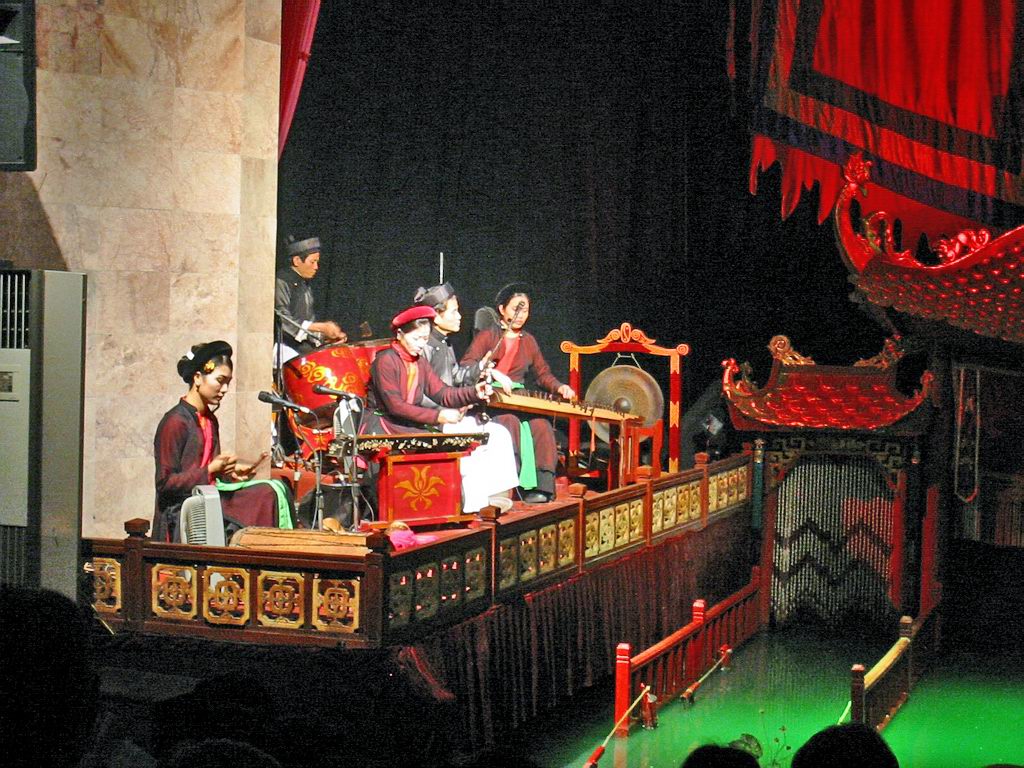 🇻🇳 Hoa Lư, VietnamChèo嘲
Satirical folk musical theatre performed by village troupes across northern VietnamPerformance
🇻🇳 Hoa Lư, VietnamChèo嘲
Satirical folk musical theatre performed by village troupes across northern VietnamPerformance
 🇨🇳 China and 5 moreLion dance舞獅
A dynamic ritual dance featuring costumed lions, drums and martial acrobaticsPerformance
🇨🇳 China and 5 moreLion dance舞獅
A dynamic ritual dance featuring costumed lions, drums and martial acrobaticsPerformance
 🇺🇬 Uganda and 4 moreBarkcloth
Cloth beaten from tree bark across Africa, Asia and the PacificCraft
🇺🇬 Uganda and 4 moreBarkcloth
Cloth beaten from tree bark across Africa, Asia and the PacificCraft
 🇻🇳 Huế, VietnamNón lá𥶄蘿
A pointed leaf and bamboo hat worn across Vietnam for shelter, work and celebrationDress
🇻🇳 Huế, VietnamNón lá𥶄蘿
A pointed leaf and bamboo hat worn across Vietnam for shelter, work and celebrationDress
 🇹🇭 Thailand and 7 moreSpirit house
A small roofed shrine on a pillar, kept in homes and villages across Southeast Asia to honour protective spirits.Spiritual
🇹🇭 Thailand and 7 moreSpirit house
A small roofed shrine on a pillar, kept in homes and villages across Southeast Asia to honour protective spirits.Spiritual
 🇮🇳 India and 4 moreWater lantern
Small lamps floated on water to honour the dead and ask for good fortuneFestival
🇮🇳 India and 4 moreWater lantern
Small lamps floated on water to honour the dead and ask for good fortuneFestival
 🇱🇰 Colombo, Sri Lanka and 5 moreVesakVisakha Bucha (Thailand), Visakha Bouxa (Laos), Full Moon Day of Kason (Myanmar)
A day to honor the birth, awakening, and passing of the Buddha, kept by Buddhists across Asia.Festival
🇱🇰 Colombo, Sri Lanka and 5 moreVesakVisakha Bucha (Thailand), Visakha Bouxa (Laos), Full Moon Day of Kason (Myanmar)
A day to honor the birth, awakening, and passing of the Buddha, kept by Buddhists across Asia.Festival
 🇨🇳 China and 5 moreMid-Autumn Festival中秋節
An annual harvest festival celebrating family reunions, full moons and mooncakesFestival · Sweets given and shared
🇨🇳 China and 5 moreMid-Autumn Festival中秋節
An annual harvest festival celebrating family reunions, full moons and mooncakesFestival · Sweets given and shared
 🇮🇳 India and 6 moreBuddha's Birthday佛诞 (Fódàn)
A festival marking the birth of Siddhartha Gautama, observed across Asia with temple rituals and community gatherings.Festival
🇮🇳 India and 6 moreBuddha's Birthday佛诞 (Fódàn)
A festival marking the birth of Siddhartha Gautama, observed across Asia with temple rituals and community gatherings.Festival
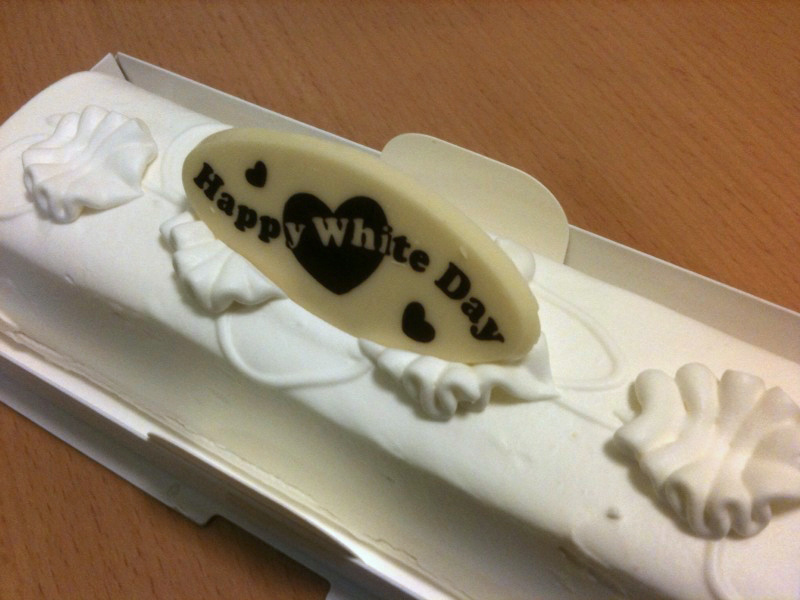 🇯🇵 Fukuoka, Japan and 4 moreWhite Dayホワイトデー
A day on 14 March when men give a return gift to the women who gave them chocolateFestival
🇯🇵 Fukuoka, Japan and 4 moreWhite Dayホワイトデー
A day on 14 March when men give a return gift to the women who gave them chocolateFestival
 🇨🇳 China and 2 moreQixi Festival七夕
A Chinese night of romance, needlecraft wishes and stargazing for two mythic loversFestival
🇨🇳 China and 2 moreQixi Festival七夕
A Chinese night of romance, needlecraft wishes and stargazing for two mythic loversFestival
 🇨🇳 China and 5 moreDouble Ninth Festival重陽節
An autumn festival of mountain walks, chrysanthemum wine and ancestor remembranceSeasonal · Tea-time and snacking customs
🇨🇳 China and 5 moreDouble Ninth Festival重陽節
An autumn festival of mountain walks, chrysanthemum wine and ancestor remembranceSeasonal · Tea-time and snacking customs
 🇻🇳 VietnamHùng Kings' Temple FestivalLễ hội đền Hùng
A Vietnamese national festival honoring the legendary founding kings with temple worship and processions.Festival
🇻🇳 VietnamHùng Kings' Temple FestivalLễ hội đền Hùng
A Vietnamese national festival honoring the legendary founding kings with temple worship and processions.Festival
 🇰🇭 Phnom Penh, Cambodia and 1 moreBon Om Toukបុណ្យអុំទូក
A three-day Cambodian festival of dragon boat races, floating lanterns and moon offeringsFestival · Tea-time and snacking customs
🇰🇭 Phnom Penh, Cambodia and 1 moreBon Om Toukបុណ្យអុំទូក
A three-day Cambodian festival of dragon boat races, floating lanterns and moon offeringsFestival · Tea-time and snacking customs
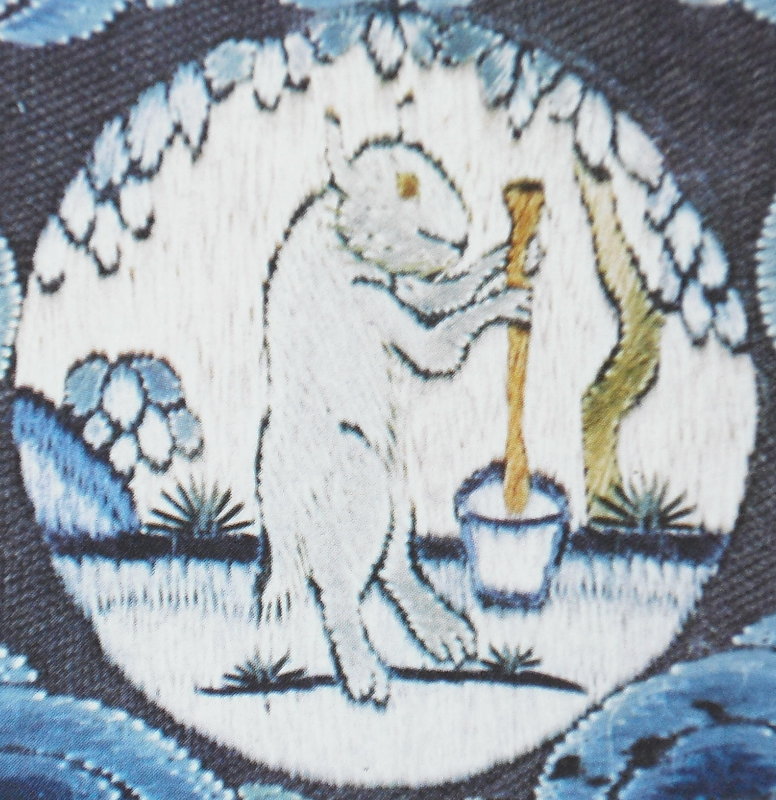 🇨🇳 China and 5 moreMoon rabbit月兔
A hare seen in the Moon's dark patches, pounding rice cakes or the elixir of lifeFolklore
🇨🇳 China and 1 moreReunion dinner團圓飯
A family gathering meal on lunar new year's eve, kept in China and VietnamTable custom · Dinner
🇨🇳 China and 5 moreMoon rabbit月兔
A hare seen in the Moon's dark patches, pounding rice cakes or the elixir of lifeFolklore
🇨🇳 China and 1 moreReunion dinner團圓飯
A family gathering meal on lunar new year's eve, kept in China and VietnamTable custom · Dinner
 🇨🇳 China and 6 moreRed envelope紅包 / 红包 (hóngbāo)
Money in a red packet, given at Lunar New Year, weddings and other big daysEtiquette
🇨🇳 China and 6 moreRed envelope紅包 / 红包 (hóngbāo)
Money in a red packet, given at Lunar New Year, weddings and other big daysEtiquette
 🇨🇳 China and 1 moreXiangqi象棋
A two-player game of armies and cannons, played on the points of a nine-by-ten boardGame
🇨🇳 China and 1 moreXiangqi象棋
A two-player game of armies and cannons, played on the points of a nine-by-ten boardGame
 🇻🇳 Hanoi, Vietnam and 5 morePhophở
A Vietnamese noodle soup of broth and rice noodles, served hot with beef or chicken.Table custom · Breakfast
🇻🇳 Hanoi, Vietnam and 5 morePhophở
A Vietnamese noodle soup of broth and rice noodles, served hot with beef or chicken.Table custom · Breakfast
 🇻🇳 Hội An, VietnamTết Trung Thu節中秋
A mid-autumn festival of lanterns, mooncakes and folklore celebrated across VietnamFestival · Sweets given and shared
🇻🇳 Hội An, VietnamTết Trung Thu節中秋
A mid-autumn festival of lanterns, mooncakes and folklore celebrated across VietnamFestival · Sweets given and shared
 🇯🇵 Japan and 3 moreBodhi Day成道会
A Buddhist observance marking the enlightenment of Gautama Buddha under the Bodhi TreeSpiritual
🇯🇵 Japan and 3 moreBodhi Day成道会
A Buddhist observance marking the enlightenment of Gautama Buddha under the Bodhi TreeSpiritual
 🇻🇳 Saigon, Vietnam and 5 moreBánh mì
A Vietnamese baguette sandwich filled with meats, pickles, herbs, and condiments.Table custom · Breakfast
🇻🇳 Saigon, Vietnam and 5 moreBánh mì
A Vietnamese baguette sandwich filled with meats, pickles, herbs, and condiments.Table custom · Breakfast
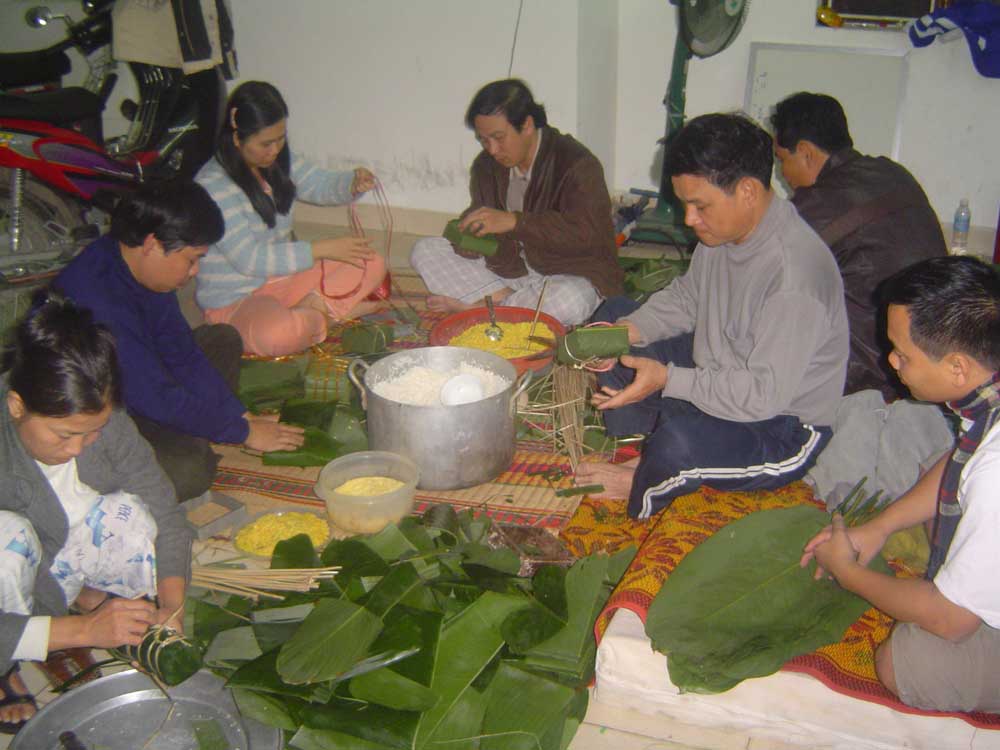 🇻🇳 VietnamTếtTết Nguyên Đán
The Vietnamese festival of the lunar new year, welcoming spring with family gatheringsFestival · Feasts and festival meals
🇻🇳 VietnamTếtTết Nguyên Đán
The Vietnamese festival of the lunar new year, welcoming spring with family gatheringsFestival · Feasts and festival meals
 🇹🇭 Thailand and 2 moreVassa
A three-month rainy-season retreat of meditation, study, and discipline for BuddhistsSpiritual
🇹🇭 Thailand and 2 moreVassa
A three-month rainy-season retreat of meditation, study, and discipline for BuddhistsSpiritual
 🇨🇳 Suzhou, China and 3 moreDongzhi冬至
A midwinter festival celebrating the return of light with family feasts and dumplingsSeasonal · Dinner
🇨🇳 Suzhou, China and 3 moreDongzhi冬至
A midwinter festival celebrating the return of light with family feasts and dumplingsSeasonal · Dinner
 🇻🇳 Huế, VietnamTraditional Vietnamese wedding
A Vietnamese wedding: two families joined through proposal, engagement and ceremonyRite of passage
🇻🇳 Huế, VietnamTraditional Vietnamese wedding
A Vietnamese wedding: two families joined through proposal, engagement and ceremonyRite of passage
 🇨🇳 Hong Kong, China and 5 moreLunar New Year
New year festivals dated by the moon, kept from East Asia to the Middle EastFestival
🇨🇳 Hong Kong, China and 5 moreLunar New Year
New year festivals dated by the moon, kept from East Asia to the Middle EastFestival
 🇻🇳 Huế, VietnamNhã nhạcNhã nhạc (雅樂)
Vietnam's royal court music, played for palace rites from the Trần dynasty onwardPerformance
🇻🇳 Huế, VietnamNhã nhạcNhã nhạc (雅樂)
Vietnam's royal court music, played for palace rites from the Trần dynasty onwardPerformance
 🇻🇳 VietnamCa trùCa trù (歌籌)
A Vietnamese art of sung poetry, led by a woman singer with lute and praise drumPerformance
🇻🇳 VietnamCa trùCa trù (歌籌)
A Vietnamese art of sung poetry, led by a woman singer with lute and praise drumPerformance
 🇨🇳 China and 5 moreJoss paper金紙 (jīnzhǐ)
Paper money burned for ancestors and gods, folded and offered in Chinese worshipSpiritual
🇨🇳 China and 5 moreJoss paper金紙 (jīnzhǐ)
Paper money burned for ancestors and gods, folded and offered in Chinese worshipSpiritual
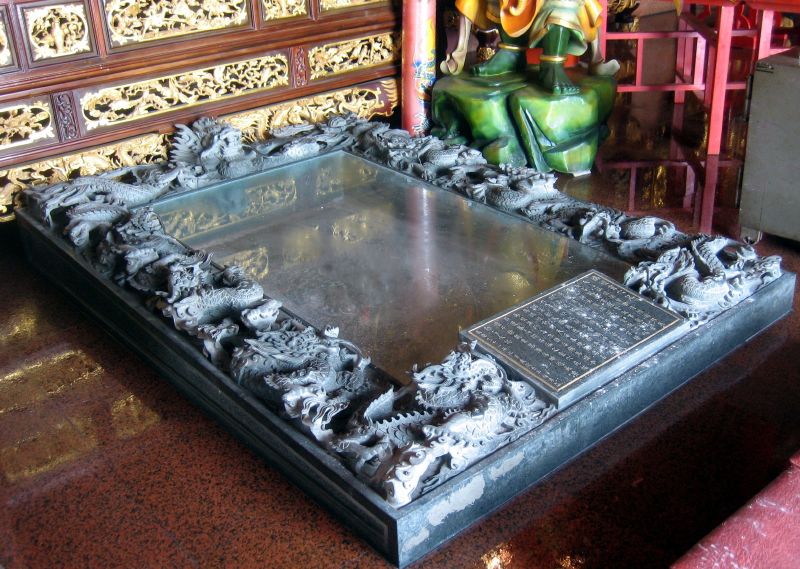 🇨🇳 Meizhou Island, China and 5 moreMazu媽祖
A sea goddess of the Chinese coast, asked for calm water and a safe returnSpiritual
🇨🇳 Meizhou Island, China and 5 moreMazu媽祖
A sea goddess of the Chinese coast, asked for calm water and a safe returnSpiritual
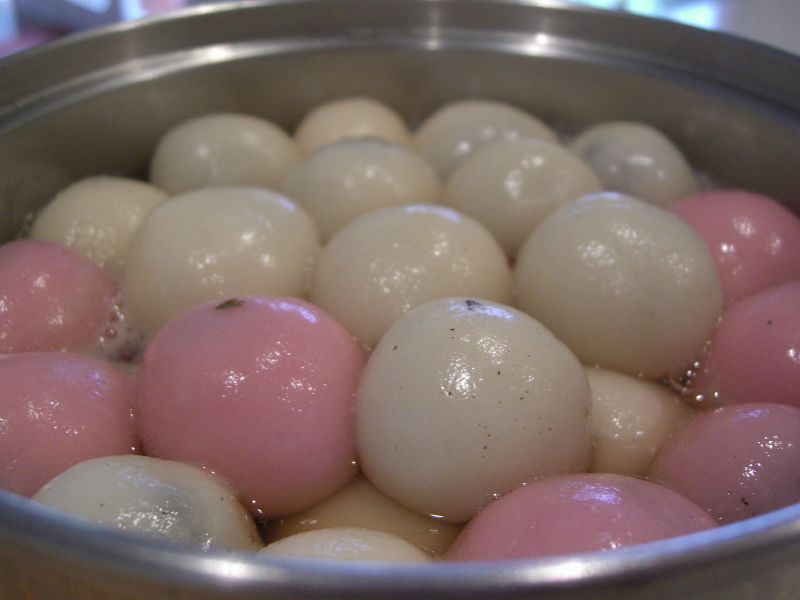 🇨🇳 Suzhou, China and 4 moreDongzhi Festival冬至
A winter solstice festival of family reunions, ancestor rites and sweet rice ballsSeasonal · Dinner
🇨🇳 Suzhou, China and 4 moreDongzhi Festival冬至
A winter solstice festival of family reunions, ancestor rites and sweet rice ballsSeasonal · Dinner
 🇻🇳 Ho Chi Minh City, VietnamReunification DayNgày Thống nhất
A public holiday in Vietnam on 30 April, marking the war's end in 1975Ceremony
🇻🇳 Ho Chi Minh City, VietnamReunification DayNgày Thống nhất
A public holiday in Vietnam on 30 April, marking the war's end in 1975Ceremony
 🇻🇳 Hanoi, VietnamNational DayNgày Quốc khánh
Vietnam's national day, marking the 1945 independence declaration read in HanoiCeremony
🇻🇳 Hanoi, VietnamNational DayNgày Quốc khánh
Vietnam's national day, marking the 1945 independence declaration read in HanoiCeremony
 🇻🇳 Tuyên Quang, VietnamCây nêuCây nêu (Chữ Nôm: 核標)
A bamboo pole raised in Vietnam to mark the New Year and protect homes from bad spirits.Festival
🇨🇳 China and 2 moreJi Li笄禮
The traditional Chinese coming-of-age hairpin ceremony for young womenRite of passage
🇻🇳 Tuyên Quang, VietnamCây nêuCây nêu (Chữ Nôm: 核標)
A bamboo pole raised in Vietnam to mark the New Year and protect homes from bad spirits.Festival
🇨🇳 China and 2 moreJi Li笄禮
The traditional Chinese coming-of-age hairpin ceremony for young womenRite of passage
 🇨🇳 China and 5 moreLife release放生
A Buddhist practice of freeing captive animals to spare their lives and gain meritSpiritual
🇨🇳 China and 5 moreLife release放生
A Buddhist practice of freeing captive animals to spare their lives and gain meritSpiritual
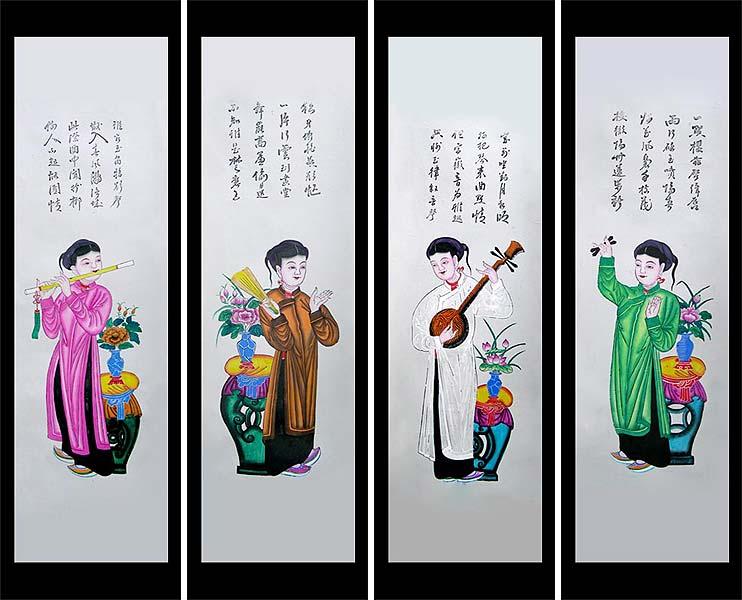 🇻🇳 VietnamVietnamese zodiacMười hai con giáp
A twelve-year cycle of animal years, kept in Vietnam on the lunar calendarFolklore
🇻🇳 VietnamVietnamese zodiacMười hai con giáp
A twelve-year cycle of animal years, kept in Vietnam on the lunar calendarFolklore
 🇯🇵 Kyoto, Japan and 5 moreTeeth blackening
A custom of dyeing teeth black to mark adulthood and beauty in parts of Asia and Oceania.Rite of passage
🇯🇵 Kyoto, Japan and 5 moreTeeth blackening
A custom of dyeing teeth black to mark adulthood and beauty in parts of Asia and Oceania.Rite of passage
Photo credits on this page
The small pictures above come from Wikimedia Commons under free licences. Some are cropped to fit.
- Bon Om Touk: Codas, CC BY-SA 4.0, source
- Dongzhi Festival: Alpha, CC BY-SA 2.0, source
- Water lantern: 松岡明芳, CC BY-SA 4.0, source
- Vesak: ผู้สร้างสรรค์ผลงาน/ส่งข้อมูลเก็บในคลังข้อมูลเสรีวิกิมีเดียคอมมอนส์ - เ, CC BY-SA 3.0, source
- Double Ninth Festival: Sgerbic, CC BY-SA 4.0, source
- Qixi Festival: shizhao ( talk )拍摄,画者不明, Public domain, source
- Mid-Autumn Festival: Shizhao, CC BY-SA 2.5, source
- Hùng Kings' Temple Festival: Xuannguyen1133, CC BY-SA 4.0, source
- Tết Trung Thu: The imperial government of the Nguyễn Dynasty, French Indo-China., Public domain, source
- Bodhi Day: Shirazibustan, CC BY-SA 4.0, source
- Celadon: Vassil, Public domain, source
- Bánh mì: Andrea Nguyen, CC BY 2.0, source
- Tết: vi:Lưu Ly, Public domain, source
- Vassa: Chainwit., CC BY 4.0, source
- Dongzhi: N509FZ, CC BY-SA 4.0, source
- White Day: Flickr user mersy ( Masashi Yanagiya), CC BY-SA 2.0, source
- Cây nêu: vi:Phạm Xuân Nguyên, CC BY-SA 3.0, source
- Chèo: Thomas Schoch, CC BY-SA 3.0, source
- Lion dance: Alfresco24, CC BY 3.0, source
- Barkcloth: Hiart, CC0, source
- Nón lá: Ratmanhme282020, CC BY-SA 4.0, source
- Spirit house: Chainwit., CC BY-SA 4.0, source
- Pho: Phương Huy, CC BY-SA 4.0, source
- Traditional Vietnamese wedding: Gabrielle M. Vassal, Public domain, source
- Moon rabbit: An artist, Public domain, source
- Xiangqi: Francesc Fort, CC BY-SA 4.0, source
- Red envelope: Oldie~commonswiki, Public domain, source
- Life release: Wonderlane, CC BY 2.0, source
- Lunar New Year: Flying Pharmacist, CC BY-SA 3.0, source
- Vietnamese zodiac: Unknown (traditional painting dated back to the 17th century), Public domain, source
- Nhã nhạc: Lưu Ly ( thảo luận ), Public domain, source
- Ca trù: Michael Coghlan, CC BY-SA 2.0, source
- Joss paper: Vmenkov, CC BY-SA 3.0, source
- Mazu: Prince Roy, CC BY-SA 3.0, source
- Buddha's Birthday: User: (WT-shared) Manoj nav at wts wikivoyage, Public domain, source
- Reunification Day: HappyMidnight, CC BY-SA 3.0, source
- National Day: Unknown author, Public domain, source
- Teeth blackening: momo, CC BY 2.0, source