Music, dance and storytellingEast Asia
Cantonese opera
In its own language: 粵劇
One of the major forms of Chinese opera, sung in Cantonese in southern China

Cantonese opera is one of the major forms of Chinese opera, with music, singing, martial arts, acrobatics and acting. It grew in Guangdong in southern China and is kept today in Guangdong, Guangxi, Hong Kong, Macau and Chinese communities in Southeast Asia.
When is Cantonese opera kept?
Cantonese opera is kept on year-round, in theatres, playgrounds and at arts festivals.
Cantonese opera is a form of Chinese opera from southern China, performed in the Cantonese language. Singers act while acrobatics and martial arts fill the stage. Troupes in Guangdong, Guangxi, Hong Kong and Macau have made it their own, and it travels with Chinese communities across Southeast Asia. In 2009 UNESCO added Yueju Opera, its own name for the tradition, to the Representative List of intangible cultural heritage.
What it is
Cantonese opera is one of the major forms of Chinese opera. A performance draws on several skills at once: acting, singing, acrobatics and martial arts. The words are sung and spoken in Cantonese, and scripts and lyrics are written for the form. It belongs to Guangdong and Guangxi in southern China, to Hong Kong and Macau, and to Chinese communities across Southeast Asia. Like other kinds of Chinese opera, it is a traditional art handed on by teaching and performance. Two names are used for it: 粵劇 and 大戲.
Origins and history
The origins are debated. The account most people accept is that opera travelled down from northern China and arrived in Guangdong in the late thirteenth century, as the Southern Song was ending. In the twelfth century a form called Nanxi, or southern drama, was played in the public theatres of Hangzhou, which was then the Song capital. When the Mongol army came, Emperor Gong fled south in 1276 with a great many Song people. Performers of Nanxi from Zhejiang were among them, and they helped build opera in the south. In the Qianlong reign most troupes were based in Foshan and formed the Qionghua Guild; the Barwo Guild came later, in Guangzhou's Huangsha district.
Singers and roles
Sex shaped the stage. Under the Ming and the Qing, imperial law forbade men and women from appearing together, so public troupes were all-male. Men spent years learning to sing falsetto and to imitate feminine movement. In the 1920s and 1930s actresses who dressed as men became the great attraction. Audiences adored the polished, romantic look of a woman playing the man mou sang, the civil-and-martial male lead. Yam Kim-fai fixed that fashion. She sang pinghou, a lower register that sounds masculine, and her skill as a romantic lead set a standard that female students still copy.
Around the world
Guangdong traders began moving to Shanghai in the 1840s, and the clan associations they founded paid for cultural events, Cantonese opera among them. By the 1920s and 1930s the opera was thriving there, and department stores run by Cantonese owners kept their own opera companies. Hong Kong's turn came in the 1950s, when people leaving Shanghai settled in places such as North Point and enlarged the audience. Newspapers such as Ta Kung Pao and Chang Cheung Hua Pao, set up by mainland government agents, pushed new productions. Theatres opened in Sheung Wan and Sai Wan, and shows later moved into playgrounds, drawing wider crowds. For a while the opera was part of daily entertainment.
Today and change
Cantonese opera lost ground in Hong Kong towards the end of the 1960s. Cinema was cheaper and television more convenient, so audiences drifted away and theatres were demolished or converted into shops and flats. The Sunbeam Theatre is one of the last venues left that was built for it. Training answered the decline. Classes at the Cantonese Opera Academy of Hong Kong began in 1980, and from 1998 the Chinese Artists Association of Hong Kong worked with the Hong Kong Academy for Performing Arts on certificate, diploma and advanced courses. Cantonese opera now sits inside the compulsory music programme in primary schools, and public funding includes the Cantonese Opera Development Fund.
How Cantonese opera is kept
Troupes of trained actors and musicians stage each opera. A performer sings the part, speaks it and acts it, and the staging turns to acrobatics and martial arts where the story needs them. Roles fall into types, among them the man mou sang, the civil-and-martial male lead. Training happens in academies and association classes, and in Hong Kong also in primary-school music lessons. The profession has long been organised through guilds: troupes in Foshan formed the Qionghua Guild, and the Barwo Guild was later founded in Guangzhou. Shows are given in theatres, in playgrounds and at arts festivals.
When and where
There is no fixed date. Performances run through the year, in theatres, in playgrounds and at arts festivals such as the Hong Kong Arts Festival and the Festival of Asian Arts. Training follows school and academy terms, with evening certificate classes, a daytime diploma and an advanced course.
Guangdong and Guangxi in southern China, and Hong Kong and Macau. Hong Kong is its strongest home now, with surviving theatres, academy courses and school teaching. Chinese communities in Southeast Asia keep it as well. Shanghai was an important centre in the 1920s and 1930s.
What Cantonese opera means
For those who keep it, the opera carries the stories and the language of southern China. Lyrics and scripts are written in Cantonese, and titles performed today go back a long way: The Purple Hairpin and The Orphan of Zhao to the Yuan dynasty, Tai Nui Fa to the Ming. Teachers hand their versions to students, and performers guard what they inherited. UNESCO listed Yueju Opera as representative intangible cultural heritage in 2009.


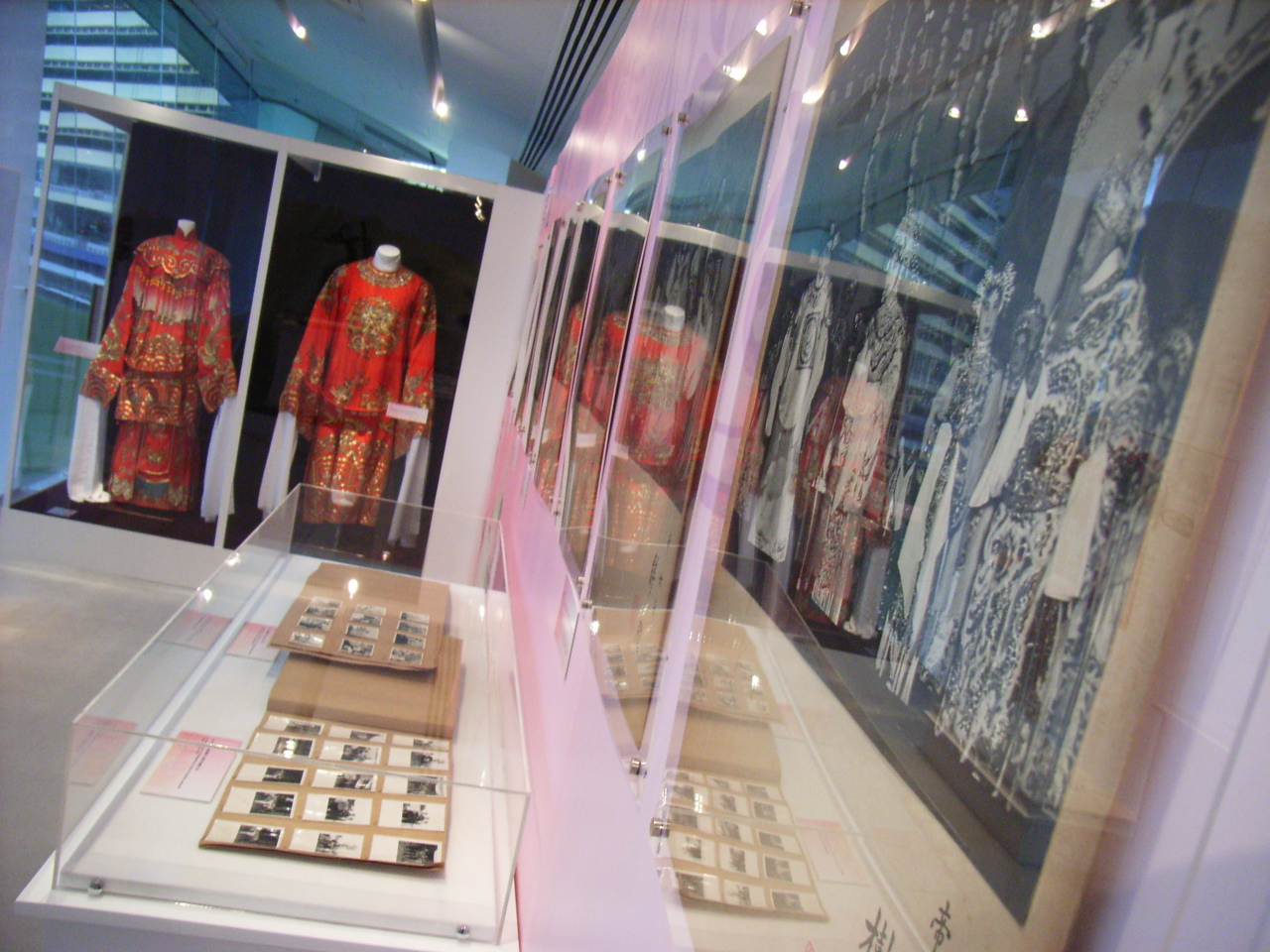
Questions people ask about Cantonese opera
When is Cantonese opera kept?
Cantonese opera is kept on year-round, in theatres, playgrounds and at arts festivals.
What is Cantonese opera?
It is one of the major forms of Chinese opera, performed in Cantonese. Actors sing and act, and scenes call on acrobatics and martial arts. It comes from Guangdong in southern China and is kept in Guangxi, Hong Kong, Macau and Chinese communities in Southeast Asia.
Where is it kept?
Guangdong and Guangxi, Hong Kong and Macau are its main homes. It also travelled with Cantonese traders to Shanghai in the 1840s, and Chinese communities in Southeast Asia keep it. In Hong Kong the Sunbeam Theatre is one of the last surviving venues built for it.
Who performs it?
Troupes of trained actors and musicians. Men once took every role, singing falsetto. From the 1920s and 1930s actresses playing male leads became the main draw, and Yam Kim-fai set the standard that female students still follow.
Is it recognised officially?
Yes. UNESCO listed Yueju Opera, the name it uses for the tradition, as representative intangible cultural heritage in 2009, with China as the country concerned. In Hong Kong it is also taught in the compulsory primary school music programme.
See also
 Chinese operaA sung, danced and acrobatic theatre from China, in over a hundred regional styles
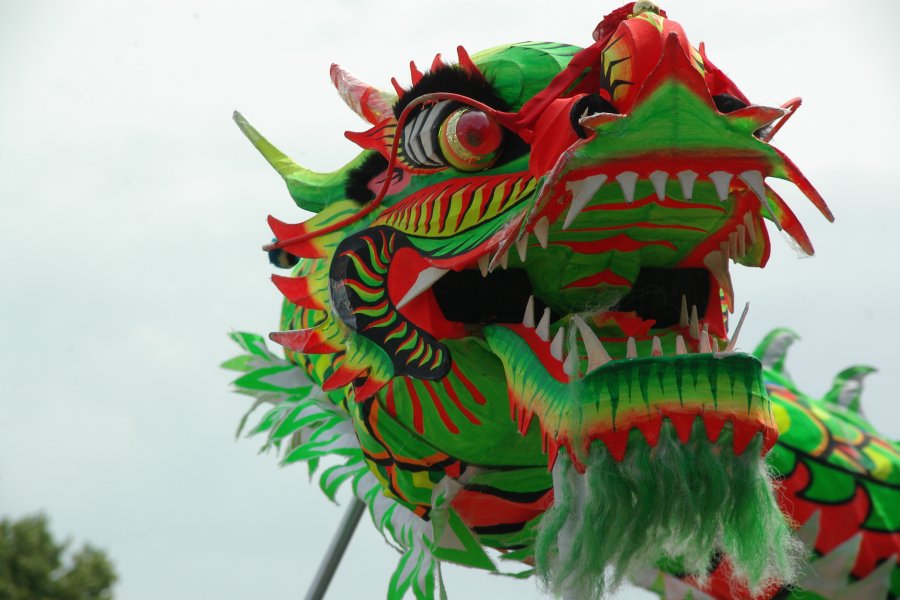 Dragon danceA long dragon puppet on poles, danced by a team at Chinese New Year and other festivals
 KizombaA close, slow couple dance from Angola, named after a Kimbundu word for party
 Glove puppetryA traditional theatre of cloth-bodied puppets with carved wooden heads and live music
Good reading and sources
- Cantonese opera on WikipediaEncyclopedia
- More photos on Wikimedia CommonsPhotos and video
- Wikidata recordOpen data
The facts on this page come from the Wikipedia article "Cantonese opera", written by its contributors and used under the CC BY-SA 4.0 licence, and from its Wikidata record (CC0). EveryParampara rewrote the text in its own words, with AI assistance, and compares every page with the article to make sure no passage is copied. It may be reused under the same CC BY-SA 4.0 licence with a link back.
It may contain mistakes. Traditions differ from one family, village and community to the next, and the people who keep them know them best. If something is wrong, tell us. Last refreshed 2026-10-05.
More from China
All the traditions of China 🇹🇼 Yilan, Taiwan and 4 moreTaiwanese opera歌仔戲
A Taiwanese theatrical art of Hokkien balladry, stylized staging, and expressive song.Performance
🇹🇼 Yilan, Taiwan and 4 moreTaiwanese opera歌仔戲
A Taiwanese theatrical art of Hokkien balladry, stylized staging, and expressive song.Performance
 🇨🇳 China and 5 moreLion dance舞獅
A dynamic ritual dance featuring costumed lions, drums and martial acrobaticsPerformance
🇨🇳 Quanzhou, China and 3 moreGlove puppetry布袋戲
A traditional theatre of cloth-bodied puppets with carved wooden heads and live musicPerformance
🇨🇳 China and 5 moreLion dance舞獅
A dynamic ritual dance featuring costumed lions, drums and martial acrobaticsPerformance
🇨🇳 Quanzhou, China and 3 moreGlove puppetry布袋戲
A traditional theatre of cloth-bodied puppets with carved wooden heads and live musicPerformance
 🇨🇳 China and 5 moreShadow play
A storytelling art using flat puppets and light to cast moving silhouettes on a screen.Performance
🇨🇳 China and 5 moreShadow play
A storytelling art using flat puppets and light to cast moving silhouettes on a screen.Performance
The same idea elsewhere
All of this kind 🇹🇷 Kayseri, Turkey and 4 moreHalay
A traditional line and circle folk dance kept across Turkey, Azerbaijan, Armenia, Iran, and Syria.Performance
🇧🇷 BrazilBaião
A syncopated folk rhythm and partnered dance from northeastern BrazilPerformance
🇹🇷 Kayseri, Turkey and 4 moreHalay
A traditional line and circle folk dance kept across Turkey, Azerbaijan, Armenia, Iran, and Syria.Performance
🇧🇷 BrazilBaião
A syncopated folk rhythm and partnered dance from northeastern BrazilPerformance
 🇺🇦 Kyiv, UkraineBanduraБандура
A Ukrainian plucked string instrument played to accompany epic songs and folk balladsPerformance
🇺🇦 Kyiv, UkraineBanduraБандура
A Ukrainian plucked string instrument played to accompany epic songs and folk balladsPerformance
 🇳🇿 Auckland, New ZealandPoi
A Māori performing art of swinging tethered weights in rhythmical patterns.Performance
🇳🇿 Auckland, New ZealandPoi
A Māori performing art of swinging tethered weights in rhythmical patterns.Performance