Carbatina
In its own language: καρβατίνη
A one-piece hide shoe tied with thongs, worn by the rural poor of ancient Greece and Rome

Made from one sheet of hide, with no separate sole, the carbatina was the everyday shoe of country people in ancient Greece and Rome. Its edges were cut into strips or pierced for strips, which were tied to keep it on the foot. It was worn from the earliest times until around the 3rd century.
The carbatina is the plainest kind of shoe known from the ancient world: a single sheet of hide with no separate sole, secured with strips of the same hide and nothing else. Country people in Greece, Roman Italy and the Middle East wore it because it cost almost nothing and needed no tools or training to make. Cheap shoes wear out, so carbatinae were replaced often and seldom decorated.
What it is
Latin took the word carbatina from the Greek karbatínē, a term thought to be related to another Greek word and to have meant something close to 'made of dried hide' or 'of skin'. It did not cover leather shoes in general. It named the plainest foot coverings, the sort worn by country people with little money, or put together quickly when nothing better was at hand. Aristotle used it for a basic covering tied onto the feet of camels. Philo used it for the thick leather screen that attackers held up for protection during a siege.
How it was made
A carbatina came from one piece of rawhide. The outer edge was cut into strips, or holes were made so that separate strips could be threaded through. No last, nails or sewing were needed, and the shoe had no upper joined to a sole. Some writers count fuller versions as carbatinae as well: shoes where the hide is raised and stitched along one side to form a heel and fit more closely, or where the hide over the toes is sewn to make it last longer. From medieval times, shoes of this style were usually worn with a footwrap or sock, since the sole had almost no padding.
Who wore it
In ancient times carbatinae were worn across the Middle East, in Greece and in Roman Italy. They could be made without special tools or any training, which is why the Ten Thousand, the mercenary army that marched back to Greece after their commanders were put to death by the satrap Tissaphernes, relied on them as emergency footwear. Under the Roman Empire they belonged mostly to the rural poor. They were still better than bare feet, which by then signalled deep poverty or slavery. Even poor Romans had largely stopped wearing them by the 3rd century, turning instead to shoes, slippers and boots.
Decoration and looks
Carbatinae were cheap and wore through quickly, so people replaced them rather than adorned them. Openwork was rare. One example, studded in that style, was found at Praetorium Agrippinae, a site in what is now the Netherlands. The strips themselves were sometimes woven and crossed into patterns that look like openwork. People sometimes compare carbatinae to ballet shoes or moccasins. That comparison only holds for the thin, largely unpadded sole, since the shoe is otherwise unlike either.
After the Romans
Carbatina-style footwear outlived the empire that made it ordinary. Similar shoes were worn by the ancient Germans, by the peoples of the states that followed them, and by country people in general well into the Middle Ages and the Early Modern Period. The word carbatina is also used as a general label for comparable simple shoes in other cultures. Such shoes carry their own names elsewhere, among them ciocie, pampootie and abarka.
How Carbatina is kept
To wear one, a person stood on the flat hide, drew the sides up, and knotted the strips so the shoe stayed on. Nothing else was required. A pair could be cut and tied in a few minutes, which made carbatinae useful on hard journeys and for anyone who could not afford better. They wore through quickly and were simply replaced. Underneath, from medieval times, came a wrap or a sock, because the sole offered little cushioning. Only the rural poor kept to them once other shoes became available.
When and where
Carbatinae were worn in the Middle East, in Greece and in Roman Italy, and the Ten Thousand used them while marching home to Greece. One decorated example comes from Praetorium Agrippinae, a site in the present-day Netherlands. The same kind of shoe stayed in use among the ancient Germans and other country people across Europe through the Middle Ages and into the Early Modern Period.
What Carbatina means
The carbatina carried no sacred meaning of its own. Its importance was practical: it kept the feet off the ground. Wearing one placed a person among the rural poor, yet it still counted as better than bare feet, which Roman eyes read as a sign of extreme poverty or of slavery. Because almost anyone could make a pair from a scrap of hide, the shoe marks the narrow line between having something on your feet and having nothing at all.


Questions people ask about Carbatina
What is a carbatina?
It is a simple shoe made from a single piece of rawhide. The edges are cut into strips or pierced for strips, and the strips are knotted over the foot to hold it on. It has no separate sole and no stitched upper, which makes it one of the plainest forms of footwear known from the ancient world.
Where and when were carbatinae worn?
In antiquity they were worn in the Middle East, Greece and Roman Italy, mainly by country people. They stayed in use until about the 3rd century, when poorer Romans turned to shoes, slippers and boots. Similar shoes continued among the ancient Germans and other rural communities into the Middle Ages and the Early Modern Period.
Who wore them?
Mostly the rural poor. They were cheap, easy to make and quickly replaced. The Ten Thousand, a mercenary army retreating to Greece, used them as emergency footwear. In the Roman Empire they marked a person as poor, though still better off than someone who went barefoot.
Were they decorated?
Rarely. They wore out fast and cost little, so there was not much reason to ornament them. One example with openwork studs was found at Praetorium Agrippinae, a site in what is now the Netherlands, and the strips could be woven into patterns that look like openwork.
Do they look like moccasins or ballet shoes?
People sometimes say so, but the likeness is limited to the flat, largely unpadded sole. Otherwise the carbatina is not shaped like either one. From medieval times shoes of this kind were usually worn over a footwrap, sock or other padding, since the sole gave almost no cushioning.
See also
 Vyshyvanka DayAn annual day for wearing traditional Ukrainian embroidered shirts across the world
 DirndlA fitted dress with apron from the German-speaking Alps, worn for festivals and weddings.
 KynodesmeA cord ancient Greek athletes tied around the foreskin to stay modest in public.
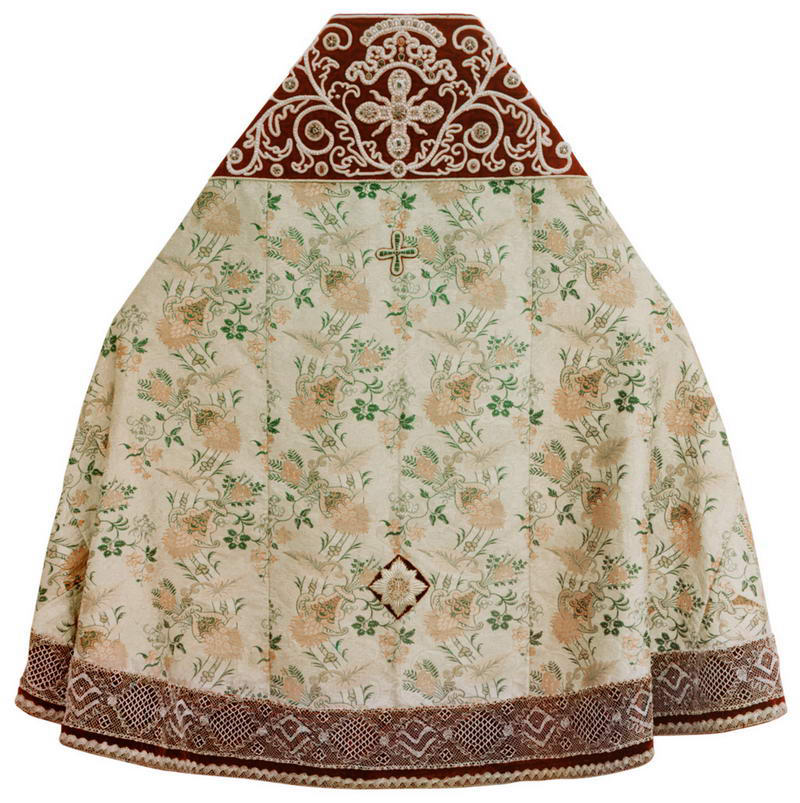 PhelonionA large outer vestment worn by Eastern Christian clergy during worship services.
Good reading and sources
- Carbatina on WikipediaEncyclopedia
- More photos on Wikimedia CommonsPhotos and video
- Wikidata recordOpen data
The facts on this page come from the Wikipedia article "Carbatina", written by its contributors and used under the CC BY-SA 4.0 licence, and from its Wikidata record (CC0). EveryParampara rewrote the text in its own words, with AI assistance, and compares every page with the article to make sure no passage is copied. It may be reused under the same CC BY-SA 4.0 licence with a link back.
It may contain mistakes. Traditions differ from one family, village and community to the next, and the people who keep them know them best. If something is wrong, tell us. Last refreshed 2026-10-14.
More from Greece
All the traditions of Greece 🇬🇷 GreeceKausiaκαυσία
A flat hat of ancient Macedonia, worn by kings and later as sun cover in RomeDress
🇬🇷 GreeceKausiaκαυσία
A flat hat of ancient Macedonia, worn by kings and later as sun cover in RomeDress
 🇬🇷 GreeceTablionταβλίον
An embroidered panel on the ceremonial mantle of Byzantine courtiers.Dress
🇬🇷 GreecePeronaiπερόνη (perónē)
A long straight pin that fastened Greek clothing, and a weapon in Greek legendDress
🇬🇷 GreeceTablionταβλίον
An embroidered panel on the ceremonial mantle of Byzantine courtiers.Dress
🇬🇷 GreecePeronaiπερόνη (perónē)
A long straight pin that fastened Greek clothing, and a weapon in Greek legendDress
 🇬🇷 Sparta, GreeceChitonχιτών
A draped tunic of wool or linen worn across ancient Greece and RomeDress
🇬🇷 Sparta, GreeceChitonχιτών
A draped tunic of wool or linen worn across ancient Greece and RomeDress
The same idea elsewhere
All of this kind 🇮🇱 Israel and 1 moreTzitzitצִיצִית
Knotted ritual fringes worn on a four-cornered garment, a reminder of the commandmentsDress
🇮🇱 Israel and 1 moreTzitzitצִיצִית
Knotted ritual fringes worn on a four-cornered garment, a reminder of the commandmentsDress
 🇪🇬 Egypt and 5 moreTraditional tattooing
The ancient custom of marking the skin for protection, healing, status and sacred ritesDress
🇪🇬 Egypt and 5 moreTraditional tattooing
The ancient custom of marking the skin for protection, healing, status and sacred ritesDress
 🇼🇸 Samoa and 1 moreʻIe tōga
Precious woven mats exchanged in Samoan ceremonies to honor family ties and chiefly status.Dress
🇼🇸 Samoa and 1 moreʻIe tōga
Precious woven mats exchanged in Samoan ceremonies to honor family ties and chiefly status.Dress
 🇱🇸 LesothoMokorotlo
A conical straw hat that serves as the national symbol of Lesotho and a key element of Basotho traditional dress.Dress
🇱🇸 LesothoMokorotlo
A conical straw hat that serves as the national symbol of Lesotho and a key element of Basotho traditional dress.Dress