Music, dance and storytellingSouth Asia
Dandiya Raas
A stick dance from Gujarat performed in pairs during the festival of Navaratri

Dandiya Raas is a traditional Indian folk dance originating in Gujarat, widely performed in pairs during the festival of Navaratri. Dancers strike wooden sticks together to an eight-beat rhythm while moving along facing lines, rotating partners as the music gains speed.
When is Dandiya Raas marked?
Dandiya Raas is kept as part of Navratri, which runs from 11 to 19 October 2026.
Dandiya Raas is a socio-religious folk dance from the western Indian state of Gujarat, celebrated especially during the festival of Navaratri. Partners form facing lines and strike small wooden sticks in rhythm with the music, stepping forward and trading positions in a continuous circuit. The tradition connects social gathering with rhythmic movement, drawing its name from the Sanskrit concept of aesthetic emotion.
Origins and meaning
Dandiya Raas traces its roots to Gujarat and is also observed across the Marwar area of Rajasthan. The term Raas comes from the Sanskrit word Rasa, which refers to feelings and aesthetic emotion in Indian artistic theory. Scholars such as Kapila Vatsyayan have noted that this concept of Rasa provides a unifying foundation across traditional Indian arts. In its folk context, the dance serves both social and religious purposes, bringing communities together to celebrate during festival periods.
How the dance is performed
The traditional dance is played in pairs, requiring an even group of dancers. Participants arrange themselves into two facing lines that advance in a clockwise direction. Movements follow an eight-beat rhythmic cycle known as Kaherva. The rhythm begins slowly as dancers strike their own sticks together, strike sticks against their partner's right and left sides, turn outward to tap their own batons, and face inward again before shifting along the line by two spots to greet a new partner.
Regional variations
Several distinct variations of the dance have developed across western India. Well-known styles include Gopgunthan Solanga Raas and Mer Dandiya Raas. In the Saurashtra region, men traditionally perform Raas, while a related women's dance is called Raasda. While Raas places its primary emphasis on physical movement and choreography, Raasda highlights vocal music and singing, reflecting the diverse ways the underlying rhythm and stick play are adapted by different groups.
The competitive collegiate circuit
In North America, the dance evolved into a competitive intercollegiate activity through student groups and cultural federations. Known as Garba-Raas, this style combines Dandiya Raas, Garba, and tran tali into fast routines staged by teams of twelve to sixteen dancers. Rather than dancing around a central focal point, collegiate teams use themed stage choreography, rapid head movements, and synchronized steps. Competitions held from January to April are evaluated by panels judging choreography, execution, and artistic staging.
How Dandiya Raas is kept
Dancers hold sticks and line up in two rows facing each other, keeping an even number of participants. Moving in a clockwise circle, partners step forward to tap their sticks against each other to an eight-beat meter called Kaherva. Each dancer strikes their own pair of sticks, taps their partner's stick on the right and left, pivots away to strike their own sticks again, and turns back before advancing two places to meet a new partner.
When and where
Dandiya Raas is traditionally danced during the festival of Navaratri. In North American universities, competitive Garba-Raas teams hold their tournament season in the early months of the calendar year, running from January through April.
The dance originates in the state of Gujarat in western India and is also maintained in Rajasthan's Marwar region and Saurashtra. A competitive collegiate variation is performed across universities in North America under national student organizations.
What Dandiya Raas means
The name of the dance connects to the Sanskrit term Rasa, which represents emotion and aesthetic experience in Indian thought. Kapila Vatsyayan described this aesthetic theory as the fundamental element uniting Indian arts. Through synchronized stick striking and continuous rotation among partners, the dance embodies social cohesion and shared festive celebration.
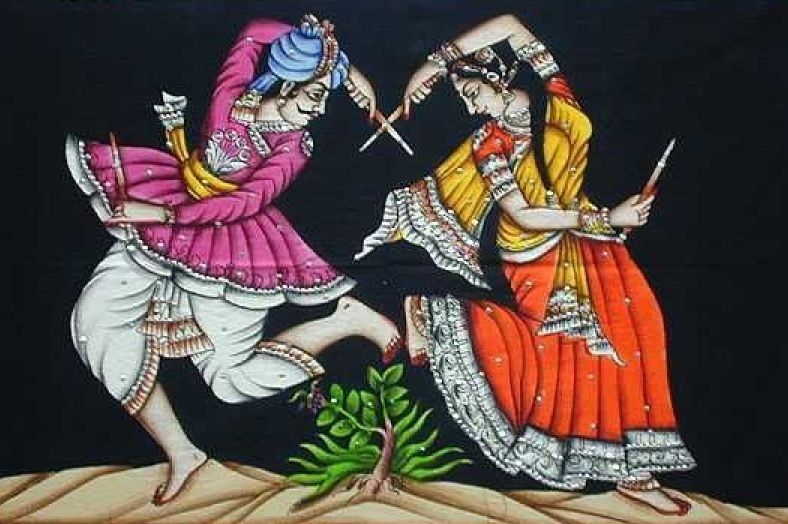


Days Dandiya Raas is marked
Questions people ask about Dandiya Raas
When is Dandiya Raas marked?
Dandiya Raas is kept as part of Navratri, which runs from 11 to 19 October 2026.
What is Dandiya Raas?
Dandiya Raas is a traditional stick dance originating from Gujarat in India. It is a socio-religious folk dance where partners strike wooden sticks together in coordinated eight-beat rhythms, continuously circulating to dance with new partners.
What are the main forms of Raas?
Traditional forms include Dandiya Raas, Mer Dandiya Raas, and Gopgunthan Solanga Raas. In the Saurashtra region, men perform Raas, while a women's variant focused more heavily on song and music is known as Raasda.
What is competitive Garba-Raas?
Competitive Garba-Raas is an energetic collegiate dance style developed in North America. Teams of 12 to 16 students perform high-tempo stage routines combining Dandiya Raas, Garba, and tran tali, judged on choreography, artistic theme, and execution.
See also
 PlenaPuerto Rican folk songs and dance sharing community news with rhythmic frame drums
 Irish traditional musicA living folk practice of dance tunes, airs, songs and communal pub sessions
 Morris danceA rhythmic English folk dance performed in costume with bells, sticks and handkerchiefs
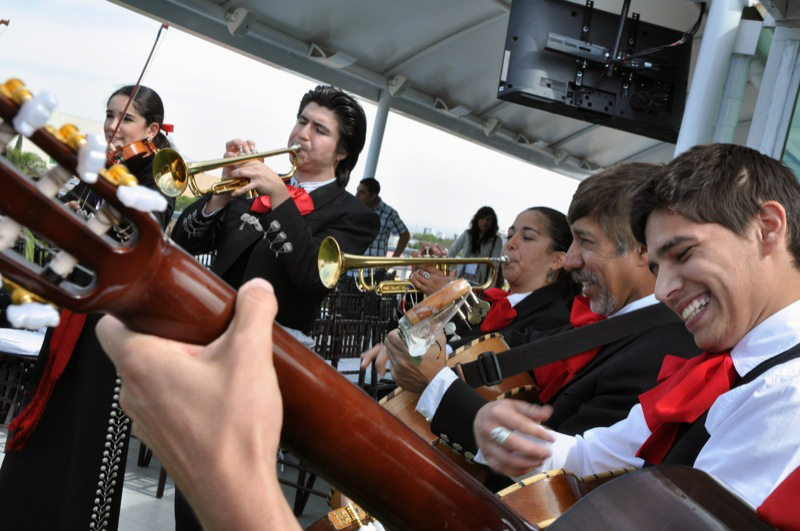 MariachiA Mexican string and trumpet music tradition featuring charro attire and communal singing.
Good reading and sources
- Dandiya Raas on WikipediaEncyclopedia
- More photos on Wikimedia CommonsPhotos and video
- Wikidata recordOpen data
The facts on this page come from the Wikipedia article "Dandiya Raas", written by its contributors and used under the CC BY-SA 4.0 licence, and from its Wikidata record (CC0). EveryParampara rewrote the text in its own words, with AI assistance, and compares every page with the article to make sure no passage is copied. It may be reused under the same CC BY-SA 4.0 licence with a link back.
It may contain mistakes. Traditions differ from one family, village and community to the next, and the people who keep them know them best. If something is wrong, tell us. Last refreshed 2026-10-04.
More from India
All the traditions of India 🇮🇳 Thrissur, IndiaPulikaliപുലിക്കളി
Painted tigers and leopards dance through Thrissur on the fourth day of OnamPerformance
🇮🇳 Thrissur, IndiaPulikaliപുലിക്കളി
Painted tigers and leopards dance through Thrissur on the fourth day of OnamPerformance
 🇮🇳 Jammu, IndiaBhangra
A Punjabi harvest dance, first kept by farmers and now performed worldwidePerformance
🇮🇳 Jammu, IndiaBhangra
A Punjabi harvest dance, first kept by farmers and now performed worldwidePerformance
 🇮🇳 India and 5 moreGhazalغَزَل
A short rhyming poem of love and parting, recited and sung from Arabia to South AsiaPerformance
🇮🇳 India and 5 moreGhazalغَزَل
A short rhyming poem of love and parting, recited and sung from Arabia to South AsiaPerformance
 🇵🇰 Islamabad, Pakistan and 2 moreQawwaliقَوّالی
Devotional Sufi singing from South Asia, led by hereditary parties at shrinesPerformance
🇵🇰 Islamabad, Pakistan and 2 moreQawwaliقَوّالی
Devotional Sufi singing from South Asia, led by hereditary parties at shrinesPerformance
The same idea elsewhere
All of this kind 🇹🇷 Kayseri, Turkey and 4 moreHalay
A traditional line and circle folk dance kept across Turkey, Azerbaijan, Armenia, Iran, and Syria.Performance
🇧🇷 BrazilBaião
A syncopated folk rhythm and partnered dance from northeastern BrazilPerformance
🇹🇷 Kayseri, Turkey and 4 moreHalay
A traditional line and circle folk dance kept across Turkey, Azerbaijan, Armenia, Iran, and Syria.Performance
🇧🇷 BrazilBaião
A syncopated folk rhythm and partnered dance from northeastern BrazilPerformance
 🇺🇦 Kyiv, UkraineBanduraБандура
A Ukrainian plucked string instrument played to accompany epic songs and folk balladsPerformance
🇺🇦 Kyiv, UkraineBanduraБандура
A Ukrainian plucked string instrument played to accompany epic songs and folk balladsPerformance
 🇳🇿 Auckland, New ZealandPoi
A Māori performing art of swinging tethered weights in rhythmical patterns.Performance
🇳🇿 Auckland, New ZealandPoi
A Māori performing art of swinging tethered weights in rhythmical patterns.Performance