Dhaka topi
In its own language: ढाका टोपी
A patterned cotton cap worn across Nepal as part of the national dress

The Dhaka topi is a patterned cotton cap from Nepal, traditionally worn by men as part of formal attire, family rites, and major festivals. It features colorful geometric designs handwoven on looms, symbolizing the peaks and valleys of the Himalayan mountains.
When is Dhaka topi marked?
Dhaka topi is kept as part of Dashain, which runs from 11 to 25 October 2026.
The Dhaka topi is a brimless cotton cap with colorful geometric patterns, recognized as a vital element of Nepalese national attire. Worn primarily by men across the hill regions of Nepal and in Nepali-speaking parts of India, this handwoven headwear is donned for everyday tasks, state occasions, weddings, and celebrations such as Dashain and Tihar. It stands as a prominent emblem of cultural identity.
Form and craftsmanship
Dhaka topis are crafted from a specialized cotton inlay fabric known as dhaka. Weavers use pre-dyed cotton yarn to form colorful geometric patterns on wooden handlooms. The resulting cap has a round base and stands about three to four inches high with a flat top and subtle pleating. While traditional production involves labor-intensive hand-weaving that yields only small lengths of cloth over several weeks, modern jacquard looms and synthetic fibers were introduced in the 1970s. Key weaving centers include the eastern district of Tehrathum, Kathmandu, and the hill town of Tansen in Palpa, where visitors commonly purchase topis and textiles as keepsakes.
History and national standing
The cap gained widespread national prominence in the mid-twentieth century under King Mahendra, who ruled between 1955 and 1972. During his reign, wearing a Dhaka topi became compulsory for administrative staff and official passport photographs, leading to cap rental services near government offices in Kathmandu. Palace visitors and civil servants often attached a crossed kukri badge to the front. Weaving enterprises expanded after entrepreneur Ganesh Man Maharjan brought techniques to Palpa in the late 1950s. The headwear gradually superseded older black caps, known as bhaad-gaaule topis from Bhaktapur, as the foremost national head covering.
Cultural meaning and occasions
Beyond daily use, the Dhaka topi is essential in life-cycle rites such as weddings and funerals across Kathmandu Valley communities. During Dashain and Tihar, families traditionally present these caps to relatives as gifts. Cultural interpreters view the shape of the cap as an image of the Himalayas: the round base represents the lower slopes, while the patterned heights suggest melting snow nurturing lush greenery and blossoms below. On the first of January, Nepalis worldwide observe International Nepali Topi Day, wearing the cap alongside other regional garments to honor their shared traditions.
How Dhaka topi is kept
Men wear the Dhaka topi upright upon the head, often pairing it with the traditional daura-suruwal suit, waist cloth, and sleeveless waistcoat for formal gatherings. Government workers and palace visitors historically added a crossed kukri insignia. During major celebrations like Dashain and Tihar, family members exchange newly woven caps as gifts. On January 1, community members around the world put on topis for International Nepali Topi Day to celebrate their cultural heritage.
When and where
The cap is worn daily by men in the hill regions and on special occasions throughout the year. It is gifted during the autumn festivals of Dashain and Tihar, and celebrated globally every year on January 1 during International Nepali Topi Day.
The tradition is rooted in the hilly regions of Nepal, especially in Kathmandu, Palpa, and Tehrathum. It is also kept by Nepali-speaking communities across India, including Darjeeling, Sikkim, Assam, West Bengal, and Uttarakhand.
What Dhaka topi means
The circular base and four-inch height represent the Himalayan mountain range. The colorful patterning evokes the transition after mountain ice thaws, bringing water that fosters blooming flowers and greenery across the lower slopes. It also serves as a unifying emblem of Nepali identity.


Days Dhaka topi is marked
Questions people ask about Dhaka topi
When is Dhaka topi marked?
Dhaka topi is kept as part of Dashain, which runs from 11 to 25 October 2026.
What is a Dhaka topi?
A Dhaka topi is a traditional Nepalese brimless cap made from colorful, patterned cotton fabric called dhaka. It is a central piece of Nepal's national dress.
Where is the Dhaka topi worn and made?
It is worn throughout Nepal, particularly in the hill regions and Kathmandu, as well as in Nepali communities in India. Prominent weaving centers include Palpa and Tehrathum.
What does the shape of the cap represent?
According to cultural experts, the cap symbolizes the Himalayan mountains. The patterns reflect the melting of glacial ice, which feeds flowering plants and green growth on the lower hills.
See also
 TurbanCloth wound around the head, worn for faith, rank, shade and identity
 SherwaniA long buttoned coat for men, worn at weddings and state occasions in South Asia
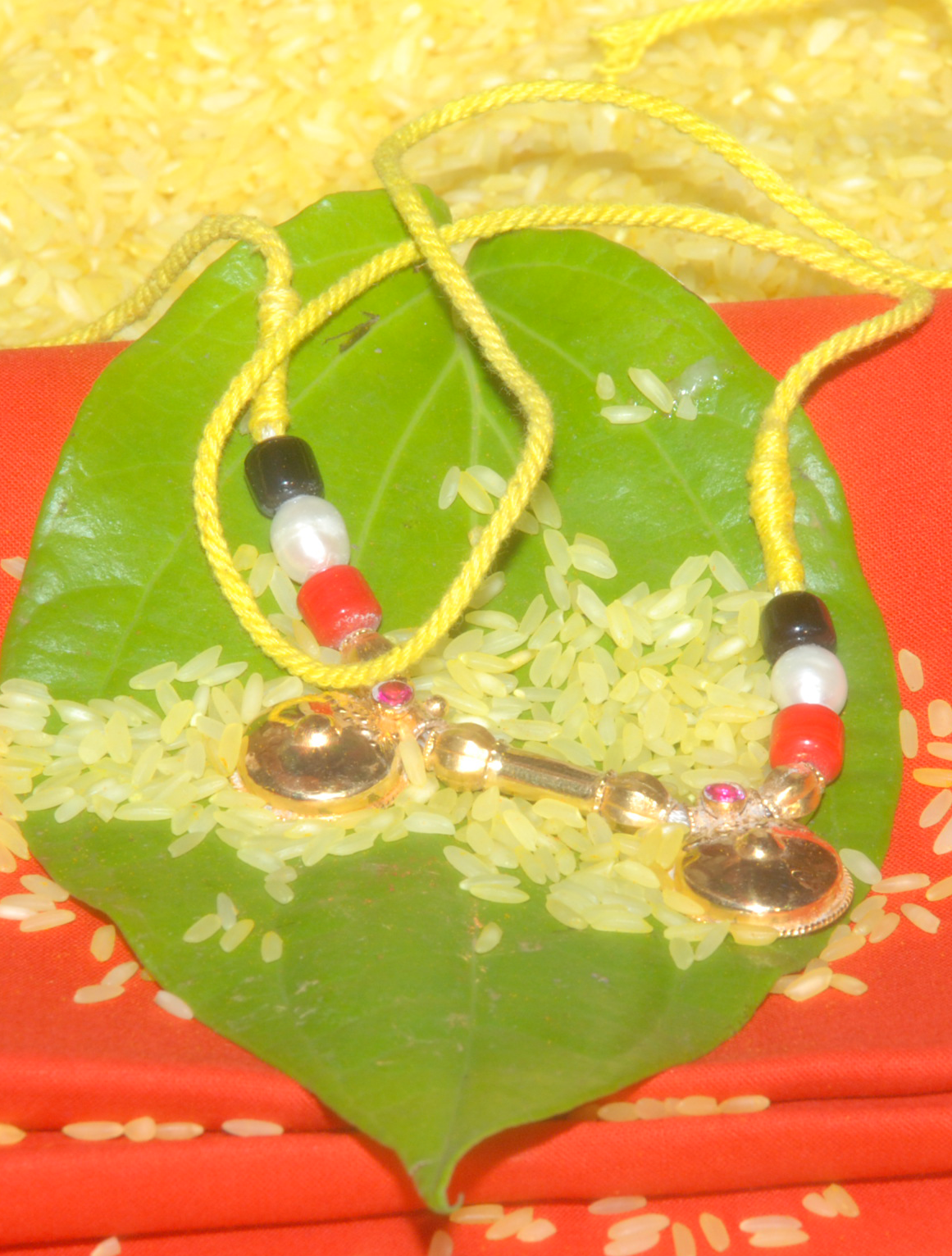 MangalasutraA necklace tied by the groom at a wedding, worn through married life
 DhotiA long unstitched cloth men wrap like trousers, for worship and formal days
Good reading and sources
- Dhaka topi on WikipediaEncyclopedia
- More photos on Wikimedia CommonsPhotos and video
- Wikidata recordOpen data
The facts on this page come from the Wikipedia article "Dhaka topi", written by its contributors and used under the CC BY-SA 4.0 licence, and from its Wikidata record (CC0). EveryParampara rewrote the text in its own words, with AI assistance, and compares every page with the article to make sure no passage is copied. It may be reused under the same CC BY-SA 4.0 licence with a link back.
It may contain mistakes. Traditions differ from one family, village and community to the next, and the people who keep them know them best. If something is wrong, tell us. Last refreshed 2026-10-06.
More from Nepal
All the traditions of Nepal
🇮🇳 India and 2 moreMangalasutraमङ्गलसूत्रम् (maṅgalasūtram)
A necklace tied by the groom at a wedding, worn through married lifeDress
 🇮🇳 Srinagar, India and 3 morePashmina
Ultra-fine wool of Himalayan goats, hand-woven in Kashmir into shawls of rankDress
🇮🇳 Pune, India and 5 moreTurbanدولبند (dolband)
Cloth wound around the head, worn for faith, rank, shade and identityDress
🇮🇳 Srinagar, India and 3 morePashmina
Ultra-fine wool of Himalayan goats, hand-woven in Kashmir into shawls of rankDress
🇮🇳 Pune, India and 5 moreTurbanدولبند (dolband)
Cloth wound around the head, worn for faith, rank, shade and identityDress
 🇮🇳 India and 4 moreSariसाड़ी
An unstitched length of cloth that women drape around the body, worn across South AsiaDress
🇮🇳 India and 4 moreSariसाड़ी
An unstitched length of cloth that women drape around the body, worn across South AsiaDress
The same idea elsewhere
Weddings compared 🇮🇩 Bali, Indonesia and 5 moreIkat
A resist-dyeing craft from Southeast Asia, where yarns are tied and dyed before weavingCraft
🇮🇩 Bali, Indonesia and 5 moreIkat
A resist-dyeing craft from Southeast Asia, where yarns are tied and dyed before weavingCraft
 🇲🇬 MadagascarLamba
A rectangular cloth wrapped around the body, worn across Madagascar and at burialsDress
🇲🇬 MadagascarLamba
A rectangular cloth wrapped around the body, worn across Madagascar and at burialsDress
 🇹🇴 Tonga and 1 moreTaʻovala
A waist mat worn in Tonga for weddings, funerals and formal daysDress
🇹🇴 Tonga and 1 moreTaʻovala
A waist mat worn in Tonga for weddings, funerals and formal daysDress
 🇬🇭 GhanaAdowa
A Ghanaian Akan dance where hands and feet carry the mood of the occasionPerformance
🇬🇭 GhanaAdowa
A Ghanaian Akan dance where hands and feet carry the mood of the occasionPerformance