Music, dance and storytellingSub-Saharan Africa
Adowa
A Ghanaian Akan dance where hands and feet carry the mood of the occasion

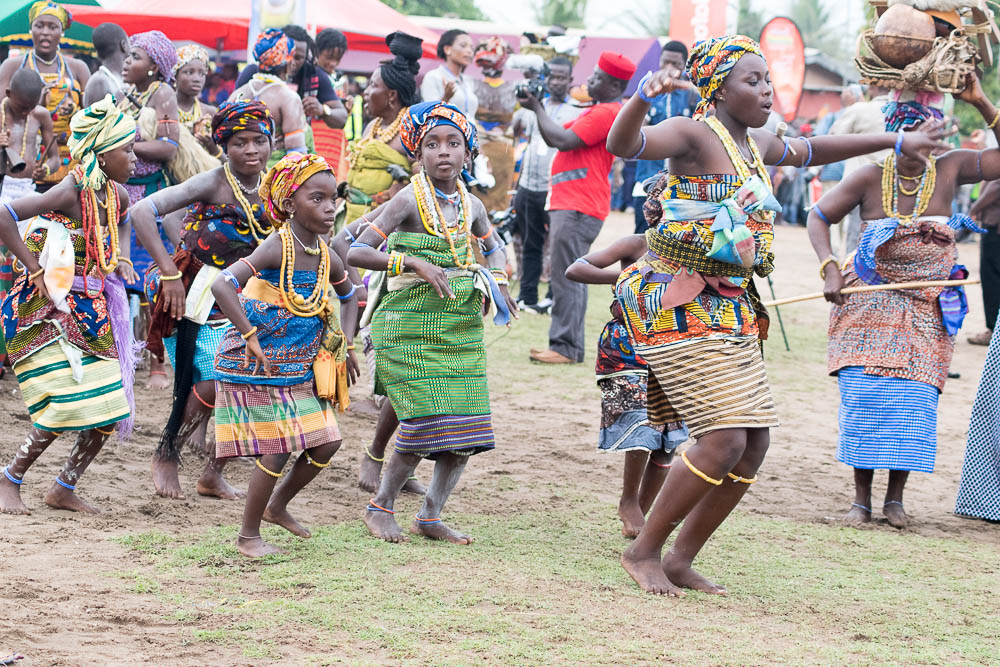
Adowa is a dance kept by Akan communities in Ghana, and it belongs to their public ceremonies. Its performers speak with their hands and feet, showing joy at an engagement or a chief's enstoolment and grief at a funeral, while a lead singer, a chorus and percussion players carry the rhythm.
When is Adowa kept?
Adowa is kept on the occasions that call for it: funerals, festivals, engagements, weddings and the enstoolment of a chief.
Among the Akan of Ghana, Adowa is the dance that carries an occasion. Dancers say what the gathering means with their hands and their feet: gladness at an engagement, a wedding or the enstoolment of a chief, mourning at a funeral. A lead singer, a chorus and percussion players hold the rhythm, and the steps change with the setting.
What it is
Adowa comes from the Akan of Ghana and is among the best-known dances in the country. It is danced by people who want to put a feeling into public view rather than simply move to music. The dance fits the event that hosts it, so one name covers a joyful performance and a solemn one. Dancers hold the mood in their bodies: the placing of a hand or the setting of a foot tells onlookers what the day is about, and everyone present can read it.
The ensemble
A performance is carried by a small group. One lead singer starts the song, a chorus answers, and percussion marks the beat. The lead and the chorus are almost always women in middle age. They keep time with their own clapping, and bells can join in: a double bell called dawure or a single bell called atoke. Drumming is part of the sound. A dancer and a drummer keep a quiet understanding that goes on through the dance, one that onlookers do not notice.
How the body speaks
Movement in Adowa works as a kind of talk. Each hand gesture carries its own sense, and the meaning changes with the setting, so a gesture that suits a wedding would not be used at a mourning. A white cloth, held in one hand, makes the movement easier to see. Dancers work mainly with the arms and the legs. There are basic steps that a performer learns first. One of them asks the dancer to press down and bring the right foot forward, while staying alert to cues from the drummer.
Occasions and moods
Adowa belongs to public and family ceremonies. Festivals, engagements, weddings and other celebrations are the glad occasions, and so is the enstoolment, the ceremony that installs a chief. Funerals are the sorrowful ones. At the happy gatherings, hands and feet show pleasure and good feeling. At a funeral, the same body language turns to grief. Because the dance is understood as expression, a performer is expected to match the mood of the gathering instead of dancing the same way everywhere.
Recent well-known performances
A number of well-known people have danced Adowa in public. The musicians SP Kofi Sarpong, Nana Ama McBrown and Grand P each gave a performance, in 2017, 2022 and 2023. The politicians Alban Bagbin and Yaw Osafo-Marfo danced it, in 2018 and 2024. Footballers have joined in as well: Memphis Depay in 2023, right after scoring a goal, and Richard Ofori in 2024. Freezy Macbones came into the ring with it in 2025, and in the same year the Dzenbii cultural group danced it in the United States.
How Adowa is kept
A lead singer opens the song and a chorus answers, with percussion players and bells holding the beat, often alongside the singers' own clapping. Dancers step in with hands and feet, shaping each gesture to suit the gathering, and the white cloth in the hand makes the movement plain to see. At a happy ceremony the body shows pleasure; at a funeral it shows grief. Family, guests and neighbours watch, and the dancing forms part of the ceremony itself.
When and where
There is no single date for Adowa. It is danced when an occasion arises, so it can appear at any point in the year. Festivals, weddings, engagements, funerals and the enstoolment of a chief are the moments that call for it, and the dancers take their cue from the ceremony rather than from a season or a calendar day.
The dance belongs to Akan communities in Ghana, and it is best known there. A performance formed part of Ghana's Independence Day celebration held in Kumasi in 2020. In 2025 the Dzenbii cultural group took Adowa to the United States, which shows that it travels with the people who keep it.
What Adowa means
Adowa is understood as a way of saying something without words. The hands and the feet carry what the dancer feels, so the dance gives shape to joy at a wedding or an engagement and to sorrow at a funeral. Positive feeling belongs to celebrations and to the enstoolment of a chief; the mood at a funeral is the opposite. The white cloth held in the hand is part of how that message is made visible.


Questions people ask about Adowa
When is Adowa kept?
Adowa is kept on the occasions that call for it: funerals, festivals, engagements, weddings and the enstoolment of a chief.
What is Adowa?
It is a dance kept by Akan communities in Ghana. Dancers use their hands and feet to show feeling, and a lead singer, a chorus and percussion players provide the sound. The same name covers glad occasions and mournful ones.
Who takes part?
Dancers are the people taking part in the ceremony. The singing side of the group is usually made up of middle-aged women. The lead singer and the chorus clap, and may also play a bell, either a double bell called dawure or a single one called atoke.
What do the hand movements mean?
They carry meaning, and the meaning changes with the setting. At a wedding, an engagement or an enstoolment the gestures express positive feeling. At a funeral they express the opposite. A white cloth held in the hand helps onlookers follow the message.
Where is it kept?
In Ghana, among Akan communities. A performance formed part of the country's Independence Day celebration in Kumasi in 2020, and in 2025 the Dzenbii cultural group performed Adowa in the United States.
See also
 AgbadzaAn Ewe music and dance, born of war songs and kept for funerals, weddings and festivals
 KizombaA close, slow couple dance from Angola, named after a Kimbundu word for party
 Adinkra symbolsSymbols of the Akan people, stamped on cloth, each one carrying a proverb
 Shell moneyTraditional currency made from cowries, ground clam beads, and carved sea shells
Good reading and sources
The facts on this page come from the Wikipedia article "Adowa dance", written by its contributors and used under the CC BY-SA 4.0 licence, and from its Wikidata record (CC0). EveryParampara rewrote the text in its own words, with AI assistance, and compares every page with the article to make sure no passage is copied. It may be reused under the same CC BY-SA 4.0 licence with a link back.
It may contain mistakes. Traditions differ from one family, village and community to the next, and the people who keep them know them best. If something is wrong, tell us. Last refreshed 2026-10-05.
More from Ghana
All the traditions of Ghana
🇬🇭 Ghana and 2 moreAgbadza
An Ewe music and dance, born of war songs and kept for funerals, weddings and festivalsPerformance
🇦🇴 Luanda, Angola and 4 moreKizomba
A close, slow couple dance from Angola, named after a Kimbundu word for partyPerformance
 🇬🇭 Ghana and 2 moreEwe drumming
The drum ensembles of the Ewe people, with iron bells, rattles and talking drumsPerformance
🇬🇭 Ghana and 2 moreEwe drumming
The drum ensembles of the Ewe people, with iron bells, rattles and talking drumsPerformance
 🇬🇭 Accra, GhanaChale Wote Street Art Festival
An annual street art festival in Accra featuring murals, theater, and music.Performance
🇬🇭 Accra, GhanaChale Wote Street Art Festival
An annual street art festival in Accra featuring murals, theater, and music.Performance
The same idea elsewhere
Death and mourning compared 🇮🇩 Bali, Indonesia and 5 moreIkat
A resist-dyeing craft from Southeast Asia, where yarns are tied and dyed before weavingCraft
🇮🇩 Bali, Indonesia and 5 moreIkat
A resist-dyeing craft from Southeast Asia, where yarns are tied and dyed before weavingCraft
 🇹🇴 Tonga and 1 moreTaʻovala
A waist mat worn in Tonga for weddings, funerals and formal daysDress
🇹🇴 Tonga and 1 moreTaʻovala
A waist mat worn in Tonga for weddings, funerals and formal daysDress
 🇨🇳 ChinaKowtow叩頭
A traditional Chinese prostration of deep respect by kneeling and bowing to the groundEtiquette
🇨🇳 ChinaKowtow叩頭
A traditional Chinese prostration of deep respect by kneeling and bowing to the groundEtiquette
 🇳🇵 Nepal and 1 moreDhaka topiढाका टोपी
A patterned cotton cap worn across Nepal as part of the national dressDress
🇳🇵 Nepal and 1 moreDhaka topiढाका टोपी
A patterned cotton cap worn across Nepal as part of the national dressDress