Festivals and celebrationsSub-Saharan AfricaIndigenous and traditional
Gelede
In its own language: Gẹlẹdẹ
A Yoruba masked dance festival honoring the spiritual power of mothers and social harmony.

The Gẹlẹdẹ is a public ritual of the Yoruba people in West Africa that uses elaborate masks to honor women. It celebrates female ancestors, deities, and elderly community members. The spectacle combines art, dance, and satire to promote peace and correct behavior.
When is Gelede kept?
Gelede is kept on annual festival or when needed for specific community goals.
The Gẹlẹdẹ is a vibrant Yoruba tradition that honors the spiritual force of mothers. Men wear colorful masks to dance and sing, aiming to please female ancestors and deities. This ritual promotes social harmony and respects the delicate nature of life within the community.
Meaning and purpose
The practice rests on the belief that life is fragile and requires caution. It honors 'Mothers,' a group including female ancestors, deities, and elderly women. These figures hold significant spiritual capacity in society. The festival encourages diplomacy, respect, and harmony. It focuses on fertility, motherhood, and proper social conduct. By appeasing these powerful women, the community seeks protection and stability.
Origins and myths
Stories about its start vary between history and myth. Historical accounts point to places like Oyo ile, Ketu, and Ilobi. One tale involves twin sons vying for a throne using masks as deception. Mythological roots connect to Iya Nla, the Great Mother. Divination narratives say she danced with wooden images to conceive children named Efe and Gelede. Their descendants continued the rituals to ensure fertility and community well-being.
Roles and leadership
Both men and women participate to maintain social balance. The Chief Priestess, called Iyalase, leads the society and manages the shrine. She communicates with the Great Mother. The Chief Priest, Babalase, organizes events and keeps the costumes. Other roles include the Abore priest who helps with rituals, and the Elefe humorist who carries the Efe mask. Maskers must be skilled dancers who understand drum language and proverbs.
Masks and costumes
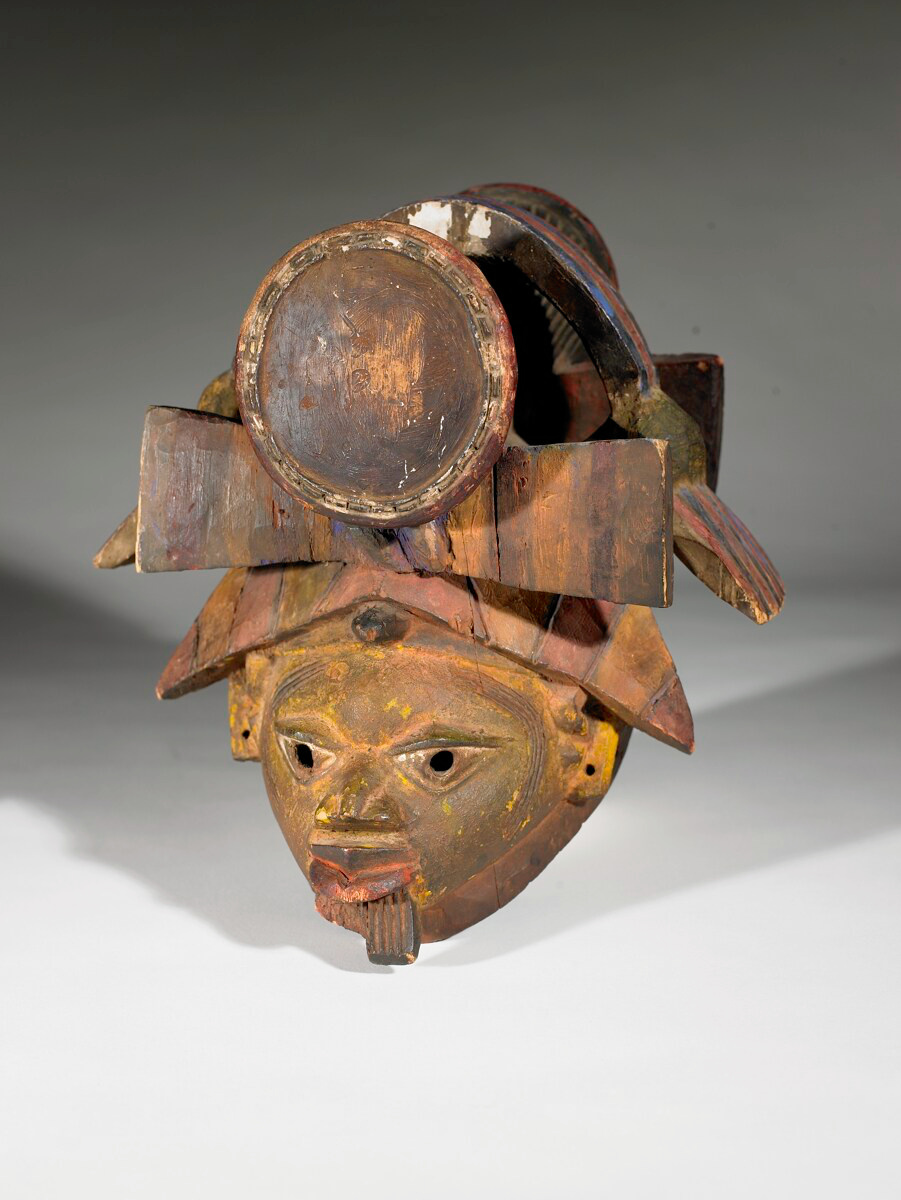
Performers wear headdresses shaped like human heads, animals, or objects. These sit atop layered, colorful cloth costumes featuring breasts, buttocks, and metal anklets. The masks rest on the head while a veil covers the face. Motifs address social concerns or entertain viewers. Common designs include the human head, the Great Mother, and double-faced masks. Costumes are more elaborate during daytime performances so details remain visible.
How Gelede is kept
Divination sets the dates for the annual festival. The Chief Priestess notifies leaders and calls members home. An all-night concert begins with the Efe mask using satire to educate. Afterward, dancers rest before afternoon performances in the marketplace. Pairs of men wear masks and dance to fast-paced drums. They match their anklet sounds to the rhythm while anticipating solos. The choreography amuses and placates the Mothers, acknowledging their power over life and death.
When and where
Usually held annually, though ceremonies can occur anytime to seek rain, fertility, or protection. Dates are often fixed through divination rituals.
Kept by the Yoruba people across Nigeria, Benin, and Togo. Elaborate performances are common in towns like Ketu.
What Gelede means
The headdress represents the essence of the masker's personality. Serene faces beneath comical masks highlight life's paradoxes. The ritual acknowledges that women hold vital spiritual power. Appeasing them ensures community safety and fertility. The practice reinforces social order and respect for elders.



Questions people ask about Gelede
When is Gelede kept?
Gelede is kept on annual festival or when needed for specific community goals.
What is Gelede?
It is a Yoruba masked dance festival that honors female ancestors and deities. Men wear elaborate headdresses to dance and sing, promoting social harmony and respecting the spiritual power of mothers.
Where is it kept?
The tradition belongs to the Yoruba people in West Africa. It is practiced primarily in Nigeria, Benin, and Togo, with notable performances in historic towns like Ketu.
Who performs in the festival?
Men perform the dances wearing masks and costumes. However, the society includes both genders. Women lead through the Chief Priestess, while men organize events and act as maskers under her guidance.
Why do they wear masks?
Masks represent various figures like humans, animals, or social types. They help performers embody different personalities to amuse, educate, and placate the Mothers. The masks acknowledge the spiritual forces that influence daily life.
See also
 ChristmasA festival of Jesus's birth, kept on 25 December with gifts, lights and shared meals
 HalloweenAn annual observance on 31 October marking the eve of All Saints' Day, rooted in Christian tradition and Celtic heritage
 Christmas treeA decorated evergreen or artificial tree placed indoors to mark the Christmas season.
 DiwaliA five-day festival of lights celebrated across India and its diaspora to mark the victory of light over darkness.
Good reading and sources
- Gẹlẹdẹ on WikipediaEncyclopedia
- More photos on Wikimedia CommonsPhotos and video
- Wikidata recordOpen data
The facts on this page come from the Wikipedia article "Gẹlẹdẹ", written by its contributors and used under the CC BY-SA 4.0 licence, and from its Wikidata record (CC0). EveryParampara rewrote the text in its own words, with AI assistance, and compares every page with the article to make sure no passage is copied. It may be reused under the same CC BY-SA 4.0 licence with a link back.
It may contain mistakes. Traditions differ from one family, village and community to the next, and the people who keep them know them best. If something is wrong, tell us. Last refreshed 2026-10-04.
More from Nigeria
All the traditions of Nigeria 🇳🇬 Osogbo, NigeriaOsun-Osogbo FestivalOsun-Osogbo
An annual Yoruba festival of cleansing, procession and sacrifice to the river goddess Osun in Osogbo, Nigeria.Festival
🇳🇬 Osogbo, NigeriaOsun-Osogbo FestivalOsun-Osogbo
An annual Yoruba festival of cleansing, procession and sacrifice to the river goddess Osun in Osogbo, Nigeria.Festival
 🇳🇬 Lagos, NigeriaEyo FestivalAdamu Orisha Play
A Yoruba masquerade procession honouring departed leaders and royalty in LagosFestival
🇳🇬 Lagos, NigeriaEyo FestivalAdamu Orisha Play
A Yoruba masquerade procession honouring departed leaders and royalty in LagosFestival
 🇳🇬 Oyo, Nigeria and 3 moreSango Festival
An annual Yoruba gathering in Nigeria honoring the deity of thunder and lightningFestival · Feasts and festival meals
🇳🇬 Oyo, Nigeria and 3 moreSango Festival
An annual Yoruba gathering in Nigeria honoring the deity of thunder and lightningFestival · Feasts and festival meals
 🇳🇬 Abuja, NigeriaNew Yam FestivalIri ji
A yearly harvest thanksgiving across Nigeria, when the first new yams may be eatenFestival · Feasts and festival meals
🇳🇬 Abuja, NigeriaNew Yam FestivalIri ji
A yearly harvest thanksgiving across Nigeria, when the first new yams may be eatenFestival · Feasts and festival meals
The same idea elsewhere
Remembering the ancestors compared 🇮🇱 Jerusalem, IsraelSukkotסוכות
A seven-day autumn Jewish festival of temporary booths, harvest prayers and hospitalitySpiritual
🇮🇱 Jerusalem, IsraelSukkotסוכות
A seven-day autumn Jewish festival of temporary booths, harvest prayers and hospitalitySpiritual
 🇳🇿 New Zealand and 2 moreMarae
A cleared, sacred gathering place at the heart of Māori and Polynesian community lifeSpiritual
🇳🇿 New Zealand and 2 moreMarae
A cleared, sacred gathering place at the heart of Māori and Polynesian community lifeSpiritual
 🇳🇿 Auckland, New ZealandWharenui
A Māori carved communal meeting house at the centre of tribal life in New ZealandHome
🇦🇺 AustraliaGarma Festival of Traditional Cultures
A four-day cultural gathering in northeast Arnhem Land celebrating Yolngu traditions and fostering two-way learning.Festival
🇳🇿 Auckland, New ZealandWharenui
A Māori carved communal meeting house at the centre of tribal life in New ZealandHome
🇦🇺 AustraliaGarma Festival of Traditional Cultures
A four-day cultural gathering in northeast Arnhem Land celebrating Yolngu traditions and fostering two-way learning.Festival