Festivals and celebrationsSub-Saharan Africa
Fichee-Chambalaalla
A moveable new year festival of the Sidama people in Ethiopia.

Fichee-Chambalaalla marks the new year for the Sidama people in Ethiopia. Astrologers set the date each cycle, and clan heads share the news. Families gather to sing, dance, and share a dish called buurisame. The event strengthens bonds across generations and neighborhoods.
When is Fichee-Chambalaalla kept?
Fichee-Chambalaalla is kept on once a year, on a date set by local astrologers.
Fichee-Chambalaalla serves as the annual new year celebration for the Sidama community in Ethiopia. The gathering honors a longstanding custom where a married daughter returns home to share food and greetings. Elders use the occasion to pass down values about hard work and mutual care. Music and movement bring everyone together regardless of age or background.
Origins and meaning
The festival traces back to a story about a married woman who visits her birth family once each year. She carries a special meal to share with relatives and neighbors. This act stands as a clear symbol of togetherness. The gathering reminds participants that strong families build strong communities. Everyone joins the festivities without regard for social rank or gender. The shared table becomes a space where differences fade and common ground grows.
How the day unfolds
The celebration begins with children walking door to door to offer morning greetings. Hosts welcome them with bowls of the traditional dish. Later, adults take to open spaces to perform old songs and rhythmic steps. Women spend time preparing the food and styling the hair of younger girls. These quiet moments pass practical skills and stories directly from one generation to the next. The entire village moves at a steady pace throughout the day.
Guidance and renewal
Clan leaders address the crowd to lay out expectations for the coming year. They urge residents to labor diligently, honor older members, and protect native forests. The speakers also warn against laziness, dishonesty, and taking what belongs to others. These words frame the new period as a fresh start built on responsibility. The community leaves the meeting ready to rebuild relationships and uphold shared standards. International observers recognized the event in two thousand fifteen for its cultural value.
How Fichee-Chambalaalla is kept
Children greet neighbors house to house on the opening morning and receive the shared meal. Adults then gather to sing old tunes and dance in open areas. Women prepare the food while teaching younger girls how to style their hair. Clan heads announce the date after consulting local astrologers. Leaders deliver a speech outlining duties like respecting elders, working steadily, and guarding local trees. The whole group participates without barriers of age or status.
When and where
The timing shifts each cycle rather than falling on a fixed calendar day. Local astrologers calculate the correct moment based on celestial movements. Once the calculation finishes, clan leaders spread the word through the region. The announcement ensures every household knows when to prepare and arrive.
The main gatherings happen in the Sidama Region of Ethiopia. Communities often meet at sacred grounds near Hawassa. People travel from surrounding villages to join the central events. The regional landscape provides open spaces for singing and movement. Families host smaller meals within their own neighborhoods before joining the larger public events.
What Fichee-Chambalaalla means
The festival centers on the return of a married daughter to her family home. Her journey represents enduring loyalty and the strength of kinship networks. Sharing the prepared meal turns personal gratitude into collective support. The event teaches that individual success relies on neighborhood cooperation. By breaking bread together, participants renew their commitment to mutual aid and peaceful coexistence.
Questions people ask about Fichee-Chambalaalla
When is Fichee-Chambalaalla kept?
Fichee-Chambalaalla is kept on once a year, on a date set by local astrologers.
What is Fichee-Chambalaalla?
It is an annual new year festival observed by the Sidama people in Ethiopia. The gathering brings together families and neighbors to celebrate seasonal renewal through music, dance, and shared meals.
Where do people usually celebrate it?
Main events occur in the Sidama Region, particularly around Hawassa. Smaller gatherings happen in local neighborhoods across Ethiopia where Sidama families reside.
Who leads the announcements?
Clan heads deliver the official dates and yearly guidance after receiving calculations from local astrologers. Their speeches set the tone for the months ahead.
See also
 NayrouzA Coptic feast marking the new year and honoring martyrs, kept in Egypt and Ethiopia.
 Habesha coffee ceremonyA daily ritual of roasting, grinding and serving coffee to welcome guests in Ethiopia and Eritrea
 HandshakeA brief clasp of hands to greet, part or seal a deal, with local rules on how it is done
 EnkutatashThe Ethiopian New Year festival of song, yellow daisies and family feasts
Good reading and sources
The facts on this page come from the Wikipedia article "Fichee-Chambalaalla", written by its contributors and used under the CC BY-SA 4.0 licence, and from its Wikidata record (CC0). EveryParampara rewrote the text in its own words, with AI assistance, and compares every page with the article to make sure no passage is copied. It may be reused under the same CC BY-SA 4.0 licence with a link back.
It may contain mistakes. Traditions differ from one family, village and community to the next, and the people who keep them know them best. If something is wrong, tell us. Last refreshed 2026-10-05.
More from Ethiopia
All the traditions of Ethiopia
🇪🇬 Cairo, Egypt and 1 moreNayrouzالنيروز (Arabic); ⲡⲓⲭⲗⲟⲙ ⲛ̀ⲧⲉ ϯⲣⲟⲙⲡⲓ (Coptic)
A Coptic feast marking the new year and honoring martyrs, kept in Egypt and Ethiopia.Festival
 🇪🇹 Mekelle, EthiopiaAshendaአሸንዳ
An Ethiopian festival celebrating women and girls with song, dance and tall grass attireFestival
🇪🇹 Mekelle, EthiopiaAshendaአሸንዳ
An Ethiopian festival celebrating women and girls with song, dance and tall grass attireFestival
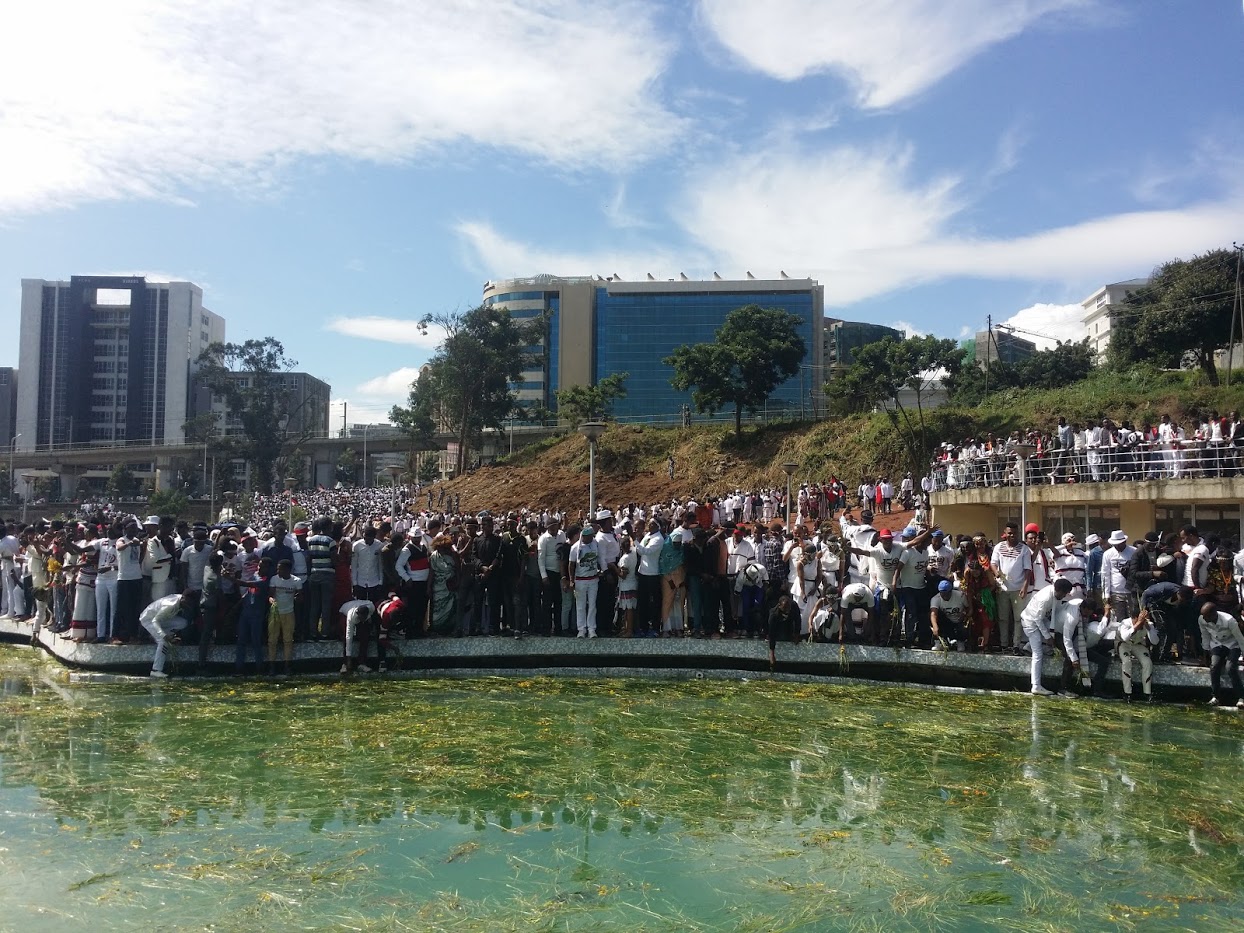 🇪🇹 Addis Ababa, EthiopiaIrreechaIrreessa
A thanksgiving festival at sacred lakes in Oromia, Ethiopia, at the end of the rainsFestival
🇬🇷 Greece and 5 moreHandshake
A brief clasp of hands to greet, part or seal a deal, with local rules on how it is doneEtiquette
🇪🇹 Addis Ababa, EthiopiaIrreechaIrreessa
A thanksgiving festival at sacred lakes in Oromia, Ethiopia, at the end of the rainsFestival
🇬🇷 Greece and 5 moreHandshake
A brief clasp of hands to greet, part or seal a deal, with local rules on how it is doneEtiquette
The same idea elsewhere
New Year compared 🇨🇳 China and 5 moreLion dance舞獅
A dynamic ritual dance featuring costumed lions, drums and martial acrobaticsPerformance
🇨🇳 China and 5 moreLion dance舞獅
A dynamic ritual dance featuring costumed lions, drums and martial acrobaticsPerformance
 🇩🇪 Nuremberg, Germany and 5 moreChristmas marketWeihnachtsmarkt
A seasonal street market held during Advent in German-speaking regions and beyond, featuring stalls, food, and crafts.Festival · Tea, coffee and drinking ceremonies
🇩🇪 Nuremberg, Germany and 5 moreChristmas marketWeihnachtsmarkt
A seasonal street market held during Advent in German-speaking regions and beyond, featuring stalls, food, and crafts.Festival · Tea, coffee and drinking ceremonies
 🇲🇳 Mongolia and 2 moreTsagaan SarЦагаан сар
The Mongolian Lunar New Year festival of peace, elders, white foods and renewalSeasonal · Feasts and festival meals
🇲🇳 Mongolia and 2 moreTsagaan SarЦагаан сар
The Mongolian Lunar New Year festival of peace, elders, white foods and renewalSeasonal · Feasts and festival meals
 🇦🇿 AzerbaijanNovruzNovruz Bayramı
The Azerbaijani spring equinox festival of bonfires, sweets and sprouted wheatSeasonal · Feasts and festival meals
🇦🇿 AzerbaijanNovruzNovruz Bayramı
The Azerbaijani spring equinox festival of bonfires, sweets and sprouted wheatSeasonal · Feasts and festival meals