Seasons, harvest and the calendarCentral Asia and the CaucasusZoroastrianSecular and civic
Novruz
In its own language: Novruz Bayramı
The Azerbaijani spring equinox festival of bonfires, sweets and sprouted wheat

Novruz is the Azerbaijani spring festival and new year celebration, held around the March equinox. Families clean their homes, leap over bonfires across four themed Tuesdays, share festive tables laden with sprouted wheat and pastries, and watch comic street performances.
When is Novruz kept?
Novruz is kept on annually at the March equinox, preceded by four celebratory Tuesdays.
Novruz marks the vernal equinox and the arrival of spring across Azerbaijan. Tracing customs back through generations, the holiday welcomes the new year with themes of renewal, fertility and kinship. Over several days of public and private festivities, people gather around laden tables, tend the graves of ancestors, ignite ceremonial fires, and enjoy comedic street plays celebrating nature's awakening.
The four Tuesdays
Preparations start a month early, focusing on the last four Tuesdays of winter. Each day honours a fundamental element: water, fire, wind, and earth. The opening Tuesday highlights purification through water. The second focuses on fire, where neighbours ignite outdoor blazes and leap over the flames to shed sickness and hardship. Wind marks the third Tuesday, bringing the chill of late winter and a custom of tending family graves. The final Tuesday celebrates the earth reviving for spring. During this evening, children go from house to house leaving hats or pouches on doorsteps to receive baked sweets, while young women use candles and mirrors for traditional fortune-telling.
The festive table
At the centre of the household is the khoncha, a celebratory tray of polished copper or silver. Its centerpiece is samani, a shallow dish of bright green sprouted wheat grains that represent agricultural fertility. Surrounding the sprouts are dyed eggs, lit candles, and seven distinct foods whose names share a single initial sound in the local language, including milk, vinegar, and ground sumac. Families bake pastries such as pakhlava, shekerbura, and shorgoghal, while mixing fried wheat berries with raisins and walnuts. Leaving the main entrance unlocked welcomes guests, and keeping lights burning throughout the first night wards off misfortune.
Public rituals and street theatre
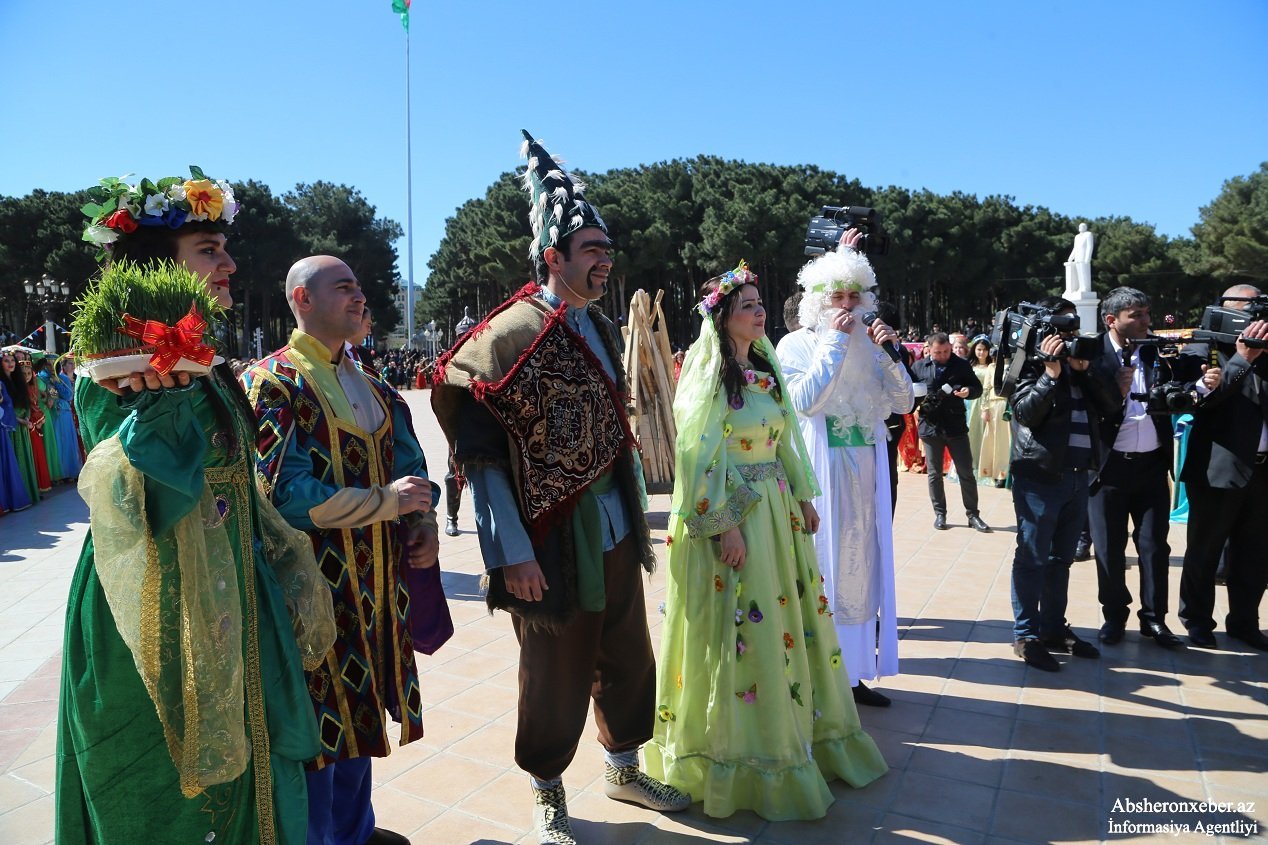
Public squares fill with dancers, musicians, tightrope walkers, and traditional wrestlers testing their strength. Central to the outdoor fun is a humorous folk performance featuring two stock characters named Kosa and Kechal. Kosa, wearing an artificial beard to represent winter, engages in playful squabbles with Kechal, a mischievous bald figure representing the warmth of summer. Their theatrical bout always concludes with Kechal emerging victorious, symbolising the triumph of warmer weather. In addition to music and games, family members playfully splash water on one another on the final evening of the year to wash away past troubles.
How Novruz is kept
Celebrations unfold across several weeks, starting with four successive Tuesdays devoted to water, fire, wind, and earth. People cleanse their dwellings, visit ancestral resting places, and jump over bonfires. On the eve of the equinox, families assemble around a festive khoncha tray decorated with samani wheatgrass, painted eggs, and specific holiday pastries. Children visit neighbours to collect treats in their caps, while public squares host folk music, tightrope walking, wrestling matches, and comic skits dramatising the defeat of winter.
When and where
Novruz coincides with the astronomical vernal equinox in March, inaugurating the new year on the Solar Hijri calendar. Observances begin four Tuesdays prior, typically in late February, and continue through a five-day public holiday period.
Novruz is celebrated nationwide across Azerbaijan, where it is an official state holiday. Festivities take place inside private family homes, in neighbourhood courtyards, and throughout public town squares.
What Novruz means
The festival centers on rebirth, cleanliness, and the victory of light and warmth over winter's dormancy. Samani wheatgrass denotes fertility, while jumping over bonfires purges past burdens and illness. Reflective mirrors signify happiness, and glowing candles keep away malevolent spirits. An unlocked household doorway expresses generous hospitality, and splashing water symbolizes shedding old hardships.
On the table
- Samani
- Shekerbura
- Pakhlava
- Shorgoghal
- Govurga
- Sumakh
- Sud
- Sirke
Flavours: Sumac



Questions people ask about Novruz
When is Novruz kept?
Novruz is kept on annually at the March equinox, preceded by four celebratory Tuesdays.
What is Novruz in Azerbaijan?
Novruz is a traditional Azerbaijani holiday celebrating the arrival of spring and the astronomical vernal equinox. It marks the start of a new calendar year through family gatherings, element-themed Tuesdays, festive foods, and folk entertainment.
What is the meaning behind the four Tuesdays?
Each Tuesday before the festival honors one of four natural elements: water, fire, wind, and earth. People observe them in sequence to welcome the changing season, culminating in bonfires, ancestral remembrance, and rites of renewal.
Who are Kosa and Kechal?
Kosa and Kechal are comedic holiday figures who appear in street performances. Kosa, wearing a fake beard, represents winter, while the bald Kechal represents summer. Their mock battle ends with Kechal winning, marking the victory of spring.
See also
 NowruzThe Iranian new year at the March equinox, kept with fire, greenery and picnics
 Yaldā NightA solstice night of poetry, fruit and family, kept from Iran through Central Asia
 Chaharshanbe SuriAn Iranian festival of fire and renewal celebrated on the eve of the final Wednesday before spring.
 HıdırellezA spring festival marking the meeting of two prophets, celebrated across Turkey and the Balkans.
Good reading and sources
- Nawrouz, Novruz, Nowrouz, Nowrouz, Nawrouz, Nauryz, Nooruz, Nowruz, Navruz, Nevruz, Nowruz, NavruzUNESCO, Heritage listing
- Nawrouz, Novruz, Nowrouz, Nowrouz, Nawrouz, Nauryz, Nooruz, Nowruz, Navruz, Nevruz, Nowruz, NavruzUNESCO, Article
- Novruz in Azerbaijan on WikipediaEncyclopedia
- More photos on Wikimedia CommonsPhotos and video
- Wikidata recordOpen data
The facts on this page come from the Wikipedia article "Novruz in Azerbaijan", written by its contributors and used under the CC BY-SA 4.0 licence, and from its Wikidata record (CC0). EveryParampara rewrote the text in its own words, with AI assistance, and compares every page with the article to make sure no passage is copied. It may be reused under the same CC BY-SA 4.0 licence with a link back.
It may contain mistakes. Traditions differ from one family, village and community to the next, and the people who keep them know them best. If something is wrong, tell us. Last refreshed 2026-10-04.
More from Azerbaijan
All the traditions of Azerbaijan
🇮🇷 Iran and 7 moreNowruzنوروز
The Iranian new year at the March equinox, kept with fire, greenery and picnicsSeasonal
 🇮🇷 Isfahan, Iran and 4 moreMehreganمهرگان
An Iranian autumn festival honoring Mithra, friendship, and the harvestSeasonal
🇮🇷 Isfahan, Iran and 4 moreMehreganمهرگان
An Iranian autumn festival honoring Mithra, friendship, and the harvestSeasonal
 🇦🇿 Azerbaijan and 1 moreArmudu tea glassArmudu stəkan
A pear-shaped glass used in Azerbaijan to serve and drink black tea.Table custom · Tea, coffee and drinking ceremonies
🇦🇿 Azerbaijan and 1 moreArmudu tea glassArmudu stəkan
A pear-shaped glass used in Azerbaijan to serve and drink black tea.Table custom · Tea, coffee and drinking ceremonies
 🇬🇪 Tbilisi, Georgia and 4 moreGeorgian polyphonic singing
Several voices at once, sung without instruments at Georgian feasts and weddingsPerformance
🇬🇪 Tbilisi, Georgia and 4 moreGeorgian polyphonic singing
Several voices at once, sung without instruments at Georgian feasts and weddingsPerformance
The same idea elsewhere
New Year compared 🇮🇳 Guwahati, IndiaBohag Bihu
A multi-day Assamese New Year festival of cattle rites, music, gifts and feastsSeasonal · Feasts and festival meals
🇮🇳 Guwahati, IndiaBohag Bihu
A multi-day Assamese New Year festival of cattle rites, music, gifts and feastsSeasonal · Feasts and festival meals
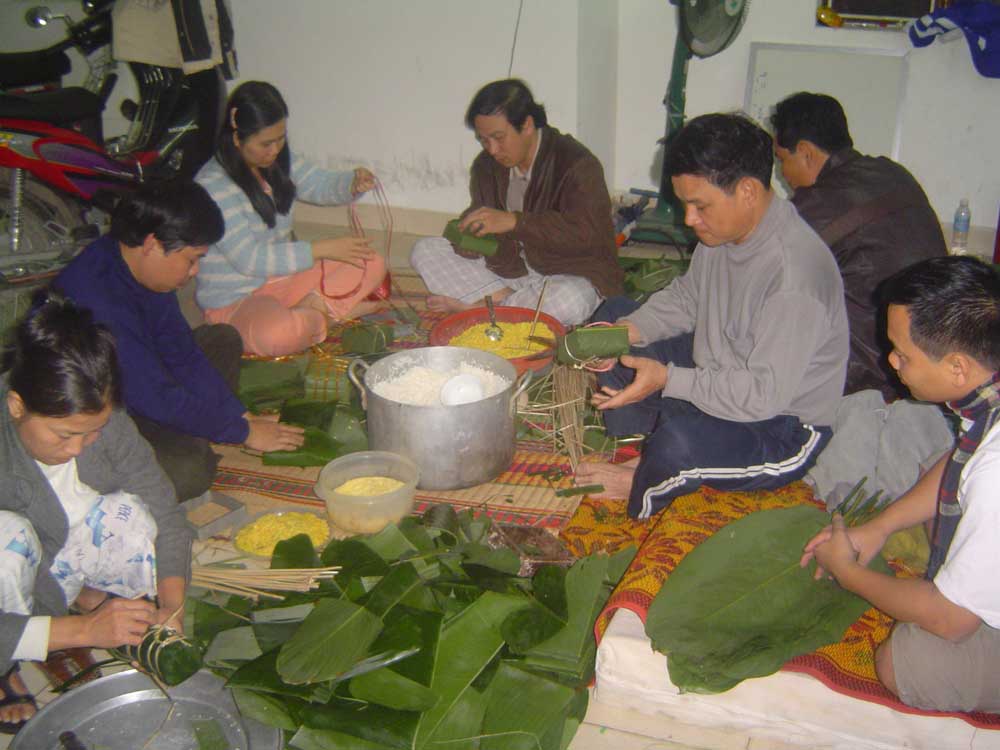 🇻🇳 VietnamTếtTết Nguyên Đán
The Vietnamese festival of the lunar new year, welcoming spring with family gatheringsFestival · Feasts and festival meals
🇻🇳 VietnamTếtTết Nguyên Đán
The Vietnamese festival of the lunar new year, welcoming spring with family gatheringsFestival · Feasts and festival meals
 🇮🇳 Mathura, India and 5 moreHoliहोली (Hindi)
A spring festival of colours and bonfires that marks the end of winter and the triumph of good over evil.Festival
🇮🇳 Mathura, India and 5 moreHoliहोली (Hindi)
A spring festival of colours and bonfires that marks the end of winter and the triumph of good over evil.Festival
 🇰🇷 Jeju, South KoreaGut굿
Sacred rites of song, dance, and spirit communion performed by Korean shamansSpiritual
🇰🇷 Jeju, South KoreaGut굿
Sacred rites of song, dance, and spirit communion performed by Korean shamansSpiritual