Festivals and celebrationsSub-Saharan AfricaIndigenous and traditional
Irreecha
In its own language: Irreessa
A thanksgiving festival at sacred lakes in Oromia, Ethiopia, at the end of the rains
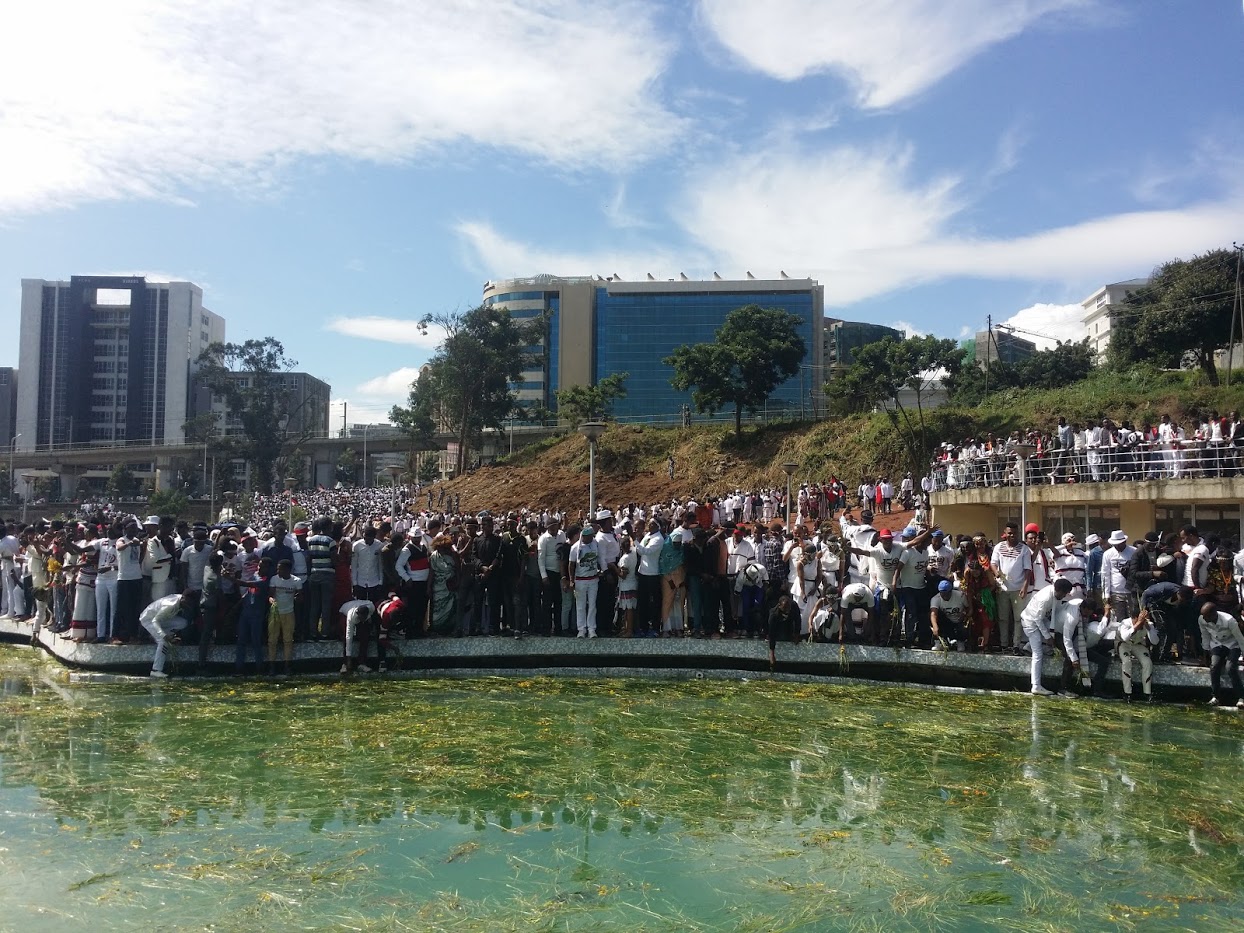
Irreecha, also known as Irreessa or Dhibaayyuu, is a thanksgiving festival of the Oromo people of Oromia, Ethiopia. It is held as the long rainy season ends and spring begins, when crowds gather at sacred lakes to give thanks and to welcome the ripening harvest.
When is Irreecha in 2027?
Irreecha 2027 is on Sunday, 3 October 2027. The date follows the moon or a local calendar, so it can move by a day. Other years: 2026, Sunday, 4 October 2026; 2028, Sunday, 1 October 2028.
Irreecha is a thanksgiving festival of the Oromo people, kept in Oromia, Ethiopia, as the rainy season ends and spring begins. Families gather at sacred lakes, carry freshly cut grass and flowers, and give thanks for the year that has passed, praying to Waaqa for what is to come. It is also spelled Irreessa and Dhibaayyuu.
The season it marks
June to September is the rainy season, called Ganna, and Oromo tradition treats it as a hard stretch of the year. Rivers rise and floods can drown people and cattle, ruin crops and reach into homes. Visiting is difficult when the water is high, so families and friends may lose touch. The harvest taken in January is nearly gone and the next one is not ready, so some households go short of food. Malaria and other illnesses spread in the wet months. In Birraa, the season after the rains, maize ripens along with potato and barley, and the shortage ends. The feast turns on that change.
Origins and the date
According to Oromo accounts, the festival began at Mormor in Oromia during the era of the Gadaa known as Melbaa. The day that closed that period, remembered as a time of hunger and want, was fixed by the Gadaa lunar calendar to a Sunday as September gives way to October. Oromo people today have set that day apart as a national thanksgiving. Since the reckoning is lunar, the date shifts from year to year and does not sit on the same calendar day.
At the sacred lakes
The gathering always happens beside water, at lakes that are held sacred. Hora Finfinne and Hora Harsadi are the two the sources name, and others lie elsewhere in Oromia where the festival is also kept. A single Irreecha can bring together hundreds of thousands of people. The lakeside is also a meeting place: the day is a reunion after months in which rain and swollen rivers made visiting hard. Oromo communities in North America and Europe hold their own Irreecha as well, far from these waters.
Today and change
Irreecha is a public holiday, and the sources call it the biggest cultural festival in Africa. Crowds at the lakes have run into the hundreds of thousands. Addis Ababa, the capital, hosted the 2019 celebration, and Debre Zeit followed it. Roughly 5,000 people came to the 2020 gathering at Addis Ababa, a number the sources tie to political tension and the pandemic. On 2 October 2016 a stampede at the festival killed between 55 and 300 people and left many injured. Local accounts blamed the security forces for starting it.
How Irreecha is kept
People come to the lake in family and neighbourhood groups, carrying grass and flowers. At the water's edge the plants are dipped in, and those taking part sprinkle the lake water over themselves and leave the grass and flowers behind in the water. Prayers go up to Waaqa in thanks for the past year. Afterwards the crowd celebrates together, since relatives kept apart by the rainy months can meet again, and the sources say the day draws people closer to one another.
When and where
Irreecha comes once a year at the close of the rainy season. The date is worked out from the Gadaa lunar calendar, which places it on a Sunday as September turns to October. The holiday infobox lists it as falling in October. It is not fixed to the same calendar day each year.
It is kept in Oromia, Ethiopia, at sacred lakes such as Hora Finfinne and Hora Harsadi, and at others across the region. Bishoftu and Addis Ababa are the two towns the sources name for it. Oromo communities abroad also hold the festival, particularly in North America and Europe, where diaspora Oromos live.
What Irreecha means
The day is a giving of thanks to Waaqa for the year that has passed, and a welcome for the season of ripe crops that follows the hard, wet months. Oromo communities hold that it brings relatives and neighbours back together after a stretch when travel was impossible, and that it strengthens the bonds between them. It is also a moment of turning: the rains end, maize and other crops are ready, and the shortage that some households faced through the winter is over.

Irreecha dates: 2026, 2027, 2028
| Year | Irreecha date |
|---|---|
| 2026 | Sunday, 4 October 2026 |
| 2027 | Sunday, 3 October 2027 |
| 2028 | Sunday, 1 October 2028 |
This date follows the moon or a local calendar and can move by a day, so check with a local source nearer the time.
Questions people ask about Irreecha
When is Irreecha in 2027?
Irreecha 2027 is on Sunday, 3 October 2027. The date follows the moon or a local calendar, so it can move by a day. Other years: 2026, Sunday, 4 October 2026; 2028, Sunday, 1 October 2028.
What is Irreecha?
It is a thanksgiving festival of the Oromo people, kept at the end of the rainy season. Those taking part give thanks to Waaqa for the year gone by and welcome the new season of ripe crops. It is also spelled Irreessa or Dhibaayyuu.
Where do people celebrate it?
At sacred lakes in Oromia, Ethiopia. Hora Finfinne and Hora Harsadi are among them, and Bishoftu and Addis Ababa are named in accounts of the festival. Oromo communities in North America and Europe keep it too, away from the lakes.
What happens at the lake?
People bring freshly cut green grass and flowers, dip them in the water, sprinkle themselves with it, and leave the plants in the lake. Prayers of thanks are offered to Waaqa. The rest of the day is spent together with family, friends and neighbours.
How many people attend?
Hundreds of thousands have gathered at the lakes. The 2019 celebration in Addis Ababa was followed by one at Debre Zeit, while the 2020 event in Addis Ababa drew about 5,000 people, which the sources link to political tension and the pandemic.
See also
 DiwaliA five-day festival of lights celebrated across India and its diaspora to mark the victory of light over darkness.
 HoliA spring festival of colours and bonfires that marks the end of winter and the triumph of good over evil.
 JaanipäevEstonia's midsummer night of bonfires, song and fortune-telling, on 23 and 24 June
 Kishiwada Danjiri MatsuriA high-speed festival of wooden shrine floats pulled through Kishiwada, Japan
Good reading and sources
- In Pictures: Ethiopia’s Oromos celebrate Irreecha festivalAl Jazeera, Article
- In pictures: Ethiopia's Oromos celebrate thanksgivingBBC, Article
- In Pictures: Ethiopia’s Oromos celebrate Irreecha festivalAl Jazeera, Article
- In pictures: Ethiopia's Oromos celebrate thanksgivingBBC, Article
The facts on this page come from the Wikipedia article "Irreechaa", written by its contributors and used under the CC BY-SA 4.0 licence, and from its Wikidata record (CC0). EveryParampara rewrote the text in its own words, with AI assistance, and compares every page with the article to make sure no passage is copied. It may be reused under the same CC BY-SA 4.0 licence with a link back.
It may contain mistakes. Traditions differ from one family, village and community to the next, and the people who keep them know them best. If something is wrong, tell us. Last refreshed 2026-10-05.
More from Ethiopia
All the traditions of Ethiopia 🇪🇬 Cairo, Egypt and 1 moreNayrouzالنيروز (Arabic); ⲡⲓⲭⲗⲟⲙ ⲛ̀ⲧⲉ ϯⲣⲟⲙⲡⲓ (Coptic)
A Coptic feast marking the new year and honoring martyrs, kept in Egypt and Ethiopia.Festival
🇪🇬 Cairo, Egypt and 1 moreNayrouzالنيروز (Arabic); ⲡⲓⲭⲗⲟⲙ ⲛ̀ⲧⲉ ϯⲣⲟⲙⲡⲓ (Coptic)
A Coptic feast marking the new year and honoring martyrs, kept in Egypt and Ethiopia.Festival
 🇪🇹 Mekelle, EthiopiaAshendaአሸንዳ
An Ethiopian festival celebrating women and girls with song, dance and tall grass attireFestival
🇪🇹 Mekelle, EthiopiaAshendaአሸንዳ
An Ethiopian festival celebrating women and girls with song, dance and tall grass attireFestival
 🇪🇹 EthiopiaFichee-Chambalaalla
A moveable new year festival of the Sidama people in Ethiopia.Festival · Feasts and festival meals
🇪🇹 EthiopiaFichee-Chambalaalla
A moveable new year festival of the Sidama people in Ethiopia.Festival · Feasts and festival meals
 🇬🇧 United Kingdom and 5 moreHarvest festival
A thanks for the gathered crop, kept with church meals, songs and shared foodSeasonal · Feasts and festival meals
🇬🇧 United Kingdom and 5 moreHarvest festival
A thanks for the gathered crop, kept with church meals, songs and shared foodSeasonal · Feasts and festival meals
The same idea elsewhere
Harvest and thanksgiving compared 🇮🇱 Jerusalem, IsraelPassoverפסח
A Jewish spring festival celebrating freedom from slavery with ritual mealsSpiritual · Dinner
🇮🇱 Jerusalem, IsraelPassoverפסח
A Jewish spring festival celebrating freedom from slavery with ritual mealsSpiritual · Dinner
 🇮🇳 Jammu, IndiaBhangra
A Punjabi harvest dance, first kept by farmers and now performed worldwidePerformance
🇮🇳 Jammu, IndiaBhangra
A Punjabi harvest dance, first kept by farmers and now performed worldwidePerformance
 🇧🇹 Bhutan and 4 moreLosarལོ་གསར་
The Tibetan Buddhist New Year festival of renewal, offerings, and family feastsSeasonal · Feasts and festival meals
🇧🇹 Bhutan and 4 moreLosarལོ་གསར་
The Tibetan Buddhist New Year festival of renewal, offerings, and family feastsSeasonal · Feasts and festival meals
 🇮🇳 India and 1 moreUgadiఉగాది
A South Indian New Year feast celebrating life with sweet, sour, and bitter tastesSeasonal
🇮🇳 India and 1 moreUgadiఉగాది
A South Indian New Year feast celebrating life with sweet, sour, and bitter tastesSeasonal