🇪🇹 Traditions of Ethiopia
33 traditions from Ethiopia, best known first, across 5 cities and towns.
Ethiopia's traditions grow from deep roots in Orthodox Christianity, Islam, and indigenous faiths, shaped by dozens of ethnic groups each carrying their own music, food, and ceremony. What stands out is how religious fasting has produced one of the world's great plant-based cuisines, and how music threads through every corner of daily life, from church drum to street poet.
Ethiopia sits at the crossroads of Africa and the Arabian Peninsula, and its living traditions reflect that meeting point. More than eighty ethnic groups keep their own music, dances, and ways of cooking, yet certain rhythms run through the whole country: the Orthodox church calendar shaping what lands on the table, coffee ceremonies binding households together, and musicians carrying stories from village to city. The result is a culture where sacred chant, street poetry, and shared meals all belong to the same conversation.
Faith and the fasting year
The Ethiopian Orthodox Tewahedo Church sets much of the rhythm of daily life. Fasting periods, called tsom, fall on every Wednesday and Friday and stretch across the entire Lenten season, with additional fast days outside it. During these times the faithful avoid all animal products, including dairy and eggs. Ethiopian Muslims observe their own dietary laws, and Islamic customs shape dishes served at celebrations like Eid. Ethiopian Jews follow similar restrictions in their own tradition. This shared calendar of abstinence has pushed Ethiopian cooks to develop a remarkably inventive plant-based kitchen, one rooted in centuries of practice rather than modern trends.
The communal table
Nearly every meal revolves around injera, a large, tangy flatbread made from fermented teff flour. Stews called wat, featuring lentils, chickpeas, lamb, or beef and often spiced with berbere, a household-specific blend of chili and aromatics, are spooned onto the injera. Diners tear off pieces with their right hand and scoop up food from a shared platter on a woven mesob basket. In the south and southwest, the false banana plant, enset, is pounded and fermented into kocho, a dense bread served with kitfo, a seasoned raw or lightly cooked beef dish. Pasta, a legacy of the Italian occupation, is also widely eaten.
The coffee ceremony
Coffee is thought to have originated in Ethiopia, and the drink still anchors social life. After every meal a ceremony unfolds: green beans are roasted, ground, and brewed in a clay pot called a jebena, then poured for guests in small cups. The ritual is unhurried, a moment for conversation and rest. In parts of the south, the Gurage people prepare coffee with butter, a rich variation on the usual brew. Accepting the cup is a sign of respect and welcome. The ceremony is not a performance for visitors but a daily practice that ties households and neighborhoods together.
Music of the highlands and lowlands
Ethiopian music varies sharply by region and ethnic group. In the highlands, wandering singer-poets called azmari perform secular songs and are both admired and distrusted. The Orthodox church keeps rhythm in its liturgy with large hand drums called kebero, sistrums, and prayer staffs. String instruments range from the one-string masenqo in the north to the krar lyre and the five-string dita further south. Wind instruments include the washint bamboo flute across the highlands, the metal embilta flute in the north, and pan flutes played by the Konso and other southern peoples. Each group carries its own musical voice.
Dance in many forms
A 1964 study by a visiting Hungarian scholar documented at least one hundred and fifty distinct Ethiopian dances. These fall broadly into three types: group dances performed by a community together, dances divided by men and women, and dances for couples. Each ethnic group tends to have its own variations, so a traveler moving from the highlands to the lowlands would encounter very different styles of movement. Dance remains a living practice at weddings, religious celebrations, and community gatherings rather than a display arranged for outsiders.
Music in the modern city
Ethiopian popular music has a deep history of its own. A brass band tradition began in 1924 when forty Armenian orphans arrived in Addis Ababa and formed the country's first official orchestra. By mid-century, large orchestras backed celebrated singers, while Mulatu Astatke pioneered a blend of jazz and Ethiopian modes. During the 1980s, under the Derg government, musicians used a poetic form called sem ena worq, double-meaning language, to slip criticism past censors. Today artists fuse older styles with new sounds, though some observers note that synthesizers are replacing traditional instruments and ensemble playing.
The facts in this overview come from the Wikipedia article "Culture of Ethiopia", written by its contributors and used under the CC BY-SA 4.0 licence. EveryParampara rewrote the text in its own words, with AI assistance, and compares every page with the article to make sure no passage is copied. It may be reused under the same CC BY-SA 4.0 licence with a link back.
The table in Ethiopia
Foods and drinks by the moment they belong to.
Cities, towns and villages of Ethiopia
 🇬🇷 Greece and 5 moreHandshake
A brief clasp of hands to greet, part or seal a deal, with local rules on how it is doneEtiquette
🇬🇷 Greece and 5 moreHandshake
A brief clasp of hands to greet, part or seal a deal, with local rules on how it is doneEtiquette
 🇸🇴 Somalia and 1 moreDhaanto
A Somali folk dance and music style used for morale and celebration in the Horn of Africa.Performance
🇸🇴 Somalia and 1 moreDhaanto
A Somali folk dance and music style used for morale and celebration in the Horn of Africa.Performance
 🇪🇹 Ethiopia and 1 moreGadaa
An eight-year democratic governance cycle practiced by the Oromo people of Ethiopia and Kenya.Ceremony
🇪🇹 Ethiopia and 1 moreGadaa
An eight-year democratic governance cycle practiced by the Oromo people of Ethiopia and Kenya.Ceremony
 🇪🇹 Ethiopia and 1 moreHabesha coffee ceremonyቡና ማፍላት
A daily ritual of roasting, grinding and serving coffee to welcome guests in Ethiopia and EritreaEtiquette
🇪🇹 Ethiopia and 1 moreHabesha coffee ceremonyቡና ማፍላት
A daily ritual of roasting, grinding and serving coffee to welcome guests in Ethiopia and EritreaEtiquette
 🇺🇸 United States and 5 moreRite of passage
A ceremony that marks leaving one group and entering another, with a new statusRite of passage
🇺🇸 United States and 5 moreRite of passage
A ceremony that marks leaving one group and entering another, with a new statusRite of passage
 🇪🇹 Addis Ababa, Ethiopia and 1 moreMeskelመስቀል (Mesk'el)
A celebration in Ethiopia and Eritrea marking the discovery of the True Cross with a large bonfire.Spiritual
🇪🇹 Addis Ababa, Ethiopia and 1 moreMeskelመስቀል (Mesk'el)
A celebration in Ethiopia and Eritrea marking the discovery of the True Cross with a large bonfire.Spiritual
 🇪🇹 Ethiopia and 2 moreSigdስግድ
An Ethiopian Jewish holiday of covenant renewal, fasting, and longing for ZionSpiritual · Fasting and breaking the fast
🇪🇹 Ethiopia and 2 moreSigdስግድ
An Ethiopian Jewish holiday of covenant renewal, fasting, and longing for ZionSpiritual · Fasting and breaking the fast
 🇪🇹 Ethiopia and 1 moreEnkutatashእንቁጣጣሽ
The Ethiopian New Year festival of song, yellow daisies and family feastsSeasonal · Feasts and festival meals
🇪🇹 Ethiopia and 1 moreEnkutatashእንቁጣጣሽ
The Ethiopian New Year festival of song, yellow daisies and family feastsSeasonal · Feasts and festival meals
 🇪🇹 Mekelle, EthiopiaAshendaአሸንዳ
An Ethiopian festival celebrating women and girls with song, dance and tall grass attireFestival
🇪🇹 Mekelle, EthiopiaAshendaአሸንዳ
An Ethiopian festival celebrating women and girls with song, dance and tall grass attireFestival
 🇪🇹 Ethiopia and 1 moreBuheቡሄ
An Orthodox feast day celebrated with neighborhood torches, songs, and gifts of breadSpiritual · Feasts and festival meals
🇪🇹 Ethiopia and 1 moreFasikaፋሲካ
The celebration of Easter and the end of Lent across Ethiopia and EritreaSpiritual · Feasts and festival meals
🇪🇹 Ethiopia and 1 moreBuheቡሄ
An Orthodox feast day celebrated with neighborhood torches, songs, and gifts of breadSpiritual · Feasts and festival meals
🇪🇹 Ethiopia and 1 moreFasikaፋሲካ
The celebration of Easter and the end of Lent across Ethiopia and EritreaSpiritual · Feasts and festival meals
 🇪🇬 Egypt and 3 moreGreat LentΜεγάλη Τεσσαρακοστή
The forty-day fast before Easter, kept by Eastern Christians as a season of prayerSpiritual · Fasting and breaking the fast
🇪🇬 Egypt and 3 moreGreat LentΜεγάλη Τεσσαρακοστή
The forty-day fast before Easter, kept by Eastern Christians as a season of prayerSpiritual · Fasting and breaking the fast
 🇪🇹 Ethiopia and 5 moreNativity Fast
A forty-day Christian period of abstinence and prayer observed in preparation for Christmas.Spiritual
🇪🇹 Ethiopia and 5 moreNativity Fast
A forty-day Christian period of abstinence and prayer observed in preparation for Christmas.Spiritual
 🇪🇹 Lalibela, Ethiopia and 1 moreTimkatጥምቀት
The Ethiopian and Eritrean Orthodox Epiphany celebrating the baptism of JesusSpiritual · Feasts and festival meals
🇪🇹 Lalibela, Ethiopia and 1 moreTimkatጥምቀት
The Ethiopian and Eritrean Orthodox Epiphany celebrating the baptism of JesusSpiritual · Feasts and festival meals
 🇪🇹 Lalibela, Ethiopia and 1 moreEthiopian Christmasገና
The Christian Nativity feast, marked by night vigils, white garments and field hockeySpiritual
🇪🇹 Lalibela, Ethiopia and 1 moreEthiopian Christmasገና
The Christian Nativity feast, marked by night vigils, white garments and field hockeySpiritual
 🇪🇬 Cairo, Egypt and 1 moreNayrouzالنيروز (Arabic); ⲡⲓⲭⲗⲟⲙ ⲛ̀ⲧⲉ ϯⲣⲟⲙⲡⲓ (Coptic)
A Coptic feast marking the new year and honoring martyrs, kept in Egypt and Ethiopia.Festival
🇪🇬 Cairo, Egypt and 1 moreNayrouzالنيروز (Arabic); ⲡⲓⲭⲗⲟⲙ ⲛ̀ⲧⲉ ϯⲣⲟⲙⲡⲓ (Coptic)
A Coptic feast marking the new year and honoring martyrs, kept in Egypt and Ethiopia.Festival
 🇬🇧 United Kingdom and 5 moreHarvest festival
A thanks for the gathered crop, kept with church meals, songs and shared foodSeasonal · Feasts and festival meals
🇬🇧 United Kingdom and 5 moreHarvest festival
A thanks for the gathered crop, kept with church meals, songs and shared foodSeasonal · Feasts and festival meals
 🇬🇷 Greece and 5 moreEpiphany
A January feast of the Magi, the Jordan baptism and the Cana miracle, kept by ChristiansSpiritual
🇪🇹 EthiopiaWedding customs in Ethiopia
Weddings across Ethiopia's many peoples, arranged by families and sealed in local ritesRite of passage
🇬🇷 Greece and 5 moreEpiphany
A January feast of the Magi, the Jordan baptism and the Cana miracle, kept by ChristiansSpiritual
🇪🇹 EthiopiaWedding customs in Ethiopia
Weddings across Ethiopia's many peoples, arranged by families and sealed in local ritesRite of passage
 🇪🇬 Egypt and 1 moreLentQuadragesima
Forty days of prayer, fasting and giving that lead Christians towards EasterSpiritual · Fasting and breaking the fast
🇪🇬 Egypt and 1 moreLentQuadragesima
Forty days of prayer, fasting and giving that lead Christians towards EasterSpiritual · Fasting and breaking the fast
 🇮🇳 India and 4 moreProstration
Bowing the whole body to the ground, in prayer and as a sign of respectSpiritual
🇮🇳 India and 4 moreProstration
Bowing the whole body to the ground, in prayer and as a sign of respectSpiritual
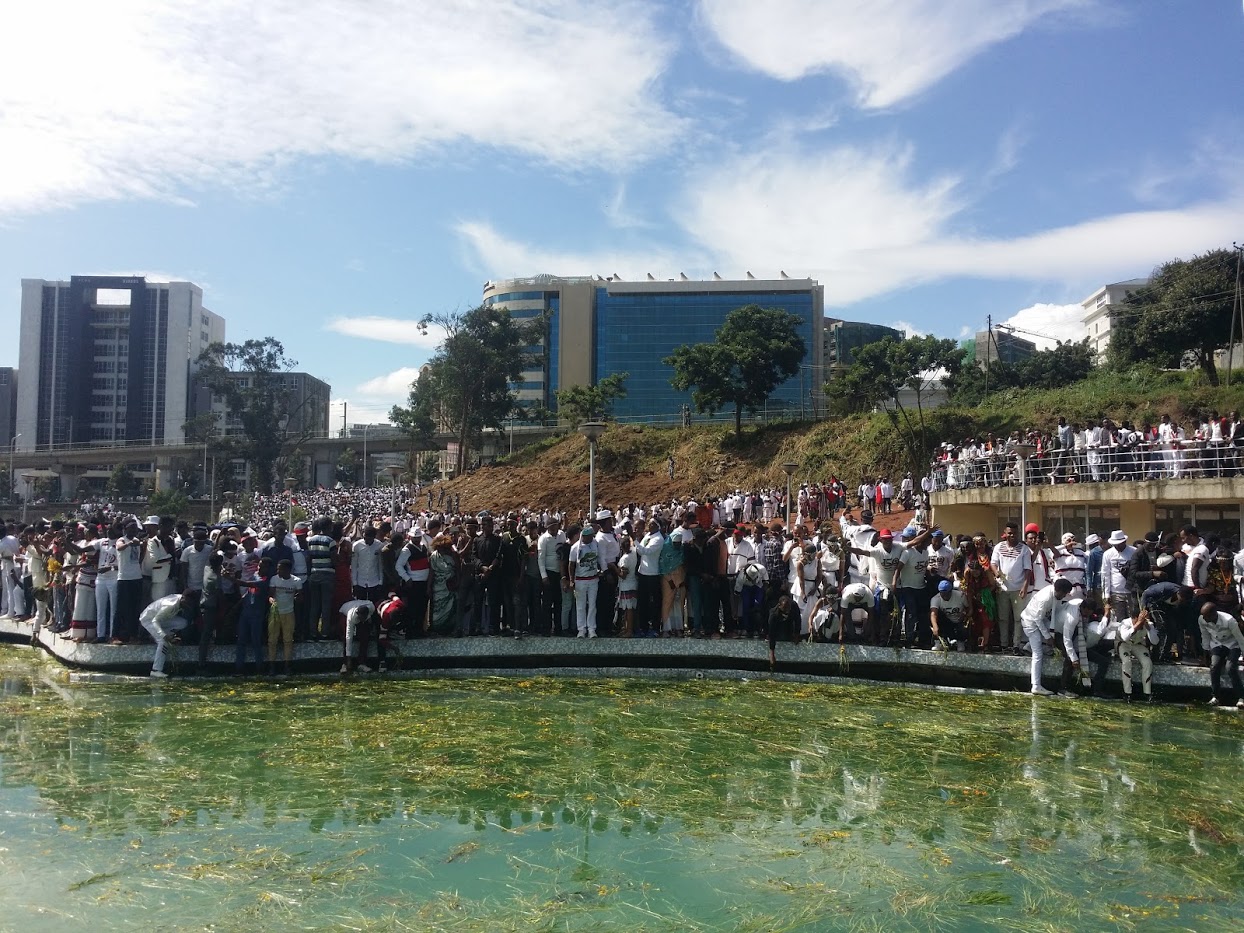 🇪🇹 Addis Ababa, EthiopiaIrreechaIrreessa
A thanksgiving festival at sacred lakes in Oromia, Ethiopia, at the end of the rainsFestival
🇪🇹 Addis Ababa, EthiopiaIrreechaIrreessa
A thanksgiving festival at sacred lakes in Oromia, Ethiopia, at the end of the rainsFestival
 🇹🇷 Turkey and 5 moreCoffee culture
The habits and etiquette of drinking coffee, and the cafés built around itTable custom · Tea, coffee and drinking ceremonies
🇹🇷 Turkey and 5 moreCoffee culture
The habits and etiquette of drinking coffee, and the cafés built around itTable custom · Tea, coffee and drinking ceremonies
 🇮🇱 Israel and 5 moreHoly SaturdaySabbatum Sanctum
The closing day of Holy Week, a Saturday of waiting, fasting and vigil before EasterSpiritual
🇮🇱 Israel and 5 moreHoly SaturdaySabbatum Sanctum
The closing day of Holy Week, a Saturday of waiting, fasting and vigil before EasterSpiritual
 🇷🇺 Moscow, Russia and 5 moreDormition of the Mother of God
A major feast in Eastern Christianity marking the death and heavenly ascent of Mary.Spiritual
🇷🇺 Moscow, Russia and 5 moreDormition of the Mother of God
A major feast in Eastern Christianity marking the death and heavenly ascent of Mary.Spiritual
 🇷🇺 Russia and 5 moreBeheading of John the Baptist
A Christian holy day of strict fasting that marks the death of John the BaptistSpiritual · Fasting and breaking the fast
🇷🇺 Russia and 5 moreBeheading of John the Baptist
A Christian holy day of strict fasting that marks the death of John the BaptistSpiritual · Fasting and breaking the fast
 🇦🇲 Armenia and 5 moreFeast of the TransfigurationՊայծառակերպութիւն
A Christian holy day marking the revelation of Christ's divine glory on Mount TaborSpiritual · Feasts and festival meals
🇦🇲 Armenia and 5 moreFeast of the TransfigurationՊայծառակերպութիւն
A Christian holy day marking the revelation of Christ's divine glory on Mount TaborSpiritual · Feasts and festival meals
 🇮🇱 Jerusalem, Israel and 5 moreKiddush Levanahקידוש לבנה
A Jewish ritual service held after the new moon to bless God for the lunar cycle and seek protection.Spiritual
🇮🇱 Jerusalem, Israel and 5 moreKiddush Levanahקידוש לבנה
A Jewish ritual service held after the new moon to bless God for the lunar cycle and seek protection.Spiritual
 🇸🇾 Syria and 2 moreAd orientem
The Christian practice of facing eastward during personal prayer and communal liturgySpiritual
🇸🇾 Syria and 1 moreThree Sundays of Commemoration
A Maronite Christian observance held on the three Sundays before Lent to remember the departed.Spiritual · Dinner
🇪🇹 Ethiopia and 1 moreFilsetaፍልሰታ
A fifteen-day fast and feast honouring the Dormition and Assumption of MarySpiritual · Fasting and breaking the fast
🇪🇹 EthiopiaGifaataaጊፋታ
The annual New Year celebration of the Wolayta people in southern EthiopiaSeasonal · Feasts and festival meals
🇸🇾 Syria and 2 moreAd orientem
The Christian practice of facing eastward during personal prayer and communal liturgySpiritual
🇸🇾 Syria and 1 moreThree Sundays of Commemoration
A Maronite Christian observance held on the three Sundays before Lent to remember the departed.Spiritual · Dinner
🇪🇹 Ethiopia and 1 moreFilsetaፍልሰታ
A fifteen-day fast and feast honouring the Dormition and Assumption of MarySpiritual · Fasting and breaking the fast
🇪🇹 EthiopiaGifaataaጊፋታ
The annual New Year celebration of the Wolayta people in southern EthiopiaSeasonal · Feasts and festival meals
 🇪🇹 EthiopiaFichee-Chambalaalla
A moveable new year festival of the Sidama people in Ethiopia.Festival · Feasts and festival meals
🇪🇹 EthiopiaFichee-Chambalaalla
A moveable new year festival of the Sidama people in Ethiopia.Festival · Feasts and festival meals
Photo credits on this page
The small pictures above come from Wikimedia Commons under free licences. Some are cropped to fit.
- Nativity Fast: User:LoKi, Public domain, source
- Prostration: Meghan Breeze, CC BY-SA 4.0, source
- Meskel: DanielGirmaTsige, CC BY-SA 4.0, source
- Sigd: האגודה הישראלית למען יהודי אתיופיה, CC BY-SA 3.0, source
- Enkutatash: Nati Tad, CC BY-SA 4.0, source
- Lent: Manuela Paki-Costa, CC BY-SA 3.0, source
- Timkat: Jean Rebiffé, CC BY 4.0, source
- Ethiopian Christmas: Tanjagari, CC BY-SA 4.0, source
- Ashenda: Unknown author, Public domain, source
- Handshake: Rufino, CC BY-SA 2.0, source
- Buhe: Woyne, CC BY-SA 4.0, source
- Rite of passage: Rogier van der Weyden, Public domain, source
- Dhaanto: aflaanta std, CC BY 3.0, source
- Great Lent: Stalinsunnykvj, CC BY-SA 4.0, source
- Irreecha: Mohammed Kassahun, CC BY-SA 4.0, source
- Gadaa: YHANNES BULTIE TADESSE, CC BY-SA 4.0, source
- Habesha coffee ceremony: sameffron, CC BY-SA 2.0, source
- Nayrouz: Rafael Tuck & Sons, Ltd., CC BY-SA 2.5, source
- Harvest festival: High Contrast, CC BY 3.0 de, source
- Epiphany: Gentile da Fabriano, Public domain, source
- Coffee culture: The original uploader was Hajor at English Wikipedia ., CC BY 3.0 br, source
- Holy Saturday: Anonymous Unknown author, Public domain, source
- Dormition of the Mother of God: El Greco, Public domain, source
- Beheading of John the Baptist: Caravaggio, Public domain, source
- Fichee-Chambalaalla: User:Kebede asefa, CC BY-SA 3.0, source
- Kiddush Levanah: Wacław Koniuszko, Public domain, source
- Feast of the Transfiguration: Unknown artist, Public domain, source
- Ad orientem: Joachim Specht, Public domain, source