Folklore and beliefEast AsiaShinto, Taoist and folk ChineseBuddhist
Five Grains
In its own language: 五穀
A sacred grouping of staple crops honoured as the bedrock of East Asian civilization

The Five Grains is a traditional grouping of foundational crops that originated in ancient China and spread across East Asia. Revered through folklore and spiritual teachings as sacred gifts from mythic rulers, these staple harvests represent the root of settled society and daily sustenance.
The Five Grains is a sacred East Asian concept that groups five essential cultivated crops as the foundation of human society. Originating in ancient China, the grouping honors staple harvests as divine gifts taught by mythic culture heroes. Respect for these foods shaped moral codes, religious diets, and everyday eating habits across China and Japan, where wasting grain was long regarded as a grave spiritual fault.
Mythic origins and history
Early Chinese texts first mentioned the five grains without specifying each crop, as seen in the Analects. During the Han dynasty, scholars compiled explicit lists. The Classic of Rites named soybeans, wheat, hemp, and two varieties of millet, while later commentaries substituted rice for hemp. Ancient folklore attributed the crops to revered culture heroes. The philosopher Mencius credited Houji with teaching people to farm them. Other texts, such as Lu Jia's Xin Yu and the Epic of Darkness, credited the mythical sovereign Shennong. Mythology also tied the medical classic Huangdi Neijing to the Yellow Emperor, who grouped five grains alongside sets of five fruits, vegetables, and livestock.
Spiritual and moral meaning
Because legendary rulers were believed to have established agriculture, the five grains came to embody civilization itself. Throwing away or wasting grain was viewed as a severe moral offense, said to bring punishment in Diyu, the subterranean underworld of Chinese belief. Eating or abstaining from these crops carried strong symbolic weight. The loyalists Boyi and Shuqi famously refused the grains to protest the fall of the Shang dynasty. Over time, this political refusal influenced the Taoist custom of bigu, an ascetic practice where adepts abstain from grain to cultivate spiritual purity and seek immortality. Later Buddhist teachers, including the Tang monk Daoxuan, blended these indigenous groupings with Indian Buddhist botanical classifications.
Adoption across Japan
By the eighth century, the concept crossed the sea to Japan, where it became known as gokoku. Early Japanese chronicles recorded different versions of the group. The Kojiki in 711 listed rice, barley, foxtail millet, soybeans, and adzuki beans. The Nihon Shoki in 720 included Japanese millet alongside rice, barley, beans, and foxtail millet. Modern Japanese definitions generally feature rice, barley, beans, foxtail millet, and either proso millet or Japanese millet. This legacy continues in daily life through gokokumai, a multi-grain blend cooked with white or brown rice. The dish combines diverse grains to celebrate culinary variety and recall historical agrarian roots.
Archaeological roots in China
Excavations reveal that the crops grouped under this title sustained Chinese communities for millennia. Grinding stones date back to the Nanzhuangtou culture along the Yellow River basin. Early farming settlements at Xinglongwa in Inner Mongolia and Dadiwan along the upper Yellow River grew millet. Later Yangshao villages farmed millet widely, alongside some barley, rice, and hemp. Further south along the Yangtze, sites from the Pengtoushan culture yielded early farming implements, while Hemudu communities near Hangzhou Bay cultivated rice. Over centuries, northern dynasties united and assimilated these southern regions, bringing northern millet and southern rice together under the shared concept of the five grains.
How Five Grains is kept
The tradition is maintained through language, ritual respect, and dietary customs. In everyday speech, wugu serves as a collective term for all staple cereal crops. Households treat grains with reverence, avoiding waste to respect the sustenance provided by nature and mythical culture bearers. In religious settings, Taoist practitioners historically fasted from the five grains in pursuit of spiritual transcendence through bigu. In modern dining across East Asia, cooks prepare mixed-grain combinations such as Japanese gokokumai, blending rice with pulses and millets to honour this ancient fivefold grouping.
When and where
The concept originated in the Yellow River and Yangtze River basins of China. It became a foundational idea across greater China and later spread to Japan and other parts of East Asia, where it remains embedded in cultural idioms, literature, and culinary traditions.
What Five Grains means
To those who revere it, the Five Grains symbolize civilization, survival, and moral order. Agrarian society viewed these crops not as arbitrary plants, but as sacred gifts bestowed by ancestral culture heroes. Respecting grain stood for gratitude toward the earth and the rulers who sustained human life, while rejecting or wasting grain carried intense political and spiritual meaning.


Questions people ask about Five Grains
What are the Five Grains?
The Five Grains is a traditional East Asian grouping of five essential staple crops. In modern Chinese usage, the term usually refers to rice, wheat, soybeans, foxtail millet, and proso millet, and also acts as a general word for all grain crops.
Where is the concept of the Five Grains kept?
The concept originated in ancient China along the Yellow and Yangtze river valleys. It later extended to Japan during the eighth century and spread throughout East Asia, shaping folklore, philosophical writings, and dietary traditions across the region.
Why were the Five Grains considered sacred?
They were viewed as the bedrock of civilization, traditionally credited to legendary rulers such as Shennong, Houji, and the Yellow Emperor. Wasting grain was considered a grave sin deserving punishment in Diyu, the subterranean underworld of Chinese belief.
What is bigu in relation to the Five Grains?
Bigu is an esoteric Taoist practice of fasting from grains to achieve spiritual immortality. It evolved from historical political protests, such as when loyalists Boyi and Shuqi refused to eat the five grains after a change of dynasty.
See also
 HalloweenAn annual observance on 31 October marking the eve of All Saints' Day, rooted in Christian tradition and Celtic heritage
 Manchu-Han Imperial FeastA grand multi-day banquet uniting Manchu and Han culinary traditions in China
 PretaOfferings and rites for spirits enduring deep hunger across Asian traditions.Cenobitic monasticismA communal way of monastic life where monks live, pray, and follow a shared rule
Good reading and sources
The facts on this page come from the Wikipedia article "Five Grains", written by its contributors and used under the CC BY-SA 4.0 licence, and from its Wikidata record (CC0). EveryParampara rewrote the text in its own words, with AI assistance, and compares every page with the article to make sure no passage is copied. It may be reused under the same CC BY-SA 4.0 licence with a link back.
It may contain mistakes. Traditions differ from one family, village and community to the next, and the people who keep them know them best. If something is wrong, tell us. Last refreshed 2026-10-07.
More from China
All the traditions of China 🇨🇳 Puyang, ChinaFeng shui風水
The Chinese spatial practice of aligning homes and graves with natural energyFolklore
🇨🇳 Puyang, ChinaFeng shui風水
The Chinese spatial practice of aligning homes and graves with natural energyFolklore
 🇯🇵 Tokyo, Japan and 2 moreManeki-neko招き猫
A lucky cat figurine, paw raised, kept by shop doors and in homes across JapanFolklore
🇯🇵 Tokyo, Japan and 2 moreManeki-neko招き猫
A lucky cat figurine, paw raised, kept by shop doors and in homes across JapanFolklore
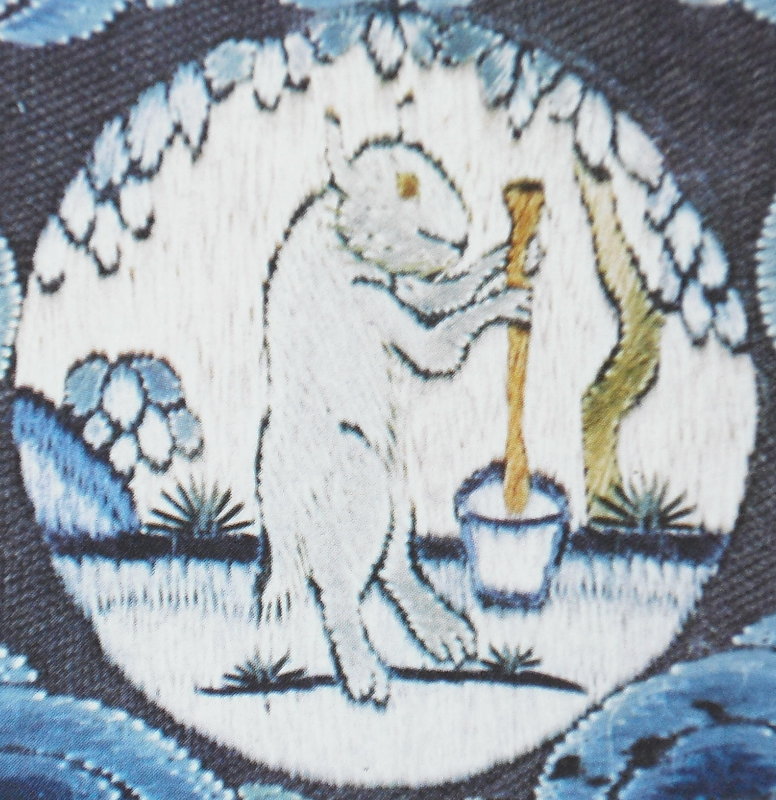 🇨🇳 China and 5 moreMoon rabbit月兔
A hare seen in the Moon's dark patches, pounding rice cakes or the elixir of lifeFolklore
🇨🇳 ChinaSymbolic stars神煞
Helpful and harmful influences read from the Chinese calendar's stems and branchesFolklore
🇨🇳 China and 5 moreMoon rabbit月兔
A hare seen in the Moon's dark patches, pounding rice cakes or the elixir of lifeFolklore
🇨🇳 ChinaSymbolic stars神煞
Helpful and harmful influences read from the Chinese calendar's stems and branchesFolklore
The same idea elsewhere
Fasting and feasting compared
🇮🇪 Ireland and 5 moreHalloween
An annual observance on 31 October marking the eve of All Saints' Day, rooted in Christian tradition and Celtic heritageFestival · Sweets given and shared
 🇹🇷 Turkey and 5 moreEid al-Fitrعيد الفطر
The feast that ends Ramadan, opened with morning prayers, sweets and visits homeFestival · Feasts and festival meals
🇹🇷 Turkey and 5 moreEid al-Fitrعيد الفطر
The feast that ends Ramadan, opened with morning prayers, sweets and visits homeFestival · Feasts and festival meals
 🇦🇺 Australia and 5 moreGood Friday
A solemn Christian holy day commemorating the crucifixion and death of Jesus Christ.Spiritual · Fasting and breaking the fast
🇦🇺 Australia and 5 moreGood Friday
A solemn Christian holy day commemorating the crucifixion and death of Jesus Christ.Spiritual · Fasting and breaking the fast
 🇮🇳 Ayodhya, India and 7 moreDiwaliदीपावली (Dīpāvalī)
A five-day festival of lights celebrated across India and its diaspora to mark the victory of light over darkness.Festival · Feasts and festival meals
🇮🇳 Ayodhya, India and 7 moreDiwaliदीपावली (Dīpāvalī)
A five-day festival of lights celebrated across India and its diaspora to mark the victory of light over darkness.Festival · Feasts and festival meals