Seasons, harvest and the calendarEast AsiaSecular and civic
Golden Week
In its own language: 黄金周
Seven- or eight-day national holiday periods in China for travel and family visits

Golden Week refers to week-long public holiday breaks in China designed to give workers extended time off. Set around major occasions like the Spring Festival, May Day, and National Day, these periods allow millions across the country to travel and reunite with family.
When is Golden Week marked?
Golden Week is kept as part of May Day and Labour Day, which is on Saturday, 1 May 2027.
In China, Golden Week refers to extended statutory holiday breaks that give workers seven or eight consecutive days away from their jobs. Established to encourage leisure travel and provide time for long-distance family visits, these periods reshape the national routine. By rearranging weekend shifts alongside official paid leave, the system grants unbroken time off around the Lunar New Year, Labor Day, and China's National Day in autumn.
The three holiday periods
China observes three separate Golden Week periods throughout the year. The first coincides with the Spring Festival, or Chinese New Year, taking place in January or February. The second begins on May 1 for Labor Day, an observance that was restored in 2019 following an earlier suspension. The third starts around October 1 for National Day. Whenever the Mid-Autumn Festival falls close to National Day, the break lengthens to eight days. Each period combines three or four paid holiday days with swapped weekend shifts, creating a continuous block of rest.
Origins and travel surges
The Golden Week system originated in 1999 for National Day before expanding to three annual holidays in 2000. Chinese authorities designed the prolonged breaks to stimulate domestic tourism, strengthen consumer commerce, and raise living standards, while giving employees a practical window to visit distant relatives. The policy quickly transformed travel patterns across the nation. Even during 2020, more than 637 million domestic trips occurred over the holiday period, bringing in roughly 466 billion yuan in tourism earnings.
Reforms and calendar adjustments
Over time, the long breaks triggered debate among policymakers. Critics in 2004 and 2006 noted that seven-day shutdowns disrupted business, foreign trade, and government functions such as customs and tax collection. In response, a calendar revision took effect in 2008. The reform reduced May Day to a single day off and established new public holidays for three traditional celebrations: the Qingming Festival, the Dragon Boat Festival, and the Mid-Autumn Festival. This shift aimed to distribute travel more evenly and support customary observances.
How Golden Week is kept
Workers receive statutory paid days off, while the government shifts surrounding weekend schedules to build a continuous seven- or eight-day vacation. Across the country, millions take advantage of the extended time to travel across provinces, visit family, or tour popular destinations. Public agencies and commercial offices pause standard services, leading to heavy transit traffic across national railway lines, roads, and flight corridors.
When and where
Golden Weeks take place three times a year: during the Spring Festival in January or February, starting May 1 for Labor Day, and beginning October 1 for National Day. If the Mid-Autumn Festival falls near National Day, the autumn holiday extends to eight days.
Golden Week is observed across China. The public holidays impact urban centers, transport hubs, and regional hometowns nationwide as citizens travel between major employment hubs and their ancestral localities.
What Golden Week means
The Golden Week system bridges modern civic policy and traditional family life. While established by the state to support economic growth and leisure travel, the extended breaks have become an essential modern occasion for long-distance family reunions, allowing workers in distant cities to return home and reconnect with their communities.
Days Golden Week is marked
Questions people ask about Golden Week
When is Golden Week marked?
Golden Week is kept as part of May Day and Labour Day, which is on Saturday, 1 May 2027.
What is a Golden Week in China?
It is an extended public holiday period lasting seven or eight consecutive days. The system combines paid leave with rearranged weekend workdays to provide prolonged time off for travel and rest.
Why was the Golden Week system created?
The Chinese government launched the framework in 1999 and 2000 to foster domestic tourism, improve general living standards, and give workers sufficient time for long-distance family visits.
How did traditional festivals change the Golden Week calendar?
In 2008, the schedule was modified to turn May Day into a shorter holiday while adding days off for the Qingming, Dragon Boat, and Mid-Autumn festivals to balance travel flow.
See also
 Tsagaan SarThe Mongolian Lunar New Year festival of peace, elders, white foods and renewal
 NowruzThe Iranian new year at the March equinox, kept with fire, greenery and picnics
 JiaoziCrescent Chinese dumplings filled with meat or vegetables, eaten for fortune and feasts
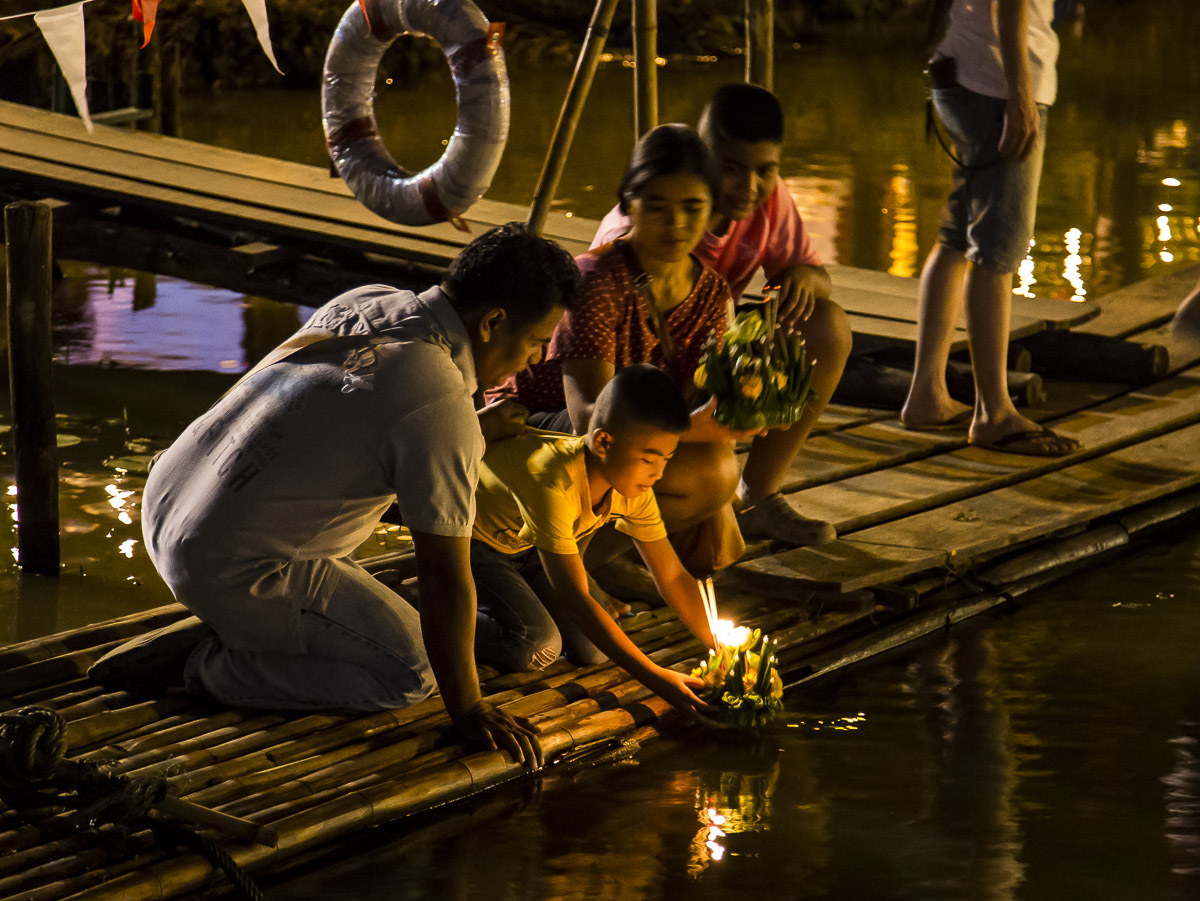 Loy KrathongA Thai festival of floating leaf baskets on rivers to honor water and release negativity.
Good reading and sources
- Coronavirus isn't going anywhere — the same can't be said for China's travel loversABC News Australia, Article
- Coronavirus isn't going anywhere — the same can't be said for China's travel loversABC News Australia, Article
The facts on this page come from the Wikipedia article "Golden Week (China)", written by its contributors and used under the CC BY-SA 4.0 licence, and from its Wikidata record (CC0). EveryParampara rewrote the text in its own words, with AI assistance, and compares every page with the article to make sure no passage is copied. It may be reused under the same CC BY-SA 4.0 licence with a link back.
It may contain mistakes. Traditions differ from one family, village and community to the next, and the people who keep them know them best. If something is wrong, tell us. Last refreshed 2026-10-04.
More from China
All the traditions of China
🇲🇳 Mongolia and 2 moreTsagaan SarЦагаан сар
The Mongolian Lunar New Year festival of peace, elders, white foods and renewalSeasonal · Feasts and festival meals
 🇮🇷 Iran and 5 moreWinter solstice
The shortest day and longest night of the year, marked with fire, feasting and poetrySeasonal
🇮🇷 Iran and 5 moreWinter solstice
The shortest day and longest night of the year, marked with fire, feasting and poetrySeasonal
 🇨🇳 China and 5 moreDouble Ninth Festival重陽節
An autumn festival of mountain walks, chrysanthemum wine and ancestor remembranceSeasonal · Tea-time and snacking customs
🇨🇳 China and 5 moreDouble Ninth Festival重陽節
An autumn festival of mountain walks, chrysanthemum wine and ancestor remembranceSeasonal · Tea-time and snacking customs
 🇨🇳 Suzhou, China and 3 moreDongzhi冬至
A midwinter festival celebrating the return of light with family feasts and dumplingsSeasonal · Dinner
🇨🇳 Suzhou, China and 3 moreDongzhi冬至
A midwinter festival celebrating the return of light with family feasts and dumplingsSeasonal · Dinner
The same idea elsewhere
New Year compared 🇮🇳 Ayodhya, India and 7 moreDiwaliदीपावली (Dīpāvalī)
A five-day festival of lights celebrated across India and its diaspora to mark the victory of light over darkness.Festival · Feasts and festival meals
🇮🇷 Iran and 7 moreNowruzنوروز
The Iranian new year at the March equinox, kept with fire, greenery and picnicsSeasonal
🇮🇳 Ayodhya, India and 7 moreDiwaliदीपावली (Dīpāvalī)
A five-day festival of lights celebrated across India and its diaspora to mark the victory of light over darkness.Festival · Feasts and festival meals
🇮🇷 Iran and 7 moreNowruzنوروز
The Iranian new year at the March equinox, kept with fire, greenery and picnicsSeasonal
 🇮🇱 Jerusalem, Israel and 1 moreHanukkahחֲנֻכָּה
An eight-day Jewish festival marking the rededication of the Second Temple in Jerusalem and the miracle of a single day'Festival
🇮🇱 Jerusalem, Israel and 1 moreHanukkahחֲנֻכָּה
An eight-day Jewish festival marking the rededication of the Second Temple in Jerusalem and the miracle of a single day'Festival
 🇪🇬 Egypt and 5 moreMawlidمولد (Mawlid)
An annual festival marking the birth of the Prophet Muhammad, marked by poetry, processions and feasts.Festival · Feasts and festival meals
🇪🇬 Egypt and 5 moreMawlidمولد (Mawlid)
An annual festival marking the birth of the Prophet Muhammad, marked by poetry, processions and feasts.Festival · Feasts and festival meals