Seasons, harvest and the calendarEurope
Guldize
In its own language: Gool dheys
A Cornish harvest supper after the last sheaf is cut, with pork, pie, singing and games
Guldize is a harvest festival of the Cornish people, held when the wheat harvest ends. Farming families and their workers shared a large supper, sang together and carried the last sheaf indoors. The custom is recorded from 1602 and has been revived in Penzance and elsewhere in Cornwall since 2008.
When is Guldize kept?
Guldize is kept at the close of the wheat harvest, usually near the autumn equinox.
Guldize is the harvest festival of the Cornish people, kept at the close of the wheat harvest. Neighbours and farm families gathered for a large supper once the last sheaf was cut, and the evening mixed food, singing and games. A version of it has been held again in Cornwall since 2008.
What it is
Guldize belongs to Cornwall, the south-western county of the United Kingdom, and it is the harvest festival of the Cornish people. The word comes from the Cornish 'Gool dheys', which means feast of ricks, the stacks of grain built in a field after cutting. It marked the finish of the wheat harvest, so it fell near the autumn equinox. People came together for one large meal. The last sheaf, known as the neck, was central to the whole event. Written forms of the name vary: Gooldize, and sometimes Dicklydize or Nickly Thize.
Origins and history
The oldest mention of Guldize that survives is from 1602, when Richard Carew wrote about it in his Survey of Cornwall. Later writers recorded how it was kept. A. K. Hamilton Jenkin described the evening in his book Cornish Homes and Customs. When the neck had been cut, the harvest workers went to the farmhouse kitchen. A crowd larger than the farmer's own household sat down to eat. That reference by Carew is the earliest one the sources give for the festival.
How it is kept
The evening began with Crying the Neck, the ceremony for the final sheaf of wheat. Once it was cut, the neck went to the feast. The last sheaf was made into a corn dolly, and that figure held the place of honour through the night. One custom turned the walk to the feast into a small game. A man was picked to carry the neck and slip into the building unseen. A chosen woman tried to catch him. If she did, she drenched him with water. If he got in without being found out, he was allowed to kiss her.
Food, drink and song
The harvest supper was a solid meal. Workers and the farming family ate broiled pork with potatoes. A second course followed: apple pie, cream and fuggans. Cider and spirits went round the table. Music and group singing came after the food and could carry on until morning. Songs noted from these gatherings include 'Harvest Home' and 'Green Brooms'. Through it all the corn dolly stayed among the company. The whole evening took place indoors, in the farmhouse kitchen, once the field work had finished for the year.
Today and change
Guldize faded as a working farm custom, though the sources do not say when. A revived celebration has been held in Penzance every year since 2008. From 2010 onwards, similar events have been started in several other places around Cornwall. Filming of the 2010 Penzance feast exists, and a video of it is linked from the subject's entry. So the festival is kept today by people in Cornwall, in a form that carries the old name and the old harvest theme into the present.
How Guldize is kept
Harvest workers and the farmer's family, along with a wider company of neighbours, took part. The last sheaf of wheat was cut in the field first, in the ceremony called Crying the Neck. That sheaf, the neck, was then shaped into a corn dolly. One man was chosen to carry it to the farmhouse and get inside without being spotted, while a woman chosen for the task tried to stop him and soak him. Everyone then sat down to a large supper in the kitchen. Singing and music followed, sometimes lasting the whole night.
When and where
Guldize fell at the end of the wheat harvest, which in Cornwall comes around the time of the autumn equinox. The date was set by the field work, not by a fixed day in the calendar, so it moved from year to year. The revived celebration in Penzance has been held annually since 2008.
The custom belongs to Cornwall, in the south-west of the United Kingdom. It was a farmhouse event, held indoors once the harvest was in. Today the best known celebration is in Penzance, and since 2010 other places in Cornwall have held their own versions.
What Guldize means
For the people who kept it, Guldize marked the end of the heaviest work of the farming year. The last sheaf stood for the crop, and the corn dolly made from it was treated as the head of the celebrations. The shared supper and the singing brought the workers and the farming family together. The corn dolly held a place of honour during the night, and the meal closed the season in company.
Questions people ask about Guldize
When is Guldize kept?
Guldize is kept at the close of the wheat harvest, usually near the autumn equinox.
What is Guldize?
It is the harvest festival of the Cornish people. It was held when the wheat harvest ended and centred on a large shared meal, usually near the autumn equinox. The name comes from Cornish words meaning feast of ricks, the stacks of grain.
Where is it kept?
The tradition belongs to Cornwall in the United Kingdom. It began as a farmhouse supper rather than a public event. The modern revival is centred on Penzance, and since 2010 several other places in Cornwall have held their own Guldize celebrations.
What was eaten at the feast?
Harvest workers and the farmer's household shared broiled pork with potatoes. A second course brought apple pie, cream and fuggans, with cider and spirits to drink. Music and communal singing followed, sometimes lasting through the night.
What happens with the corn neck?
The final sheaf, called the neck, was cut in the ceremony of Crying the Neck. It was then made into a corn dolly that held a place of honour at the feast. A chosen man carried it to the farmhouse, trying to avoid a woman who would drench him if she caught him.
See also
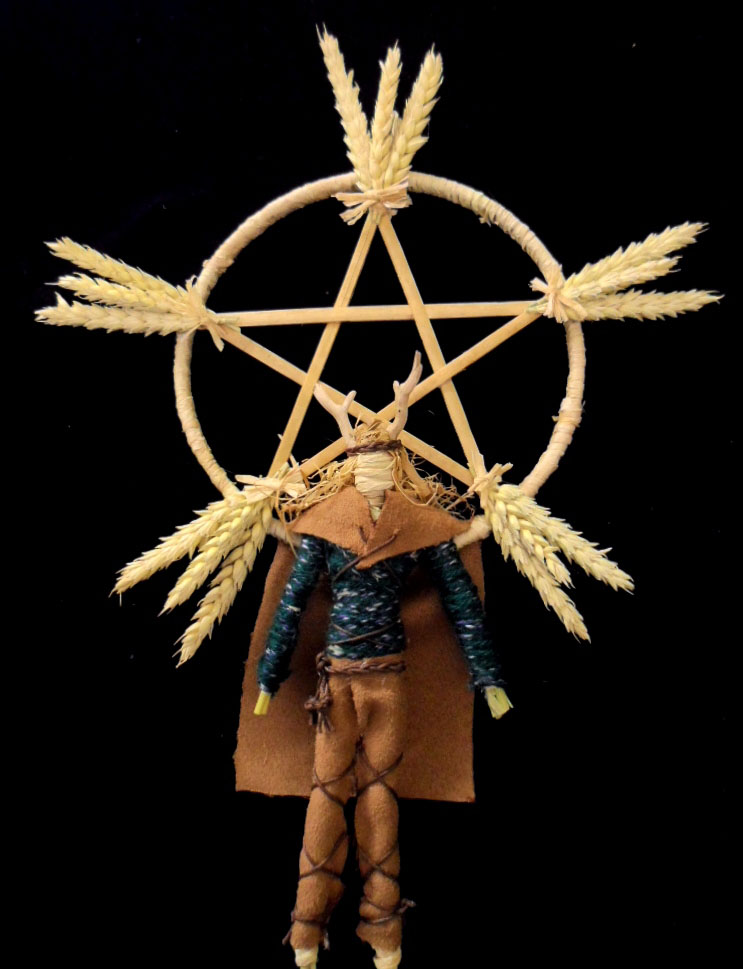 LughnasadhA Gaelic festival marking the start of harvest with feasts, fairs and mountain walks
 LammasA harvest festival marking the blessing of the first baked bread from the new wheat crop
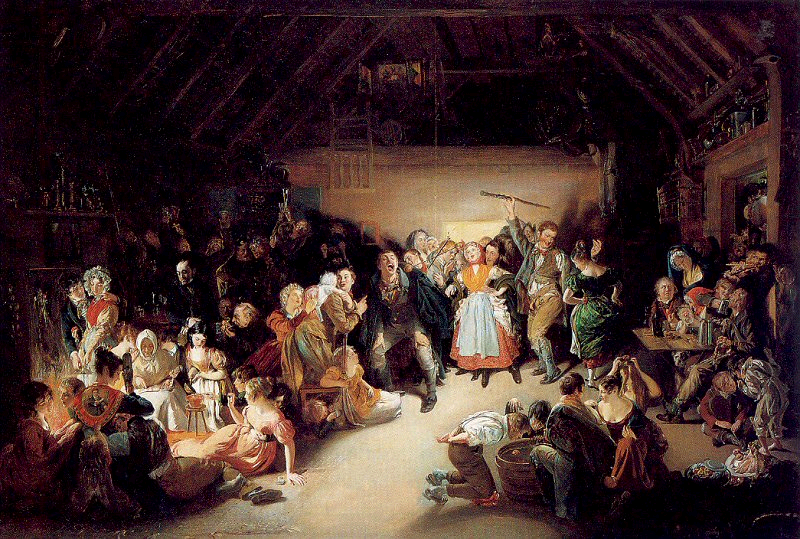 SamhainA Gaelic festival marking the start of winter with bonfires and ancestor feasts
 Harvest FestivalAn autumn thanksgiving for the crops, kept in churches and schools across the UK
Good reading and sources
The facts on this page come from the Wikipedia article "Guldize", written by its contributors and used under the CC BY-SA 4.0 licence, and from its Wikidata record (CC0). EveryParampara rewrote the text in its own words, with AI assistance, and compares every page with the article to make sure no passage is copied. It may be reused under the same CC BY-SA 4.0 licence with a link back.
It may contain mistakes. Traditions differ from one family, village and community to the next, and the people who keep them know them best. If something is wrong, tell us. Last refreshed 2026-10-10.
More from the United Kingdom
All the traditions of the United Kingdom
🇮🇪 Killorglin, Ireland and 1 moreLughnasadhLúnasa
A Gaelic festival marking the start of harvest with feasts, fairs and mountain walksSeasonal · Feasts and festival meals
🇬🇧 United KingdomLammashlāfmæsse
A harvest festival marking the blessing of the first baked bread from the new wheat cropSeasonal
🇮🇪 Ireland and 1 moreSamhain
A Gaelic festival marking the start of winter with bonfires and ancestor feastsSeasonal · Feasts and festival meals
 🇬🇧 United Kingdom and 5 moreHarvest festival
A thanks for the gathered crop, kept with church meals, songs and shared foodSeasonal · Feasts and festival meals
🇬🇧 United Kingdom and 5 moreHarvest festival
A thanks for the gathered crop, kept with church meals, songs and shared foodSeasonal · Feasts and festival meals
The same idea elsewhere
Harvest and thanksgiving compared 🇮🇳 Ayodhya, India and 7 moreDiwaliदीपावली (Dīpāvalī)
A five-day festival of lights celebrated across India and its diaspora to mark the victory of light over darkness.Festival · Feasts and festival meals
🇮🇳 Ayodhya, India and 7 moreDiwaliदीपावली (Dīpāvalī)
A five-day festival of lights celebrated across India and its diaspora to mark the victory of light over darkness.Festival · Feasts and festival meals
 🇮🇱 Jerusalem, IsraelPassoverפסח
A Jewish spring festival celebrating freedom from slavery with ritual mealsSpiritual · Dinner
🇮🇱 Jerusalem, IsraelPassoverפסח
A Jewish spring festival celebrating freedom from slavery with ritual mealsSpiritual · Dinner
 🇮🇱 Jerusalem, IsraelSukkotסוכות
A seven-day autumn Jewish festival of temporary booths, harvest prayers and hospitalitySpiritual
🇮🇱 Jerusalem, IsraelSukkotסוכות
A seven-day autumn Jewish festival of temporary booths, harvest prayers and hospitalitySpiritual
 🇮🇳 Jammu, IndiaBhangra
A Punjabi harvest dance, first kept by farmers and now performed worldwidePerformance
🇮🇳 Jammu, IndiaBhangra
A Punjabi harvest dance, first kept by farmers and now performed worldwidePerformance