Seasons, harvest and the calendarEuropePagan and ancientChristian
Lughnasadh
In its own language: Lúnasa
A Gaelic festival marking the start of harvest with feasts, fairs and mountain walks
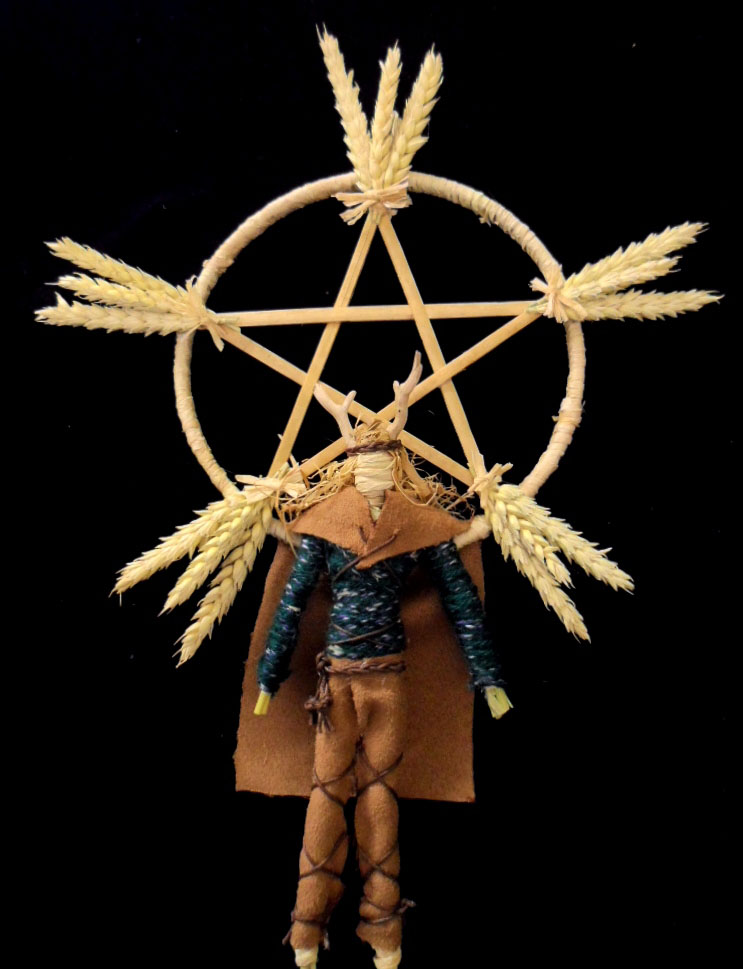
Lughnasadh is an ancient Gaelic festival marking the onset of the harvest season, celebrated on the first of August across Ireland, Scotland and the Isle of Man. Historically held to honour the god Lugh, the day brings communities together for hill walks, fresh food, fairs, matchmaking and games.
When is Lughnasadh in 2027?
Lughnasadh 2027 is on Sunday, 1 August 2027. Other years: 2026, Saturday, 1 August 2026; 2028, Tuesday, 1 August 2028.
Lughnasadh is a Gaelic seasonal festival that marks the arrival of the harvest. Standing halfway between midsummer and autumn, it was traditionally kept across Ireland, Scotland and the Isle of Man. People gathered to taste the first crops, arrange marriages, compete in athletic events and climb nearby summits. Named after the Celtic god Lugh, the occasion is still observed today through mountain walks, traditional fairs and modern pagan rites.
Origins and sacred myths
Ancient lore links this feast to the deity Lugh, who established funeral contests to honour his foster mother Tailtiu. Stories say she died from the toil of clearing the land for planting crops. Other tales describe a battle over the ripening grain between Lugh and Crom Dubh, a figure guarding the earth's riches. Folklorist Máire MacNeill identified this confrontation as an effort to overcome drought and blight so humans could eat. In later folk tales, Saint Patrick took the role of Lugh, subduing Crom Dubh and converting him. Whether viewed as an act of mourning for departing summer or a celebration of hard-won grain, the festival honoured the earth's bounty.
Historic gatherings and games
Medieval assemblies drew large crowds for days of sport, lawmaking and commerce under an official truce. The most famous was Aonach Tailteann in County Meath, where kings oversaw horse races, music and athletic trials. Matchmaking was a central attraction. Young partners could enter a trial union by holding hands through an opening in a wooden door, a pact lasting twelve months and a day before being confirmed or peacefully dissolved. People also visited sacred wells to walk sunwise, pray for sound health and leave small coins or scraps of cloth. In some Scottish communities, rival groups of youths constructed earthen sod towers and staged mock battles.
Rituals on the heights
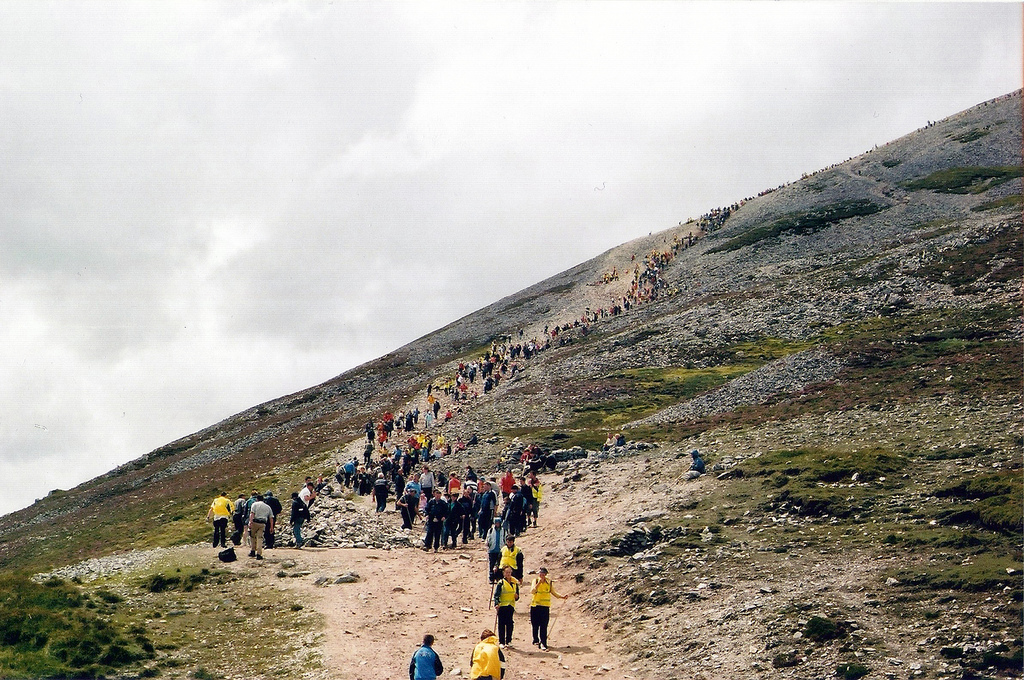
As early crops began to ripen, families climbed high hills to forage for sweet bilberries and celebrate. These excursions gave the day regional names like Bilberry Sunday or Mountain Sunday. Ascending the peaks carried symbolic meaning: climbers wore wildflowers and buried them upon the summit to signify the closing of summer, while others interred the first cut grain as an offering. Young people spent the afternoon dancing, playing music and testing their strength in weight-throwing or hurling matches. Over time, several of these hilltop walks evolved into Christian events, such as the Reek Sunday ascent of Croagh Patrick, where massive crowds gather.
Living festivals and revivals
Echoes of Lughnasadh survive across modern Ireland in lively summer fairs. In the Kerry town of Killorglin, the three-day Puck Fair crowns a wild mountain goat as sovereign and a schoolgirl as queen, accompanied by cattle sales, street music and dancing. Similar cultural gatherings have returned to towns such as Brandon, Sligo and Gweedore, where artisans display traditional crafts and storytellers entertain crowds. At Craggaunowen in County Clare, historical re-enactors showcase Gaelic clothing and ancient lifeways. Meanwhile, Celtic neopagans and Wiccans have embraced the festival as a sacred seasonal milestone, celebrating it with feasts, handfasting unions and offerings from the land.
How Lughnasadh is kept
Families, townspeople and religious observers mark the feast in several distinct ways. In rural areas, walkers journey to hilltops, carrying freshly plucked wildflowers to bury at the summit and gathering wild bilberries along the way. Town communities gather in open squares for multi-day fairs that feature market stalls, cattle trade, music and energetic dancing. Neopagan groups celebrate by sharing meals prepared from the season's first harvested crops, conducting handfasting ceremonies and making symbolic offerings. Others participate in church pilgrimages up rocky mountain paths, preserving an ancient tradition of communal outdoor ascents.
When and where
The festival is traditionally set for the first of August, falling roughly midway between the summer solstice and the autumn equinox. In modern practice, many outdoor events and church pilgrimages shift to the nearest Sunday to avoid disrupting the workday calendar during a critical farming period.
Historically celebrated across Ireland, Scotland and the Isle of Man, Lughnasadh remains strongest in rural Ireland. Hilltop climbs take place on major peaks across the countryside, while lively community festivals thrive in towns like Killorglin in Kerry, Gweedore in Donegal and Brandon in Kerry.
What Lughnasadh means
Lughnasadh represents relief and gratitude at the turning of the agricultural year. Coming at a lean period when stored winter food was exhausted but field crops were not yet harvested, the feast welcomed the first grains and fruits. Climbing heights and burying flowers marked a collective farewell to summer warmth. In myth, it recalled the divine struggle to wrest grain from dark hoarders, framing each harvest meal as a victory that sustained community life through the coming colder months.


Lughnasadh dates: 2026, 2027, 2028
| Year | Lughnasadh date |
|---|---|
| 2026 | Saturday, 1 August 2026 |
| 2027 | Sunday, 1 August 2027 |
| 2028 | Tuesday, 1 August 2028 |
Questions people ask about Lughnasadh
When is Lughnasadh in 2027?
Lughnasadh 2027 is on Sunday, 1 August 2027. Other years: 2026, Saturday, 1 August 2026; 2028, Tuesday, 1 August 2028.
What is Lughnasadh?
Lughnasadh is a Gaelic festival marking the start of the harvest season. Named after the Celtic god Lugh, it has ancient pagan roots and was traditionally observed with athletic games, hill climbs, matchmaking and communal feasting.
Where is Lughnasadh observed?
The tradition originated among Gaelic peoples across Ireland, Scotland and the Isle of Man. Today, it is mainly celebrated in Ireland through hilltop pilgrimages and community fairs, as well as by Celtic neopagans worldwide.
What are the main activities during the festival?
Celebrations include climbing hills to forage for bilberries, burying flowers or grain at summits, holding fairs with markets and music, and sharing meals of newly harvested crops. Neopagans also hold handfasting ceremonies.
See also
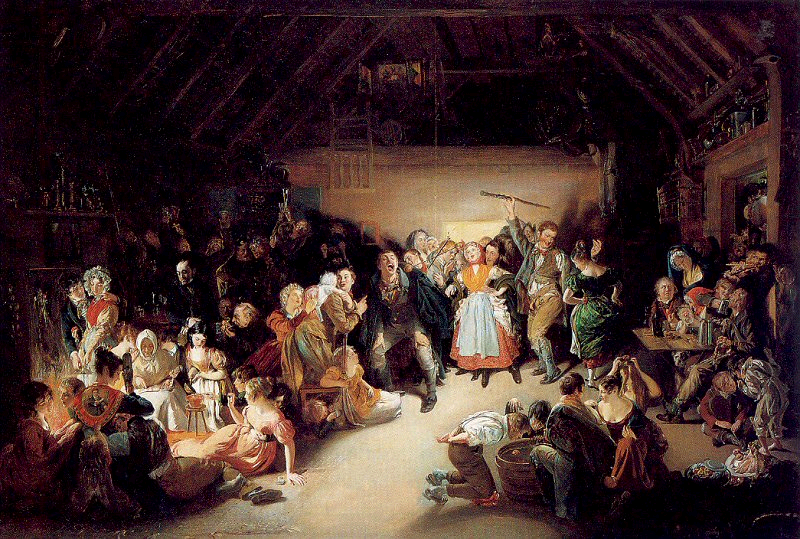 SamhainA Gaelic festival marking the start of winter with bonfires and ancestor feasts
 Mother's DayA worldwide annual celebration dedicated to mothers, maternal bonds and family care
 St. Martin's DayA November feast of lantern walks, bonfires, roast goose and new wine
 OnamA ten-day harvest festival in Kerala celebrating the return of King Mahabali with feasts, flower carpets and boat races.
Good reading and sources
- Encyclopaedia BritannicaArticle
- Puck Fair festival asked to leave goat out of itBBC, Article
- Puck Fair festival asked to leave goat out of itBBC, Article
The facts on this page come from the Wikipedia article "Lughnasadh", written by its contributors and used under the CC BY-SA 4.0 licence, and from its Wikidata record (CC0). EveryParampara rewrote the text in its own words, with AI assistance, and compares every page with the article to make sure no passage is copied. It may be reused under the same CC BY-SA 4.0 licence with a link back.
It may contain mistakes. Traditions differ from one family, village and community to the next, and the people who keep them know them best. If something is wrong, tell us. Last refreshed 2026-10-04.
More from Ireland
All the traditions of Ireland
🇮🇪 Ireland and 1 moreSamhain
A Gaelic festival marking the start of winter with bonfires and ancestor feastsSeasonal · Feasts and festival meals
 🇮🇪 Ireland and 2 moreEmber daysQuatuor Tempora
A quarterly Western Christian rhythm of fasting, prayer and seasonal thanksgivingSeasonal · Fasting and breaking the fast
🇮🇪 Ireland and 2 moreEmber daysQuatuor Tempora
A quarterly Western Christian rhythm of fasting, prayer and seasonal thanksgivingSeasonal · Fasting and breaking the fast
 🇮🇪 Ireland and 1 moreImbolcLá Fhéile Bríde
A Gaelic festival heralding spring and honoring Saint Brigid with woven rush crossesSeasonal · Feasts and festival meals
🇮🇪 Ireland and 1 moreImbolcLá Fhéile Bríde
A Gaelic festival heralding spring and honoring Saint Brigid with woven rush crossesSeasonal · Feasts and festival meals
 🇮🇪 Dublin, Ireland and 3 moreMay Day
A traditional European festival welcoming summer with greenery, dances and bonfiresSeasonal · Feasts and festival meals
🇮🇪 Dublin, Ireland and 3 moreMay Day
A traditional European festival welcoming summer with greenery, dances and bonfiresSeasonal · Feasts and festival meals
The same idea elsewhere
Harvest and thanksgiving compared 🇮🇱 Jerusalem, IsraelPassoverפסח
A Jewish spring festival celebrating freedom from slavery with ritual mealsSpiritual · Dinner
🇮🇱 Jerusalem, IsraelPassoverפסח
A Jewish spring festival celebrating freedom from slavery with ritual mealsSpiritual · Dinner
 🇮🇱 Jerusalem, IsraelSukkotסוכות
A seven-day autumn Jewish festival of temporary booths, harvest prayers and hospitalitySpiritual
🇮🇱 Jerusalem, IsraelSukkotסוכות
A seven-day autumn Jewish festival of temporary booths, harvest prayers and hospitalitySpiritual
 🇮🇱 Jerusalem, IsraelShavuotשבועות
A late-spring Jewish festival of the wheat harvest and the giving of the TorahSpiritual · Feasts and festival meals
🇮🇱 Jerusalem, IsraelShavuotשבועות
A late-spring Jewish festival of the wheat harvest and the giving of the TorahSpiritual · Feasts and festival meals
 🇮🇳 Prayagraj, India and 6 moreMakar Sankrantiमकरसङ्क्रान्ति (Makarasaṅkrānti)
A mid-winter harvest festival marking the sun's northward journey, celebrated across South and Southeast Asia with fairsFestival · Feasts and festival meals
🇮🇳 Prayagraj, India and 6 moreMakar Sankrantiमकरसङ्क्रान्ति (Makarasaṅkrānti)
A mid-winter harvest festival marking the sun's northward journey, celebrated across South and Southeast Asia with fairsFestival · Feasts and festival meals