Seasons, harvest and the calendarEuropeChristianJewish
Harvest festival
A thanks for the gathered crop, kept with church meals, songs and shared food

Harvest festivals mark the end of the main crop gathering. Britain's church version, with hymns, produce and a supper, grew in the 1800s, while communities from Ethiopia to China keep their own harvest days.
When is Harvest festival marked?
Harvest festival is kept as part of Sukkot, which runs from 16 to 22 October 2027.
A harvest festival is a yearly celebration held when a region's main crop is brought in. Because climates and crops differ, the timing shifts from place to place. In Britain churches decorate with fruit and vegetables and sing hymns of thanks; elsewhere communities mark the same moment with their own meals, music and prayers.
What it marks
A harvest festival belongs to the moment a region's main crop is gathered in. Dates differ because climates and crops differ, so the same kind of celebration can fall in spring in one country and in autumn in another. Food is at the centre of it: households and whole communities eat together, and the harvest itself often fills the table. British harvest thanks reach back to pagan times. The church version known today is kept in September or October, depending on where you are, and its date is set locally rather than nationally.
British church custom
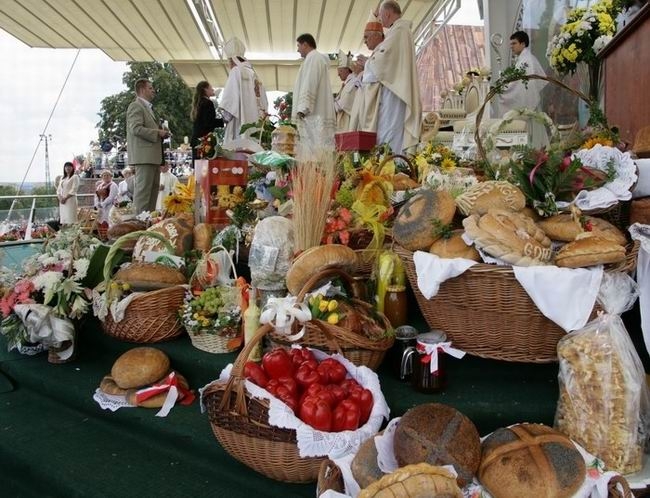
In Britain and the wider English-speaking world, harvest thanks moved into churches in the 1800s. Robert Hawker, vicar of Morwenstow in Cornwall, invited his parishioners to a thanksgiving service in 1843. Similar services followed in Norfolk and Huntingdonshire within about ten years. Victorian hymns, among them Come, ye thankful people, come and We plough the fields and scatter, carried the idea further, and decorating churches with home-grown produce became the pattern. Congregations, chapels and schools bring in fruit and vegetables, which are shared with poorer or older neighbours or sold for the church or a charity. Many services now also look outward, to places where growing enough food is still a struggle.
Older harvest rites
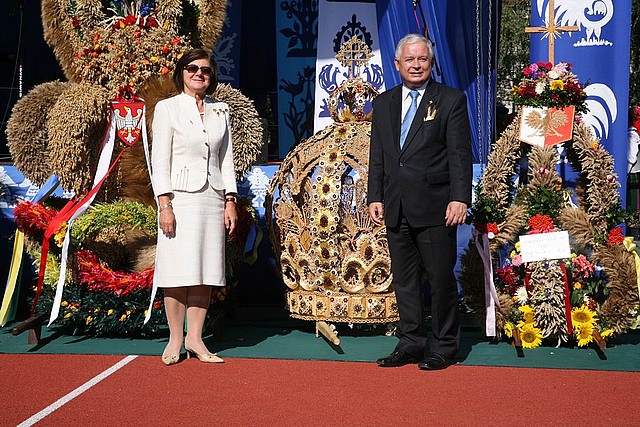
Farming villages held ceremonies before the cutting and again afterwards. One belief, traced by Encyclopædia Britannica, held that a spirit lived in the final sheaf. To drive it out, some beat the grain down; others wove stalks into a figure called a corn dolly, kept for luck and ploughed back before the next sowing. Church bells rang through the harvest days. The horse that pulled the final cartload wore garlands of flowers and bright ribbons, reapers walked beside a loaded cart shouting, and one of them, dressed richly, played lord of the harvest and asked onlookers for money. Cornwall kept the ceremony of Crying the Neck, still re-enacted each year by the Old Cornwall Society.
Harvests around the world
Oromo people in Ethiopia keep Irreecha, a thanksgiving that comes with the end of the rains and the start of the harvest. In Iran, Mehrgan was once celebrated at Persepolis in lavish style: taxes were collected then, and visitors from across the Persian Empire brought gifts to the king. China's Mid-Autumn Festival is one of the most widely kept harvest celebrations in the world. India holds many, among them Makar Sankranti, Pongal, Lohri, Baisakhi, Mag Bihu and Onam, spread from January to September. Jews keep the week-long Sukkot in autumn, eating, sleeping and praying in a temporary sukkah.
The harvest supper
Until the 1900s most farmers ended the harvest with a large meal, the harvest supper, and everyone who had helped in the fields was invited. In some places it was called a Mell-supper, after the final stand of grain, which carried the name Mell or Neck; cutting it ended the work and began the feasting. Farm workers were given a special cake, a custom recorded as older than the Reformation. Games were played at the farmer's house, and the meal was a reward as much as a celebration. Some churches and villages still hold a supper, and neighbours sometimes set their services on different Sundays so they can visit one another.
How Harvest festival is kept
Congregations, schoolchildren and farming families take part. Produce is grown or gathered in advance, then carried to the church, chapel or school and arranged in baskets to dress the building. A service follows, with hymns of thanks and prayers. The food is then handed to poorer or older people in the parish, or sold to raise money for the church or a charity. Where the older pattern survives, the season closes with a harvest supper, a shared meal for everyone who helped bring the crop in.
When and where
There is no single date. A harvest festival follows the main crop of its region, so it can fall at any point in the year. British services are usually held in September or October, sometimes on different Sundays in neighbouring parishes. In Britain an older harvest began on 1 August, the day called Lammas.
Harvest festivals are kept in many parts of the world. The custom is strongest in Britain and the wider English-speaking world, where churches, chapels and schools hold services, and it also appears in farming regions of Ethiopia, Iran, India and China. Jewish communities keep Sukkot wherever they live, and in Britain country parishes, from Cornwall to Norfolk, are where the church festival is most visible.
What Harvest festival means
A harvest festival says thank you for food that has been grown. For farming communities it marks the close of hard work in the fields and the moment when the year's effort is safely gathered. Older beliefs gave the final sheaf of grain a spirit, and the corn dolly made from it carried luck into the next sowing. In churches the thanks are offered to God, and the gifts of food are passed on to people in need, so gratitude and generosity are held together.

Days Harvest festival is marked
Questions people ask about Harvest festival
When is Harvest festival marked?
Harvest festival is kept as part of Sukkot, which runs from 16 to 22 October 2027.
What exactly is a harvest festival?
It is a yearly celebration that falls when a region's main crop is brought in. People give thanks with meals, songs and prayers, and the food of the harvest often supplies the dishes. Because crops and climates differ, the festival takes a different form and date in each place.
Where is it kept?
Churches, chapels and schools across Britain and the English-speaking world hold services, and some Canadian churches do the same. Harvest thanksgivings also belong to farming communities in Ethiopia, Iran, India and China, and Jewish communities keep Sukkot worldwide.
What is a corn dolly?
It was a figure woven from stalks of the final sheaf of grain. Some farmers believed a spirit lived in that sheaf, so the doll was kept for luck until the next sowing, when the ears were ploughed back into the soil. Cornwall still re-enacts Crying the Neck each year.
Why do churches give the food away?
Produce brought to a harvest service is often shared with poor or older people in the parish, or sold to raise funds for the church or a charity. Many congregations now link the festival with concern for people in poorer countries, where growing enough food is still difficult.
See also
 LosarThe Tibetan Buddhist New Year festival of renewal, offerings, and family feasts
 UgadiA South Indian New Year feast celebrating life with sweet, sour, and bitter tastes
 MehreganAn Iranian autumn festival honoring Mithra, friendship, and the harvest
 LohriA northern Indian midwinter festival of evening bonfires, folk songs and harvest foods
Good reading and sources
- Harvest festival on WikipediaEncyclopedia
- More photos on Wikimedia CommonsPhotos and video
- Wikidata recordOpen data
The facts on this page come from the Wikipedia article "Harvest festival", written by its contributors and used under the CC BY-SA 4.0 licence, and from its Wikidata record (CC0). EveryParampara rewrote the text in its own words, with AI assistance, and compares every page with the article to make sure no passage is copied. It may be reused under the same CC BY-SA 4.0 licence with a link back.
It may contain mistakes. Traditions differ from one family, village and community to the next, and the people who keep them know them best. If something is wrong, tell us. Last refreshed 2026-10-05.
More from the United Kingdom
All the traditions of the United Kingdom 🇮🇪 Ireland and 1 moreImbolcLá Fhéile Bríde
A Gaelic festival heralding spring and honoring Saint Brigid with woven rush crossesSeasonal · Feasts and festival meals
🇮🇪 Ireland and 1 moreImbolcLá Fhéile Bríde
A Gaelic festival heralding spring and honoring Saint Brigid with woven rush crossesSeasonal · Feasts and festival meals
 🇬🇧 United Kingdom and 5 moreYule log
A log kept burning on the hearth through the twelve days of Christmas, for luckSeasonal
🇬🇧 United Kingdom and 5 moreYule log
A log kept burning on the hearth through the twelve days of Christmas, for luckSeasonal
 🇮🇪 Uisneach, Ireland and 1 moreBeltaneBealtaine
A Gaelic first-of-summer festival of bonfires, May flowers and feasting on 1 MaySeasonal
🇮🇪 Uisneach, Ireland and 1 moreBeltaneBealtaine
A Gaelic first-of-summer festival of bonfires, May flowers and feasting on 1 MaySeasonal
 🇮🇪 Ireland and 1 moreSamhain
A Gaelic festival marking the start of winter with bonfires and ancestor feastsSeasonal · Feasts and festival meals
🇮🇪 Ireland and 1 moreSamhain
A Gaelic festival marking the start of winter with bonfires and ancestor feastsSeasonal · Feasts and festival meals
The same idea elsewhere
Harvest and thanksgiving compared 🇨🇱 ChileNgillatun
A communal Mapuche rite of prayer, sacrifice and dance to maintain cosmic balanceSpiritual
🇨🇱 ChileNgillatun
A communal Mapuche rite of prayer, sacrifice and dance to maintain cosmic balanceSpiritual
 🇯🇵 JapanHadaka Matsuri裸祭り
Japanese festivals where participants clad in loincloths seek luck and purificationSpiritual
🇯🇵 JapanHadaka Matsuri裸祭り
Japanese festivals where participants clad in loincloths seek luck and purificationSpiritual
 🇰🇷 South Korea and 1 moreDaeboreum대보름
A Korean festival of the first lunar full moon, marked by fires, wishes and feastsSeasonal · Feasts and festival meals
🇨🇳 Beijing, ChinaLaba Festival臘八節
A winter porridge festival marking the start of the Chinese New Year seasonFestival · Feasts and festival meals
🇰🇷 South Korea and 1 moreDaeboreum대보름
A Korean festival of the first lunar full moon, marked by fires, wishes and feastsSeasonal · Feasts and festival meals
🇨🇳 Beijing, ChinaLaba Festival臘八節
A winter porridge festival marking the start of the Chinese New Year seasonFestival · Feasts and festival meals