Spiritual and religiousEast Asia
Jongmyo jerye
In its own language: 종묘 제례
Ancestral rite for Korea's Joseon kings, with court music and a line dance, held in Seoul

Jongmyo jerye is a Confucian royal ancestral rite kept at Jongmyo Shrine in Seoul, South Korea. Descendants of the Joseon royal house perform it every May, with court music and a line dance, to honour the dynasty's dead monarchs, and UNESCO recognised it in 2001.
When is Jongmyo jerye kept?
Jongmyo jerye is kept on once a year, on May's first Sunday.
Jongmyo jerye is a traditional rite from Korea. It honours the dead monarchs of the Joseon dynasty and takes place at Jongmyo Shrine in Seoul. Each year it falls on May's first Sunday. Descendants of the former royal family lead the ceremony, and court music and a line dance go with it. In 2001 UNESCO named the rite and its music a Masterpiece of the Oral and Intangible Heritage of Humanity.
What it is
Jongmyo jerye is a rite of the Confucian ancestral shrine kind, kept for the dead monarchs of the Joseon dynasty at Jongmyo Shrine in Seoul. A senior member of the former imperial family presides as choheongwan, the presiding officer; that is Yi Won today, who carries the title Hereditary Prince Imperial and followed Yi Gu, known as Prince. Under the Joseon dynasty, and through the years of Japanese occupation, the Emperor of Korea served as chief officiant. The ceremony's words are spoken in the Korean reading of Classical Chinese, not in modern Korean. With the Soil and Grain rite at Sajikdan, it ranks among Korea's two leading imperial rituals.
Origins and history
The rite belongs to the Confucian system of royal ancestral shrines followed in premodern China and Korea, where it was counted among a monarch's heaviest duties. By the Three Kingdoms period it was established at the latest, especially in Goguryeo, and it continued through the Silla era down to Joseon, the last Korean dynasty. In China these practices were given up when the monarchy ended, while South Korea kept them after the Joseon dynasty fell. The court music has its roots in Chinese yayue, which came to Korea in the Goryeo period. King Sejong wrote new music for the rite in 1447 and again in 1462, drawing mostly on hyangak and some dangak.
How the rite unfolds
The ceremony falls into three stages. First the spirits are welcomed: jagye, a purification, then chwiwi, when the officiants wash and go to their places. Next they are entertained. Jinchan brings 63 kinds of food to the altars. Three wine offerings follow, choheonrye, aheonrye and jongheonrye, each made by one of the three most senior officiants, while others recite prayers asking heaven and earth for blessing. In eumbok the presiding officer tastes what has been offered, a shared meal with the spirits. Cheonbyeondu removes the food; in practice the table stays and the dishes are merely moved as a sign. Last, songsin sends the spirits to heaven with four bows, and mangryo burns the prayer papers. Officials bow first, then the onlookers, when the master of ceremonies signals.
Music and dance
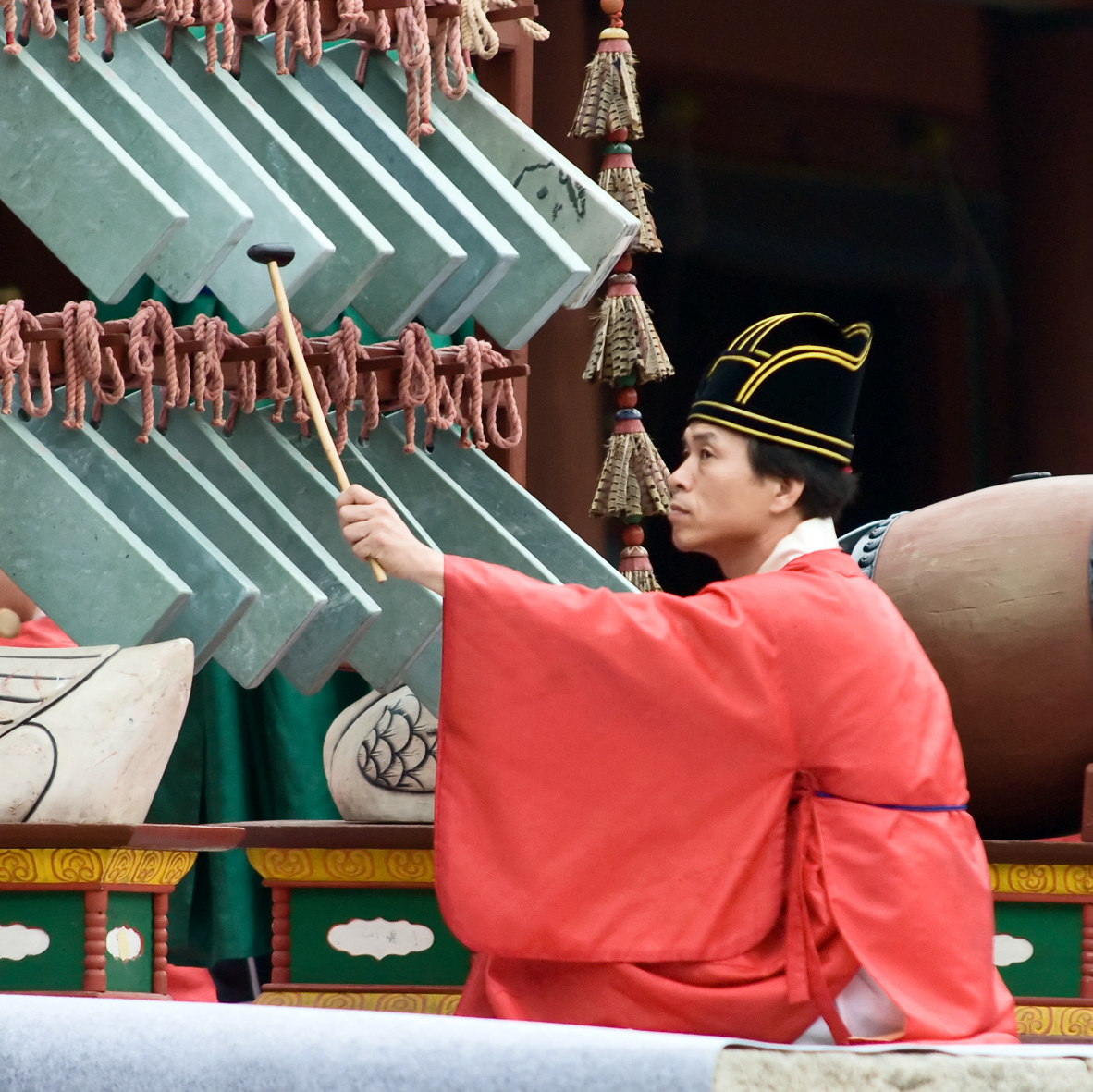
Jongmyo jerye-ak is the music of the rite, played and sung by a big ensemble and thought to please the spirits. Two pieces are performed, Botaepyeong and Jeongdaeeop, along with songs known as Jongmyo akjang. The Jeongakdan of the National Gugak Center performs this music now. It carries the listing Important Intangible Cultural Property No. 1, and the Center follows directly from the Yi Household Music Department. The dance that goes with the rite is ilmu, or line dance. Botaepyeongji-mu praises the achievements of earlier kings; jeongdaeeopji-mu praises their military ones. Sixty-four dancers in purple form palilmu, the eight-line dance, in eight rows. The civil dance, munmu, uses a yak flute and a jeok, a wooden bar with a pheasant-feather tassel. The martial dance, mumu, uses wooden swords and spears.
Today and change
The Jongmyo Daeje carries the listing Important Intangible Cultural Property No. 56 and is staged in May each year. In earlier times musicians, dancers and scholars performed the Confucian rituals in the shrine courtyard five times in a year; the ceremonies have since been rebuilt and revived. Descendants of the former imperial family, gathered in the Jeonju Lee Royal Family Association, arrange and carry out the rite, with help from other cultural bodies. UNESCO listed the rite and its music in 2001 as a Masterpiece of the Oral and Intangible Heritage of Humanity.
How Jongmyo jerye is kept
Descendants of the former royal house and other officiants take part, with the most senior family member leading as choheongwan. The day opens with purification, jagye, and the officiants take their places after washing in the chwiwi step. Food for the spirits, 63 kinds, is set out at the altars in jinchan. Three senior officiants pour wine in turn, choheonrye, aheonrye and jongheonrye, while prayers are read. The presiding officer tastes the offerings in eumbok. The food is then moved aside as a sign in cheonbyeondu. Four bows send the spirits home in songsin, prayer papers are burned in mangryo, and the officiants leave.
When and where
The rite comes round once a year, on May's first Sunday, so the month stays the same. In earlier centuries the courtyard ceremonies took place five times a year. What is kept now is a single yearly occasion, staged each May at the shrine.
Jongmyo Shrine in Seoul, South Korea, is the ancestral shrine of the Joseon royal house and the home of this rite. The music that goes with it belongs to the National Gugak Center. South Korea is where the practice has survived; in China the same royal shrine ceremonies ended with the monarchy.
What Jongmyo jerye means
Those who keep the rite see it as a duty owed to the dead kings of Joseon and to heaven and earth. The offerings, the music and the bows are a way of inviting the spirits, feeding and entertaining them, and then letting them go back to heaven. Confucian teaching gives it shape: the rite stood among the monarchy's most weighty duties, and together with the Soil and Grain rite at Sajikdan it ranked as one of Korea's two leading imperial ceremonies.



Questions people ask about Jongmyo jerye
When is Jongmyo jerye kept?
Jongmyo jerye is kept on once a year, on May's first Sunday.
What is Jongmyo jerye?
It is a Confucian royal ancestral rite from Korea, kept for the dead monarchs of the Joseon dynasty. It takes place at Jongmyo Shrine in Seoul. Court music called jerye-ak and a line dance called ilmu form part of it. UNESCO listed the rite and its music in 2001.
Who performs it?
Descendants of the former Joseon imperial family, organised as the Jeonju Lee Royal Family Association, arrange and carry out the ceremony, with help from other cultural bodies. The presiding officer, the choheongwan, is the family's most senior member, and Yi Won holds that place today.
Where is it kept?
At Jongmyo Shrine in Seoul, South Korea. The shrine is the ancestral shrine of the Joseon royal house. Royal shrine ceremonies of the same kind once existed in China, but they ended when the monarchy there was abolished, while the Korean practice has continued.
What is jerye-ak?
It is the music of the rite, played and sung by a large ensemble. Two pieces, Botaepyeong and Jeongdaeeop, are performed, with songs called Jongmyo akjang. Dancers perform ilmu, the line dance, alongside it. The music carries the listing Important Intangible Cultural Property No. 1.
See also
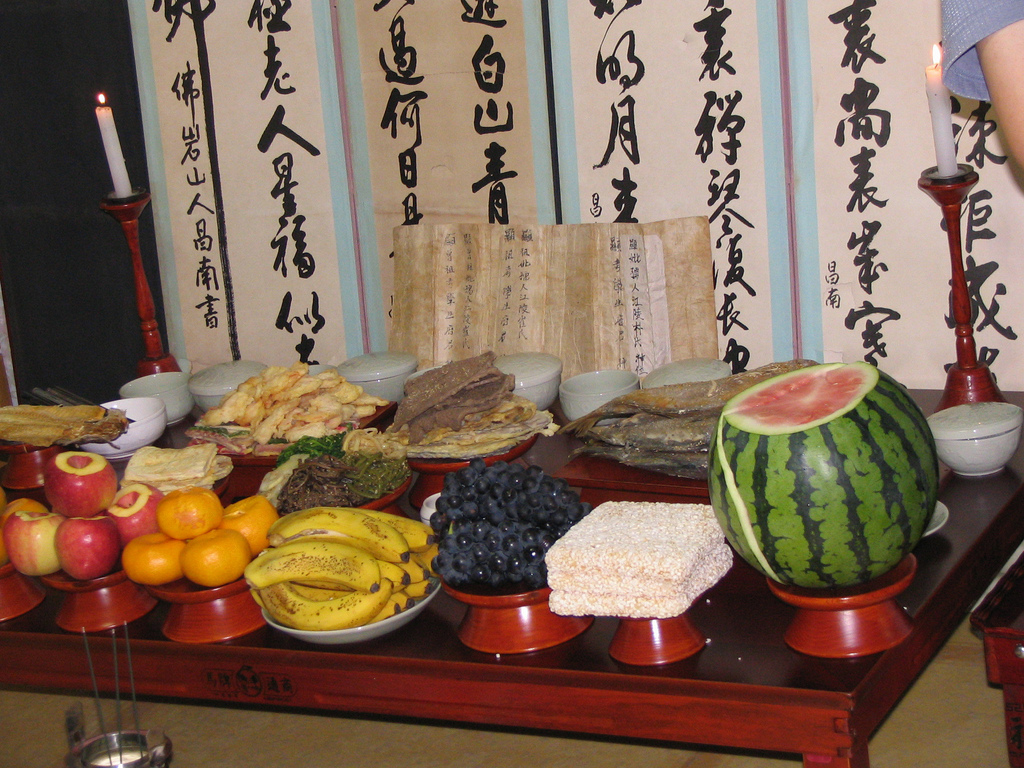 JesaA Korean ancestral memorial ceremony held on death anniversaries and major holidays.
 GutSacred rites of song, dance, and spirit communion performed by Korean shamans
 YeondeunghoeA Korean lantern festival celebrating the Buddha's birthday with glowing lotus lights
 Water lanternSmall lamps floated on water to honour the dead and ask for good fortune
Good reading and sources
- Royal ancestral ritual in the Jongmyo shrine and its musicUNESCO, Heritage listing
- Royal ancestral ritual in the Jongmyo shrine and its musicUNESCO, Article
- Jongmyo jerye on WikipediaEncyclopedia
- More photos on Wikimedia CommonsPhotos and video
- Wikidata recordOpen data
The facts on this page come from the Wikipedia article "Jongmyo jerye", written by its contributors and used under the CC BY-SA 4.0 licence, and from its Wikidata record (CC0). EveryParampara rewrote the text in its own words, with AI assistance, and compares every page with the article to make sure no passage is copied. It may be reused under the same CC BY-SA 4.0 licence with a link back.
It may contain mistakes. Traditions differ from one family, village and community to the next, and the people who keep them know them best. If something is wrong, tell us. Last refreshed 2026-10-05.
More from South Korea
All the traditions of South Korea
🇰🇷 South KoreaJesa제사 (Jesa)
A Korean ancestral memorial ceremony held on death anniversaries and major holidays.Spiritual · Feasts and festival meals
🇰🇷 Jeju, South KoreaGut굿
Sacred rites of song, dance, and spirit communion performed by Korean shamansSpiritual
🇰🇷 Seoul, South KoreaYeondeunghoe연등회
A Korean lantern festival celebrating the Buddha's birthday with glowing lotus lightsSpiritual
 🇰🇷 Seoul, South KoreaTemplestay템플스테이
A program that invites visitors to live in South Korean Buddhist temples and join the daily routines of monastic life.Spiritual · Dinner
🇰🇷 Seoul, South KoreaTemplestay템플스테이
A program that invites visitors to live in South Korean Buddhist temples and join the daily routines of monastic life.Spiritual · Dinner
The same idea elsewhere
Remembering the ancestors compared 🇲🇲 Bagan, MyanmarNat worshipနတ်
Veneration of guardian spirits and nature deities alongside Buddhism in MyanmarSpiritual
🇲🇲 Bagan, MyanmarNat worshipနတ်
Veneration of guardian spirits and nature deities alongside Buddhism in MyanmarSpiritual
 🇲🇱 Bamako, Mali and 5 moreGriotjeli, ߖߋ߬ߟߌ in N'Ko script
West Africa's hereditary keepers of spoken history, praise and musicPerformance
🇲🇱 Bamako, Mali and 5 moreGriotjeli, ߖߋ߬ߟߌ in N'Ko script
West Africa's hereditary keepers of spoken history, praise and musicPerformance
 🇵🇪 Cusco, Peru and 4 moreIntiinti (Quechua)
The Inca sun deity, honoured with temples, offerings and the June festival Inti RaymiSpiritual
🇵🇪 Cusco, Peru and 4 moreIntiinti (Quechua)
The Inca sun deity, honoured with temples, offerings and the June festival Inti RaymiSpiritual
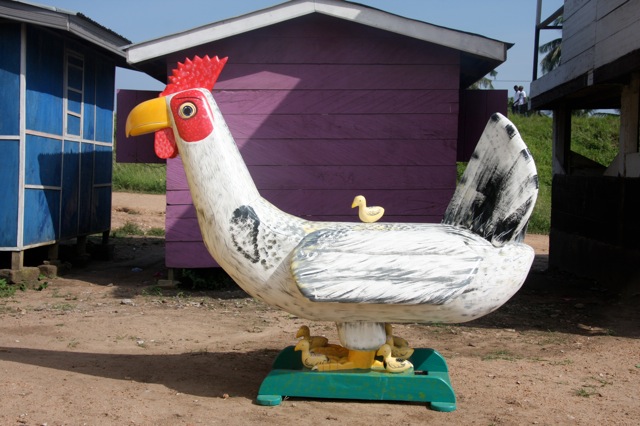 🇬🇭 Accra, GhanaFantasy coffinsAbebuu adekai
Custom hand-carved burial caskets shaped as animals, tools and symbols in southern GhanaRite of passage
🇬🇭 Accra, GhanaFantasy coffinsAbebuu adekai
Custom hand-carved burial caskets shaped as animals, tools and symbols in southern GhanaRite of passage