Hollekreisch
An Ashkenazi birth ritual where children name a newborn with a secular name.
Hollekreisch is an Ashkenazi Jewish custom for naming a baby with a secular name. It involves children lifting the infant and calling out the chosen name three times. The practice originated in medieval Alsace and Southern Germany.
When is Hollekreisch kept?
Hollekreisch is kept on after a child is born.
Hollekreisch is a traditional Ashkenazi Jewish ceremony for giving a newborn a secular name. Children play a central role by lifting the baby and repeating the name three times. This custom preserves a unique link between family joy and community participation.
What the ritual means
The Hollekreisch provides a secular name for a baby, distinct from the sacred Hebrew name given during a Brit Milah. The term likely comes from the Hebrew phrase khol kreisch, meaning secular cry. Some scholars also link it to German folklore involving Frau Holle, a mythical figure who protected unbaptised infants. The ritual serves as a protective blessing for the child's daily life.
How the ceremony works
Children gather around the newborn's cradle to perform the rite. For boys, older participants read verses from the Pentateuch and place religious items like a tallit on the bed. Girls receive part of a bridal garment instead. All children lift the cradle three times while asking what the child should be named. They then repeat the chosen secular name three times before sharing sweets or nuts with guests.
Origins and history
Early Jewish liturgical texts mention similar gatherings around newborns in the eleventh century. The specific Hollekreisch name appears in sixteenth-century writings by Rabbi Israel ben Shalom Shakhna. Detailed accounts from Juspa Schammes in the seventeenth century describe the Worms community's version. By the nineteenth century, the practice shifted toward being primarily for girls.
Modern variations
The tradition survives in parts of Switzerland, Alsace, and the Rhine valley. Modern prayer books include specific verses for welcoming newborns, reflecting renewed interest in the custom. Local variations have emerged over time, with different pronunciations of the word Holle and varying biblical readings. These changes show how the ritual adapts while keeping its core purpose intact.
How Hollekreisch is kept
Children gather around the newborn's cradle to perform the rite. For boys, older participants read verses from the Pentateuch and place religious items like a tallit on the bed. Girls receive part of a bridal garment instead. All children lift the cradle three times while asking what the child should be named. They then repeat the chosen secular name three times before sharing sweets or nuts with guests.
When and where
After a child is born
Primarily in Alsace, Southern Germany, and Switzerland, with historical roots in Worms.
What Hollekreisch means
The ritual separates the secular identity from the sacred Hebrew name. It invokes protection for the child's everyday life. The repetition of the name three times reinforces the community's acceptance of the baby. Sharing sweets symbolizes joy and blessing for the new arrival.
Questions people ask about Hollekreisch
When is Hollekreisch kept?
Hollekreisch is kept on after a child is born.
What is the Hollekreisch?
It is an Ashkenazi Jewish birth ritual where children give a newborn a secular name. The ceremony involves lifting the baby and calling the name three times to bless their daily life.
Where is this tradition kept?
It is practiced in parts of Switzerland, Alsace, and the Rhine valley in Germany. Historical records also link it strongly to the Jewish community in Worms.
See also
 Zeved habatA Jewish naming ceremony for newborn girls, kept by Sephardi, Mizrahi and Ashkenazi communities.
 First haircutA rite of passage marking a child's first shave or trim across many cultures and faiths.
 Saint Stephen's DayA Christian feast day celebrating the first martyr with feasts, rides and folk customs.
 Nativity of John the BaptistA Christian feast day on June 24 that marks the birth of John the Baptist and anticipates Christmas.
Good reading and sources
The facts on this page come from the Wikipedia article "Hollekreisch", written by its contributors and used under the CC BY-SA 4.0 licence, and from its Wikidata record (CC0). EveryParampara rewrote the text in its own words, with AI assistance, and compares every page with the article to make sure no passage is copied. It may be reused under the same CC BY-SA 4.0 licence with a link back.
It may contain mistakes. Traditions differ from one family, village and community to the next, and the people who keep them know them best. If something is wrong, tell us. Last refreshed 2026-10-06.
More from Germany
All the traditions of Germany
🇮🇱 Israel and 5 moreZeved habatזֶבֶד הַבָּת
A Jewish naming ceremony for newborn girls, kept by Sephardi, Mizrahi and Ashkenazi communities.Rite of passage
 🇮🇱 Tiberias, Israel and 2 moreYahrzeitיאָרצײַט (yortsayt)
A Jewish death anniversary marked by prayer and a burning candle to honour the departed.Rite of passage
🇮🇱 Tiberias, Israel and 2 moreYahrzeitיאָרצײַט (yortsayt)
A Jewish death anniversary marked by prayer and a burning candle to honour the departed.Rite of passage
 🇺🇸 United States and 5 moreBachelor party
A send-off for a groom-to-be, kept in the days and weeks before a weddingRite of passage
🇺🇸 United States and 5 moreBachelor party
A send-off for a groom-to-be, kept in the days and weeks before a weddingRite of passage
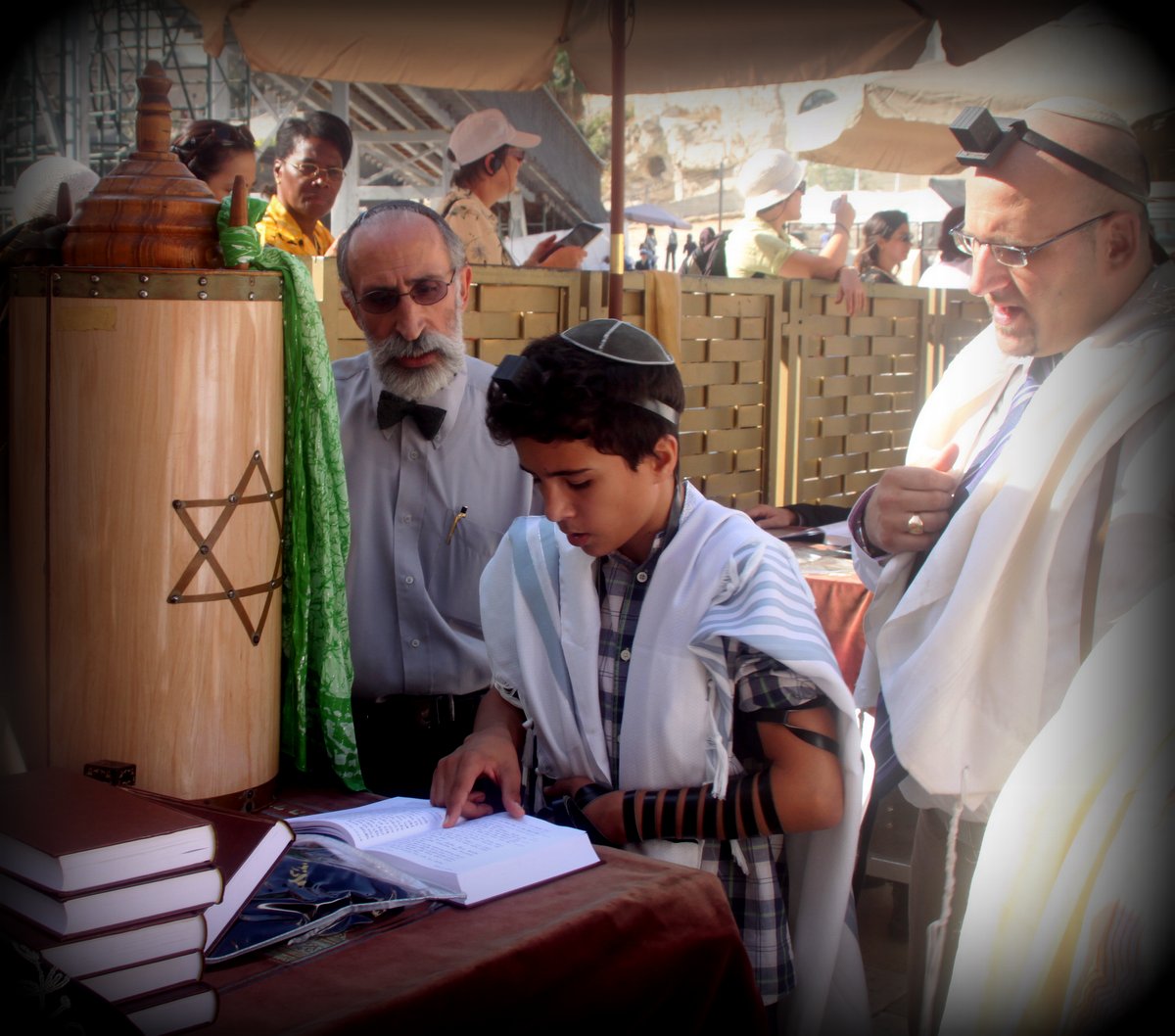 🇮🇱 Jerusalem, Israel and 5 moreBar and bat mitzvahבַּר מִצְוָה / בַּת מִצְוָה
A Jewish rite of passage marking when youth reach adulthood and take responsibility for their own actions.Rite of passage · Feasts and festival meals
🇮🇱 Jerusalem, Israel and 5 moreBar and bat mitzvahבַּר מִצְוָה / בַּת מִצְוָה
A Jewish rite of passage marking when youth reach adulthood and take responsibility for their own actions.Rite of passage · Feasts and festival meals
The same idea elsewhere
Birth and new babies compared 🇬🇭 Ghana and 3 moreDamba festivalDamba chuɣu
A Ghanaian celebration of royal authority, ancestral memory, music and danceFestival
🇬🇭 Ghana and 3 moreDamba festivalDamba chuɣu
A Ghanaian celebration of royal authority, ancestral memory, music and danceFestival
 🇮🇩 IndonesiaSlametan
A short communal meal on Java where neighbours share food, prayer and a wish for peaceSpiritual · Feasts and festival meals
🇬🇭 GhanaOutdooringkpojiemɔ (Ga), abadinto (Akan), vihehedego (Ewe)
A Ghanaian ceremony eight days after birth, when a baby is brought outdoors and namedRite of passage · Feasts and festival meals
🇮🇩 IndonesiaSlametan
A short communal meal on Java where neighbours share food, prayer and a wish for peaceSpiritual · Feasts and festival meals
🇬🇭 GhanaOutdooringkpojiemɔ (Ga), abadinto (Akan), vihehedego (Ewe)
A Ghanaian ceremony eight days after birth, when a baby is brought outdoors and namedRite of passage · Feasts and festival meals