Life-cycle ritesSub-Saharan AfricaIndigenous and traditionalChristian
Outdooring
In its own language: kpojiemɔ (Ga), abadinto (Akan), vihehedego (Ewe)
A Ghanaian ceremony eight days after birth, when a baby is brought outdoors and named
Outdooring is Ghana's ceremony for naming a newborn, traditionally held eight days after birth. Parents carry the baby outdoors, give the child a name, and celebrate with relatives, gifts and a feast. Ga, Akan and Ewe communities each keep their own version of it.
When is Outdooring kept?
Outdooring is kept on the eighth day after a child is born, or later as a celebration.
An outdooring is a naming ceremony for babies, kept in Ghana by Ga, Akan and Ewe families. Eight days after a birth, parents carry the newborn outdoors and give the child a name in front of relatives and friends. The day mixes thanks, blessing and welcome: elders speak to the baby, libations are poured, gifts are brought and a feast is shared. Christian and Muslim households keep it too.
What it is
An outdooring is the ceremony that brings a new baby out into the open. In Ghana it is also the moment a child receives a name. The word describes the act itself: the infant is carried outside the house and shown to relatives, neighbours and friends. Ga speakers call the ceremony kpojiemɔ, Akan speakers call it abadinto, and Ewe speakers call it vihehedego. Each community keeps its own details, but all of them centre on the same thing, welcoming the baby and presenting the child to the wider world.
Ga, Akan and Ewe
The ceremony belongs to several peoples, and each keeps its own form of it. The differences are slight and the focus is the same. Akan parents lift the child towards the sky three times, which introduces the baby to the gods and to the earth. Ewe families thank God, whom they call Mawu Sogbolisa, for the new life. They also thank the ancestors, asking that the child be protected. Libations are poured over the infant as protection as well. Everyone present is there to welcome the baby.
Names and family
Giving a name is the heart of the day. Families often choose a day name, tied to the weekday of the birth, and in addition they may name the baby after an elder relative, whether that person is living or has died. Names are handled differently by different households. Christian Ghanaians commonly give a child a local name alongside an English one. In Muslim families a mallam suggests several names and the parents pick from those. After the naming, friends and relatives bring gifts for the baby, and a feast follows.
Signs and blessing
Several small acts carry the day. Among the Ga and the Ewe, an elder lets a drop of water fall first, then dips a finger into alcohol and touches the baby's tongue. Water stands for good and alcohol for evil, so the child is shown what both look like. Ewe elders speak to the ancestors, thanking them for the baby and asking them to watch over the child. Gifts come after the name has been given, and then everyone eats together.
Today and change
The ceremony has become syncretic. Ghana's population has largely adopted Christianity or Islam, and the outdooring has changed with it, so families may keep older gestures alongside new prayers. Circumcision of boys and ear piercing for girls, once part of the day itself, now usually happen earlier, in hospital, and naming often takes place there too, soon after delivery. What the outdooring still does is gather people: a baby is brought out, named and given gifts, and the family and friends share a meal.
How Outdooring is kept
It happens on the eighth day after a birth, or later as a celebration. The family gathers and the parents carry the newborn outdoors. A name is given, after the day name and often after an elder relative. Among the Akan the baby is raised towards the sky three times. Ewe families thank God and the ancestors. Ga and Ewe elders touch water, then alcohol, to the baby's tongue. Libations are poured for protection. Gifts follow the naming, and then a feast.
When and where
Traditionally the eighth day after birth. The timing was not arbitrary: people held that a baby who survived those first days was likely to live, and only then could be named. Many families today hold the outdooring later, since naming and any hospital procedures now take place soon after delivery.
It belongs to Ghana. Ga, Akan and Ewe communities each keep their own version, and the differences between them are slight. The custom is found across the country, in Christian and Muslim households as much as in those that follow older religious practice. Each group's ceremony has its own details, and all of them are built around welcoming the baby.
What Outdooring means
The eighth day marks survival. Naming a child after a living or dead relative ties the baby to a family line and to people who are remembered. Water and alcohol placed on the tongue teach the child that life holds both good and evil. Raising a baby to the sky among the Akan introduces the child to the gods and the earth. Libations ask for protection. For the Ewe, the day also gives thanks to God, giver of life, and to the ancestors for the new child.
Questions people ask about Outdooring
When is Outdooring kept?
Outdooring is kept on the eighth day after a child is born, or later as a celebration.
What is an outdooring?
It is Ghana's traditional ceremony for naming a baby. Parents bring their newborn outdoors for the first time and give the child a name in front of relatives and friends. Ga speakers know it as kpojiemɔ, Akan speakers as abadinto and Ewe speakers as vihehedego.
Where is it kept?
In Ghana, among Ga, Akan and Ewe communities in particular. Christian and Muslim families keep it as well as those who follow older practices. The details differ slightly from one group to another, but every version welcomes the baby and gives the child a name.
What happens during the ceremony?
The baby is brought outside. A name is given, often a day name plus the name of an elder relative. Among the Akan the infant is raised towards the sky three times. Ga and Ewe elders touch water, then alcohol, to the tongue. Gifts and a feast follow.
Do families still circumcise boys or pierce ears at the outdooring?
Usually not. Circumcision for boys and ear piercing for girls were once part of the ceremony, but in present-day Ghana these are generally done at the hospital soon after birth. The outdooring has become largely symbolic, a public celebration of the birth.
See also
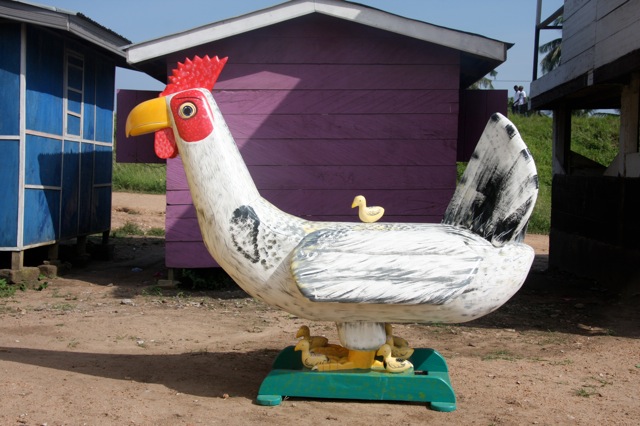 Fantasy coffinsCustom hand-carved burial caskets shaped as animals, tools and symbols in southern Ghana
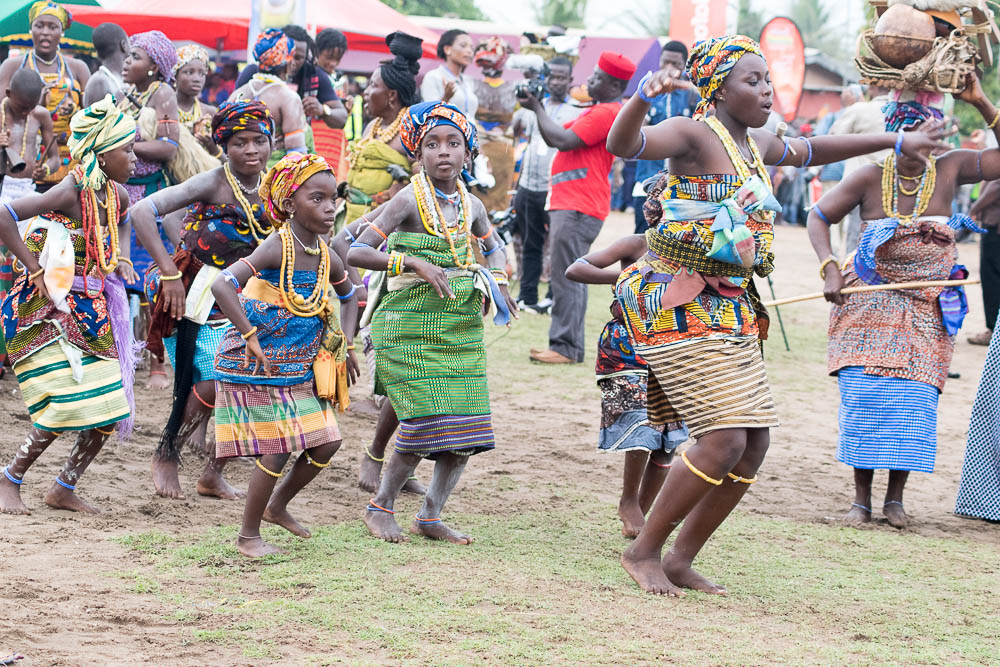 AgbadzaAn Ewe music and dance, born of war songs and kept for funerals, weddings and festivals
 HomowoA harvest festival of the Ga people in Ghana to remember surviving famine
 Damba festivalA Ghanaian celebration of royal authority, ancestral memory, music and dance
Good reading and sources
The facts on this page come from the Wikipedia article "Outdooring", written by its contributors and used under the CC BY-SA 4.0 licence, and from its Wikidata record (CC0). EveryParampara rewrote the text in its own words, with AI assistance, and compares every page with the article to make sure no passage is copied. It may be reused under the same CC BY-SA 4.0 licence with a link back.
It may contain mistakes. Traditions differ from one family, village and community to the next, and the people who keep them know them best. If something is wrong, tell us. Last refreshed 2026-10-05.
More from Ghana
All the traditions of Ghana
🇬🇭 Accra, GhanaFantasy coffinsAbebuu adekai
Custom hand-carved burial caskets shaped as animals, tools and symbols in southern GhanaRite of passage
 🇬🇭 Odumase Krobo, GhanaDipo
An annual Ghanaian coming-of-age ceremony welcoming Krobo girls into womanhoodRite of passage
🇬🇭 Ghana and 2 moreAgbadza
An Ewe music and dance, born of war songs and kept for funerals, weddings and festivalsPerformance
🇬🇭 Ghana and 3 moreDamba festivalDamba chuɣu
A Ghanaian celebration of royal authority, ancestral memory, music and danceFestival
🇬🇭 Odumase Krobo, GhanaDipo
An annual Ghanaian coming-of-age ceremony welcoming Krobo girls into womanhoodRite of passage
🇬🇭 Ghana and 2 moreAgbadza
An Ewe music and dance, born of war songs and kept for funerals, weddings and festivalsPerformance
🇬🇭 Ghana and 3 moreDamba festivalDamba chuɣu
A Ghanaian celebration of royal authority, ancestral memory, music and danceFestival
The same idea elsewhere
Naming ceremonies compared 🇮🇩 IndonesiaSlametan
A short communal meal on Java where neighbours share food, prayer and a wish for peaceSpiritual · Feasts and festival meals
🇮🇩 IndonesiaSlametan
A short communal meal on Java where neighbours share food, prayer and a wish for peaceSpiritual · Feasts and festival meals
 🇨🇳 ChinaChinese paper cutting剪紙 / 剪纸 (jiǎnzhǐ)
Chinese cut paper pictures, pasted on windows and doors for luck at New YearCraft
🇨🇳 ChinaChinese paper cutting剪紙 / 剪纸 (jiǎnzhǐ)
Chinese cut paper pictures, pasted on windows and doors for luck at New YearCraft
 🇮🇱 Israel and 4 moreTorah readingקריאת התורה
The public reading of the Torah scroll in synagogue, chanted to a special tuneSpiritual
🇮🇱 Israel and 4 moreTorah readingקריאת התורה
The public reading of the Torah scroll in synagogue, chanted to a special tuneSpiritual
 🇮🇳 India and 2 morePujaपूजा (pūjā)
Hindu worship: light, flowers and food offered to a deity or a guestSpiritual
🇮🇳 India and 2 morePujaपूजा (pūjā)
Hindu worship: light, flowers and food offered to a deity or a guestSpiritual