Life-cycle ritesMiddle EastJewish
Yahrzeit
In its own language: יאָרצײַט (yortsayt)
A Jewish death anniversary marked by prayer and a burning candle to honour the departed.

Yahrzeit is the annual commemoration of a death in Judaism. It is kept by reciting the Mourner's Kaddish and lighting a twenty-four-hour candle. The practice originated in medieval Germany and spread across Jewish communities worldwide.
When is Yahrzeit kept?
Yahrzeit is kept on the Hebrew calendar anniversary of a death.
Yahrzeit marks the anniversary of a death in Judaism. Families and communities gather to remember the deceased through prayer and ritual light. This observance honours the departed and seeks spiritual elevation for their soul. It is a solemn yet meaningful tradition found across Jewish life.
Origins and history
The word comes from Yiddish, meaning year-time. It likely entered Jewish usage in the fifteenth century. Medieval German communities shaped the modern custom. Later, Sephardic Jews adopted the practice. Ancient roots exist in Talmudic times, when followers fasted on a teacher's death day. Rashi recorded gatherings at gravesites. These early acts showed respect for fathers and mentors.
How it is kept
Observers mark the day by lighting a special candle. This flame burns for twenty-four hours in the home or synagogue. Reciting the Mourner's Kaddish is central to the ritual. Some call the deceased up during Torah readings. Others sponsor a Kiddush meal. Hasidic groups may celebrate with song and dance. This joyous approach differs from earlier mournful customs.
Symbolism and meaning
The candle represents the human soul. Proverbs describe the soul as God's candle. The burning wick mirrors this connection. Kabbalistic thought links the flame to divine presence. Reciting Kaddish after eleven months elevates the soul yearly. This act helps the spirit move toward paradise. It transforms grief into ongoing spiritual support for the departed.
Notable observances
Many specific dates hold great importance. The seventh of Adar marks Moses' passing. Lag ba-Omer celebrates Simeon ben Yoḥai at Meron. Pilgrimages occur in Morocco to holy tombs. Israeli national figures receive state holidays on their death anniversaries. These events unite communities in shared memory and reverence.
How Yahrzeit is kept
Immediate relatives observe the date by lighting a twenty-four-hour candle. They also recite the Mourner's Kaddish during prayer services. Communities may sponsor a Kiddush or read the Haftara. Hasidic groups often add song and dance to the proceedings. These actions honour the dead and support their spiritual journey.
When and where
It falls on the Hebrew calendar anniversary of the death. If burial was delayed, the first observance may follow the burial date. Leap years and new moon days can shift the timing slightly.
The tradition is strongest in Israel, Germany, and Morocco. Specific sites like Meron attract pilgrims. National figures are honoured throughout Israel. Local synagogues maintain the practice globally.
What Yahrzeit means
The candle symbolizes the soul. Its light guides the spirit upward. Prayer lifts the deceased to higher realms. Joyous celebration reflects hope for eternal peace. The ritual transforms personal loss into communal remembrance.


Questions people ask about Yahrzeit
When is Yahrzeit kept?
Yahrzeit is kept on the Hebrew calendar anniversary of a death.
What is Yahrzeit?
It is the annual Jewish death anniversary. Families mark it with prayer and a burning candle. The ritual honours the departed and supports their soul.
What rituals are performed?
Observers light a twenty-four-hour candle. They recite the Mourner's Kaddish. Some attend synagogue services for Torah readings.
Where is it practiced?
It is kept worldwide by Jewish communities. Major observances happen in Israel, Germany, and Morocco. Specific holy sites draw pilgrims annually.
See also
 ChristmasA festival of Jesus's birth, kept on 25 December with gifts, lights and shared meals
 Christmas treeA decorated evergreen or artificial tree placed indoors to mark the Christmas season.
 HanukkahAn eight-day Jewish festival marking the rededication of the Second Temple in Jerusalem and the miracle of a single day'
 MawlidAn annual festival marking the birth of the Prophet Muhammad, marked by poetry, processions and feasts.
Good reading and sources
- Yahrzeit on WikipediaEncyclopedia
- More photos on Wikimedia CommonsPhotos and video
- Wikidata recordOpen data
The facts on this page come from the Wikipedia article "Yahrzeit", written by its contributors and used under the CC BY-SA 4.0 licence, and from its Wikidata record (CC0). EveryParampara rewrote the text in its own words, with AI assistance, and compares every page with the article to make sure no passage is copied. It may be reused under the same CC BY-SA 4.0 licence with a link back.
It may contain mistakes. Traditions differ from one family, village and community to the next, and the people who keep them know them best. If something is wrong, tell us. Last refreshed 2026-10-05.
More from Israel
All the traditions of Israel 🇰🇪 Kenya and 5 moreBurial
Placing the dead in the ground or a structure to honor them and guide their journey.Rite of passage
🇰🇪 Kenya and 5 moreBurial
Placing the dead in the ground or a structure to honor them and guide their journey.Rite of passage
 🇮🇳 India and 5 moreFirst haircut
A rite of passage marking a child's first shave or trim across many cultures and faiths.Rite of passage
🇮🇳 India and 5 moreFirst haircut
A rite of passage marking a child's first shave or trim across many cultures and faiths.Rite of passage
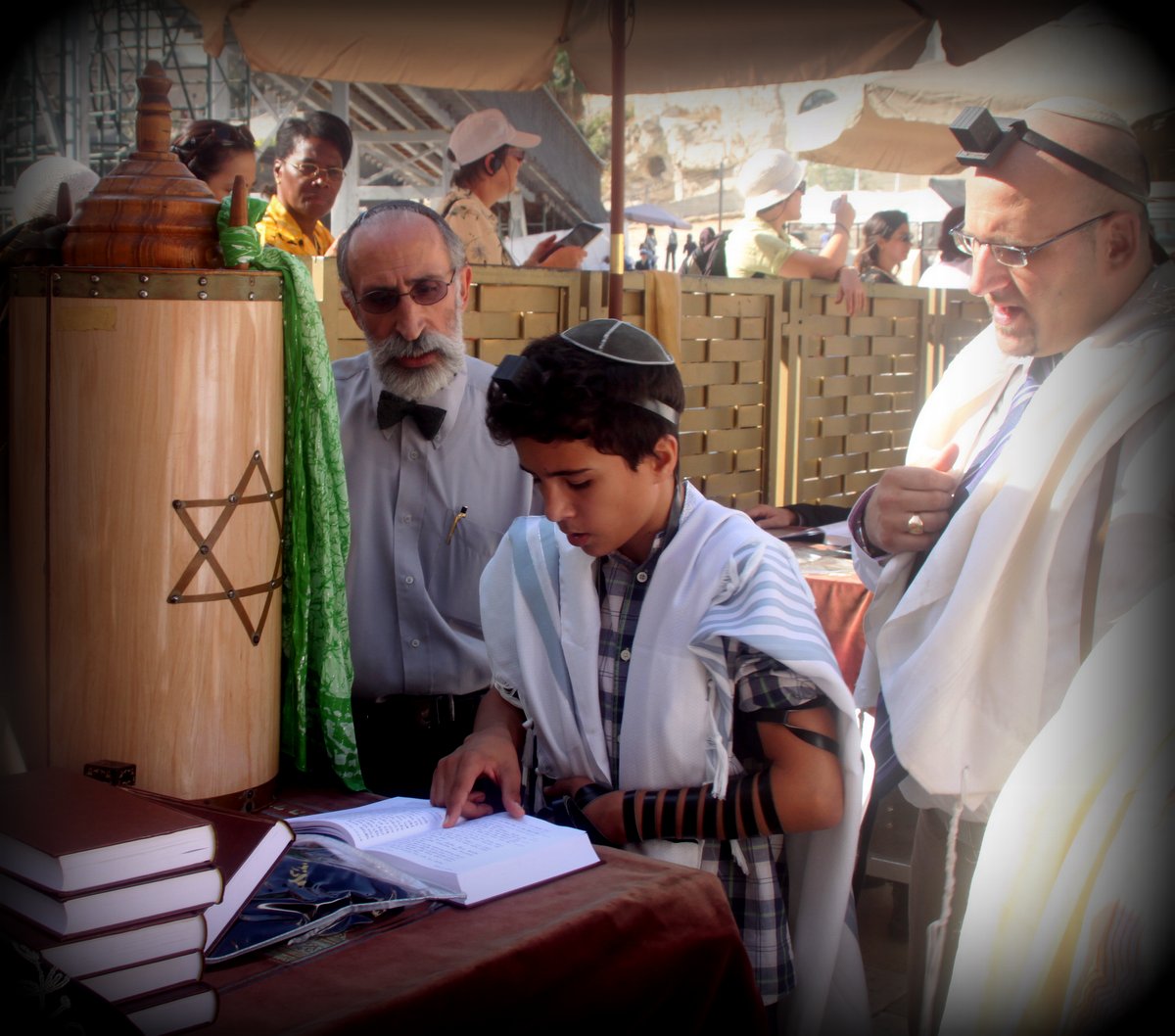 🇮🇱 Jerusalem, Israel and 5 moreBar and bat mitzvahבַּר מִצְוָה / בַּת מִצְוָה
A Jewish rite of passage marking when youth reach adulthood and take responsibility for their own actions.Rite of passage · Feasts and festival meals
🇮🇱 Jerusalem, Israel and 5 moreBar and bat mitzvahבַּר מִצְוָה / בַּת מִצְוָה
A Jewish rite of passage marking when youth reach adulthood and take responsibility for their own actions.Rite of passage · Feasts and festival meals
 🇮🇱 Israel and 5 moreZeved habatזֶבֶד הַבָּת
A Jewish naming ceremony for newborn girls, kept by Sephardi, Mizrahi and Ashkenazi communities.Rite of passage
🇮🇱 Israel and 5 moreZeved habatזֶבֶד הַבָּת
A Jewish naming ceremony for newborn girls, kept by Sephardi, Mizrahi and Ashkenazi communities.Rite of passage
The same idea elsewhere
Death and mourning compared 🇲🇽 Mexico City, Mexico and 1 moreDay of the DeadDía de Muertos
A Mexican remembrance of deceased family and friends with altars, marigolds and feastsFestival · Sweets given and shared
🇲🇽 Mexico City, Mexico and 1 moreDay of the DeadDía de Muertos
A Mexican remembrance of deceased family and friends with altars, marigolds and feastsFestival · Sweets given and shared
 🇳🇿 New Zealand and 2 moreMarae
A cleared, sacred gathering place at the heart of Māori and Polynesian community lifeSpiritual
🇳🇿 New Zealand and 2 moreMarae
A cleared, sacred gathering place at the heart of Māori and Polynesian community lifeSpiritual
 🇼🇸 Samoa and 1 moreʻIe tōga
Precious woven mats exchanged in Samoan ceremonies to honor family ties and chiefly status.Dress
🇼🇸 Samoa and 1 moreʻIe tōga
Precious woven mats exchanged in Samoan ceremonies to honor family ties and chiefly status.Dress
 🇹🇱 Timor-LesteUma Lulik
Sacred ancestral clan houses and ritual shrines in East TimorSpiritual
🇹🇱 Timor-LesteUma Lulik
Sacred ancestral clan houses and ritual shrines in East TimorSpiritual