Huadian
In its own language: 花鈿
A forehead ornament of Chinese women, painted or fixed on, still worn with hanfu

Huadian is an ornament of Chinese women's dress that sits on the forehead between the brows, and can also appear on the cheeks, temples or dimples. It is painted on or fixed to the skin in shapes such as blossoms, is dated by folklore to the Southern dynasty but by painted face patterns to the Warring States period, and is still worn today with hanfu.
Huadian is a small ornament worn on a woman's forehead in Chinese tradition, sitting between the brows and sometimes moving onto the cheeks, temples or dimples. It may be painted on the skin or fixed in place as a ready-made shape. Folk tales trace the floral sort to a Southern dynasty princess, while painted faces on much older figurines suggest the custom began earlier. Today it is worn again with hanfu, and the same patterns appear in wedding accessories.
What it is
Huadian sits centred on the forehead, in the space between the eyebrows. The same ornament can also appear lower, on the cheeks and the temples, and even in the dimples, where the sources call it mianye. Small shapes are typical: blossoms, plum flowers, butterflies, coins, peaches, birds, phoenixes, other animals. Red is the usual colour, though green and gold occur too. Materials vary widely. Gold or silver foil, paper, pearls and jewels are named, along with fish scales, feathers, dragonfly wings and the blue-green kingfisher feathers known as cuidian. A huadian may be painted straight onto the skin or applied as a temporary transfer. It counts as part of Chinese clothing culture.
Origins and legends
Two stories about the beginnings of floral huadian are told. In the first, a plum blossom blew onto the forehead of a princess during an early spring walk in the palace. It would not wash off, and because it suited her, other women copied the look. In the second, she was napping when a blossom fell on her forehead and cheeks, leaving marks that stayed for three days. The striking effect started a fashion that spread widely. Legend gives the credit to Shouyang, a princess of the Liu Song court. Both versions are given as folklore. Excavated figurines from a Warring States tomb at Changsha, in Hunan, carry painted face patterns, which suggests the practice is older than the tales. The sources also state that huadian has nothing to do with the forehead mark on Buddha statues.
Through the dynasties
Customs of face decoration reach back before the Qin and Han dynasties, into the pre-Qin period. Under the Tang, huadian became common. The Youyang zazu links painted huazi to Shangguan Wan'er. A folk account says her forehead was scarred on Wu Zetian's orders, and that she covered the mark with a red plum blossom, dyeing it red. Palace women and ordinary women alike took it up, and it became known as red plum makeup. Tang makers also cut huadian from gold and silver foil, paper, fish scales and dragonfly wings, and more than ten plum variations were used. Pearls decorated the Song versions, and the fashion faded under the Yuan dynasty.
Wearing it today
Huadian is no longer part of everyday makeup for most women. What survives is the design. Contemporary wedding accessories borrow traditional huadian patterns, and the ornament appears in Chinese television dramas. Women who wear hanfu, the traditional clothing of the Han Chinese, often add a huadian to finish the look, either painted on the face or applied as a temporary tattoo. The mianye marks on the cheeks widened in earlier centuries too: at the height of the Tang and during the Five Dynasties and Ten Kingdoms period they reached the sides of the nose and took the shapes of coins, peaches, birds and flowers.
How Huadian is kept
A woman prepares her face, then sets a small ornament in the middle of her forehead, between the eyebrows. The shape may be painted on with colour, or cut from foil, paper or another material and fixed in place. Modern versions can be pressed on as temporary tattoos. Some also place marks on the cheeks, temples or dimples. Designs follow blossoms, butterflies, coins, peaches, birds or phoenixes, most often in red, sometimes green or gold. Huadian is worn with hanfu when women dress in the traditional clothing of the Han Chinese, and the same patterns are used in wedding accessories. It is not everyday makeup today.
When and where
There is no fixed day. Huadian belongs to daily dressing rather than to a calendar festival. It was worn in ordinary life and at court, and the older customs are dated by archaeology and texts: pre-Qin and Warring States finds, common use in Tang and Song, a decline under the Yuan. Today it returns with hanfu and in wedding accessories.
Huadian belongs to China and to Han Chinese dress. The earliest evidence comes from a Warring States tomb at Changsha, in Hunan province. The custom is recorded at the Tang and Song courts and among ordinary women. Images of it survive in the cave paintings at Mo-kao Cave, where Buddhist donors in Tang clothing are shown with huadian on forehead, dimples, temples and cheeks.
What Huadian means
For the women who wear it, a huadian is an ornament of beauty and a marker of Chinese dress. The floral kind carries the story of a plum blossom that would not wash away, so the plum became its emblem. Worn with hanfu, it signals a deliberate return to older ways of dressing. The sources record no religious meaning: huadian is said to have no link with the forehead mark on Buddha statues, even though donors in cave paintings wear it. In the Tang it stood for fashionable court style, copied from palace women by ordinary women.

Questions people ask about Huadian
What is huadian?
An ornament worn on a woman's forehead in Chinese tradition, placed between the eyebrows. It can also be put on the cheeks, temples or dimples. It is painted on the skin or fixed there as a small shape, and it belongs to Chinese clothing culture.
When is it worn?
There is no set day. Huadian was worn as part of dressing in ordinary life and at court, and it is not everyday makeup now. Today you are most likely to see it with hanfu, in wedding accessories, and in Chinese television dramas.
Where does it come from?
From China. Painted face patterns on female figurines from a Warring States tomb at Changsha point to early forms. Folk tales place the floral huadian in the Southern dynasty. The Tang and Song courts used it widely, and its popularity fell away in the Yuan dynasty.
What is huadian made of?
The sources list many materials: gold and silver foil, paper, pearls, jewels, fish scales, feathers, dragonfly wings and the kingfisher feathers called cuidian. It may also be painted straight onto the skin, or applied today as a temporary tattoo. Red is the common colour, with green and gold also used.
Why is it called plum blossom makeup?
A legend says a plum blossom landed on a Southern dynasty princess's forehead and could not be washed off. Because it looked well on her, other women copied the mark. The plum flower became the emblem of huadian, and the names plum makeup and shouyang makeup come from that story.
See also
 DahuA cross-collar jacket worn in the Ming dynasty, blending Chinese and Mongol styles.
 HanfuThe dress of the Han Chinese, named for the Han dynasty and worn again today
 HanbokKorea's customary dress: a short jacket, a skirt or trousers, and a bow-tied ribbon
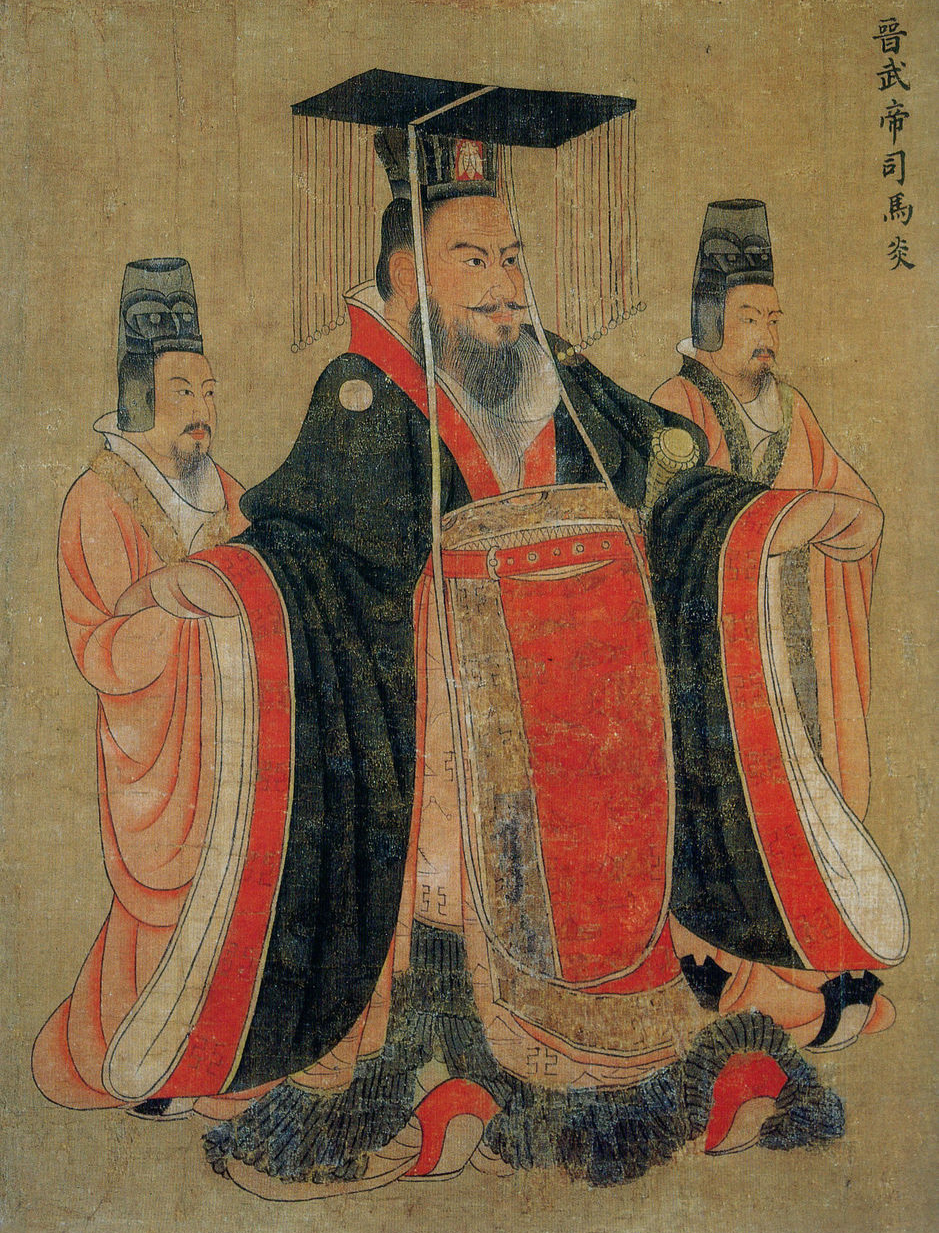 Chinese clothingRobes, gowns, and suits shaped across dynasties, ranks, and daily life in China
Good reading and sources
The facts on this page come from the Wikipedia article "Huadian (make-up)", written by its contributors and used under the CC BY-SA 4.0 licence, and from its Wikidata record (CC0). EveryParampara rewrote the text in its own words, with AI assistance, and compares every page with the article to make sure no passage is copied. It may be reused under the same CC BY-SA 4.0 licence with a link back.
It may contain mistakes. Traditions differ from one family, village and community to the next, and the people who keep them know them best. If something is wrong, tell us. Last refreshed 2026-10-09.
More from China
All the traditions of China
🇰🇷 South Korea and 2 moreHanbok한복
Korea's customary dress: a short jacket, a skirt or trousers, and a bow-tied ribbonDress
🇨🇳 Beijing, ChinaHanfu漢服
The dress of the Han Chinese, named for the Han dynasty and worn again todayDress
🇨🇳 China and 1 moreDahu褡护 (Dāhù)
A cross-collar jacket worn in the Ming dynasty, blending Chinese and Mongol styles.Dress
🇨🇳 Zhongshan, ChinaChinese clothing
Robes, gowns, and suits shaped across dynasties, ranks, and daily life in ChinaDress
The same idea elsewhere
Royalty and coronation compared 🇮🇩 Bali, Indonesia and 5 moreIkat
A resist-dyeing craft from Southeast Asia, where yarns are tied and dyed before weavingCraft
🇮🇩 Bali, Indonesia and 5 moreIkat
A resist-dyeing craft from Southeast Asia, where yarns are tied and dyed before weavingCraft
 🇮🇷 Isfahan, Iran and 3 morePersian gardenباغ ایرانی
An ancient tradition of creating walled, geometric sanctuaries of shade and flowing waterCraft
🇮🇷 Isfahan, Iran and 3 morePersian gardenباغ ایرانی
An ancient tradition of creating walled, geometric sanctuaries of shade and flowing waterCraft
 🇸🇩 SudanJirtigالجَرْتِقْ
A Sudanese wedding ritual of regal adornment, protection, and blessings of fertilityRite of passage
🇸🇩 SudanJirtigالجَرْتِقْ
A Sudanese wedding ritual of regal adornment, protection, and blessings of fertilityRite of passage
 🇹🇴 Tonga and 1 moreTaʻovala
A waist mat worn in Tonga for weddings, funerals and formal daysDress
🇹🇴 Tonga and 1 moreTaʻovala
A waist mat worn in Tonga for weddings, funerals and formal daysDress