Dress and adornmentEast AsiaShinto, Taoist and folk Chinese
Hanfu
In its own language: 漢服
The dress of the Han Chinese, named for the Han dynasty and worn again today

Hanfu means Han clothing: the historical dress of the Han Chinese, named for the Han dynasty and worn from the Shang dynasty until the Qing conquest of the 1600s. Court robes, jackets, skirts and trousers all fall under the name, and a revival movement in the 21st century has brought it back into use in China and among Chinese communities abroad.
When is Hanfu kept?
Hanfu is kept on no fixed date; worn in daily life and at rites in the past, and put on again today by people in the revival movement.
Hanfu is the traditional dress of the Han Chinese, and it takes its name from the Han dynasty. For most of China's recorded past this was ordinary and formal wear at once: hemp for the poor, silk for the wealthy, different cuts for different ranks. After the Qing conquest in the 1600s it fell out of use. A revival movement that began in the 21st century now brings it back.
What it is
Hanfu covers a wide family of garments rather than one outfit. A long skirt worn high over the top, a jacket with an underskirt, a loose open coat, a one-piece robe and a top with trousers are all part of it. Underneath the variety sits one shared rule: the collar crosses, and the wearer's left panel goes over the right, tied at the right side of the waist. Headwear, shoes, belts, fans, jade pendants, bracelets and scented sachets count as part of the dress too.
Origins and history
Clothing rules appear in China as early as the Shang dynasty, when dress was organised by rank and only a few colours could be made. Only the wealthy had silk then; others wore hemp or ramie. The Zhou dynasty bound clothing to ceremony and status, and each later dynasty set fresh codes. Hanfu takes its name from the Han dynasty, a stable period when weaving and dyeing advanced and brocade, damask, satin and gauze came into use. The styles survived until the Qing conquest of the 1600s, when Manchu dress was required and the old forms were set aside.
Court dress and rank
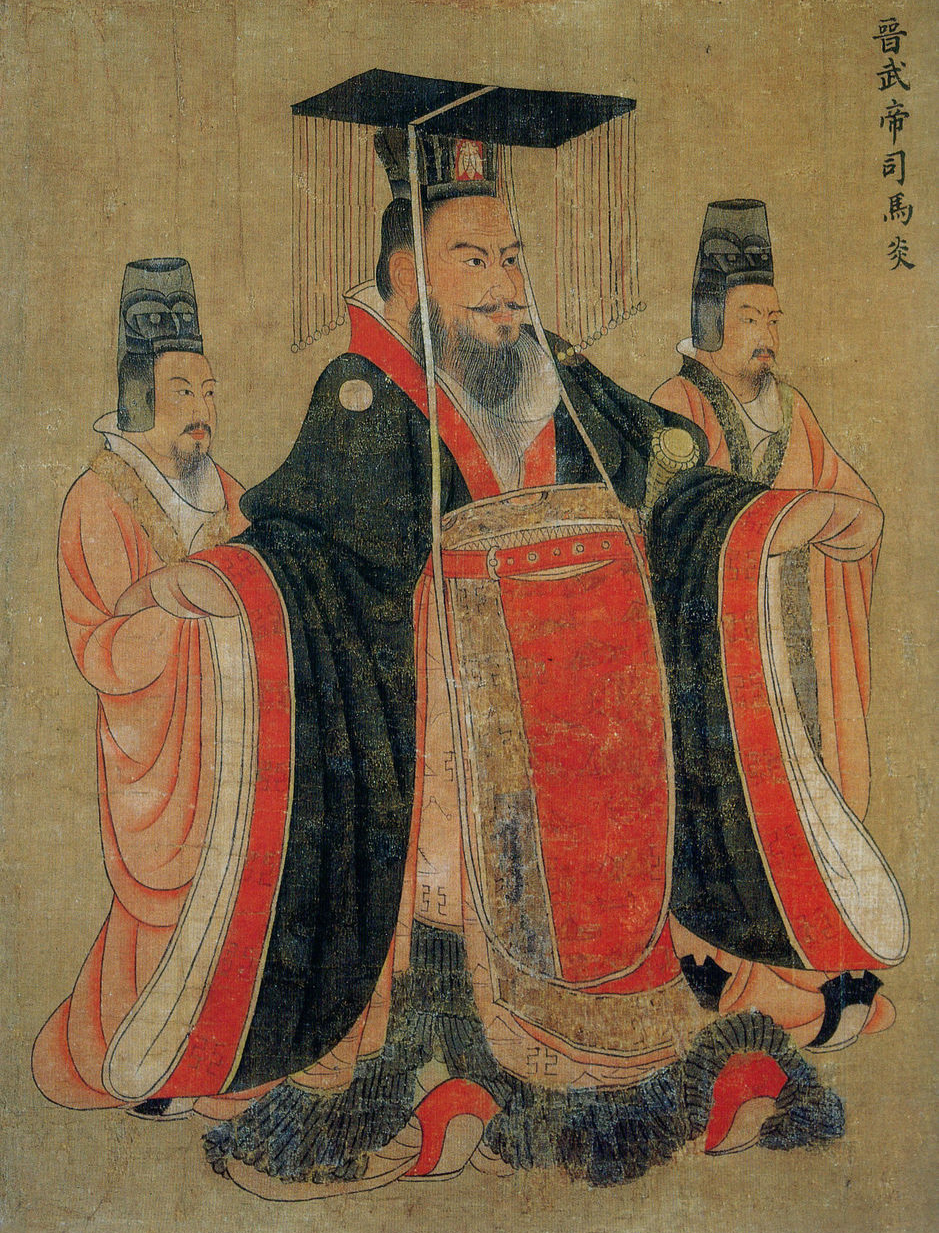
Zhou rulers built rank into clothing. A cap called the guan marked a man's standing, and he could put one on only after the coming-of-age rite known as Guan Li. Women had a matching rite, Ji Li, taking the hairpin called ji once they were engaged. The most honoured formal robe was the mianfu, made in six grades for emperors, princes and officials and worn at worship and memorial ceremonies. The bianfu ranked just below it. Away from court the emperor wore the xuanduan. All three were assembled from a skirt, a robe, a bixi and a broad cloth belt.
Silk and symbols
Silk runs through the whole story. Old texts credit Leizu, the Yellow Emperor's consort, with discovering sericulture, and she was revered as its goddess. Silk began in decoration and ritual, then pushed weaving forward. Colour carried meaning: after the Qin dynasty, laws on dress drew on the Five Elements and on yin and yang, so each dynasty favoured its own shades. The crossed collar follows the same thinking. The left panel stands for yang and life, the right for yin and death, so wrapping a garment the other way, called zuoren, belongs to the dead and is avoided by the living.
Today and change
Hanfu fell out of use after the Qing order that changed both hair and clothing, an event called Tifayifu, which put Manchu qizhuang and magua in its place. The styles came back in the 21st century. A revival movement that grew alongside China's rise presents hanfu as a truer picture of Chinese dress than the qipao, the tangzhuang or the Mao suit, which it treats as borrowings from Manchu or Japanese uniforms. Those who wear it are mostly young, at home in China or in Chinese communities elsewhere. Outside China, hanfu design and Chinoiserie have shaped Western fashion since the 1600s.
How Hanfu is kept
Hanfu was not kept on one fixed day. It was simply what Han Chinese people put on, from plain working clothes to an emperor's robes, with fabric, shape, colour and ornament fixed by rank and by occasion. Rites marked turning points: a man received his guan at the Guan Li ceremony, a woman took her ji at Ji Li. Today the revival movement asks people to wear these clothes again rather than the qipao, tangzhuang or Mao suit. The collar rule stays the same: left panel over right, held at the waist by a ribbon or sash.
When and where
There is no date for hanfu itself. It was worn every day and on ceremonial days alike for most of China's recorded history, and each dynasty set its own rules for who could wear what. Its use as ordinary dress ended in the 1600s under the Qing, and since the 21st century it has reappeared on days its wearers choose.
Hanfu belongs to China and to the Han Chinese, and the revival movement is strongest at home and among Chinese communities abroad. Traces of the oldest forms come from archaeological finds, among them a jade figure from a tomb at Anyang. Neighbouring traditions of dress in Korea, Japan, Ryukyu and Vietnam took cues from it long ago, and Chinoiserie carried its design into Western fashion.
What Hanfu means
For those who wear it, hanfu is more than costume. Its cut carries the old idea of a well-ordered society: dress showed rank, and rank showed duty. The crossed collar holds a picture of life and death, with the living wrapped so that life lies on top. Silk ties the wearer to sericulture and to Leizu. In the revival movement the same clothes stand for a Han Chinese identity, offered in place of the qipao, the tangzhuang and the Mao suit.


Questions people ask about Hanfu
When is Hanfu kept?
Hanfu is kept on no fixed date; worn in daily life and at rites in the past, and put on again today by people in the revival movement.
What is hanfu?
It is the historical clothing of the Han Chinese, named after the Han dynasty. The word means Han clothing, and it covers many garments: robes, jackets, skirts, trousers, coats, plus headwear, shoes, belts, fans, pendants and sachets. Writers also call it Hanzhuang, or simply traditional Chinese clothing.
Where is it worn today?
In China, above all among young people, and among Chinese communities abroad. Neighbouring traditions of dress in Korea, Japan, Ryukyu and Vietnam borrowed from it long ago, and Chinoiserie carried its design into Western fashion, but the tradition itself belongs to the Han Chinese.
Why does the collar cross a particular way?
The left panel goes over the right, tied at the right side of the waist. This is called youren. Old thought linked the left side to yang and life and the right to yin and death, so wrapping the other way, zuoren, was kept for burial clothing and treated as a taboo.
Is hanfu only one set of clothes?
No. Writers list many styles, among them a high-waisted skirt with a top, a jacket with an underskirt, an open coat, a one-piece robe and a top with trousers. Formal court dress, everyday wear, men's and women's cuts, and the dress of different dynasties all sit under the one name.
See also
 Traditional tattooingThe ancient custom of marking the skin for protection, healing, status and sacred rites
 Water lanternSmall lamps floated on water to honour the dead and ask for good fortune
 Chinese operaA sung, danced and acrobatic theatre from China, in over a hundred regional styles
 PretaOfferings and rites for spirits enduring deep hunger across Asian traditions.
Good reading and sources
- Traditional Chinese clothing inspires a budding fashion in Saint JohnCBC, Article
- BBC TwoBBC, Article
- Traditional Chinese clothing inspires a budding fashion in Saint JohnCBC, Article
- BBC TwoBBC, Article
- Hanfu on WikipediaEncyclopedia
- More photos on Wikimedia CommonsPhotos and video
- Wikidata recordOpen data
The facts on this page come from the Wikipedia article "Hanfu", written by its contributors and used under the CC BY-SA 4.0 licence, and from its Wikidata record (CC0). EveryParampara rewrote the text in its own words, with AI assistance, and compares every page with the article to make sure no passage is copied. It may be reused under the same CC BY-SA 4.0 licence with a link back.
It may contain mistakes. Traditions differ from one family, village and community to the next, and the people who keep them know them best. If something is wrong, tell us. Last refreshed 2026-10-05.
More from China
All the traditions of China
🇪🇬 Egypt and 5 moreTraditional tattooing
The ancient custom of marking the skin for protection, healing, status and sacred ritesDress
 🇨🇳 Zhongshan, ChinaChinese clothing
Robes, gowns, and suits shaped across dynasties, ranks, and daily life in ChinaDress
🇨🇳 Zhongshan, ChinaChinese clothing
Robes, gowns, and suits shaped across dynasties, ranks, and daily life in ChinaDress
 🇨🇳 China and 1 moreDahu褡护 (Dāhù)
A cross-collar jacket worn in the Ming dynasty, blending Chinese and Mongol styles.Dress
🇨🇳 China and 1 moreDahu褡护 (Dāhù)
A cross-collar jacket worn in the Ming dynasty, blending Chinese and Mongol styles.Dress
 🇨🇳 ChinaHuadian花鈿
A forehead ornament of Chinese women, painted or fixed on, still worn with hanfuDress
🇨🇳 ChinaHuadian花鈿
A forehead ornament of Chinese women, painted or fixed on, still worn with hanfuDress
The same idea elsewhere
Coming of age compared 🇨🇲 Bafoussam, CameroonNyang Nyang FestivalNyan-Nyang
A four-month Bamileke harvest festival and initiation rite in western CameroonFestival
🇨🇲 Bafoussam, CameroonNyang Nyang FestivalNyan-Nyang
A four-month Bamileke harvest festival and initiation rite in western CameroonFestival
 🇵🇪 Cusco, Peru and 4 moreIntiinti (Quechua)
The Inca sun deity, honoured with temples, offerings and the June festival Inti RaymiSpiritual
🇵🇪 Cusco, Peru and 4 moreIntiinti (Quechua)
The Inca sun deity, honoured with temples, offerings and the June festival Inti RaymiSpiritual
 🇼🇸 Samoa and 1 morePeʻa
The traditional Samoan rite of full-body tattooing for men, tapped by master artistsRite of passage
🇼🇸 Samoa and 1 morePeʻa
The traditional Samoan rite of full-body tattooing for men, tapped by master artistsRite of passage
 🇵🇬 Maprik, Papua New GuineaHaus Tambaran
A sacred house of the Sepik peoples, used for ancestor worship and male initiationSpiritual
🇵🇬 Maprik, Papua New GuineaHaus Tambaran
A sacred house of the Sepik peoples, used for ancestor worship and male initiationSpiritual