Music, dance and storytellingEurope
Irish dance
Ireland's traditional solo and group dances, from social halls to world competitions
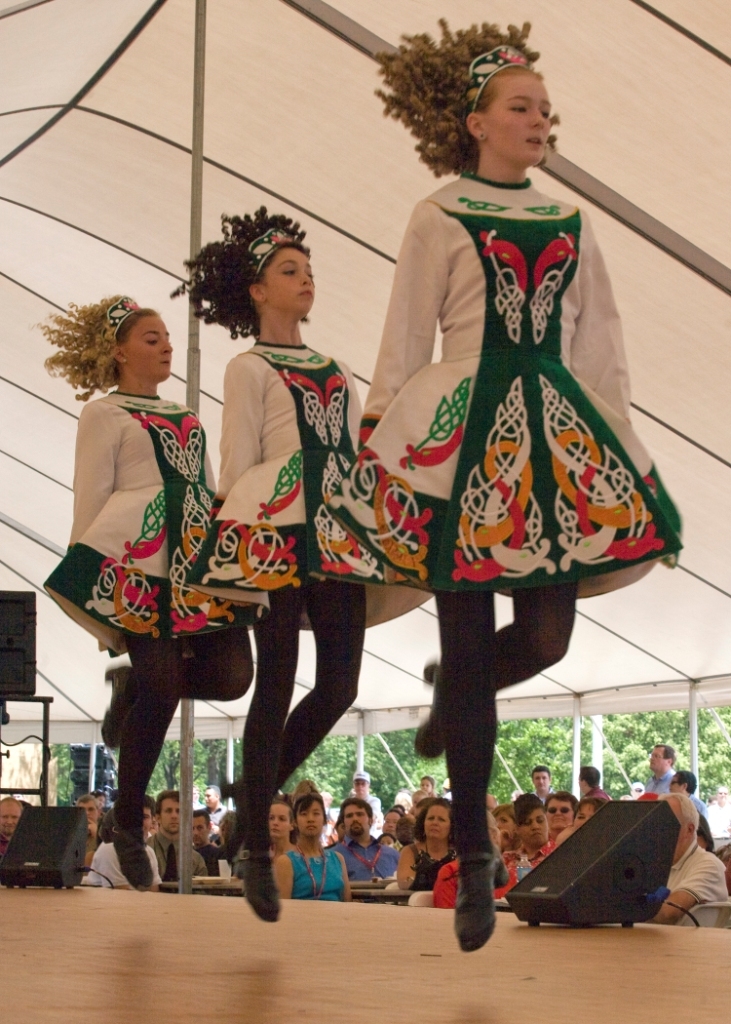
Irish dance is the family of traditional dances from Ireland, performed solo or in teams for social, competitive and stage purposes. Travelling dance teachers spread it through the 17th and 18th centuries, and since the early 20th century organisations have standardised it, so it is now danced in Ireland and in Irish communities worldwide.
When is Irish dance kept?
Irish dance is kept on all year, through classes, social dances, competitions and stage shows.
Irish dance covers the traditional dances of Ireland, done alone or in groups, for fun, for competition and for the stage. Travelling teachers shaped many of its forms in the 17th and 18th centuries, and it later became part of Irish cultural and nationalist life. Today it is taught and performed in Ireland and well beyond it, from local halls to worldwide competitions.
Solo and group forms
Dancers today usually learn one of a few shapes of the tradition. Stepdance is the best known: the body stays still from the waist up while the feet do quick, exact work. Sean-nós is looser and more social, with steps that the dancer makes up on the spot. Festival dance split away from stepdance in the middle of the 20th century. Group dancing includes céilí, done by anything from two to sixteen people with simple footwork and set patterns, and set dances, mainly social, for four dancers, using some of the fine footwork of stepdance.
Early records
Written traces of dancing in Ireland are thin before the 7th century, and some records were lost in Viking raids. Scholars think the practice may have been passed on by word of mouth rather than in writing. The Irish words for dancing, rince and damhsa, appear only in the 16th century. Most early mentions come from visitors. A song written in southern England in the 14th century invites listeners to dance in Ireland, and the first Irish account, from 1413, describes people dancing on Christmas Eve during a mayor of Waterford's visit to Baltimore in County Cork. The Norman arrival in the 12th century may have brought round dances with it.
Dancing masters and music
By the 17th century dancing was common across Ireland, and one observer wrote of fiddles in every field. The fiddle came in from mainland Europe, and by the 1760s the hornpipe rhythm had taken shape. A new figure appeared: the travelling dancing master, who moved from place to place teaching steps. Because rooms were often small, dances were shown on tabletops or on barrel tops. That helps explain why early styles hold the arms close to the body and use little sideways movement. Roomier halls later allowed more of the body and more of the floor to be used. Group dancing borrowed from French forms, above all the quadrille.
Shoes and dress
Two kinds of shoe shape the solo dances. Soft shoes, called ghillies, are black leather lace-ups like ballet slippers, and only girls wear them; boys wear black reel shoes with a hard heel, and their soft-shoe dancing adds audible clicks and stomps. Hard shoes look a little like tap shoes, but the tips and heels are fibreglass rather than metal and are much bulkier. They can also be balanced on the toe, or on block. The earliest hard shoes had wooden or leather taps fixed with metal nails; resin and fibreglass later cut the weight and raised the volume. For competitions, dancers often wear decorated dresses, large wigs and makeup.
Teaching and competitions
From the early 20th century, organisations began writing steps down and setting rules, which gave the dance standard styles and a competition circuit. In 1929 the Gaelic League set up a body to regulate stepdance teaching and judging, and it later spread overseas through exams and teacher qualifications. Other groups have broken away since, and each recognises slightly different versions of the traditional set dances. Thirty céilí dances were published as a standard list, which competitors call the book dances. Most contests ask for just a short piece of a dance, for reasons of time and stamina.
How Irish dance is kept
Dancers learn steps in classes, then show them at social gatherings, competitions or stage shows. In a solo piece the dancer works through a step: a set pattern of footwork lasting a fixed number of bars, first on the right foot, then repeated on the left. Competitive dancers usually perform two or three steps in a row, and judges may call a few of them back for a further round. Group dances bring dancers together in pairs, fours, sixes or larger sets, where the pattern of the figures matters as much as the feet. Céilí and set dancing also happen at social events.
When and where
There is no single date. Irish dance is kept all year, in weekly classes and in a competition season that runs through the year, with the largest events drawing dancers from many countries. Older references tie it to gatherings: the earliest Irish account describes dancing on Christmas Eve in 1413, and other early mentions speak of Sundays, holidays and the close of a ball.
The tradition belongs to Ireland, where it is strongest, and it travelled with Irish emigrants. Stepdance in the codified style is competed in a number of countries, among them Britain, the United States and Canada, and classes are now found far beyond Irish communities. Within Ireland, Dublin, Cork, Galway, Limerick and Waterford all appear in its history, as does Belfast in the north.
What Irish dance means
For many people Irish dance carries a sense of national identity. In the late 19th and early 20th centuries the Gaelic League promoted it as part of a wider effort to keep Irish culture alive, and a dislike of dances seen as too English or too French pushed stepdance towards the shape now taught. That heritage travels with dancers: people of many backgrounds now take part. For Irish families abroad, the dance is one of the clearest links back to home.


Questions people ask about Irish dance
When is Irish dance kept?
Irish dance is kept on all year, through classes, social dances, competitions and stage shows.
What is Irish dance?
It is the name for the traditional dances of Ireland, in solo and group forms, done for social, competitive or stage purposes. Stepdance is the best known, with a still upper body and fast footwork. Sean-nós is improvised, while céilí and set dances are group traditions.
Where is it danced?
It began in Ireland and is still strongest there, taught in classes and danced at social events. It also travelled with Irish people abroad. Stepdance in the standard style is competed in many countries, and dancers from many backgrounds now take it up.
Why do stepdancers keep their arms still?
In stepdance the arms are usually held at the sides, a habit traced to dancers performing in cramped spaces. Competition rules still require it. Outside competition, soft-shoe dancers often move their arms freely, and hard-shoe dancers sometimes hold them in set positions.
What are ghillies and reel shoes?
Ghillies are the soft black leather shoes, laced like ballet slippers, worn by girls. Boys wear black leather reel shoes with a hard heel, and their soft-shoe dancing makes audible clicks and stomps. Hard shoes are bulkier, with fibreglass tips and heels instead of metal.
See also
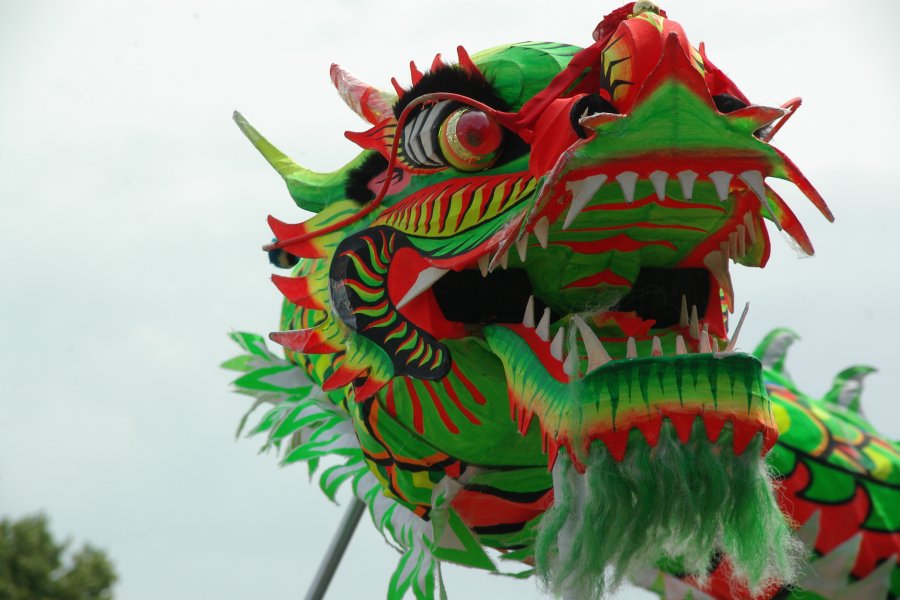 Dragon danceA long dragon puppet on poles, danced by a team at Chinese New Year and other festivals
 TiniklingA Philippine folk dance where dancers step between clapping bamboo poles
 RaraA Haitian street music of bamboo trumpets and drums, played in the Easter season
Good reading and sources
- Battle of the Irish Dancers reviewThe Guardian, Article
- Battle of the Irish Dancers reviewThe Guardian, Article
- Irish dance on WikipediaEncyclopedia
- More photos on Wikimedia CommonsPhotos and video
- Wikidata recordOpen data
The facts on this page come from the Wikipedia article "Irish dance", written by its contributors and used under the CC BY-SA 4.0 licence, and from its Wikidata record (CC0). EveryParampara rewrote the text in its own words, with AI assistance, and compares every page with the article to make sure no passage is copied. It may be reused under the same CC BY-SA 4.0 licence with a link back.
It may contain mistakes. Traditions differ from one family, village and community to the next, and the people who keep them know them best. If something is wrong, tell us. Last refreshed 2026-10-05.
More from Ireland
All the traditions of Ireland 🇮🇪 Dublin, Ireland and 2 moreIrish traditional music
A living folk practice of dance tunes, airs, songs and communal pub sessionsPerformance
🇮🇪 Dublin, Ireland and 2 moreIrish stepdance
A percussive dance form with swift, intricate footwork and an upright torsoPerformance
🇮🇪 Dublin, Ireland and 2 moreIrish traditional music
A living folk practice of dance tunes, airs, songs and communal pub sessionsPerformance
🇮🇪 Dublin, Ireland and 2 moreIrish stepdance
A percussive dance form with swift, intricate footwork and an upright torsoPerformance
 🇮🇪 Waterford, IrelandSean-nós singingSean-nós
An unaccompanied, highly ornamented style of traditional Irish folk singingPerformance
🇮🇪 Waterford, IrelandSean-nós singingSean-nós
An unaccompanied, highly ornamented style of traditional Irish folk singingPerformance
 🇮🇪 Ireland and 5 moreFleadh CheoilFleadh Cheoil na hÉireann
An annual gathering of Irish traditional music and dance, featuring competitions, public sessions, and concerts across IPerformance
🇮🇪 Ireland and 5 moreFleadh CheoilFleadh Cheoil na hÉireann
An annual gathering of Irish traditional music and dance, featuring competitions, public sessions, and concerts across IPerformance
The same idea elsewhere
All of this kind 🇹🇷 Kayseri, Turkey and 4 moreHalay
A traditional line and circle folk dance kept across Turkey, Azerbaijan, Armenia, Iran, and Syria.Performance
🇹🇷 Kayseri, Turkey and 4 moreHalay
A traditional line and circle folk dance kept across Turkey, Azerbaijan, Armenia, Iran, and Syria.Performance
 🇳🇿 Auckland, New ZealandPoi
A Māori performing art of swinging tethered weights in rhythmical patterns.Performance
🇳🇿 Auckland, New ZealandPoi
A Māori performing art of swinging tethered weights in rhythmical patterns.Performance
 🇵🇭 Philippines and 1 morePangalay
A traditional fingernail dance of the Tausūg and Bajau peoples in the Sulu Archipelago and Sabah.Performance
🇵🇭 Philippines and 1 morePangalay
A traditional fingernail dance of the Tausūg and Bajau peoples in the Sulu Archipelago and Sabah.Performance