Music, dance and storytellingEast Asia
Jiuta
In its own language: 地歌
A shamisen song style born in Kamigata and long kept by blind musician guilds

Jiuta is a style of traditional Japanese music played on the shamisen, a three-stringed lute. It grew up in the Kamigata region around Kyoto and Osaka in the Edo period, was carried by blind musicians of the Tōdōza guild, and is still played across Japan today.
Jiuta is a style of Japanese chamber music for the shamisen, a three-stringed plucked lute. Rooted in the Kamigata region of Kyoto and Osaka, it took shape in the Edo period, when blind musicians trained, composed and performed it. Unlike the theatre music of the same era, it grew into a body of pieces valued for their instrumental craft, and it is still studied and played across Japan.
What jiuta is
The word jiuta means the song of a region, and it points to Kamigata, the Kyoto and Osaka area, rather than to Edo. Pieces in this style are sung to the shamisen and belong to the lyrical side of Japanese music, the same family as nagauta. Some carry a story, others are mostly instrumental. Listeners often meet jiuta as music alone, separate from the puppet theatre and the kabuki stage, even though its players lived and worked in the same towns and century.
Origins and history
The shamisen reached Japan from China by way of Ryukyu, landing at Sakai near Osaka at the close of the Sengoku period. Blind biwa players attached to the Tōdōza adapted the instrument and struck it with a biwa plectrum, and jiuta is counted as the oldest of the shamisen repertories. Ishimura Kengyō is named as the first maker of shamisen music, and the earliest surviving piece is dated to the early Edo years. Later the style spread east to Nagoya and west to Chūgoku and Kyushu, and after the Meiji Restoration it was taken up again in Tokyo.
Kinds of piece
Within jiuta, several types of piece took shape. Tegotomono are built around tegoto, long instrumental stretches played between passages of song. Hauta were shorter, lighter songs that borrowed from popular music, and Osaka stood at the centre of a hauta boom in the middle of the eighteenth century. Sakumono tell comic tales, often about animals such as rats, snails or raccoon dogs struggling to escape trouble, and they use sound effects and demand high skill. From the late eighteenth century, utaimono set words and plots borrowed from Noh, and jōruri left its mark on jiuta melodies in the same decades.
Ensembles and instruments
Three instruments, the shamisen, the koto and the kokyū, were all in the hands of blind musicians from the early Edo years, and the group is known as sankyoku. At first each had its own repertory: jiuta for shamisen, sōkyoku for koto, kokyugaku for kokyū. In Kyoto, Ikuta Kengyō wrote pieces that set shamisen and koto together during the Genroku period, and the two repertories then developed side by side. Later Ichiura Kengyō of Osaka wrote polyphonic koto parts called kaete, a device Yaezaki Kengyō refined, and in time all three instruments played together.
Jiuta today
Today jiuta is played across Japan, with Okinawa the one region left out. In Tokyo it is often heard as the accompaniment to jiutamai, a dance form, and listeners there tend to think of it as gentle, quiet music written for the dancer. The history runs the other way: the dance was made to go with jiuta, and the dances use only a share of the repertory. Many jiuta pieces are written as instrumental music and ask more technical playing of the shamisen than other shamisen styles do, though the vocal side of the tradition matters just as much.
How Jiuta is kept
Jiuta passes from teacher to student, much as it did when the Tōdōza guild of blind musicians composed, performed and taught it. A player sings and strikes the shamisen, and in ensemble pieces a koto or kokyū player joins in. Pieces move between sung passages and tegoto, the instrumental stretches that fall between them. Some works are almost wholly instrumental, and these show the style at its most demanding. Today it is heard in lessons, recitals and concerts of traditional music around Japan.
When and where
Jiuta belongs to Japan. It began in Kamigata, the Kyoto and Osaka region, then spread east to Nagoya and west to Chūgoku and Kyushu before the Edo period ended. After the Meiji period it was promoted again in Tokyo, and it is now played across the country, except in Okinawa. In Tokyo it is most often heard as dance music; Kyoto and Osaka hold the older concert tradition.
What Jiuta means
For the blind musicians who created it, jiuta was a livelihood, a craft and a place in society. The Tōdōza guild gave them rank and protection, and the titles kengyō and koutō marked how far a player had risen. The music itself stands for a regional identity, a Kamigata voice set against the songs of Edo, and its name says as much. Players value the technical demands of the instrumental pieces.
Questions people ask about Jiuta
What is jiuta?
Jiuta is a style of traditional Japanese music sung to the shamisen, a three-stringed lute. It belongs to the lyrical family called utaimono, alongside nagauta, and it also includes many pieces that are largely instrumental. It is the oldest of the shamisen repertories.
Where does jiuta come from?
It comes from Kamigata, the Kyoto and Osaka region, which is what the name points to: the song of a place, not a song from Edo. From there it spread to Nagoya, Chūgoku and Kyushu, and later to Tokyo and the rest of Japan.
Who played jiuta?
For most of its history it was the work of blind musicians, above all the Tōdōza guild, whose members composed, performed and taught it. Because of that connection it also carries the name Houshiuta, the song of monks. When the Meiji government dissolved the guild, these musicians lost their protected status.
What is a tegoto?
Tegoto is an instrumental passage played between stretches of singing. Pieces built around it are called tegotomono, and the form grew longer and more elaborate as the Edo period went on, until it became the main type of jiuta music.
Is jiuta still played today?
Yes. It is played across Japan, with Okinawa the exception. In Tokyo it is best known as the accompaniment to jiutamai, a dance form, though the dance was in fact created to go with jiuta rather than the other way round.
See also
 RakugoJapanese solo comic storytelling told from a cushion using a fan and a cloth
 IkebanaThe Japanese art of arranging cut branches and flowers in a vessel
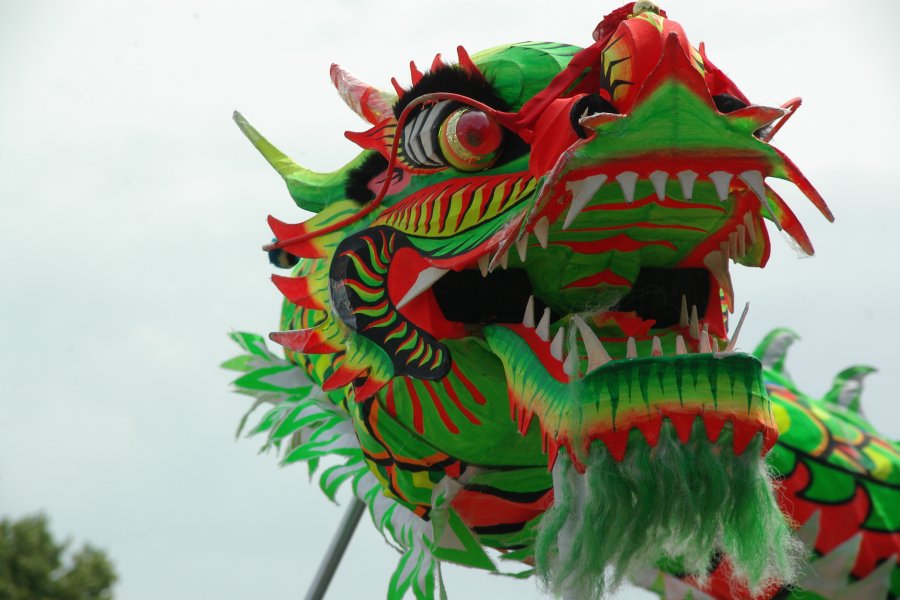 Dragon danceA long dragon puppet on poles, danced by a team at Chinese New Year and other festivals
 KyōgenA traditional Japanese comic theatre of short farces, spoken dialogue and satire
Good reading and sources
The facts on this page come from the Wikipedia article "Jiuta", written by its contributors and used under the CC BY-SA 4.0 licence, and from its Wikidata record (CC0). EveryParampara rewrote the text in its own words, with AI assistance, and compares every page with the article to make sure no passage is copied. It may be reused under the same CC BY-SA 4.0 licence with a link back.
It may contain mistakes. Traditions differ from one family, village and community to the next, and the people who keep them know them best. If something is wrong, tell us. Last refreshed 2026-10-10.
More from Japan
All the traditions of Japan 🇨🇳 China and 5 moreLion dance舞獅
A dynamic ritual dance featuring costumed lions, drums and martial acrobaticsPerformance
🇯🇵 Kyoto, JapanKyōgen狂言
A traditional Japanese comic theatre of short farces, spoken dialogue and satirePerformance
🇯🇵 Tokyo, JapanRakugo落語
Japanese solo comic storytelling told from a cushion using a fan and a clothPerformance
🇨🇳 China and 3 moreDragon dance舞龍 / 舞龙
A long dragon puppet on poles, danced by a team at Chinese New Year and other festivalsPerformance
🇨🇳 China and 5 moreLion dance舞獅
A dynamic ritual dance featuring costumed lions, drums and martial acrobaticsPerformance
🇯🇵 Kyoto, JapanKyōgen狂言
A traditional Japanese comic theatre of short farces, spoken dialogue and satirePerformance
🇯🇵 Tokyo, JapanRakugo落語
Japanese solo comic storytelling told from a cushion using a fan and a clothPerformance
🇨🇳 China and 3 moreDragon dance舞龍 / 舞龙
A long dragon puppet on poles, danced by a team at Chinese New Year and other festivalsPerformance
The same idea elsewhere
All of this kind 🇹🇷 Kayseri, Turkey and 4 moreHalay
A traditional line and circle folk dance kept across Turkey, Azerbaijan, Armenia, Iran, and Syria.Performance
🇧🇷 BrazilBaião
A syncopated folk rhythm and partnered dance from northeastern BrazilPerformance
🇹🇷 Kayseri, Turkey and 4 moreHalay
A traditional line and circle folk dance kept across Turkey, Azerbaijan, Armenia, Iran, and Syria.Performance
🇧🇷 BrazilBaião
A syncopated folk rhythm and partnered dance from northeastern BrazilPerformance
 🇺🇦 Kyiv, UkraineBanduraБандура
A Ukrainian plucked string instrument played to accompany epic songs and folk balladsPerformance
🇺🇦 Kyiv, UkraineBanduraБандура
A Ukrainian plucked string instrument played to accompany epic songs and folk balladsPerformance
 🇳🇿 Auckland, New ZealandPoi
A Māori performing art of swinging tethered weights in rhythmical patterns.Performance
🇳🇿 Auckland, New ZealandPoi
A Māori performing art of swinging tethered weights in rhythmical patterns.Performance