Games, sport and playSouth Asia
Kabaddi
A fast South Asian contact sport where solo raiders tag defenders on a single breath

Kabaddi is an ancient South Asian contact sport played between two teams of seven on a divided court. A lone attacker enters enemy territory to tag opposing defenders and dash back safely before running out of breath.
When is Kabaddi kept?
Kabaddi is kept on year-round.
Kabaddi is a high-energy team sport that pits individual agility against collective defense. Originating in South Asia, the game tests strength, speed, lung capacity, and tactical teamwork. Two sides take turns sending a single player across the central dividing line to tag opponents and return across the boundary without being pinned down. Today, it remains both a grassroots village pastime and an international competitive discipline.
Ancient origins and lore
The roots of the sport trace back thousands of years to the Indian subcontinent. Early forms may have arisen from hunting tactics, predator defense, or demonstrations of physical courage. Ancient epics and religious texts mention similar contests, including accounts of Siddhartha Gautama and Krishna testing their strength. In the Mahabharata, the warrior Abhimanyu penetrates an enemy battle array in a manner resembling a solitary raid into opposing ranks. Formal codification of the rules began in India during the 1920s, leading to structured tournaments across Maharashtra and Gujarat.
The field and players
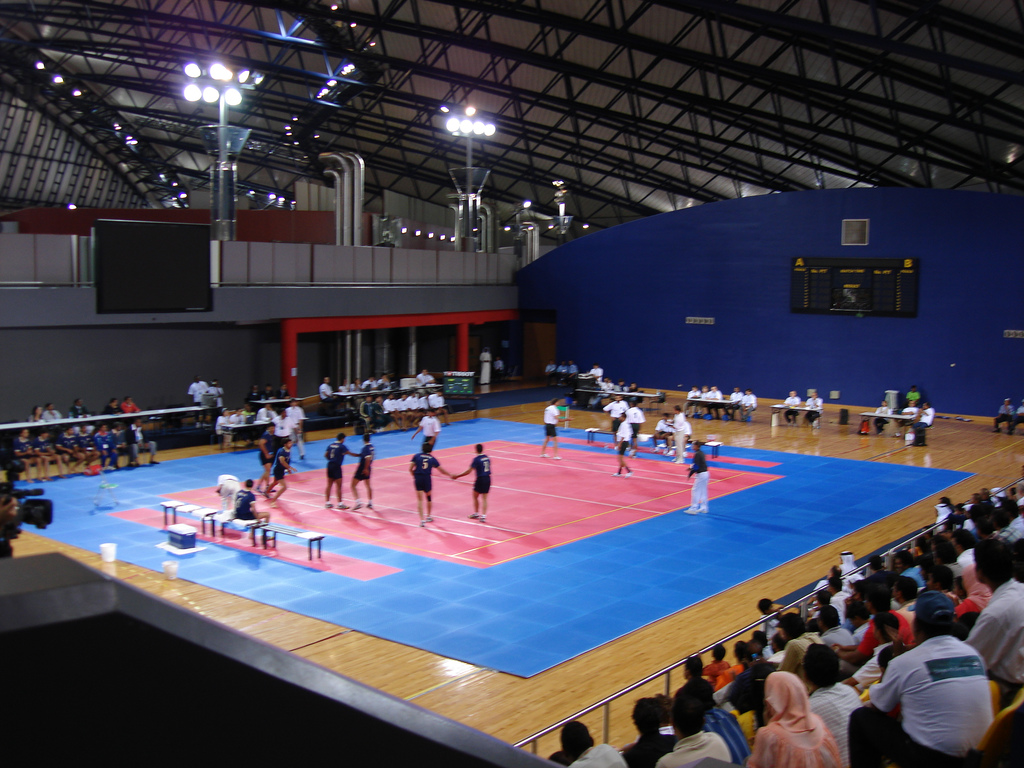
Standard matches take place on rectangular padded mats, though traditional village contests use open dirt grounds. Men and women play on slightly different court dimensions, each divided evenly by a midline. Two teams field seven active players alongside several substitutes. Athletes wear jerseys with distinct numbers, shorts, and shoes, but must keep their fingernails short and refrain from wearing jewellery or applying body oils. Umpires, scorers, and a referee manage the flow of play, tracking scoring sequences and issuing penalties for illegal tactics or improper gear.
The mechanics of raiding
During an attack, one player crosses the middle line into opponent territory. The raider must continually chant without pausing to inhale, proving that the entire effort happens on a single breath. Touching any defender earns a point, provided the raider safely crosses back home. Defenders work in unison to tackle, circle, or shove the raider before the return line is reached. Eliminating an opponent sends them to the sidelines until revived by team points, while clearing all seven rivals awards extra bonus points.
Styles and modern tournaments
Kabaddi encompasses both rectangular court play and circle style, often called Punjabi kabaddi, which takes place on open circular fields. The sport gained wider prominence as a demonstration event at the 1936 Berlin Olympics and entered the Asian Games programme in 1990. Bangladesh designated it as its national sport in 1972, while Malaysia recognises it as intangible cultural heritage. The launch of professional leagues and international world cups has expanded its following across Asia, Europe, and beyond.
How Kabaddi is kept
Two squads of seven square off on opposite sides of a divided mat. One team sends a solo raider across the center line, who must chant continuously while attempting to tag one or more opponents. The defenders coordinate to restrain or force the attacker out of bounds before they can escape home. Successful tags eliminate defenders, while a successful tackle dismisses the raider. Outed players step off the court and re-enter in sequence as their teammates score fresh points, alternating attack and defense over two timed halves.
When and where
Kabaddi is played throughout the year in community grounds, physical education classes, and sports halls. Formal seasons follow organized competitive calendars, with professional league matches and international championships scheduled across specific sporting windows each year.
The game is strongest across South Asia, particularly in India, Bangladesh, and Pakistan, as well as Iran. It is widely played on village grounds, school fields, and international arenas across Asia, and has established clubs in parts of Europe and Southeast Asia.
What Kabaddi means
Anthropologists and cultural commentators view the game as an expression of primal survival, tactical cooperation, and self-mastery. The continuous chant during a raid tests breath control and sustained nerve under pressure. By confronting an entire opposing line alone, the raider embodies individual daring, while the defenders demonstrate the protective power of unified collective action.



Questions people ask about Kabaddi
When is Kabaddi kept?
Kabaddi is kept on year-round.
What is kabaddi?
Kabaddi is a traditional South Asian contact sport where two teams of seven take turns sending a single raider into the opposing half to tag defenders and escape back across the midline.
Why does the raider chant during a raid?
The raider repeats a continuous chant, known as the cant, to prove to referees that the entire raid is carried out on a single breath without pausing to inhale.
Where is kabaddi traditionally played?
It is widely played across the Indian subcontinent and Iran, serving as the national sport of Bangladesh and a recognized cultural heritage in Malaysia.
What are the main styles of the sport?
The two primary forms are standard style, played on a rectangular court at major international tournaments, and circle style, also known as Punjabi kabaddi, played on a circular pitch.
See also
 KambalaAn annual traditional buffalo race across muddy paddy fields in southwestern India
 ChovganAn equestrian team sport played with mallets and horses across Iran and Azerbaijan
 Pahlevani and zurkhaneh ritualsA traditional Iranian martial art blending calisthenics, wrestling, music and ethics
 Vallam KaliA traditional canoe racing festival held across the waters of Kerala during Onam
Good reading and sources
- Encyclopaedia BritannicaArticle
- Favourites India win 2016 Kabaddi World Cup, defeat Iran 38-28 in the finalHindustan Times, Article
- Kabaddi gets the IPL treatmentBBC, Article
- Simple, visceral, fun: why the ancient sport of kabaddi is enjoying a resurgenceThe Guardian, Article
- Favourites India win 2016 Kabaddi World Cup, defeat Iran 38-28 in the finalHindustan Times, Article
- Kabaddi gets the IPL treatmentBBC, Article
- Simple, visceral, fun: why the ancient sport of kabaddi is enjoying a resurgenceThe Guardian, Article
- Kabaddi on WikipediaEncyclopedia
- More photos on Wikimedia CommonsPhotos and video
- Wikidata recordOpen data
The facts on this page come from the Wikipedia article "Kabaddi", written by its contributors and used under the CC BY-SA 4.0 licence, and from its Wikidata record (CC0). EveryParampara rewrote the text in its own words, with AI assistance, and compares every page with the article to make sure no passage is copied. It may be reused under the same CC BY-SA 4.0 licence with a link back.
It may contain mistakes. Traditions differ from one family, village and community to the next, and the people who keep them know them best. If something is wrong, tell us. Last refreshed 2026-10-04.
More from India
All the traditions of India
🇮🇳 IndiaKambala
An annual traditional buffalo race across muddy paddy fields in southwestern IndiaGame
🇮🇳 Kochi, IndiaVallam Kalivaḷḷaṃ kaḷi
A traditional canoe racing festival held across the waters of Kerala during OnamGame
 🇮🇳 India and 2 morePehlwani
A traditional discipline of clay-pit wrestling across the Indian subcontinent.Game
🇮🇳 India and 2 morePehlwani
A traditional discipline of clay-pit wrestling across the Indian subcontinent.Game
 🇮🇳 Madurai, IndiaJallikattuஜல்லிக்கட்டு
A traditional bull-embracing event held during harvest celebrations in Tamil NaduGame
🇮🇳 Madurai, IndiaJallikattuஜல்லிக்கட்டு
A traditional bull-embracing event held during harvest celebrations in Tamil NaduGame
The same idea elsewhere
All of this kind 🇺🇸 Fairbanks, United States and 2 moreWorld Eskimo-Indian Olympics
An annual Arctic gathering of traditional survival games, athletics, and cultural artsGame
🇺🇸 Fairbanks, United States and 2 moreWorld Eskimo-Indian Olympics
An annual Arctic gathering of traditional survival games, athletics, and cultural artsGame
 🇨🇭 Aproz, Switzerland and 2 moreCombat de Reines
An annual Swiss pushing contest where Hérens cows compete for herd dominanceGame
🇨🇭 Aproz, Switzerland and 2 moreCombat de Reines
An annual Swiss pushing contest where Hérens cows compete for herd dominanceGame
 🇲🇽 MexicoRarájipari
A traditional endurance running ball game of the Rarámuri people in northern MexicoGame
🇲🇽 MexicoRarájipari
A traditional endurance running ball game of the Rarámuri people in northern MexicoGame
 🇸🇪 Mora, SwedenVasaloppet
A 90 km cross-country ski race from Sälen to Mora, run every March since 1922Game
🇸🇪 Mora, SwedenVasaloppet
A 90 km cross-country ski race from Sälen to Mora, run every March since 1922Game