Music, dance and storytellingEurope
Kolo
In its own language: Коло
A South Slavic circle dance of linked hands, kept at weddings and gatherings

Kolo is the name South Slavic communities in Serbia, Bosnia and Herzegovina and Croatia give to their circle dance, in which people join hands and move to fast music. It is danced at weddings and at social, cultural and religious ceremonies, and in 2017 Serbia's entry was added to UNESCO's Representative List of the Intangible Cultural Heritage of Humanity.
When is Kolo kept?
Kolo is kept on danced at weddings and at social, cultural and religious ceremonies, without a fixed date.
Kolo is a circle dance kept by South Slavic communities, above all in Serbia, Bosnia and Herzegovina and Croatia. Dancers link hands or hold one another by the waist, forming a ring, a chain or parallel lines, and the steps are simple enough for a newcomer to pick up. It belongs to weddings and to social, cultural and religious gatherings, and UNESCO lists Serbia's kolo as intangible cultural heritage.
What it is
Kolo is danced in a group, and the group can be small or large: three people at the least, several dozen at most. The dancers join hands, or hold each other around the waist, and arrange themselves in a ring, in one long chain, or in several lines running side by side. Almost all the movement happens below the waist. The few basic steps can be picked up quickly, which is why newcomers are able to join in. Skilled dancers show what they can do by adding flourishes of their own. The repertoire is local: a district or village will have its own kolo, and no dancer knows every one.
Music and dress
The music that carries a kolo is usually quick. The version most often met, the narodno kolo or drmeš, follows a standard step and is played on the accordion. Antonín Dvořák drew on the dance for his Slavonic Dances, where the Serbian kolo is the seventh piece of opus 72. Dress changes from one area to the next. Costumes in neighbouring areas tend to look alike, so two villages near each other may be hard to tell apart by clothing alone. Dancers taking part in a social ceremony often wear the dress that belongs to their own district.
Where it is danced
Kolo belongs to gatherings. It is performed at weddings and at social, cultural and religious ceremonies, which is why it turns up at both family celebrations and wider community events. Not every dance is for everyone. Some are danced by men and women together, while others are kept for men alone or for women alone. Because the basic step is shared, a large group can move as one, and the ring lets many people take part at the same time.
Neighbours and relatives
Ring dances of this kind are not confined to one country. In Bulgaria a similar dance is called horo, and in North Macedonia and Montenegro it is called oro. Hungarian communities came under the influence of the tradition as well: at Laslovo a comparable dance goes by the name Kalala. North of the Croatian border, in the Mohács area of Hungary, where many ethnic Croats once lived, the dance is still kept, and it now forms part of life for the wider population there too.
Heritage listing
In 2017 Serbia brought kolo onto UNESCO's Representative List of the Intangible Cultural Heritage of Humanity, under the title Kolo, traditional folk dance. The entry names Serbia as the state party behind it. What is listed is a living practice, carried on by people, rather than a monument or a made object. The dance itself stays local: a district's version belongs to that district, and the steps, tunes and costumes travel with the dancers who keep them.
How Kolo is kept
Any number of people can take part, from three upward to several dozen. They hold hands, or hold each other by the waist, and make a circle, a single chain or parallel lines. There is little movement above the waist; the work is done by the feet. A handful of basic steps are easy to learn, so a beginner can step in beside experienced dancers, who may add ornamental flourishes. The music is quick. At weddings and ceremonies the dress worn is often the one particular to that district.
When and where
Kolo is tied to occasions rather than to the calendar, so it has no single date. It is danced when people come together: at weddings, at social and cultural ceremonies, and at religious ceremonies. That means it can be seen at any point in the year, whenever a family or a community has something to mark.
The name kolo is used in Serbia, Bosnia and Herzegovina and Croatia. Croatian communities north of the border, around Mohács in Hungary, also keep the dance, where it has spread beyond the Croatian population. Nearby countries have related ring dances under other names: horo in Bulgaria, oro in North Macedonia and Montenegro, and Kalala at Laslovo.


Questions people ask about Kolo
When is Kolo kept?
Kolo is kept on danced at weddings and at social, cultural and religious ceremonies, without a fixed date.
What is kolo?
Kolo is a circle dance of South Slavic communities, known by this name in Serbia, Bosnia and Herzegovina and Croatia. Dancers hold hands or waists and form a ring, a chain or parallel lines, usually moving to fast music. Almost all the movement is in the feet.
Where is it kept?
The name kolo is used in Serbia, Bosnia and Herzegovina and Croatia. Croatian communities around Mohács in Hungary keep it too. Related ring dances exist nearby under other names: horo in Bulgaria, oro in North Macedonia and Montenegro.
Is it hard to learn?
The basic steps are easy, so beginners join in quickly. Skilled dancers add flourishes of their own. Because every area has its own versions, even the most experienced dancers do not know them all.
Does it have official recognition?
Yes. Serbia's entry, listed as Kolo, traditional folk dance, was inscribed on UNESCO's Representative List of the Intangible Cultural Heritage of Humanity in 2017, during the twelfth session.
See also
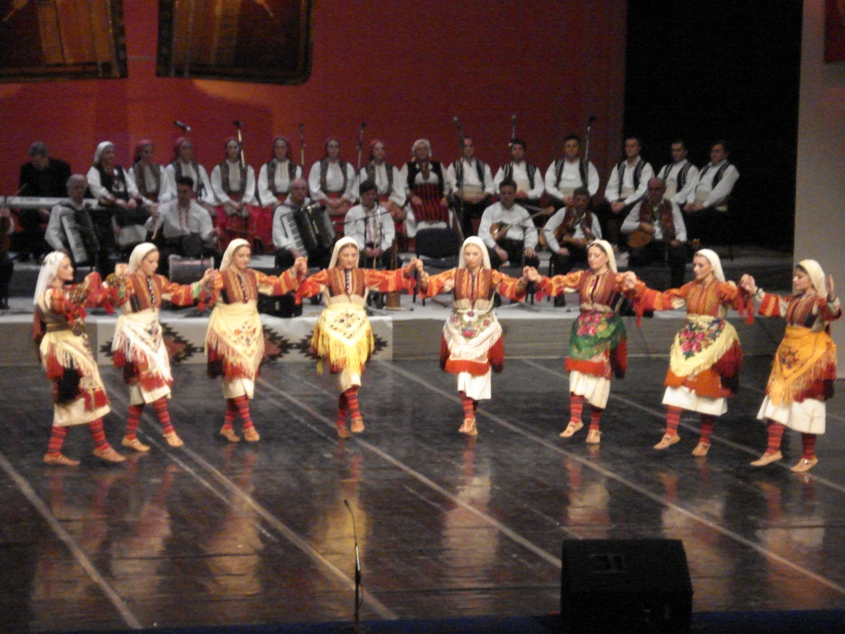 HoraA circle dance from Southeast Europe, danced at weddings and festivals
 Bread and saltBread and salt offered to a guest: a welcome kept from Russia to Albania
 HoronLine dances of Turkey's eastern Black Sea coast, danced with shaking shoulders
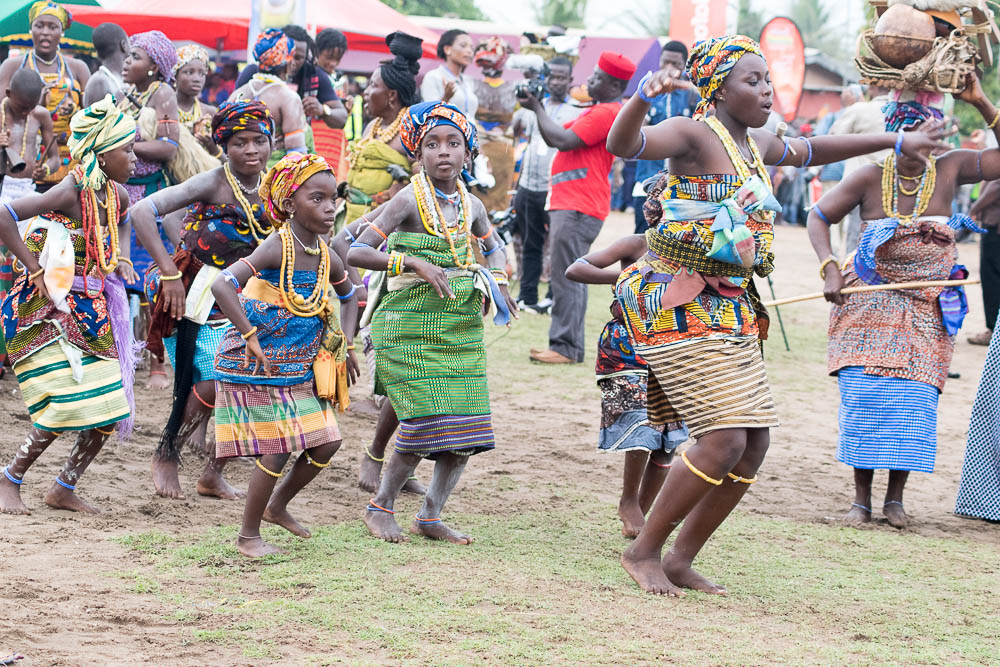 AgbadzaAn Ewe music and dance, born of war songs and kept for funerals, weddings and festivals
Good reading and sources
- Encyclopaedia BritannicaArticle
- Kolo, traditional folk danceUNESCO, Heritage listing
- Kolo, traditional folk danceUNESCO, Article
- Kolo (dance) on WikipediaEncyclopedia
- More photos on Wikimedia CommonsPhotos and video
- Wikidata recordOpen data
The facts on this page come from the Wikipedia article "Kolo (dance)", written by its contributors and used under the CC BY-SA 4.0 licence, and from its Wikidata record (CC0). EveryParampara rewrote the text in its own words, with AI assistance, and compares every page with the article to make sure no passage is copied. It may be reused under the same CC BY-SA 4.0 licence with a link back.
It may contain mistakes. Traditions differ from one family, village and community to the next, and the people who keep them know them best. If something is wrong, tell us. Last refreshed 2026-10-05.
More from Serbia
All the traditions of Serbia
🇷🇴 Bucharest, Romania and 7 moreHorahoră (Romanian), хоро (Bulgarian), оро (Macedonian), הורה (Hebrew)
A circle dance from Southeast Europe, danced at weddings and festivalsPerformance
🇭🇷 Konavle, Croatia and 2 moreOjkanje
A throat-shaking style of folk singing from Croatia's Dinaric highlandsPerformance
🇷🇺 Russia and 5 moreBread and saltхлеб-соль
Bread and salt offered to a guest: a welcome kept from Russia to AlbaniaEtiquette
 🇺🇦 Ukraine and 7 moreVechornytsiвечорниці
Evening gatherings of Ukrainian youth, with songs, jokes, games and winter divinationSeasonal
🇺🇦 Ukraine and 7 moreVechornytsiвечорниці
Evening gatherings of Ukrainian youth, with songs, jokes, games and winter divinationSeasonal
The same idea elsewhere
Weddings compared 🇼🇸 Samoa and 1 moreʻIe tōga
Precious woven mats exchanged in Samoan ceremonies to honor family ties and chiefly status.Dress
🇼🇸 Samoa and 1 moreʻIe tōga
Precious woven mats exchanged in Samoan ceremonies to honor family ties and chiefly status.Dress
 🇹🇱 Timor-LesteUma Lulik
Sacred ancestral clan houses and ritual shrines in East TimorSpiritual
🇹🇱 Timor-LesteUma Lulik
Sacred ancestral clan houses and ritual shrines in East TimorSpiritual
 🇮🇩 Indonesia and 2 moreKenduri
A communal prayer meal and gathering shared across Indonesia, Malaysia and BruneiSpiritual · Feasts and festival meals
🇺🇬 UgandaKwanjula
A formal marriage introduction ritual of the Baganda people in Uganda, where families meet to exchange gifts and seek blRite of passage
🇮🇩 Indonesia and 2 moreKenduri
A communal prayer meal and gathering shared across Indonesia, Malaysia and BruneiSpiritual · Feasts and festival meals
🇺🇬 UgandaKwanjula
A formal marriage introduction ritual of the Baganda people in Uganda, where families meet to exchange gifts and seek blRite of passage