Customs of food and drinkEast AsiaBuddhist
Laba congee
In its own language: 腊八粥
A ceremonial Chinese porridge of rice, beans and dried fruit, eaten at the Laba Festival

Laba congee is a ceremonial porridge from China, kept for the Laba Festival, a winter date in the closing month of the Chinese lunar year. Made from many kinds of rice, beans, nuts and dried fruit, it is eaten at the festival, and emperors once gave bowls of it to officials and servants.
When is Laba congee marked?
Laba congee is kept as part of Laba Festival, which is on Friday, 15 January 2027.
Laba congee is a ceremonial porridge from China, cooked for one day of the Chinese lunar year. That day is the Laba Festival, and the bowl holds grains, beans, nuts and dried fruit. It stands for good fortune. Households eat it, the imperial court once handed it out to officials and servants, and several legends explain why the custom is kept.
What it is
Laba congee, also called porridge, is a Chinese ceremonial dish of the congee family, meaning a soft, long-cooked grain porridge. Rice forms the base, and beans, peanuts, dried fruit, lotus seeds and nuts go in with it. Some cooks add tofu, potato, meat or vegetables. The dish is tied to the Laba Festival, a single day in the Chinese lunar year, and it is kept in China in many local forms. Its other common name, eight-treasure congee, comes from the usual count of ingredients, eight or more.
Origins and history
According to popular tradition the dish has been made since the Han dynasty, though in that period it was offered to the gods rather than eaten. The festival date settled in the Northern and Southern dynasties period. By the Song dynasty people across China were eating Laba congee, and not only ordinary households: officials and aristocrats took it too. In the Qing dynasty the festival was at times called the Spring Festival and the congee grew more popular still. At court the emperor and nobles passed bowls of it to officials, servants and others.
Stories of its origin
Several legends explain where the congee comes from. One ties it to Yue Fei, a Song dynasty general remembered as a patriot, so that eating it honours him. In the north, where winters bite hard, it became a winter drink and people said it helped their jaws stay attached. Another story tells of an old woman begging from neighbours, who received a mix of beans and fruit. A further tale says Zhu Yuanzhang, founder of the Ming dynasty, ate congee in poverty and later asked his people to eat it. Buddhists recall Siddhārtha Gautama, who accepted milk and rice pudding from a village girl after long fasting and reached enlightenment soon after, which is why some call the dish Buddha congee.
Regional versions
No two kitchens follow the same list. In the north of China, where the cold is sharpest, the porridge is drunk through the winter months as well as on the festival day. Beijing's traditional version brings together barley, maize, millet, sorghum, glutinous rice, azuki beans, jujubes, lotus seeds, chestnuts and pine seeds. Other households use millet, mung beans, walnuts, longan, raisins, goji berries or red dates. Vegetables and meat turn up in some regional recipes. Because the ingredients are chosen locally, the dish changes as it travels across the country, while the festival it belongs to stays the same.
How Laba congee is kept
On the Laba Festival households cook the porridge and eat it together. The grains, beans, nuts and dried fruit go into one pot and cook down soft; the mix changes from region to region, and each family settles on its own. In the Han dynasty the porridge was used for worshipping the gods and was not eaten. During the Qing dynasty the imperial court handed it out: the emperor and nobles gave bowls to officials, servants and others.
When and where
Laba congee belongs to one date: the Laba Festival, kept in the closing month of the Chinese lunar year. It comes eight days into that month, in deep winter. The Northern and Southern dynasties period fixed the date; before then it was not fixed.
Laba congee belongs to China and is eaten in every region, in many different local versions. Records from the Song dynasty onward place it in ordinary homes, among officials and aristocrats, and at the imperial court, where emperors and nobles passed bowls of it to servants and others. It stays a home dish tied to one festival day in the lunar year.
What Laba congee means
Those who keep the custom read the bowl as a wish as much as a meal. Eight ingredients, or more, stand for good fortune; eight is a favoured number in China, and the ba inside the name carries the same meaning. In its oldest recorded form the dish was offered to the gods rather than eaten. For Buddhists it recalls the Buddha's awakening, and some call it Buddha congee for that reason.

Days Laba congee is marked
Questions people ask about Laba congee
When is Laba congee marked?
Laba congee is kept as part of Laba Festival, which is on Friday, 15 January 2027.
What is Laba congee?
It is a Chinese ceremonial porridge, or congee, made from many kinds of rice, beans, nuts and dried fruit. Some versions add tofu, potato, meat or vegetables. It is also called eight-treasure congee because cooks usually put in eight ingredients or more.
Why eight ingredients?
The number matters. Eight is thought to bring good luck in China, and the syllable ba in the name Laba also means eight. So a bowl with eight or more ingredients, grains, beans, nuts and fruit, carries a wish for good fortune along with the meal.
Is it connected to Buddhism?
Some people call it Buddha congee. The name recalls Siddhārtha Gautama, who was given milk and rice pudding by a village girl when he was weak from fasting, and who reached enlightenment soon after. Eating the dish keeps that story and his path in mind.
Where is it eaten?
In China, in every region, with recipes that change from place to place. Beijing has a well-known traditional version. In the north it has long been drunk in winter. The dish was also made at the imperial court, where emperors and nobles gave bowls of it to officials and servants.
See also
 JiaoziCrescent Chinese dumplings filled with meat or vegetables, eaten for fortune and feasts
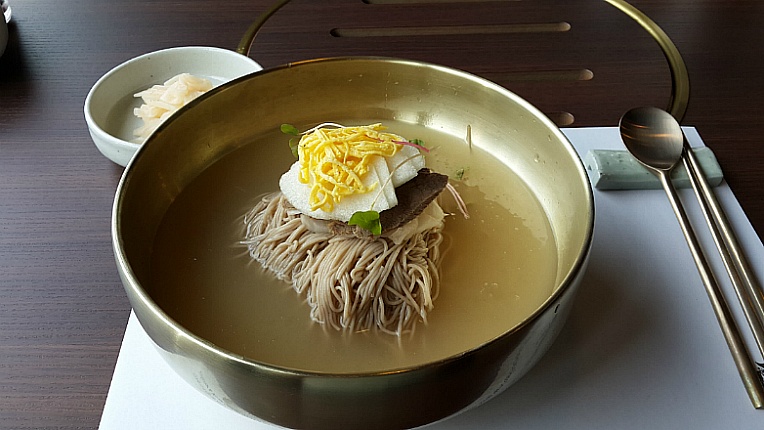 NaengmyeonLong buckwheat noodles in icy broth, born in North Korea and eaten most in summer
 Water lanternSmall lamps floated on water to honour the dead and ask for good fortune
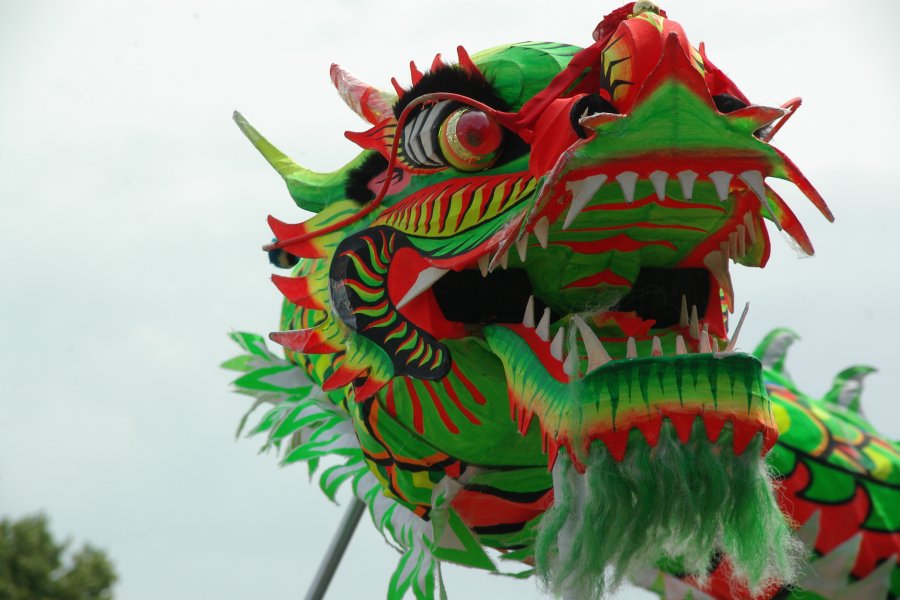 Dragon danceA long dragon puppet on poles, danced by a team at Chinese New Year and other festivals
Good reading and sources
- Laba congee on WikipediaEncyclopedia
- More photos on Wikimedia CommonsPhotos and video
- Wikidata recordOpen data
The facts on this page come from the Wikipedia article "Laba congee", written by its contributors and used under the CC BY-SA 4.0 licence, and from its Wikidata record (CC0). EveryParampara rewrote the text in its own words, with AI assistance, and compares every page with the article to make sure no passage is copied. It may be reused under the same CC BY-SA 4.0 licence with a link back.
It may contain mistakes. Traditions differ from one family, village and community to the next, and the people who keep them know them best. If something is wrong, tell us. Last refreshed 2026-10-05.
More from China
All the traditions of China
🇨🇳 Shanghai, China and 1 moreJiaozi餃子
Crescent Chinese dumplings filled with meat or vegetables, eaten for fortune and feastsTable custom · Breakfast
🇰🇵 Pyongyang, North Korea and 3 moreNaengmyeon냉면
Long buckwheat noodles in icy broth, born in North Korea and eaten most in summerTable custom · Dinner
 🇨🇳 Tianjin, ChinaManchu-Han Imperial Feast滿漢全席
A grand multi-day banquet uniting Manchu and Han culinary traditions in ChinaTable custom · Feasts and festival meals
🇨🇳 Tianjin, ChinaManchu-Han Imperial Feast滿漢全席
A grand multi-day banquet uniting Manchu and Han culinary traditions in ChinaTable custom · Feasts and festival meals
 🇨🇳 Chaozhou, China and 1 moreGongfu tea工夫茶
A skilled Chinese method of brewing tea in small teaware with precise heat and timingTable custom · Tea, coffee and drinking ceremonies
🇨🇳 Chaozhou, China and 1 moreGongfu tea工夫茶
A skilled Chinese method of brewing tea in small teaware with precise heat and timingTable custom · Tea, coffee and drinking ceremonies
The same idea elsewhere
Healing, luck and protection compared 🇩🇪 Germany and 5 moreChristmas tree
A decorated evergreen or artificial tree placed indoors to mark the Christmas season.Festival
🇩🇪 Germany and 5 moreChristmas tree
A decorated evergreen or artificial tree placed indoors to mark the Christmas season.Festival
 🇫🇷 France and 5 moreCandlemas
A Christian feast of candle blessings marking the end of the Christmas seasonSpiritual
🇫🇷 France and 5 moreCandlemas
A Christian feast of candle blessings marking the end of the Christmas seasonSpiritual
 🇺🇸 United States and 4 moreFriday the 13th
A Western folk superstition regarding the unluckiness of a Friday falling on the 13th.Folklore
🇺🇸 United States and 4 moreFriday the 13th
A Western folk superstition regarding the unluckiness of a Friday falling on the 13th.Folklore
 🇮🇪 Ireland and 2 moreJack-o'-lantern
A carved pumpkin lantern lit with a candle to brighten and protect Halloween nightsFolklore
🇮🇪 Ireland and 2 moreJack-o'-lantern
A carved pumpkin lantern lit with a candle to brighten and protect Halloween nightsFolklore