Seasons, harvest and the calendarSouth AsiaHindu
Lavan Paavain
In its own language: लवाण पावैन
The Mithila harvest festival, when the first rice of the new crop is given to the gods
A harvest festival kept by Maithil families in Mithila, the region across northern India and southern Nepal. The first paddy of the new crop is cut, flattened into chuda, and offered to Vishnu, Varuna and Agni before the household eats.
When is Lavan Paavain kept?
Lavan Paavain is kept each year in the Hindu month of Agahan, which usually comes in December.
Lavan Paavain is a harvest festival kept in Mithila, the region that runs across the borderlands of northern India and southern Nepal. It gives the first rice of the year back to the gods before anyone eats it. The Maithil families who follow it treat the day as a householder's duty: work the land, thank the powers that feed you, and share what comes in.
What it is
Lavan Paavain belongs to Mithila, the land where Maithili is spoken. It marks the new grain and is kept at home rather than at a temple. People describe it as a festival that prays to nature, and it stands for the grihastha way of life, the householder's stage, when a person marries, works the land and provides for a family. The naivedya, the food set before the gods, goes to Vishnu, Varuna and Agni. Once the worship is done, the household wishes one another happiness and prosperity.
Getting ready early
Work for the day starts more than a month before it. On Ashwin Sankranti, a date also called Gabha Sankranti, the household prepares fourteen chipdi. These are small cakes of dung, shaped by hand and then left in the sun to dry. The unmarried girl of the house is the one who makes them. They are not eaten and not offered as food. Their part comes later, on the day of Navann Parva, when they are burned to light the sacred fire that stands in front of the family's own deity, the Kuldevi or Kuldevta.
The morning itself
Very early on Navann Parva a man from the house walks out to the family's field and cuts the first paddy. The cut grain is carried home and laid before the Kuldevi or Kuldevta. The women of the household then turn that paddy into chuda, rice that has been flattened. From the chuda they make a prasad, mixing it with raw milk and jaggery. Every member of the family joins in setting this before Agni, the god of fire. Only after that does the household sit down to eat.
What is shared
Chuda sits at the centre of the meal, and it is the same chuda that went to the gods. Curd and jaggery go with it, and pickle is set out too. Radish is served as well. The whole family eats this together as prasad, food that has first been given and then shared. Nothing about the day is showy. It stays close to the fields and to the family shrine, and its pleasure lies in eating together once the offering has been made.
How Lavan Paavain is kept
Preparations open on Ashwin Sankranti, when the household's unmarried girl shapes fourteen dung cakes and dries them in the sun. On Navann Parva those cakes light the sacred fire before the family deity. Early that morning a man of the house cuts the first paddy in the field, and the grain is placed before the deity. The women flake the paddy into chuda. Mixed with raw milk and jaggery, it becomes prasad, which every family member offers to Agni. Then the household eats chuda with curd, jaggery, pickle and radish.
When and where
The main day, Navann Parva, falls in the Hindu month of Agahan, which usually comes in December. Because the date follows the Hindu calendar, it moves from year to year. The work of preparing the fire begins more than a month earlier, on Ashwin Sankranti, also called Gabha Sankranti.
The festival is kept in Mithila, the region that lies across northern India and southern Nepal, and it belongs to Maithil households there. India and Nepal are the countries given for it. It is a home observance rather than a temple one: the field, the family shrine and the kitchen are where the day happens.
What Lavan Paavain means
For the families who keep it, the day is a way of thanking the land and the powers that feed them. New grain is not eaten straight away. It is given first. That order carries meaning: the gods are served before the household, and the householder's work of growing food is treated as something sacred, not only useful. The wish made at the end is a plain one, that everyone be happy and prosper.
Questions people ask about Lavan Paavain
When is Lavan Paavain kept?
Lavan Paavain is kept each year in the Hindu month of Agahan, which usually comes in December.
What is Lavan Paavain?
It is a harvest festival of Mithila. Families thank the powers that give them grain, and they offer the first rice of the new crop, chuda, to Vishnu, Varuna and Agni before anyone in the house eats.
Where is it kept?
In Mithila, the region across northern India and southern Nepal, and in Maithil homes there. It is a family observance rather than a temple festival, kept at the field, the family shrine and the kitchen.
What is chuda?
Chuda is paddy that has been flattened, made here from the rice of the newly harvested crop. On this day it is offered to the gods as naivedya, and afterwards the family eats it with curd, jaggery, pickle and radish.
What are the chipdi used for?
They are small dung cakes made on Ashwin Sankranti by the unmarried girl of the house and dried in the sun. On Navann Parva they are burned to light the sacred fire in front of the Kuldevi or Kuldevta, the family's own deity.
See also
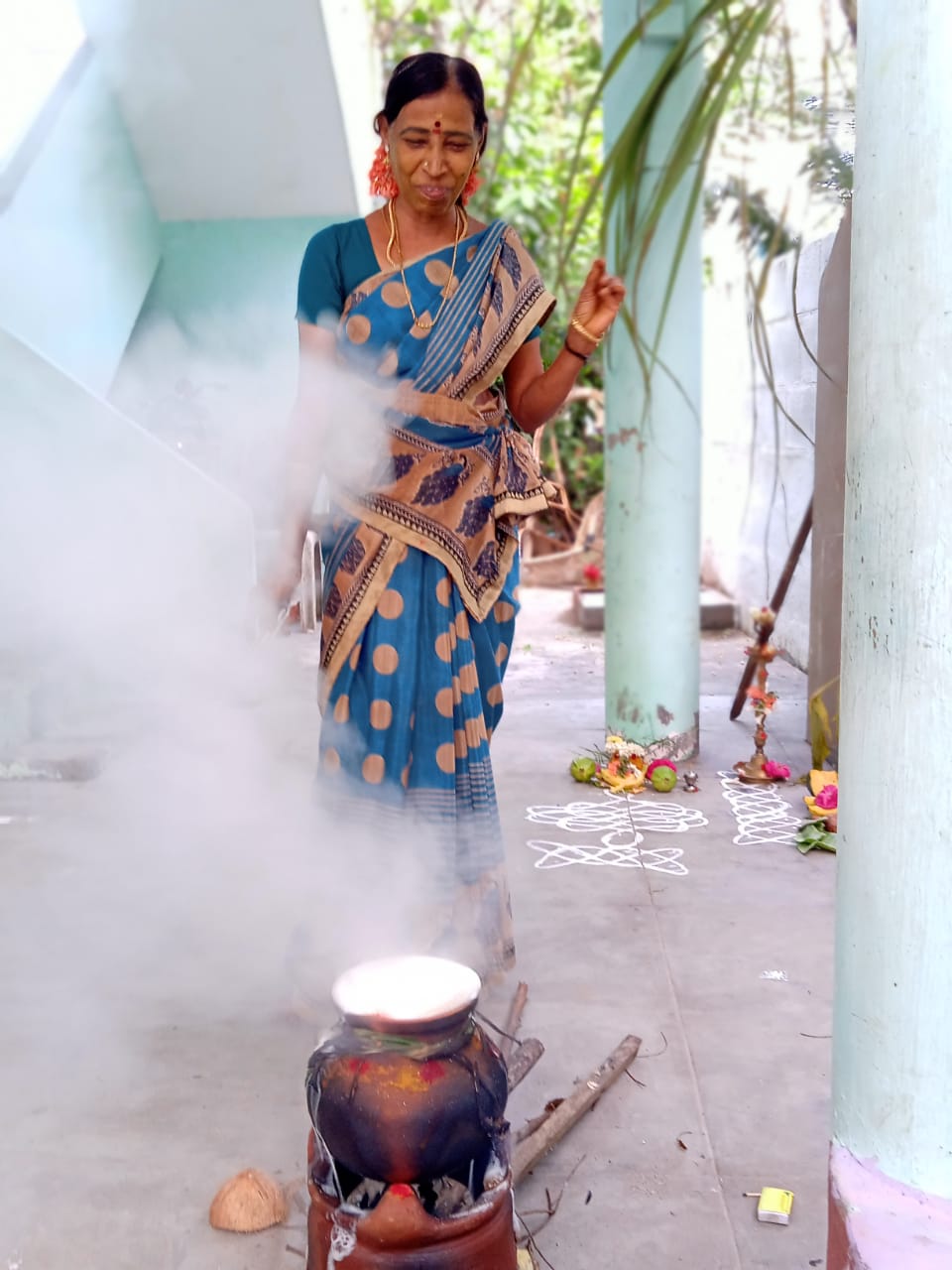 PongalThree or four days of boiling rice, garlanded cattle and thanks to the sun
 LosarThe Tibetan Buddhist New Year festival of renewal, offerings, and family feasts
 UgadiA South Indian New Year feast celebrating life with sweet, sour, and bitter tastes
 LohriA northern Indian midwinter festival of evening bonfires, folk songs and harvest foods
Good reading and sources
The facts on this page come from the Wikipedia article "Lavan Paavain", written by its contributors and used under the CC BY-SA 4.0 licence, and from its Wikidata record (CC0). EveryParampara rewrote the text in its own words, with AI assistance, and compares every page with the article to make sure no passage is copied. It may be reused under the same CC BY-SA 4.0 licence with a link back.
It may contain mistakes. Traditions differ from one family, village and community to the next, and the people who keep them know them best. If something is wrong, tell us. Last refreshed 2026-10-12.
More from India
All the traditions of India
🇮🇳 India and 5 morePongal
Three or four days of boiling rice, garlanded cattle and thanks to the sunSeasonal · Sweets given and shared
🇮🇳 India and 1 moreUgadiఉగాది
A South Indian New Year feast celebrating life with sweet, sour, and bitter tastesSeasonal
🇮🇳 India and 1 moreLohri
A northern Indian midwinter festival of evening bonfires, folk songs and harvest foodsSeasonal
 🇮🇳 IndiaVishuവിഷു
The Malayali new year, kept on 14 or 15 April with an auspicious first sightingSeasonal · Feasts and festival meals
🇮🇳 IndiaVishuവിഷു
The Malayali new year, kept on 14 or 15 April with an auspicious first sightingSeasonal · Feasts and festival meals
The same idea elsewhere
Harvest and thanksgiving compared 🇮🇱 Jerusalem, IsraelPassoverפסח
A Jewish spring festival celebrating freedom from slavery with ritual mealsSpiritual · Dinner
🇮🇱 Jerusalem, IsraelPassoverפסח
A Jewish spring festival celebrating freedom from slavery with ritual mealsSpiritual · Dinner
 🇮🇱 Jerusalem, IsraelSukkotסוכות
A seven-day autumn Jewish festival of temporary booths, harvest prayers and hospitalitySpiritual
🇮🇱 Jerusalem, IsraelSukkotסוכות
A seven-day autumn Jewish festival of temporary booths, harvest prayers and hospitalitySpiritual
 🇹🇱 Timor-LesteUma Lulik
Sacred ancestral clan houses and ritual shrines in East TimorSpiritual
🇹🇱 Timor-LesteUma Lulik
Sacred ancestral clan houses and ritual shrines in East TimorSpiritual
 🇮🇪 Ireland and 2 moreJack-o'-lantern
A carved pumpkin lantern lit with a candle to brighten and protect Halloween nightsFolklore
🇮🇪 Ireland and 2 moreJack-o'-lantern
A carved pumpkin lantern lit with a candle to brighten and protect Halloween nightsFolklore