Music, dance and storytellingEurope
Long sword dance
A Yorkshire winter sword dance kept by village teams at Christmas and Plough Monday

A traditional sword dance from Yorkshire in northern England, in which a team of dancers holds rigid metal or wooden swords and links them until the blades lock together. It is kept mostly around Christmas, with many village teams dancing on Boxing Day or Plough Monday, and it is one of a family of sword dances known across Europe.
When is Long sword dance marked?
Long sword dance is kept as part of Christmas, which is on Friday, 25 December 2026.
A sword dance kept in Yorkshire, England, in which dancers hold rigid swords and link them together as they move. Teams dance it in the weeks around Christmas, often on Boxing Day or Plough Monday, and many are village teams whose steps have been handed down locally. It belongs to a wider family of sword dances found across Europe.
What it is
In this dance the swords are stiff rather than springy. Teams hold rigid blades of metal or wood. Dancers stand in a ring or a line and weave the swords together, passing one hilt over the next point until the blades grip each other in a locked pattern, often a star or a knot. Figures and step patterns differ from team to team. The nearest relation is the rapper dance of Northumbria, whose swords are flexible spring steel. That makes the two dances feel quite different, though both come from a wider European family of sword dancing.
Origins and history
Sword dances in which the blades are locked together have been documented across northern, western and central Europe. Records go back at least to the fifteenth century, and perhaps to the fourteenth. How far those continental dances shaped the English version is not settled. Evidence for sword dancing in England is thin before the middle of the eighteenth century. The word lock appears in an English source in 1777, and Yorkshire references begin in the early nineteenth century. Cecil Sharp and other folklorists of the twentieth century argued that dances of this kind grew out of a religious or magical rite, performed at Plough Monday to encourage the soil. Later researchers have questioned that reading.
How it is kept
Winter is the shared season, though the day differs from place to place. Some teams dance at Christmas or on Boxing Day. Others wait for Plough Monday, the Monday after Epiphany that once marked a return to the fields. A performance can be slow and soldierly or quick and light. The number of dancers and the figures they make change from one tradition to another. Teams that still dance in their own village keep the version their families and neighbours passed on. This is unusual among English traditional dances, most of which are kept going by revival groups.
Teams and gatherings
Several named teams carry the dance on, among them Flamborough Sword Dancers, Grenoside Sword Dancers and the Goathland Plough Stots. Each keeps its own local shape. Teams also travel to folk festivals, Sidmouth and Beverley among them. Larger gatherings have been held: the International Sword Spectacular took place in Whitby in May 2004 and again in York in May 2008. A print journal, Rattle Up My Boys, serves people interested in sword dancing, and a booklet on the Yorkshire longsword tradition appeared in 1980.
How Long sword dance is kept
Village teams and festival teams dance in the open, most often in winter. Dancers take up rigid swords and work through a set of figures, weaving the blades until they lock into a shape. Each team's tradition decides the pace and the patterns, so some dances move slowly in a military style and others are quick. Dancers' numbers and particular movements also differ. Village teams perform on their own chosen day, such as Boxing Day or Plough Monday, and teams also appear at folk festivals away from home.
When and where
Chiefly around Christmas time. Village teams often choose Boxing Day, or Plough Monday, which falls on the Monday after Epiphany. The dance follows the season rather than one fixed date, so different teams keep different days.
Yorkshire is the heartland, above all East Cleveland, the North York Moors and the Sheffield district. A smaller group of dances belongs to south County Durham. Individual dances were also noted in the East Midlands and other parts of north eastern England. Teams have travelled further for festivals, and two international sword gatherings were held in Whitby and York.
What Long sword dance means
Early folklorists, Cecil Sharp among them, believed a dance of this kind began as a religious or magical act performed around Plough Monday to ask for fertile ground. Later researchers have doubted that. For the teams who keep it now, the meaning is more local: a village holds its own version and performs it in the same season each year, and the locked swords and shared figures belong to that community.
Days Long sword dance is marked
Questions people ask about Long sword dance
When is Long sword dance marked?
Long sword dance is kept as part of Christmas, which is on Friday, 25 December 2026.
What is long sword dance?
It is a traditional dance from Yorkshire in which a team of dancers holds rigid metal or wooden swords and links them until they lock together. It is danced in winter, and it is one of several sword dance traditions found across Europe.
Where is it danced?
Most dances come from Yorkshire, especially East Cleveland, the North York Moors and the Sheffield district. A smaller group belongs to south County Durham. Dances were also noted in the East Midlands and other parts of north eastern England.
How does it differ from rapper sword dance?
The rapper dance of Northumbria is its closest relative. Rapper teams use flexible spring steel swords, which bend and spring back, while long sword teams use rigid swords of metal or wood. The two feel quite different to watch.
Who keeps it going today?
Village teams in Yorkshire and County Durham, several of them named for their own village, still dance their local versions in winter. They also appear at folk festivals, and larger sword gatherings have been held in Whitby and York.
See also
 Christmas carolFestive songs and hymns sung during the Christmas season and door to door
 Mummers' playA comic folk drama of staged combat, death, and revival by an eccentric doctor
 ChristmasA festival of Jesus's birth, kept on 25 December with gifts, lights and shared meals
 Advent wreathAn evergreen ring of candles lit week by week in the lead-up to Christmas
Good reading and sources
The facts on this page come from the Wikipedia article "Long sword dance", written by its contributors and used under the CC BY-SA 4.0 licence, and from its Wikidata record (CC0). EveryParampara rewrote the text in its own words, with AI assistance, and compares every page with the article to make sure no passage is copied. It may be reused under the same CC BY-SA 4.0 licence with a link back.
It may contain mistakes. Traditions differ from one family, village and community to the next, and the people who keep them know them best. If something is wrong, tell us. Last refreshed 2026-10-05.
More from the United Kingdom
All the traditions of the United Kingdom
🇬🇧 United Kingdom and 5 moreChristmas carol
Festive songs and hymns sung during the Christmas season and door to doorPerformance
🇬🇧 United Kingdom and 4 moreMummers' play
A comic folk drama of staged combat, death, and revival by an eccentric doctorPerformance
 🇬🇧 United Kingdom and 5 moreMorris dance
A rhythmic English folk dance performed in costume with bells, sticks and handkerchiefsPerformance
🇬🇧 United Kingdom and 5 moreMorris dance
A rhythmic English folk dance performed in costume with bells, sticks and handkerchiefsPerformance
 🇹🇹 Trinidad and Tobago and 3 moreSteelpan
A tuned percussion tradition forged from industrial steel containers in TrinidadPerformance
🇹🇹 Trinidad and Tobago and 3 moreSteelpan
A tuned percussion tradition forged from industrial steel containers in TrinidadPerformance
The same idea elsewhere
Midwinter and the longest night compared 🇵🇪 Cusco, Peru and 4 moreIntiinti (Quechua)
The Inca sun deity, honoured with temples, offerings and the June festival Inti RaymiSpiritual
🇵🇪 Cusco, Peru and 4 moreIntiinti (Quechua)
The Inca sun deity, honoured with temples, offerings and the June festival Inti RaymiSpiritual
 🇮🇷 Iran and 5 moreYaldā Nightشب یلدا
A solstice night of poetry, fruit and family, kept from Iran through Central AsiaFestival · Dinner
🇮🇷 Iran and 5 moreYaldā Nightشب یلدا
A solstice night of poetry, fruit and family, kept from Iran through Central AsiaFestival · Dinner
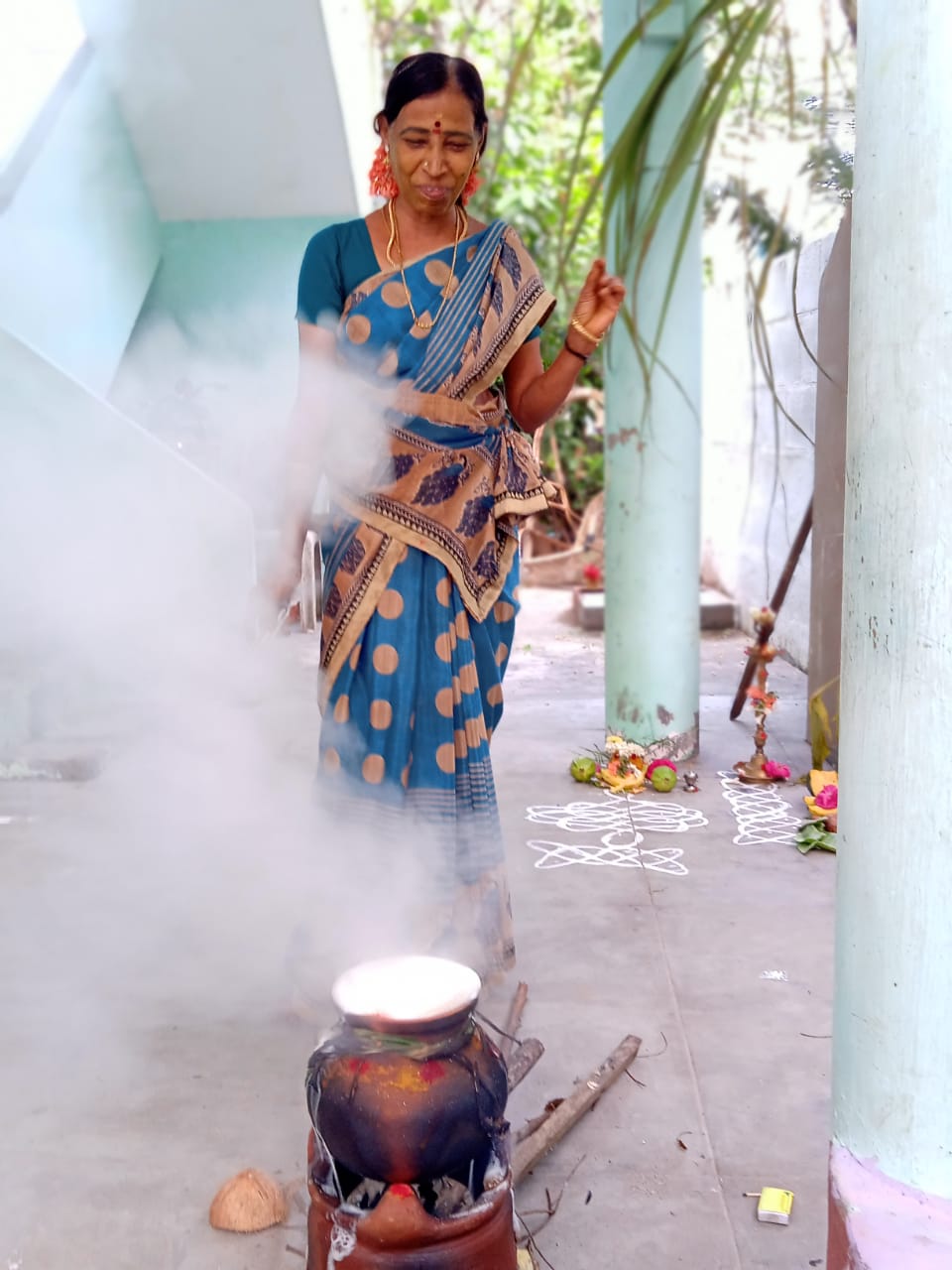 🇮🇳 India and 5 morePongal
Three or four days of boiling rice, garlanded cattle and thanks to the sunSeasonal · Sweets given and shared
🇮🇳 India and 5 morePongal
Three or four days of boiling rice, garlanded cattle and thanks to the sunSeasonal · Sweets given and shared
 🇨🇳 Shanghai, China and 1 moreJiaozi餃子
Crescent Chinese dumplings filled with meat or vegetables, eaten for fortune and feastsTable custom · Breakfast
🇨🇳 Shanghai, China and 1 moreJiaozi餃子
Crescent Chinese dumplings filled with meat or vegetables, eaten for fortune and feastsTable custom · Breakfast