Seasons, harvest and the calendarEuropeChristian
Ember days
In its own language: Quatuor Tempora
A quarterly Western Christian rhythm of fasting, prayer and seasonal thanksgiving

Ember days are four seasonal sets of Wednesday, Friday and Saturday fasts observed in Western Christian traditions. Marked by prayer, self-discipline and works of charity, these quarterly periods offer thanks for the earth and prepare candidates for holy orders.
When is Ember days marked?
Ember days is kept as part of Pentecost, which runs from 16 to 17 May 2027.
Ember days are quarterly observances kept across several Western Christian traditions, occurring four times each year across three days: Wednesday, Friday and Saturday. Rooted in seasonal change, they invite the faithful to fast, pray, give alms and offer thanks for the fruits of nature. These periods also serve as moments of penitence, church teaching and the traditional ordination of new clergy.
A four-season cycle
The liturgical year includes four sets of Ember days, occurring on the Wednesday, Friday and Saturday of a single week in each season. An English mnemonic, 'Lenty, Penty, Crucy, Lucy,' captures their annual placement: after the first Sunday of Lent in spring, following Pentecost in summer, after Holy Cross Day in autumn, and following Saint Lucy's feast in winter. While some regional variations emerged over the centuries, these four milestones anchored the schedule across Western Christendom. The rhythmic return of these fasts divided the year into quarterly periods of reflection, connecting the church calendar directly with the natural turning of the seasons.
Origins and development
The observance began as an ecclesiastical practice in Rome during early Christian centuries. Early texts link the fasts to figures like Pope Callixtus I and Leo the Great, initially covering three seasons before expanding to four by the time of Pope Gelasius I. The practice gradually spread across Western Europe, reaching Britain through Augustine of Canterbury in 597, Gaul by the eighth century, and Spain in the eleventh century. Pope Urban II codified uniform timing for the wider church at the councils of Piacenza and Clermont in 1095. By contrast, Eastern Orthodox churches never adopted this seasonal cycle.
Worship and ordination
In addition to fasting, Ember periods emphasize humility, charitable giving and communal intercession. Lutheran congregations have historically paired these days with catechism lessons, litany prayers, and personal confession. The Ember Saturdays also took on special importance as the customary time for conferring holy orders on deacons and priests. By dedicating these moments to solemn fasting, the broader congregation actively supported those preparing to enter sacred ministry. In Ireland, where the observance was commonly called quarter tense, the Saturday services were likewise seen as especially suited for ordaining new priests.
Changes in modern practice
The place of Ember days shifted significantly during the twentieth century. In 1966, Pope Paul VI removed the mandatory requirement of fasting on these days for Roman Catholics, and subsequent liturgical reforms entrusted their scheduling to local bishops' conferences. Anglican bodies made them optional in 1976, though they remain in the Book of Common Prayer and modern lectionaries. Today, the tradition continues in Evangelical Lutheranism, Western Rite Orthodoxy, Anglican parishes, and Catholic communities using traditional liturgical books or Personal Ordinariate missals.
How Ember days is kept
During an Ember week, Christians observe Wednesday, Friday and Saturday with fasting, reduced meals and focused prayer. In Lutheran settings, ministers provide instruction in the catechism, chant the litany and administer individual confession and absolution. Parishes direct their attention toward charitable help for those in need and offer prayers for the clergy. At the close of the week, bishops traditionally convene services to ordain new ministers, surrounded by the prayers of the fasting congregation.
When and where
The days occur four times a year, in March, June, September and December. They fall on the Wednesday, Friday and Saturday following four landmarks: the first Sunday of Lent, Pentecost, Holy Cross Day on 14 September, and Saint Lucy's Day on 13 December.
The observance is kept in Western Christian communities worldwide, including parts of Europe, North America and Ireland, where it was historically known as quarter tense. It appears across Anglican, Lutheran, Catholic and Western Rite Orthodox traditions.
What Ember days means
Ember days dedicate each season of the natural year to God. They serve as reminders to receive the earth's harvest with moderation, practice charity toward the poor, and seek spiritual cleansing through repentance. By pausing at solstices, equinoxes and major liturgical intervals, worshippers sanctify the passage of time and seek divine blessing on their work and community.
Days Ember days is marked
Questions people ask about Ember days
When is Ember days marked?
Ember days is kept as part of Pentecost, which runs from 16 to 17 May 2027.
What are Ember days?
Ember days are four seasonal sets of fast days, held on Wednesday, Friday and Saturday, observed in Western Christianity. They provide regular moments throughout the year for prayer, penitence, thanksgiving for the harvest and charitable giving.
Why are clergy ordinations tied to these days?
Historically, Western churches reserved the final Ember day of each season for ordaining new priests and deacons. This allowed the entire community to support candidates for ministry through dedicated fasting and prayer.
Who observes Ember days today?
They are kept by Evangelical Lutherans, Anglicans, Western Rite Orthodox Christians and traditional Catholic groups. In the mainstream Catholic Church, national bishops' conferences determine whether and how to observe them locally.
See also
 ImbolcA Gaelic festival heralding spring and honoring Saint Brigid with woven rush crosses
 Advent wreathAn evergreen ring of candles lit week by week in the lead-up to Christmas
 May DayA traditional European festival welcoming summer with greenery, dances and bonfires
 Yule logA log kept burning on the hearth through the twelve days of Christmas, for luck
Good reading and sources
The facts on this page come from the Wikipedia article "Ember days", written by its contributors and used under the CC BY-SA 4.0 licence, and from its Wikidata record (CC0). EveryParampara rewrote the text in its own words, with AI assistance, and compares every page with the article to make sure no passage is copied. It may be reused under the same CC BY-SA 4.0 licence with a link back.
It may contain mistakes. Traditions differ from one family, village and community to the next, and the people who keep them know them best. If something is wrong, tell us. Last refreshed 2026-10-07.
More from Ireland
All the traditions of Ireland
🇮🇪 Ireland and 1 moreImbolcLá Fhéile Bríde
A Gaelic festival heralding spring and honoring Saint Brigid with woven rush crossesSeasonal · Feasts and festival meals
🇮🇪 Dublin, Ireland and 3 moreMay Day
A traditional European festival welcoming summer with greenery, dances and bonfiresSeasonal · Feasts and festival meals
 🇮🇪 Uisneach, Ireland and 1 moreBeltaneBealtaine
A Gaelic first-of-summer festival of bonfires, May flowers and feasting on 1 MaySeasonal
🇮🇪 Uisneach, Ireland and 1 moreBeltaneBealtaine
A Gaelic first-of-summer festival of bonfires, May flowers and feasting on 1 MaySeasonal
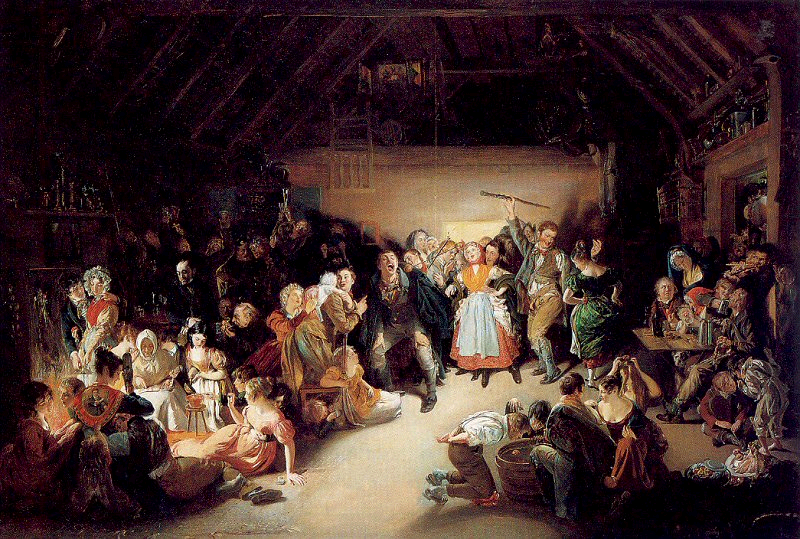 🇮🇪 Ireland and 1 moreSamhain
A Gaelic festival marking the start of winter with bonfires and ancestor feastsSeasonal · Feasts and festival meals
🇮🇪 Ireland and 1 moreSamhain
A Gaelic festival marking the start of winter with bonfires and ancestor feastsSeasonal · Feasts and festival meals
The same idea elsewhere
Fasting and feasting compared 🇮🇳 Jaipur, IndiaGangaurगणगौर
A North Indian spring festival honouring Shiva and Gauri with clay idols and processionsFestival · Fasting and breaking the fast
🇮🇳 Jaipur, IndiaGangaurगणगौर
A North Indian spring festival honouring Shiva and Gauri with clay idols and processionsFestival · Fasting and breaking the fast
 🇮🇳 Ayodhya, India and 7 moreDiwaliदीपावली (Dīpāvalī)
A five-day festival of lights celebrated across India and its diaspora to mark the victory of light over darkness.Festival · Feasts and festival meals
🇮🇳 Ayodhya, India and 7 moreDiwaliदीपावली (Dīpāvalī)
A five-day festival of lights celebrated across India and its diaspora to mark the victory of light over darkness.Festival · Feasts and festival meals
 🇮🇱 Jerusalem, IsraelPassoverפסח
A Jewish spring festival celebrating freedom from slavery with ritual mealsSpiritual · Dinner
🇮🇱 Jerusalem, IsraelPassoverפסח
A Jewish spring festival celebrating freedom from slavery with ritual mealsSpiritual · Dinner
 🇵🇪 Cusco, Peru and 4 moreIntiinti (Quechua)
The Inca sun deity, honoured with temples, offerings and the June festival Inti RaymiSpiritual
🇵🇪 Cusco, Peru and 4 moreIntiinti (Quechua)
The Inca sun deity, honoured with temples, offerings and the June festival Inti RaymiSpiritual