🇧🇳 Traditions of Brunei
10 traditions from Brunei, best known first, across 1 city and town.
Bruneian daily life is rooted in Islamic faith and Malay customs, shaped alongside indigenous and Chinese communities. The country's food traditions center on rice, fresh seafood, and unique national specialties such as ambuyat. Strict observance of religious law guides social life, public practice, and community gatherings across the sultanate.
Life in Brunei reflects a deep commitment to Islam and a shared Malay culture. Communities across the sultanate maintain distinct customs, from indigenous dialects spoken in rural districts to Chinese traditions preserved in towns. Everyday routines revolve around faith, shared home cooking, and national pastimes such as football and badminton. Islamic principles shape public laws and daily manners, giving the nation a calm, orderly rhythm centered on family, local meals, and religious duty.
Faith and society
Islam forms the bedrock of national life, with the Shafi'i legal school recognized as the official standard. The monarch protects the faith under a governing concept that unites Malay culture, Islamic teaching, and royal rule. Daily routines observe halal dietary rules, and the state bans alcohol sales. Places of worship for Christian, Buddhist, Daoist, and Hindu communities exist alongside grand mosques, though religious law limits outward displays and proselytization. Family law also requires non-Muslim women who marry Muslim men to embrace Islam, keeping religious practice woven tightly into kinship.
Staples of the table
Cooking in Brunei shares close bonds with the culinary habits of maritime Southeast Asia, drawing flavours from nearby Malaysia, Singapore, and Indonesia alongside Chinese and Indian influences. Plain rice and fresh fish serve as the foundation of everyday meals. Because cattle are costly, cooks prepare beef less frequently than other ingredients. Pork and alcohol are absent from public menus in keeping with Islamic guidelines. In countryside settlements, hunters occasionally harvest game from surrounding forests, gathering sambar deer, barking deer, or wild birds for the family pot. Meals are commonly paired with tea, milk tea, fruit juices, or fresh coconut milk.
Unique local dishes
Bruneian cooks rely on chili, spices, and sour gravies to season daily fare. A distinct national dish is ambuyat, prepared from sago palm starch. Diners twirl the thick, clear starch onto a pronged bamboo stick and dip it into tart, fiery sauces, creating a communal eating experience. Another beloved meal is nasi katok, literally meaning knock rice. This dish pairs plain steamed rice with crisp fried chicken and a pungent sambal sauce made from chili peppers, shrimp paste, and aromatics. Vendors traditionally package these hearty portions inside sheets of plain brown paper for people on the move.
Languages of the home
Although Standard Malay is taught in classrooms and used for official business, Brunei Malay is the dialect spoken most frequently in conversation. It features distinct words, sentence structures, and accents. Indigenous populations such as the Bisaya, Dusun, Murut, and Kedayan keep their own dialects, while Dayak and Iban communities maintain ancestral tongues that face pressure as younger generations assimilate. English is widely used on public street signs and in secondary schools. Meanwhile, the ethnic Chinese minority maintains Mandarin through community schools, even as historical dialects such as Hokkien become less common among youth.
Pastimes and recreation
Sports bring together neighborhood groups and national athletes across the country. Association football is the most popular game, followed closely by badminton and squash, where local players compete in regional tournaments. In coastal waters, divers explore expansive coral reefs along with submerged wrecks and offshore platforms. Younger Bruneians participate in competitive digital gaming, while others take up outdoor pursuits such as mountain biking, horseback riding, and paintball. These recreational activities offer social space for youth to gather during weekends and evenings outside of work and school obligations.
The facts in this overview come from the Wikipedia article "Culture of Brunei", written by its contributors and used under the CC BY-SA 4.0 licence. EveryParampara rewrote the text in its own words, with AI assistance, and compares every page with the article to make sure no passage is copied. It may be reused under the same CC BY-SA 4.0 licence with a link back.
The table in Brunei
Foods and drinks by the moment they belong to.
Cities, towns and villages of Brunei
 🇮🇩 Bali, Indonesia and 3 morePencak silat
Indonesia's many schools of full-body fighting, with strikes, locks, throws and bladesGame
🇮🇩 Bali, Indonesia and 3 morePencak silat
Indonesia's many schools of full-body fighting, with strikes, locks, throws and bladesGame
 🇲🇾 Malaysia and 4 moreKopitiam
A neighbourhood coffee shop where Southeast Asians share meals, drinks and newsTable custom · Breakfast
🇲🇾 Malaysia and 4 moreKopitiam
A neighbourhood coffee shop where Southeast Asians share meals, drinks and newsTable custom · Breakfast
 🇲🇾 Malaysia and 2 moreNgajatTanda Ngajat
A traditional folk dance of the Iban people in Sarawak and Borneo, mimicking birds and warriors.Performance
🇲🇾 Malaysia and 2 moreNgajatTanda Ngajat
A traditional folk dance of the Iban people in Sarawak and Borneo, mimicking birds and warriors.Performance
 🇮🇩 Indonesia and 2 moreKenduri
A communal prayer meal and gathering shared across Indonesia, Malaysia and BruneiSpiritual · Feasts and festival meals
🇮🇩 Indonesia and 2 moreKenduri
A communal prayer meal and gathering shared across Indonesia, Malaysia and BruneiSpiritual · Feasts and festival meals
 🇮🇩 Indonesia and 4 moreLebaranHari Raya Lebaran
Indonesia's festive season of homecoming, seeking forgiveness and shared feastsFestival · Breakfast
🇮🇩 Indonesia and 4 moreLebaranHari Raya Lebaran
Indonesia's festive season of homecoming, seeking forgiveness and shared feastsFestival · Breakfast
 🇵🇭 Philippines and 3 moreManoPagmamano
A Filipino greeting where a younger person bows and asks an elder for a blessingEtiquette
🇵🇭 Philippines and 3 moreManoPagmamano
A Filipino greeting where a younger person bows and asks an elder for a blessingEtiquette
 🇮🇩 Yogyakarta, Indonesia and 4 moreKebayaꦏꦼꦧꦪ
A front-opening blouse and wrapped cloth, worn by women across Southeast AsiaDress
🇮🇩 Yogyakarta, Indonesia and 4 moreKebayaꦏꦼꦧꦪ
A front-opening blouse and wrapped cloth, worn by women across Southeast AsiaDress
 🇲🇾 Malacca, Malaysia and 5 moreBaju Melayuباجو ملايو
The long-sleeved Malay man's shirt and trousers, formal national dress in Malaysia and BruneiDress
🇲🇾 Malacca, Malaysia and 5 moreBaju Melayuباجو ملايو
The long-sleeved Malay man's shirt and trousers, formal national dress in Malaysia and BruneiDress
 🇮🇩 Palembang, Indonesia and 3 moreSongketᬲᭀᬂᬓᬾᬢ᭄
A hand-woven cloth threaded with gold or silver, worn at weddings and royal courtsDress
🇮🇩 Palembang, Indonesia and 3 moreSongketᬲᭀᬂᬓᬾᬢ᭄
A hand-woven cloth threaded with gold or silver, worn at weddings and royal courtsDress
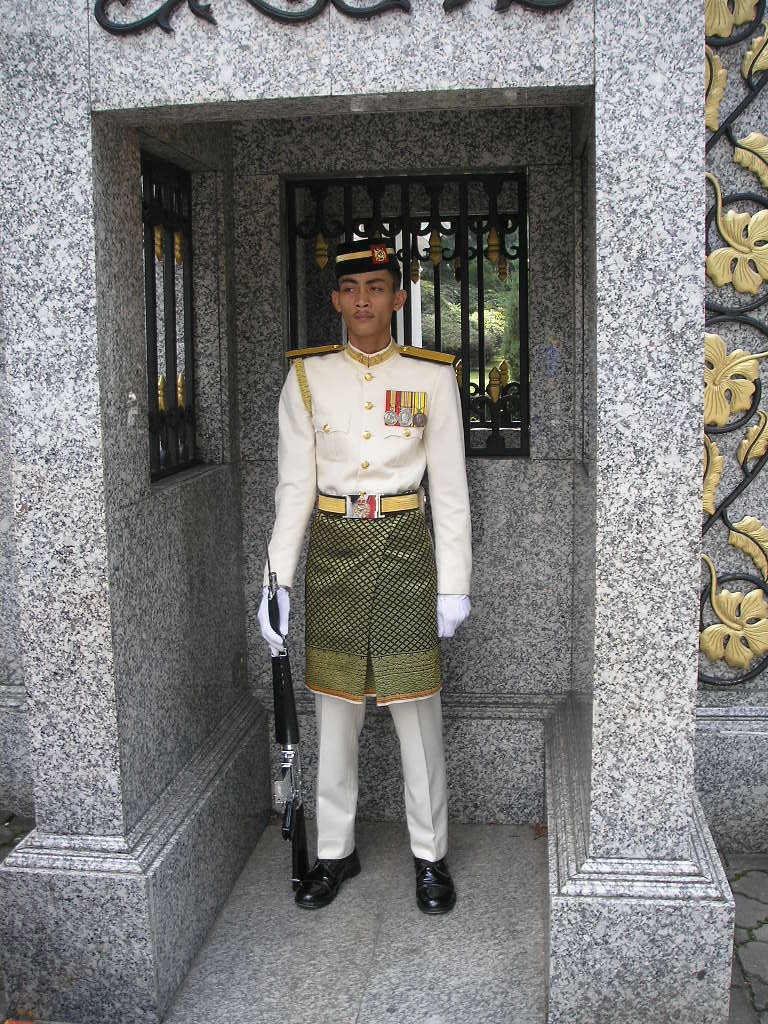 🇲🇾 Malacca, Malaysia and 4 moreSampingسمڤيڠ
A traditional Malay waist cloth worn over festive attire in Southeast AsiaDress
🇲🇾 Malacca, Malaysia and 4 moreSampingسمڤيڠ
A traditional Malay waist cloth worn over festive attire in Southeast AsiaDress
Photo credits on this page
The small pictures above come from Wikimedia Commons under free licences. Some are cropped to fit.
- Kenduri: Andreasprasetya, CC BY-SA 4.0, source
- Pencak silat: Agus Triyanto, CC0, source
- Lebaran: Nurudin Jauhari, CC BY-SA 2.0, source
- Mano: TOTO LOZANO/PRESIDENTIAL PHOTO, Public domain, source
- Kopitiam: Chongkian, CC BY-SA 4.0, source
- Ngajat: Menuaibansarawak, CC0, source
- Kebaya: Simon_sees, CC BY 2.0, source
- Baju Melayu: CuLeX-, CC BY 2.0, source
- Songket: Rijksmuseum, CC0, source
- Samping: Gryffindor, Public domain, source