Music, dance and storytellingSub-Saharan Africa
Morna
Cape Verde's guitar-and-voice song, danced in pairs, listed by UNESCO in 2019

Morna is a genre of song and dance from Cape Verde, sung in Cape Verdean Creole and often carried by guitar, cavaquinho, violin and clarinet. Cape Verdeans treat it as their national music, and communities who left the islands keep it going in Portugal, France, the Netherlands and New England.
Morna is a song and couple dance from Cape Verde, an island country off West Africa. People there call it their national music. Its words are usually in Cape Verdean Creole, and its melodies lean on guitar, violin, clarinet and voice. Singers use it to speak of love, of leaving home, of coming back and of the sea. UNESCO added it to its list of living heritage in 2019.
What it is
Morna is both something to hear and something to dance. The tune moves slowly, and a bar usually carries two beats, sometimes four. Most mornas stay in a single key from start to finish; a shift from minor to major, or back, happens now and then. The words come in strophes, or verses, that take turns with a refrain. Listeners say no two refrains share the same tune as the verses they answer. A singer may be joined by one guitar or by a larger group, and the middle of a song often gives the melody to an instrument instead of a voice.
Origins
Nobody knows exactly when or where morna began. Oral tradition places its start on Boa Vista during the 1700s, though no musicological record confirms this. Scholars also link it to older island music: the lundum, brought to the islands in that same century, and the choros, plaintive songs sung at work or at wakes. On this view morna grew out of a meeting of the two, slower in pace and more complex in harmony. The word itself has three explanations on offer: English "to mourn", French "morne", a hill in the French Antilles, or the feminine of the Portuguese "morno", meaning warm.
How it grew
Eugénio Tavares, a poet, gave the genre the romantic shape it still carries, working early in the 1900s on Brava, where the tempo slowed and love became the chief subject. In the 1930s and 1940s São Vicente became a second home for morna, and the composer Francisco Xavier da Cruz, known as B. Leza, borrowed passing chords from Brazilian music, which freed songs from the fixed chord cycle. Later, from the 1950s to the 1970s, composers wrote hidden praise of the homeland. Electric instruments arrived in the 1960s, and in the late 1990s players turned back to acoustic performance.
Dancing it
Morna is danced in pairs, ballroom style. One arm holds the partner close; the other hand stays joined with the partner's. A couple rocks twice to one side across a bar of music, then twice to the other side in the next bar. The oldest variant belongs to Boa Vista, quicker, freer in timing than later styles, and plainer in structure, with words that joke, tease or criticise. Brava's version, slower and more poetic, stands behind the morna most people hear today. Dancers treat the pair, not the individual, as the unit, and the steps stay gentle throughout.
Voices and fame
Cesária Évora is the morna singer best known outside the islands, and her fame carried the genre far beyond them. Cape Verdeans who emigrated still sing and play it, in New England in the United States, in Portugal, France and the Netherlands, in West Africa and in some Latin American countries. Ensembles are loose in shape: a small group might hold a guitar, a cavaquinho, a guitar with ten or twelve strings and percussion, while a larger one adds bass, violin, clarinet or trumpet. On 11 December 2019 UNESCO recognised morna as Intangible Cultural Heritage of Humanity.
How Morna is kept
A morna song often opens with the solo instrument playing a line that matches the refrain. Then the singer takes the main verses and the refrain answers, back and forth. Past the middle of the song the instrument improvises in place of the sung refrain, and afterwards the exchange of verse and refrain returns. A guitarist sets the rhythm with a thumb on the bass strings while the other fingers sound chords, a manner Cape Verdeans call "mãozada". Anyone in the room may join in the refrain. Couples get up and dance while the music plays.
When and where
Morna has no set date. It is played whenever people gather. The one date attached to it is 11 December 2019, when UNESCO added the practice to its heritage list.
Morna belongs to Cape Verde and is strongest there, on all the inhabited islands. Boa Vista holds the oldest claim, Brava shaped the better known style, and São Vicente enriched it. It travels with Cape Verdean migrants: it is heard in New England in the United States, in Portugal, France and the Netherlands, in West Africa, and in some Latin American countries.
What Morna means
For Cape Verdeans morna carries feeling that words alone struggle to hold, the ache of a place left behind and the pull of return. Its themes circle love, the sea, the homeland and the longing known as saudade. The genre works as a national emblem too: islanders compare its place in their country to fado in Portugal or tango in Argentina. Its slow pace lets a singer dwell on a line. UNESCO's listing in 2019 was read by many as the world acknowledging a music that had travelled with emigrant families for generations.

Questions people ask about Morna
What is morna?
A genre of song and dance from Cape Verde, sung mostly in Cape Verdean Creole and often built around guitar, violin, clarinet, cavaquinho and voice. It moves slowly, pairs verses with a refrain, and is usually described as the country's national music.
Where is it kept, and where is it strongest?
In Cape Verde itself, on the islands. Boa Vista, Brava and São Vicente each shaped it in different ways. Cape Verdean communities abroad carry it too, in New England in the United States, in Portugal, France and the Netherlands, in West Africa, and in some Latin American countries.
When did it begin?
No one can say for certain. Oral tradition puts its appearance on Boa Vista in the 1700s, but no musicological record backs that. By the 1800s it seems to have been fully formed, since the polkas and mazurkas arriving then did not change it.
Is morna recognised officially?
Yes. UNESCO proclaimed morna, the musical practice of Cabo Verde, Intangible Cultural Heritage of Humanity on 11 December 2019, at its fourteenth session, adding it to the Representative List.
Who is its best known singer?
Cesária Évora, whose voice made morna familiar far outside Cape Verde. Earlier, the poet Eugénio Tavares shaped its romantic words, and the composer B. Leza widened its harmony.
See also
 TiniklingA Philippine folk dance where dancers step between clapping bamboo poles
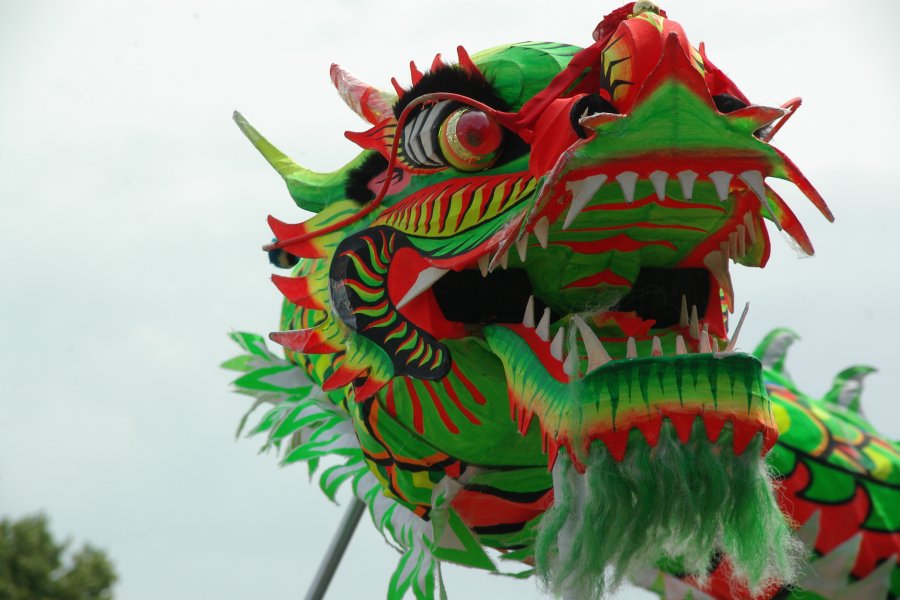 Dragon danceA long dragon puppet on poles, danced by a team at Chinese New Year and other festivalsKuduroAn energetic Angolan music and dance style born in Luanda that mixes African rhythms with electronic beats.Sean-nós danceAn improvised solo Irish dance: low footwork, free arms and a loud battering beat
Good reading and sources
- Encyclopaedia BritannicaArticle
- Morna, musical practice of Cabo VerdeUNESCO, Heritage listing
- Singer Cesaria Evora dies at the age of 70BBC, Article
- Morna, musical practice of Cabo VerdeUNESCO, Article
- Singer Cesaria Evora dies at the age of 70BBC, Article
The facts on this page come from the Wikipedia article "Morna (music)", written by its contributors and used under the CC BY-SA 4.0 licence, and from its Wikidata record (CC0). EveryParampara rewrote the text in its own words, with AI assistance, and compares every page with the article to make sure no passage is copied. It may be reused under the same CC BY-SA 4.0 licence with a link back.
It may contain mistakes. Traditions differ from one family, village and community to the next, and the people who keep them know them best. If something is wrong, tell us. Last refreshed 2026-10-05.


The same idea elsewhere
All of this kind 🇹🇷 Kayseri, Turkey and 4 moreHalay
A traditional line and circle folk dance kept across Turkey, Azerbaijan, Armenia, Iran, and Syria.Performance
🇧🇷 BrazilBaião
A syncopated folk rhythm and partnered dance from northeastern BrazilPerformance
🇹🇷 Kayseri, Turkey and 4 moreHalay
A traditional line and circle folk dance kept across Turkey, Azerbaijan, Armenia, Iran, and Syria.Performance
🇧🇷 BrazilBaião
A syncopated folk rhythm and partnered dance from northeastern BrazilPerformance
 🇺🇦 Kyiv, UkraineBanduraБандура
A Ukrainian plucked string instrument played to accompany epic songs and folk balladsPerformance
🇺🇦 Kyiv, UkraineBanduraБандура
A Ukrainian plucked string instrument played to accompany epic songs and folk balladsPerformance
 🇳🇿 Auckland, New ZealandPoi
A Māori performing art of swinging tethered weights in rhythmical patterns.Performance
🇳🇿 Auckland, New ZealandPoi
A Māori performing art of swinging tethered weights in rhythmical patterns.Performance