Music, dance and storytellingEast Asia
Noh
In its own language: 能 (Nō)
Japanese masked dance-drama, staged since the 14th century in family schools

A classical dance-drama of Japan, formed in the 14th century and the oldest of the country's major theatre arts still staged. Trained actors and musicians in masks and costumes perform tales from traditional literature, usually with a supernatural figure appearing as a human narrator. Noh, with comic kyōgen, makes up nōgaku.
When is Noh kept?
Noh is kept on all year round, with no fixed date; programmes of Noh plays and kyōgen interludes.
Noh is a classical Japanese theatre of dance and drama, and the oldest of the country's major stage arts that is still performed regularly. It began in the 14th century. Actors in carved masks move to music and song, telling stories drawn from older literature, in which a spirit usually takes human shape and speaks. Families of performers have carried it down through schools that guard every detail.
What noh is
Noh is dance-drama: the performers dance, sing and move to music rather than speak dialogue as in ordinary theatre. Carved masks show who a figure is, a ghost, a woman, a god or a demon, and the actor's feeling is carried by set, formal gestures instead of a natural face. Costumes and a few props complete the picture. It takes long training to do any of this well. The tradition values what has been handed down over anything new, so the way each role is played is fixed in close detail and watched over by the heads of the schools, the iemoto.
Origins and history
The word nō (能) means a skill or talent, and on its own it names the theatre that grew out of sarugaku in the middle of the 14th century. An older forebear, sangaku, reached Japan from China in the 8th century with acrobatics, dancing, songs and comic turns. Dances of rice planting (dengaku), court music (gagaku), folk Shinto dance (kagura) and the shirabyōshi given by women at court all fed into what became Noh. In the 14th century Kan'ami Kiyotsugu and his son Zeami Motokiyo reshaped these elements. Patronage from the shōgun Ashikaga Yoshimitsu let Zeami make Noh the leading theatre of its day.
Roles and training
A play needs at least one shite, the leading figure, and one waki, who answers and balances him, plus a chorus called jiutai of six to eight singers and a small band of instrumentalists, the hayashi. Kōken, one to three stage hands, move props and costumes. Kyōgen actors perform short comic interludes (aikyōgen) inside a play and complete pieces between plays. Instrumentalists play a flute, the nōkan, and three drums. Training starts in childhood, by tradition at three years old. Zeami set out nine levels of acting, the highest likened to a flower opening and joined to spiritual strength. Five schools teach shite actors: Kanze, Hōshō, Komparu, Kongō and Kita.
Rhythm of a programme
Jo-ha-kyū governs how a performance is built. The words mean beginning, breaking and rapid, and the idea comes from gagaku, old court music, where the tempo gradually quickens. Noh, the tea ceremony, poetry and flower arrangement all took it up. A traditional programme ran to five plays, one from each category: the first stands for jo, the next three for ha, the last for kyū. Each play is itself in three parts, an opening, a middle and a close, starting slowly and ending fast. Kyōgen pieces are placed between the plays. In current practice two Noh plays and one kyōgen piece are often enough.
Today and change
When the Tokugawa shogunate fell in 1868, state money stopped and Noh lost stages and performers. Support from the imperial government returned in part because foreign diplomats admired the art, and the troupes that survived began playing to ordinary audiences in Tokyo, Osaka and other big cities. In 1957 the government named nōgaku an Important Intangible Cultural Property, which protects the tradition and its leading practitioners. The National Noh Theatre, set up by the government in 1983, stages performances and trains actors. UNESCO listed nōgaku theatre in 2008. Women, kept out during the Edo period, entered the Nohgaku Performers' Association in 1948 and the Association for Japanese Noh Plays in 2004.
How Noh is kept
A performance is a programme rather than a single piece. The shite, often masked, takes the leading role, while the waki gives him a partner to speak and move against. Behind them sit the jiutai chorus and the hayashi players, with flute and drums. Kōken are the stage hands. Between the Noh plays, kyōgen actors perform comic scenes, and inside a play they may step in for a short interlude. The tempo builds from a slow opening to a quick close, following jo-ha-kyū. Masks mark out ghosts, women, gods and demons.
When and where
Noh has no single feast day. It has been staged since the 14th century, and performances run through the year at theatres and on temporary stages. A historic programme put several Noh plays on one bill with kyōgen between them; today a shorter bill, often two Noh plays and a kyōgen piece, is common.
Noh belongs to Japan. It is strongest where its theatres and schools sit, in Tokyo, where the National Noh Theatre was founded, and in the Kyoto and Osaka region, where the shogun's court took the art up. Yamato Province, around today's Nara, was home to the sarugaku troupes from which four of the five schools descend.
What Noh means
For those who keep it, Noh carries the memory of a long line of teachers. Every gesture and position is repeated as it was handed on, and the slowness of the movement is itself a sign of respect for what earlier masters did. Masks turn the actor into a ghost, a woman, a god or a demon, while the meaning of the story is left for the audience to complete. Zeami's image of the actor as a flower, opening only at the highest level, sets skill beside inner discipline.


Questions people ask about Noh
When is Noh kept?
Noh is kept on all year round, with no fixed date; programmes of Noh plays and kyōgen interludes.
What is Noh?
A classical Japanese dance-drama, performed since the 14th century. Actors, trained from childhood, dance and sing in masks and costumes while a chorus and a small band accompany them. It is based on older tales, often with a supernatural figure appearing in human form.
Where is it kept?
In Japan, mainly in Tokyo, where the National Noh Theatre trains actors and stages performances, and in the Kyoto and Osaka region. Its oldest school tradition traces back to sarugaku troupes in Yamato Province, near present-day Nara.
Who can become a performer?
Training begins in early childhood, by tradition at three. Five schools teach the leading shite roles, each headed by an iemoto family that can alter texts and performance styles. Women were largely shut out in the Edo period, but entered the performers' associations from 1948 onward.
What is kyōgen?
Short comic pieces performed by kyōgen actors. They gave sangaku's humour a lasting place. A kyōgen scene can also interrupt a Noh play as an aikyōgen interlude. Noh and kyōgen together make up what the Japanese government calls nōgaku theatre.
See also
 RakugoJapanese solo comic storytelling told from a cushion using a fan and a cloth
 IkebanaThe Japanese art of arranging cut branches and flowers in a vessel
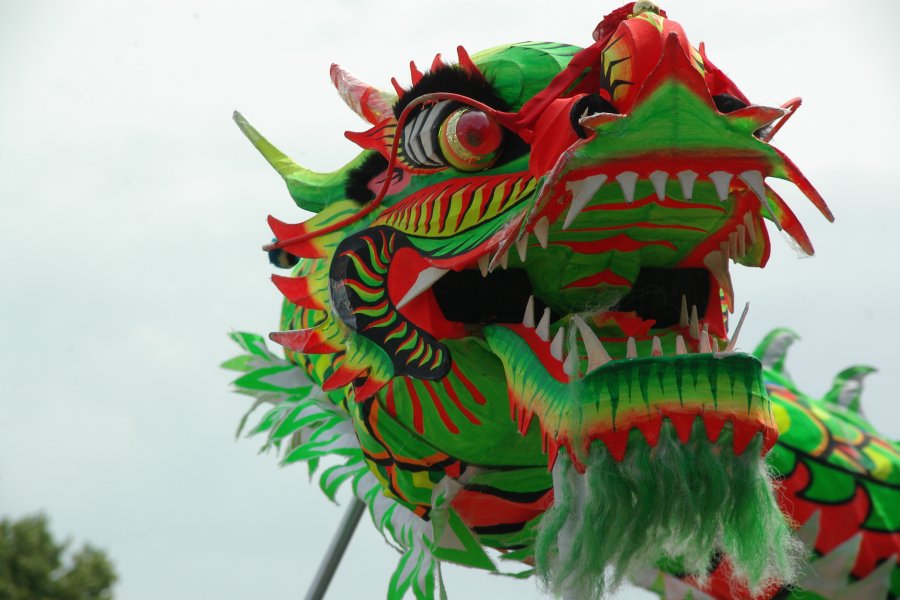 Dragon danceA long dragon puppet on poles, danced by a team at Chinese New Year and other festivals
 KyōgenA traditional Japanese comic theatre of short farces, spoken dialogue and satire
Good reading and sources
- Encyclopaedia BritannicaArticle
- Harry Partch – how Heiner Goebbels bought Delusion of the Fury to EdinburghThe Guardian, Article
- Nôgaku theatreUNESCO, Heritage listing
- Harry Partch – how Heiner Goebbels bought Delusion of the Fury to EdinburghThe Guardian, Article
- Nôgaku theatreUNESCO, Article
- Noh on WikipediaEncyclopedia
- More photos on Wikimedia CommonsPhotos and video
- Wikidata recordOpen data
The facts on this page come from the Wikipedia article "Noh", written by its contributors and used under the CC BY-SA 4.0 licence, and from its Wikidata record (CC0). EveryParampara rewrote the text in its own words, with AI assistance, and compares every page with the article to make sure no passage is copied. It may be reused under the same CC BY-SA 4.0 licence with a link back.
It may contain mistakes. Traditions differ from one family, village and community to the next, and the people who keep them know them best. If something is wrong, tell us. Last refreshed 2026-10-05.
More from Japan
All the traditions of Japan 🇨🇳 China and 5 moreLion dance舞獅
A dynamic ritual dance featuring costumed lions, drums and martial acrobaticsPerformance
🇯🇵 Kyoto, JapanKyōgen狂言
A traditional Japanese comic theatre of short farces, spoken dialogue and satirePerformance
🇯🇵 Tokyo, JapanRakugo落語
Japanese solo comic storytelling told from a cushion using a fan and a clothPerformance
🇨🇳 China and 3 moreDragon dance舞龍 / 舞龙
A long dragon puppet on poles, danced by a team at Chinese New Year and other festivalsPerformance
🇨🇳 China and 5 moreLion dance舞獅
A dynamic ritual dance featuring costumed lions, drums and martial acrobaticsPerformance
🇯🇵 Kyoto, JapanKyōgen狂言
A traditional Japanese comic theatre of short farces, spoken dialogue and satirePerformance
🇯🇵 Tokyo, JapanRakugo落語
Japanese solo comic storytelling told from a cushion using a fan and a clothPerformance
🇨🇳 China and 3 moreDragon dance舞龍 / 舞龙
A long dragon puppet on poles, danced by a team at Chinese New Year and other festivalsPerformance
The same idea elsewhere
All of this kind 🇹🇷 Kayseri, Turkey and 4 moreHalay
A traditional line and circle folk dance kept across Turkey, Azerbaijan, Armenia, Iran, and Syria.Performance
🇧🇷 BrazilBaião
A syncopated folk rhythm and partnered dance from northeastern BrazilPerformance
🇹🇷 Kayseri, Turkey and 4 moreHalay
A traditional line and circle folk dance kept across Turkey, Azerbaijan, Armenia, Iran, and Syria.Performance
🇧🇷 BrazilBaião
A syncopated folk rhythm and partnered dance from northeastern BrazilPerformance
 🇺🇦 Kyiv, UkraineBanduraБандура
A Ukrainian plucked string instrument played to accompany epic songs and folk balladsPerformance
🇺🇦 Kyiv, UkraineBanduraБандура
A Ukrainian plucked string instrument played to accompany epic songs and folk balladsPerformance
 🇳🇿 Auckland, New ZealandPoi
A Māori performing art of swinging tethered weights in rhythmical patterns.Performance
🇳🇿 Auckland, New ZealandPoi
A Māori performing art of swinging tethered weights in rhythmical patterns.Performance