Pashtun clothing
Loose linen clothes worn by Pashtun men and women in Afghanistan and Pakhtunkhwa

Pashtun clothing is the dress of the Pashtun people, who are mainly a rural and tribal population of Afghanistan and Pakhtunkhwa. It is usually sewn from light linen and cut loosely so it is easy to move in, and men and women each keep their own set of garments.
When is Pashtun clothing kept?
Pashtun clothing is kept every day, with festive and winter versions.
Pashtun clothing is what Pashtun men and women wear in Afghanistan and Pakhtunkhwa. Pashtuns are mostly a rural, tribal people, and their clothes are cut loose from light linen so they are comfortable to move in. Men and women wear different sets of garments, and the colours and fabrics change with the season and with how formal the occasion is.
What it is
This is the everyday dress of the Pashtuns, the people who live mainly in the countryside and tribal areas of Afghanistan and Pakhtunkhwa. Garments are usually sewn from light linen and hang loosely, which makes walking and working easier. Men and women each have their own set of clothes, though both share the same taste for a relaxed fit. There is no single uniform: what a person puts on depends on the weather, the region and whether the day is ordinary or a celebration. Colour and cloth carry those differences more than the basic shape does, because the cut of casual and festive versions stays much the same.
Men's clothes
For men the familiar outfit is a shalwar kemeez, in Pashto, a loose shirt with matching trousers. Many add a pakol or a paṭkay. Headwear differs by district: young men around Kandahar choose a hat much like a topi, while white kufis are common around Peshawar. Tribal chiefs and leaders sometimes put on a karakul hat, among them Hamid Karzai, Nur Muhammad Taraki, Hafizullah Amin and Zahir Shah. Of all the caps the lūngai, also named the paṭkay, is the one most often worn.
Women's clothes
Women wear a long tunic, the kamiz, or a full-skirted dress, drawn over loose trousers known as the partug, which is usually a contrasting colour. A head covering completes the outfit. Beadwork or felt often trims a tunic, running over the shoulders and down the chest or waist. Casual and festive garments follow the same shapes, and so do summer and winter ones; what changes is the colour and the fabric, which answer to the occasion and the season. Pashtun Kochi women have a colourful three-layer embroidered dress that keeps out the cold.
Today and change
The Kochi dress once belonged to those women alone. A lighter version now exists for hotter places, and the style has spread so that it is often linked with Pashtun women more generally. All of these clothes belong to a mostly rural and tribal society, and they are made for that setting: light cloth, loose cuts, layers that answer the weather. District matters too, because the cap a man chooses changes from one area to the next, and colour and fabric show how formal the day is meant to be.
How Pashtun clothing is kept
There is no ceremony attached to dressing. A person picks what suits the day: plain garments for work and travel, better ones for a wedding or a festival, heavier cloth for winter. A man puts on a shalwar kemeez and adds a cap, the kind depending on where he lives. A woman wears the kamiz over the partug and covers her head. Colour and fabric are what tell others how formal the occasion is, and Kochi women add their embroidered three-layer dress in the cold. Chiefs may wear a karakul hat.
When and where
Pashtun clothing has no fixed date. It is worn every day, and when a celebration comes round a person changes the cloth and the colour rather than the pattern, because casual and festive garments share the same shapes. Summer and winter versions exist as well, and Kochi women keep the three-layer embroidered dress for cold weather.
It belongs to the Pashtun areas of Afghanistan and Pakhtunkhwa. The source ties particular headwear to two districts: young men around Kandahar wear a hat close to a topi, while white kufis are seen around Peshawar. Chiefs and leaders have worn the karakul hat. Kochi women wear the colourful three-layer embroidered dress.
What Pashtun clothing means
No source sets out a symbolic code for these clothes. What they carry is practical and social at once. Linen cut loosely suits a rural and tribal life spent outdoors and on the move. Because a casual and a festive garment are the same shape, colour and fabric are left to say how formal the day is. The karakul hat marks out tribal chiefs and leaders, and the embroidered Kochi dress has come to be linked with Pashtun women more widely.
Questions people ask about Pashtun clothing
When is Pashtun clothing kept?
Pashtun clothing is kept every day, with festive and winter versions.
What is Pashtun clothing?
It is the dress worn by Pashtuns in Afghanistan and Pakhtunkhwa. Garments are usually made from light linen and cut loosely so the wearer can move easily. Men and women have separate sets of clothes, and colour and fabric change with the season and with how formal the occasion is.
Where is it worn?
In the Pashtun areas of Afghanistan and Pakhtunkhwa. The source notes regional differences in men's hats, with young men near Kandahar wearing a hat much like a topi and white kufis seen around Peshawar. Chiefs and leaders have appeared in the karakul hat.
What do men wear?
Men commonly wear a shalwar kemeez, sometimes with a pakol or paṭkay on the head. Headwear varies by district. The lūngai, also called the paṭkay, is the most worn of the caps, and tribal chiefs and leaders sometimes choose a karakul hat instead.
What do women wear?
A long tunic called the kamiz, or a full-skirted dress, worn over loose trousers named the partug in a contrasting colour, with a head covering. Beadwork or felt often trims the tunic. Kochi women have a colourful three-layer embroidered dress for the cold, and a lighter version suits hotter places.
See also
 Shalwar kameezLoose trousers and a long tunic, worn as one outfit across South Asia
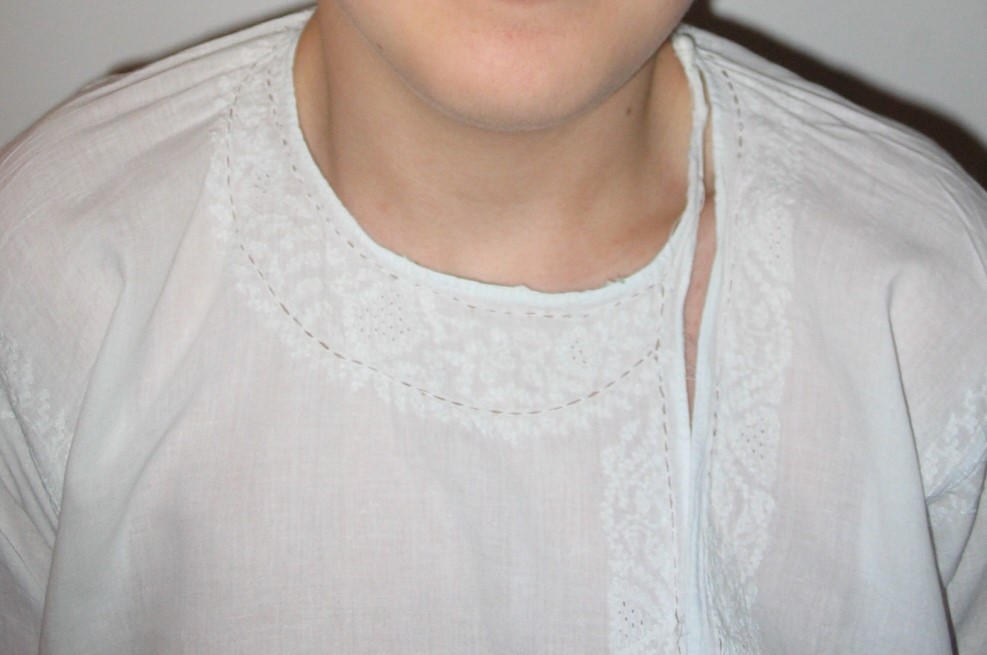 KurtaA loose collarless tunic from South Asia, worn plain or embroidered over pyjamas or jeans
 TurbanCloth wound around the head, worn for faith, rank, shade and identity
 BurqaA garment covering the body and face, worn by some Muslim women
Good reading and sources
The facts on this page come from the Wikipedia article "Pashtun clothing", written by its contributors and used under the CC BY-SA 4.0 licence, and from its Wikidata record (CC0). EveryParampara rewrote the text in its own words, with AI assistance, and compares every page with the article to make sure no passage is copied. It may be reused under the same CC BY-SA 4.0 licence with a link back.
It may contain mistakes. Traditions differ from one family, village and community to the next, and the people who keep them know them best. If something is wrong, tell us. Last refreshed 2026-10-09.
More from Afghanistan
All the traditions of Afghanistan
🇮🇳 Pune, India and 5 moreTurbanدولبند (dolband)
Cloth wound around the head, worn for faith, rank, shade and identityDress
🇵🇰 Multan, Pakistan and 3 moreShalwar kameez
Loose trousers and a long tunic, worn as one outfit across South AsiaDress
🇮🇳 Lucknow, India and 5 moreKurtaکرته (Persian), कुरता (Hindi)
A loose collarless tunic from South Asia, worn plain or embroidered over pyjamas or jeansDress
🇦🇫 Kabul, Afghanistan and 1 moreBurqa
A garment covering the body and face, worn by some Muslim womenDress
The same idea elsewhere
All of this kind 🇳🇴 Norway and 3 moreGákti
A traditional coat worn by the Sámi people across northern Scandinavia and Russia, signaling origin and status through cDress
🇳🇴 Norway and 3 moreGákti
A traditional coat worn by the Sámi people across northern Scandinavia and Russia, signaling origin and status through cDress
 🇮🇱 Israel and 1 moreTzitzitצִיצִית
Knotted ritual fringes worn on a four-cornered garment, a reminder of the commandmentsDress
🇮🇱 Israel and 1 moreTzitzitצִיצִית
Knotted ritual fringes worn on a four-cornered garment, a reminder of the commandmentsDress
 🇼🇸 Samoa and 1 moreʻIe tōga
Precious woven mats exchanged in Samoan ceremonies to honor family ties and chiefly status.Dress
🇼🇸 Samoa and 1 moreʻIe tōga
Precious woven mats exchanged in Samoan ceremonies to honor family ties and chiefly status.Dress
 🇪🇬 Egypt and 5 moreTraditional tattooing
The ancient custom of marking the skin for protection, healing, status and sacred ritesDress
🇪🇬 Egypt and 5 moreTraditional tattooing
The ancient custom of marking the skin for protection, healing, status and sacred ritesDress