Spiritual and religiousNorth AmericaChristian
Passion Play of Iztapalapa
A community passion play staged across Iztapalapa during Holy Week

The Passion Play of Iztapalapa is an elaborate annual Holy Week reenactment held in Mexico City. Staged by residents of eight historic barrios, it features thousands of performers, barefoot cross-bearers, and dramatic outdoor biblical scenes across the borough.
When is Passion Play of Iztapalapa marked?
Passion Play of Iztapalapa is kept as part of Good Friday, which is on Friday, 26 March 2027.
The Passion Play of Iztapalapa is an immense outdoor drama staged every year during Holy Week in Mexico City. Begun in the nineteenth century after a cholera outbreak, the production is organised and performed entirely by people from eight historic local neighbourhoods. Millions of spectators gather to watch hundreds of actors, along with thousands of barefoot penitents carrying wooden crosses, bring the final days of Jesus Christ to life.
Origins and cholera outbreak
The drama began in 1843 following a deadly cholera epidemic in what was then a predominantly indigenous settlement outside Mexico City. Seeking relief, local residents held a procession to a cave shrine housing an image known as the Lord of the Small Cave. When the outbreak ended, the community established the procession as an annual custom of thanksgiving. Over time, theatrical enactments of the Passion were added. In 1920, flooding prompted organisers to move the final crucifixion scene to Cerro de la Estrella, a hill historically associated with pre-Hispanic rituals. The modern performance retains indigenous touches, including the use of Aztec drums and flutes.
Holy Week performances
The theatrical cycle opens on Palm Sunday with a procession along local streets and the reenactment of Christ entering Jerusalem. Midweek scenes include the miracle of the loaves and fishes on Holy Tuesday. On Maundy Thursday, thousands gather at Cuitlahuac Plaza to watch depictions of the Last Supper, the washing of the feet, and the betrayal of Judas, followed by a silent nighttime procession through the eight barrios. Good Friday presents the trial before Pontius Pilate, a brutal four-kilometre march to Calvary, and the crucifixion atop Cerro de la Estrella. The cycle ends on Saturday with scenes of the Resurrection and Ascension, accompanied by fireworks.
Cast and community devotion
Only people native to the eight original communities of Iztapalapa may participate in the production. The organising committee selects the lead performers under strict rules: candidates for Jesus and Mary must be unmarried, show high moral character, avoid tattoos and piercings, and abstain from alcohol, parties, and dating throughout their preparation. The man chosen as Jesus trains physically for six months to withstand staged beatings and haul a hundred-kilo wooden cross. Thousands of local men called Nazarenes join the procession barefoot, wearing crowns of thorns and bearing their own crosses, accompanied by young women known as the village virgins.
Organisation and modern scale
Preparing the play requires months of coordinated effort by local residents and municipal authorities. Families frequently inherit responsibilities, such as making specific props, tailoring garments, or providing medical assistance. A dedicated community committee manages the production, which involves hundreds of speaking actors, hundreds more extras, and extensive crowd control by city police. To preserve the solemn character of the event, local authorities prohibit the sale of alcohol across the borough during Holy Week. The staging draws millions of onlookers and television audiences, transforming the borough into a major centre of civic and religious pride.
How Passion Play of Iztapalapa is kept
The week opens on Palm Sunday with a procession to the parish church and the entry into Jerusalem. Midweek brings enactments of biblical miracles, leading to Maundy Thursday's Last Supper and nighttime arrest. On Good Friday, the trial takes place at Cuitlahuac Plaza before a massive procession moves toward Cerro de la Estrella. The actor playing Jesus carries a heavy cross along a four-kilometre route, followed by thousands of barefoot Nazarenes with their own crosses. At the hilltop, the crucifixion is staged, followed by the burial, and the cycle finishes on Saturday with the Resurrection.
When and where
The play takes place each year across Holy Week, spanning from Palm Sunday through Black Saturday. Its exact dates follow the Christian liturgical calendar in the spring.
The observance takes place across the borough of Iztapalapa in Mexico City. Key scenes unfold on the esplanade in front of borough hall, at Cuitlahuac Plaza, along local streets, and atop the hill of Cerro de la Estrella.
What Passion Play of Iztapalapa means
Born as a collective plea for deliverance from disease, the event serves as a vow of communal gratitude and faith. For residents of the eight historic barrios, taking part reinforces ancestral identity and solidarity. Carrying heavy crosses and walking barefoot express deep personal devotion, penance, and continuity with generations of local families who have sustained the tradition.


Days Passion Play of Iztapalapa is marked
Questions people ask about Passion Play of Iztapalapa
When is Passion Play of Iztapalapa marked?
Passion Play of Iztapalapa is kept as part of Good Friday, which is on Friday, 26 March 2027.
What is the Passion Play of Iztapalapa?
It is a massive annual religious drama that reenacts the Passion, Death, and Resurrection of Jesus Christ through the streets and plazas of the Iztapalapa borough in Mexico City.
Who is allowed to participate in the cast?
Participation is limited exclusively to residents from the eight historic barrios of Iztapalapa, whether they appear as principal actors, supporting cast members, or cross-bearing Nazarene penitents.
How did this tradition begin?
It began in 1843 during a deadly cholera outbreak. Local villagers staged a religious procession asking for relief, and when the epidemic ceased, they established an annual commemorative performance.
See also
 PassoverA Jewish spring festival celebrating freedom from slavery with ritual meals
 SukkotA seven-day autumn Jewish festival of temporary booths, harvest prayers and hospitality
 CandlemasA Christian feast of candle blessings marking the end of the Christmas season
 Isra and Mi'rajAn Islamic observance marking the prophet Muhammad’s night journey and ascent through the heavens.
Good reading and sources
- Representation of the Passion, Death and Resurrection of Christ in IztapalapaUNESCO, Heritage listing
- Representation of the Passion, Death and Resurrection of Christ in IztapalapaUNESCO, Article
- Passion Play of Iztapalapa on WikipediaEncyclopedia
- More photos on Wikimedia CommonsPhotos and video
- Wikidata recordOpen data
The facts on this page come from the Wikipedia article "Passion Play of Iztapalapa", written by its contributors and used under the CC BY-SA 4.0 licence, and from its Wikidata record (CC0). EveryParampara rewrote the text in its own words, with AI assistance, and compares every page with the article to make sure no passage is copied. It may be reused under the same CC BY-SA 4.0 licence with a link back.
It may contain mistakes. Traditions differ from one family, village and community to the next, and the people who keep them know them best. If something is wrong, tell us. Last refreshed 2026-10-04.
More from Mexico
All the traditions of Mexico 🇺🇸 United States and 2 moreSweat lodge
A purification ceremony kept by Indigenous peoples of the Americas using a heated hut and steam.Spiritual
🇺🇸 United States and 2 moreSweat lodge
A purification ceremony kept by Indigenous peoples of the Americas using a heated hut and steam.Spiritual
 🇲🇽 Mexico City, Mexico and 2 moreOur Lady of GuadalupeNuestra Señora de Guadalupe
A Mexican devotion to Mary, with a feast on 12 December and an image kept on a cloakSpiritual
🇲🇽 Mexico City, Mexico and 2 moreOur Lady of GuadalupeNuestra Señora de Guadalupe
A Mexican devotion to Mary, with a feast on 12 December and an image kept on a cloakSpiritual
 🇲🇽 MexicoMesoamerican bloodletting
A ritual practice of self-cutting used by ancient Maya and other Mesoamerican elites to communicate with the divine.Spiritual
🇲🇽 MexicoMesoamerican bloodletting
A ritual practice of self-cutting used by ancient Maya and other Mesoamerican elites to communicate with the divine.Spiritual
 🇦🇲 Armenia and 4 moreBlessing of the Throats
A Christian prayer rite touching throats with crossed candles for protection from illnessSpiritual
🇦🇲 Armenia and 4 moreBlessing of the Throats
A Christian prayer rite touching throats with crossed candles for protection from illnessSpiritual
The same idea elsewhere
Pilgrimage compared 🇪🇸 Santiago de Compostela, SpainBotafumeiro
A giant swinging censer of brass and silver that fills the Santiago de Compostela Cathedral with incense during solemn fSpiritual
🇪🇸 Santiago de Compostela, SpainBotafumeiro
A giant swinging censer of brass and silver that fills the Santiago de Compostela Cathedral with incense during solemn fSpiritual
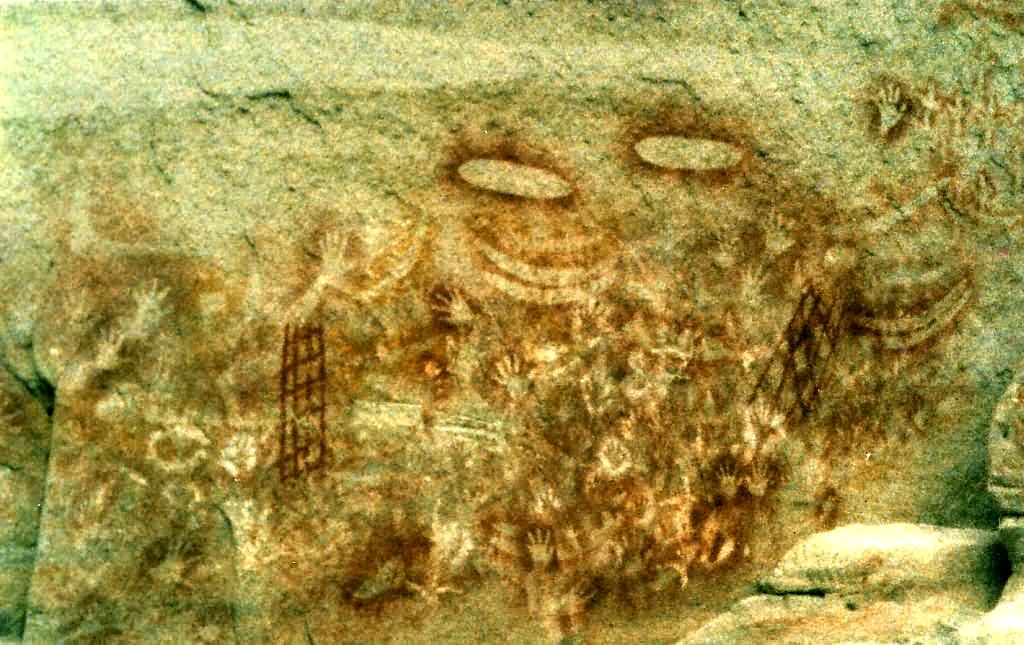 🇦🇺 AustraliaThe Dreaming
A living spiritual worldview and law connecting Aboriginal Australians to ancestors, land, and community.Spiritual
🇦🇺 AustraliaThe Dreaming
A living spiritual worldview and law connecting Aboriginal Australians to ancestors, land, and community.Spiritual
 🇮🇳 India and 5 moreThaipusam
A Tamil Hindu festival honoring Murugan through devotional burdens and pilgrimageSpiritual
🇮🇳 India and 5 moreThaipusam
A Tamil Hindu festival honoring Murugan through devotional burdens and pilgrimageSpiritual
 🇵🇭 Cebu City, Philippines and 4 moreSinulog Festival
An annual Philippine dance festival and Catholic devotion honouring the Santo NiñoFestival
🇵🇭 Cebu City, Philippines and 4 moreSinulog Festival
An annual Philippine dance festival and Catholic devotion honouring the Santo NiñoFestival