Music, dance and storytellingNorth America
Pirekua
A gentle Purépecha song form from Michoacán, sung solo or in duets
Pirekua is a traditional song form of the Purépecha people of Michoacán, in Mexico. Singers, called pirériecha, may be men or women, alone, in duets or with guitars and small brass bands, and they mostly sing in the Purépecha language.
Pirekua is a traditional song of the Purépecha people of Michoacán, in Mexico. Its singers, called pirériecha, may be men or women, and they perform alone, in pairs, with guitars and small brass bands, or with no accompaniment at all. Pirekua carries news and feeling between communities, and UNESCO added it to its Representative List in 2010.
What it is
A pirekua is a song, and the person who sings one is called a pirériecha. Men and women both take that role, performing by themselves, in pairs, or with a group. A piece can also be played with no singing at all. Ensembles are often made up of two or three guitars, other string and wind instruments, or a small brass band. The pace is gentle. There are two named kinds of pirekua: sones, counted in three-eight time, and abajeños, counted in six-eight time.
Roots and influences
The music draws on three strands of influence: indigenous American, European and African. It is often placed beside the son mexicano and the waltz. Henrietta Yurchenco, who studied both the son and the pirekua, found habits they share. Each moves in a slow triple metre. Each is sung as a duet. Each sets rhythmic figures against steady patterns in the accompaniment. Each stays within two or three chords, the first, fourth and fifth, in a major or a minor key, and shifts key very little.
Words and language
The words of a pirekua cover a wide range of subjects and lean heavily on symbols. Flowers appear again and again, standing for womanhood, strong feeling, and belonging to a place. Most pirekua are sung in Purépecha. Sones, by contrast, are usually sung in Spanish. The two forms also differ in outlook. Sones stay near ordinary, everyday life. Pirekua reach further into poetic ways of expressing how the Purépecha see the world.
The singers' role
A pirériecha does more than entertain. Singers act as go-betweens inside their communities. They put feelings into words and carry news of events that matter to the Purépecha. Because the songs voice a community's own account of itself, they belong to everyone who keeps them, not only to the person singing. A performer may be a man or a woman, working alone, in a duet or with a band, and in some pieces no one sings at all.
Recognition today
UNESCO inscribed pirekua on the Representative List of the Intangible Cultural Heritage of Humanity in 2010, during the body's fifth session. The listing is filed under the title Pirekua, traditional song of the P’urhépecha, with Mexico named as the country concerned and reference number 00398. It sits in the region UNESCO calls Latin America and the Caribbean. The recognition places a living song tradition among the practices that countries and communities ask to be documented and safeguarded.
How Pirekua is kept
A pirériecha leads, whether a man or a woman, alone, in a pair, or with a group. The accompaniment may be two or three guitars, other string and wind instruments, or a small brass band, and sometimes there is none. The piece unfolds at a gentle pace, either as a son in three-eight time or as an abajeño in six-eight time. The singer shapes the melody against steady patterns underneath. Words carry the message, in Purépecha, and a pirekua can be purely instrumental as well.
When and where
Pirekua belongs to the Purépecha of Michoacán, in western Mexico. The tradition is tied to that state and its communities, and Mexico is the country that UNESCO names for the practice.
What Pirekua means
For the Purépecha, a pirekua is a way of speaking in public that song makes possible. Singers use it to say what people feel and to tell one another about events that matter to the community. Symbols do much of the work: flowers, in particular, stand for womanhood, strong feeling, and attachment to a home place. The songs therefore hold a community's own picture of itself, expressed in its own language.
Questions people ask about Pirekua
What is a pirekua?
It is a traditional song form of the Purépecha people of Michoacán, Mexico. One singer, a pirériecha, may be a man or a woman, performing alone, in a duet, with guitars or a small brass band, or with no accompaniment.
Where is it kept?
Among the Purépecha of Michoacán, in Mexico. The songs are tied to that state and its communities, and Mexico is the country that UNESCO names for the practice.
What language are the songs in?
Most pirekua are sung in Purépecha, the language of the people who keep the tradition. The related son mexicano is usually sung in Spanish, and that difference is one way the two forms are told apart.
What instruments are used?
Common groupings are two or three guitars, other string and wind instruments, or a small brass band. Some pirériecha sing with no accompaniment at all, and some pirekua are played instrumentally, with no voice.
Is it recognised officially?
Yes. In 2010 UNESCO added it to the Representative List of the Intangible Cultural Heritage of Humanity, under the title Pirekua, traditional song of the P’urhépecha.
See also
 Danza de los ViejitosA Purépecha masked dance honouring the sun and the four elements in Michoacán
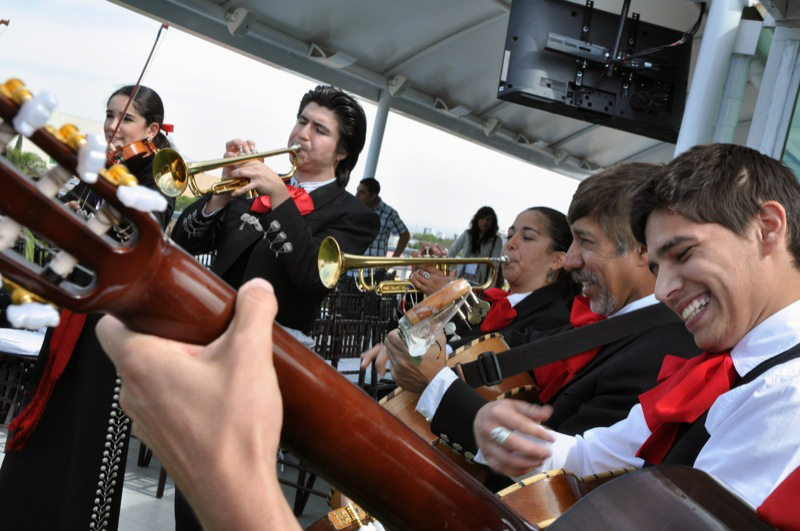 MariachiA Mexican string and trumpet music tradition featuring charro attire and communal singing.
 ChinelosMasked dancers from Morelos who spoof colonial manners at Carnival
 Mexican hat danceMexico's national courtship dance, in which a dancer's steps circle the brim of a hat
Good reading and sources
The facts on this page come from the Wikipedia article "Pirekua", written by its contributors and used under the CC BY-SA 4.0 licence, and from its Wikidata record (CC0). EveryParampara rewrote the text in its own words, with AI assistance, and compares every page with the article to make sure no passage is copied. It may be reused under the same CC BY-SA 4.0 licence with a link back.
It may contain mistakes. Traditions differ from one family, village and community to the next, and the people who keep them know them best. If something is wrong, tell us. Last refreshed 2026-10-11.
More from Mexico
All the traditions of Mexico
🇲🇽 MexicoDanza de los ViejitosT'arche Uarakua
A Purépecha masked dance honouring the sun and the four elements in MichoacánPerformance
🇲🇽 Guadalajara, Mexico and 1 moreMariachi
A Mexican string and trumpet music tradition featuring charro attire and communal singing.Performance
 🇲🇽 Veracruz, Mexico and 3 moreBaile folklórico
Staged folk dances of Mexico and Central America, with regional dress and mariachi musicPerformance
🇲🇽 Guadalajara, MexicoMexican hat danceJarabe tapatío
Mexico's national courtship dance, in which a dancer's steps circle the brim of a hatPerformance
🇲🇽 Veracruz, Mexico and 3 moreBaile folklórico
Staged folk dances of Mexico and Central America, with regional dress and mariachi musicPerformance
🇲🇽 Guadalajara, MexicoMexican hat danceJarabe tapatío
Mexico's national courtship dance, in which a dancer's steps circle the brim of a hatPerformance
The same idea elsewhere
All of this kind 🇹🇷 Kayseri, Turkey and 4 moreHalay
A traditional line and circle folk dance kept across Turkey, Azerbaijan, Armenia, Iran, and Syria.Performance
🇧🇷 BrazilBaião
A syncopated folk rhythm and partnered dance from northeastern BrazilPerformance
🇹🇷 Kayseri, Turkey and 4 moreHalay
A traditional line and circle folk dance kept across Turkey, Azerbaijan, Armenia, Iran, and Syria.Performance
🇧🇷 BrazilBaião
A syncopated folk rhythm and partnered dance from northeastern BrazilPerformance
 🇺🇦 Kyiv, UkraineBanduraБандура
A Ukrainian plucked string instrument played to accompany epic songs and folk balladsPerformance
🇺🇦 Kyiv, UkraineBanduraБандура
A Ukrainian plucked string instrument played to accompany epic songs and folk balladsPerformance
 🇳🇿 Auckland, New ZealandPoi
A Māori performing art of swinging tethered weights in rhythmical patterns.Performance
🇳🇿 Auckland, New ZealandPoi
A Māori performing art of swinging tethered weights in rhythmical patterns.Performance