Music, dance and storytellingNorth America
Baile folklórico
Staged folk dances of Mexico and Central America, with regional dress and mariachi music

Baile folklórico is a staged folk dance from Mexico, with related traditions in Honduras, Costa Rica and the United States, where dancers wear the costume of a chosen state and mariachi players often stand behind them. It draws on village dances and was reshaped for the theatre from the 1950s.
When is Baile folklórico kept?
Baile folklórico is kept on all year at parties, school events and festivals; Honduran groups peak in late October.
Baile folklórico is the staged folk dance of Mexico and parts of Central America. Dancers blend steps and stories from villages and regions with the line, pointed toes and planned movement of ballet. Schools, community groups and professional companies keep it alive, and each state or country has its own dances, songs and dress. For many dancers it is also a way of naming a mixed heritage.
What it is
Baile folklórico, which means folkloric dance in Spanish, is a shared name for many traditional dances from Mexico, the south-western United States and Central America. Companies stage them with ballet habits: toes pointed, gestures widened, every step planned. It is not the same as danzas or regional bailes, though it is sometimes linked with what are called nationalist dances. The label covers dances that live in villages as well as versions made for a theatre. Each region holds a small set of dances of its own. Writers credit Alura Angeles de Flores with researching and spreading many of these dances.
Origins and history
Amalia Hernández is widely named as the person who shaped the staged form, founding Ballet Folklórico de México in the 1950s and a Mexico City school for classical and folkloric training. Before that, these dances belonged to big parties and community gatherings. Hernández studied with Russian and French ballet teachers and also learned regional Mexican dance, tap and modern styles. She set out to make her own idea of a nationalist dance. Companies today still build on village dances and reshape them for the stage, a practice the sources describe as a living record of colonisation and cultural mixing.
Dress and objects
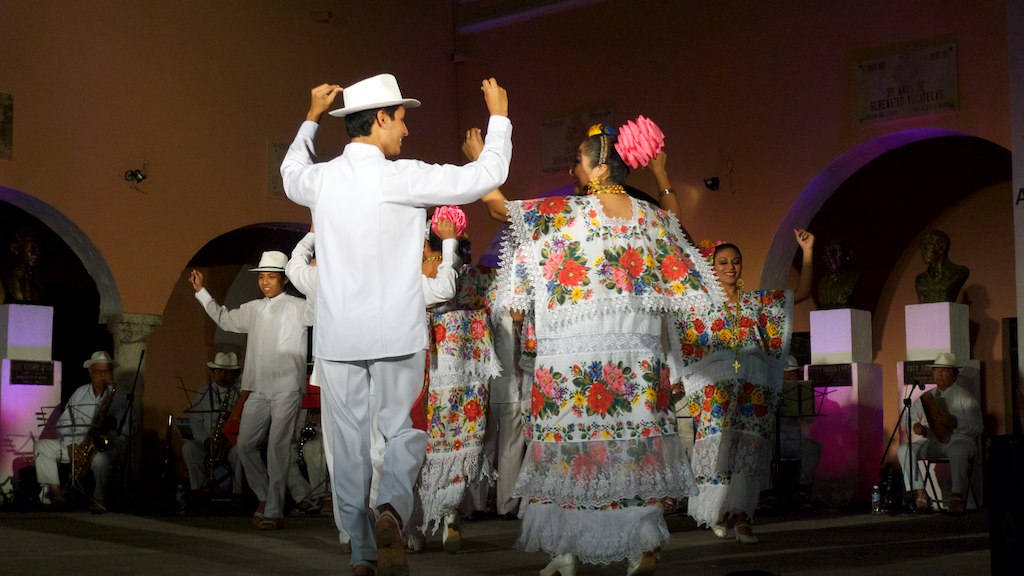
Costume follows region and state, and a dancer's outfit usually signals where the dance comes from. In Jalisco, women wear ruffled skirts in bright colours, trimmed with ribbons whose shades carry local meaning, along with heavy clog-like heels and elaborate hair ornaments. Veracruz calls for white lace dresses, white shoes and a small apron whose bandana hangs to one side, left for married women and right for those who are single. Sinaloan dancers wear lighter, more colourful dresses. Oaxacan dress is known for fine embroidery. Men's clothing changes across regions as well; in the north, dark trousers carry a decorative strip along the leg. Some dances use a fan or a bandana as a prop.
Music and dance
Mariachi groups usually stand in a row at the back of the stage. They play from memory rather than written music, while pairs of dancers work in front of them. In Jalisco, the Jarabe Tapatío, known in English as the hat dance, is the best known piece, alongside the son and El baile de los sonajeros; one favourite song, El Son de la Negra, dates from 1940. Guerrero has its own named dances, and Michoacán has a dance that tells a local folktale. Across regions the basics stay similar. Many dances include zapateados, percussive heel work that shows the mark of flamenco shoe technique. Where no hard floor exists, dancers may use a wooden board or plank, a practice compared with Irish sean-nós step dancing.
Around the world
Mexico has folkloric dance in most of its states, from Baja California and Sonora in the north to Chiapas, Yucatán and Quintana Roo in the south. Honduras runs one of the busiest programmes, with school and community groups meeting at regional and national festivals. These end in late October at El Grande de Grandes in La Esperanza, Intibucá, where more than fifty groups and over a thousand dancers gather. Since the 1950s, folklorists led by Rafael Manzanares Aguilar have catalogued about 150 Honduran dances with their music and dress, filed with the National Office of Folklore. Costa Rica has the Punto guanacasteco; the United States has its own groups and a national competition.
How Baile folklórico is kept
Folkloric dance is kept by school clubs, community troupes and professional companies. Dancers rehearse a set piece for a particular state or country, learn its steps and its costume, and perform it at parties, school events and festivals. On stage, a mariachi band or recorded music plays while couples dance in front of the musicians; the band usually stands in a line at the back. In Honduras, learners work towards regional festivals that finish with El Grande de Grandes in late October. In the United States and Mexico, private and public groups also enter competitions, including the USA Ballet Folklórico Nationals.
When and where
There is no single date. Dances are performed through the year at parties, school programmes and community events, and each region keeps its own calendar of festivals. In Honduras the season of school and community festivals builds towards El Grande de Grandes at the end of October in La Esperanza, Intibucá.
The form belongs to Mexico, where nearly every state has its own dances, and to the south-western United States. It is also established in Central America, especially Honduras, and in Costa Rica. Mexican companies tour, and Mexican and Central American communities abroad keep dancing. Veracruz, Oaxaca and Jalisco are among the regions whose styles are best known, while La Esperanza in Honduras hosts the largest festival.
What Baile folklórico means
For many dancers, baile folklórico carries the idea of mestizaje, the mixing of Indigenous, European and African peoples that began with colonisation. Costume colours, dance subjects and steps such as the zapateo are read as signs of that mixture, and the charro suit is a link to Spanish dress. Amalia Hernández, who called herself a mestiza, aimed to build a nationalist dance from these elements. Performers today describe the repertory as a living record of colonisation and cross-cultural art. Costume detail in Oaxaca is also spoken of as a source of pride and confidence for women.


Questions people ask about Baile folklórico
When is Baile folklórico kept?
Baile folklórico is kept on all year at parties, school events and festivals; Honduran groups peak in late October.
What exactly is baile folklórico?
It is a term for traditional dances from Mexico, the south-western United States and Central America that are presented on stage with ballet traits, such as pointed toes and planned, widened movement. Each region has its own dances, music and dress, and the label covers both village dances and staged versions.
Where is it danced?
Most Mexican states have folkloric dances, and the form is also at home in the south-western United States. In Central America it is strongest in Honduras, where schools and communities run festivals, and Costa Rica has its own piece, the Punto guanacasteco. Companies and student groups perform in other countries too.
How did the staged version begin?
According to the sources, Amalia Hernández pioneered it in the 1950s, when she founded Ballet Folklórico de México and a school in Mexico City. She blended her ballet training with regional Mexican dance to create her own idea of a nationalist dance, and later companies followed a similar path.
What do dancers wear?
Each state or country has its own costume. Jalisco calls for bright ruffled skirts and heavy heels, Veracruz for white lace dresses and a side apron, Oaxaca for strongly embroidered dress. Women in Veracruz fix the bandana to the left if married and to the right if single.
See also
 TiniklingA Philippine folk dance where dancers step between clapping bamboo poles
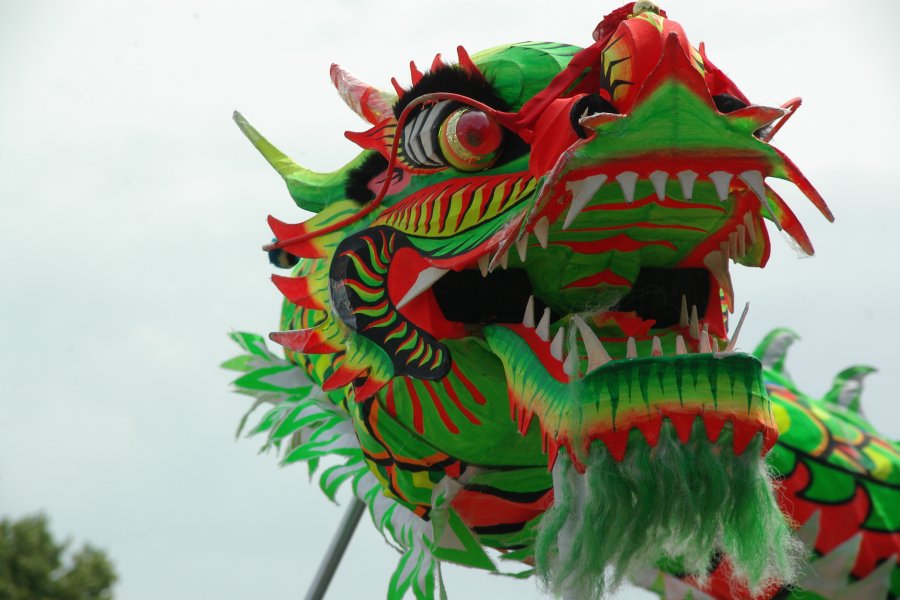 Dragon danceA long dragon puppet on poles, danced by a team at Chinese New Year and other festivals
 RaraA Haitian street music of bamboo trumpets and drums, played in the Easter season
Good reading and sources
The facts on this page come from the Wikipedia article "Baile folklórico", written by its contributors and used under the CC BY-SA 4.0 licence, and from its Wikidata record (CC0). EveryParampara rewrote the text in its own words, with AI assistance, and compares every page with the article to make sure no passage is copied. It may be reused under the same CC BY-SA 4.0 licence with a link back.
It may contain mistakes. Traditions differ from one family, village and community to the next, and the people who keep them know them best. If something is wrong, tell us. Last refreshed 2026-10-05.
More from Mexico
All the traditions of Mexico 🇲🇽 MexicoDanza de los ViejitosT'arche Uarakua
A Purépecha masked dance honouring the sun and the four elements in MichoacánPerformance
🇲🇽 MexicoDanza de los ViejitosT'arche Uarakua
A Purépecha masked dance honouring the sun and the four elements in MichoacánPerformance
 🇲🇽 Guadalajara, Mexico and 1 moreMariachi
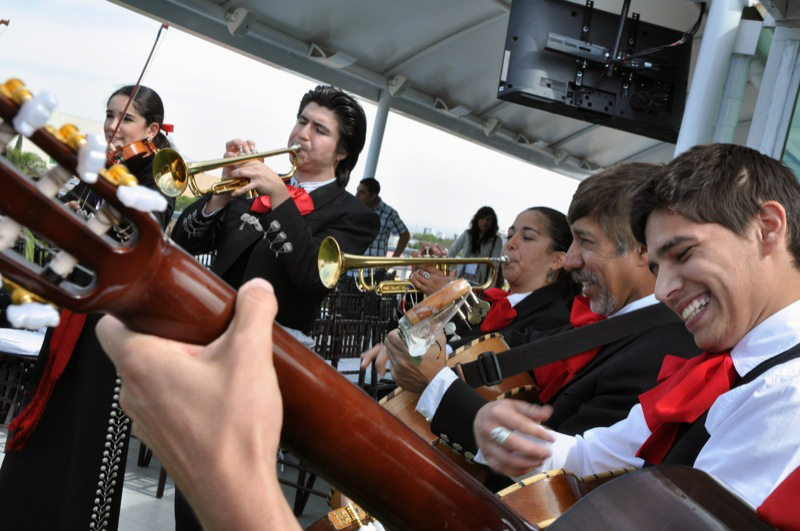
A Mexican string and trumpet music tradition featuring charro attire and communal singing.Performance
🇲🇽 Guadalajara, Mexico and 1 moreMariachi
A Mexican string and trumpet music tradition featuring charro attire and communal singing.Performance
 🇲🇽 Guadalajara, MexicoMexican hat danceJarabe tapatío
Mexico's national courtship dance, in which a dancer's steps circle the brim of a hatPerformance
🇲🇽 Guadalajara, MexicoMexican hat danceJarabe tapatío
Mexico's national courtship dance, in which a dancer's steps circle the brim of a hatPerformance
 🇲🇽 Tlayacapan, MexicoChinelos
Masked dancers from Morelos who spoof colonial manners at CarnivalPerformance
🇲🇽 Tlayacapan, MexicoChinelos
Masked dancers from Morelos who spoof colonial manners at CarnivalPerformance
The same idea elsewhere
All of this kind 🇹🇷 Kayseri, Turkey and 4 moreHalay
A traditional line and circle folk dance kept across Turkey, Azerbaijan, Armenia, Iran, and Syria.Performance
🇧🇷 BrazilBaião
A syncopated folk rhythm and partnered dance from northeastern BrazilPerformance
🇹🇷 Kayseri, Turkey and 4 moreHalay
A traditional line and circle folk dance kept across Turkey, Azerbaijan, Armenia, Iran, and Syria.Performance
🇧🇷 BrazilBaião
A syncopated folk rhythm and partnered dance from northeastern BrazilPerformance
 🇺🇦 Kyiv, UkraineBanduraБандура
A Ukrainian plucked string instrument played to accompany epic songs and folk balladsPerformance
🇺🇦 Kyiv, UkraineBanduraБандура
A Ukrainian plucked string instrument played to accompany epic songs and folk balladsPerformance
 🇳🇿 Auckland, New ZealandPoi
A Māori performing art of swinging tethered weights in rhythmical patterns.Performance
🇳🇿 Auckland, New ZealandPoi
A Māori performing art of swinging tethered weights in rhythmical patterns.Performance