Festivals and celebrationsSoutheast AsiaMuslim
Lebaran
In its own language: Hari Raya Lebaran
Indonesia's festive season of homecoming, seeking forgiveness and shared feasts

Lebaran is Indonesia's major Islamic holiday, observed mainly at Eid al-Fitr to mark the end of the fasting month of Ramadan. Families reunite across the archipelago, ask for forgiveness from elders, share traditional dishes like ketupat, and exchange festive greetings.
When is Lebaran marked?
Lebaran is kept as part of Eid al-Fitr, which runs from 9 to 11 March 2027.
Lebaran is the popular Indonesian celebration for the Islamic holidays of Eid al-Fitr and Eid al-Adha, especially marking the end of Ramadan. It brings together family reunions, pardons for past faults, and charity. Millions of people travel to their home villages, pray together in the morning, pay deep respects to their elders, and share traditional foods such as ketupat, spiced meat dishes, and cookies with visiting friends and relatives.
Origins and meaning
According to scholar Umar Khayam, Lebaran developed during the fifteenth century through the blending of Javanese customs with Islamic practice. The teacher Sunan Bonang encouraged believers to complete their fasting by seeking and offering forgiveness. The word itself may come from Javanese for finished, Sundanese for abundance, or Betawi for broadening one's heart. A distinctive Javanese element is sungkem, where younger people bow deeply and touch their noses to the hands of seated parents to ask for blessings. Another key symbol is ketupat, woven rice dumplings introduced by Sunan Kalijaga to represent acknowledging faults and gaining spiritual cleanliness.
The great homecoming
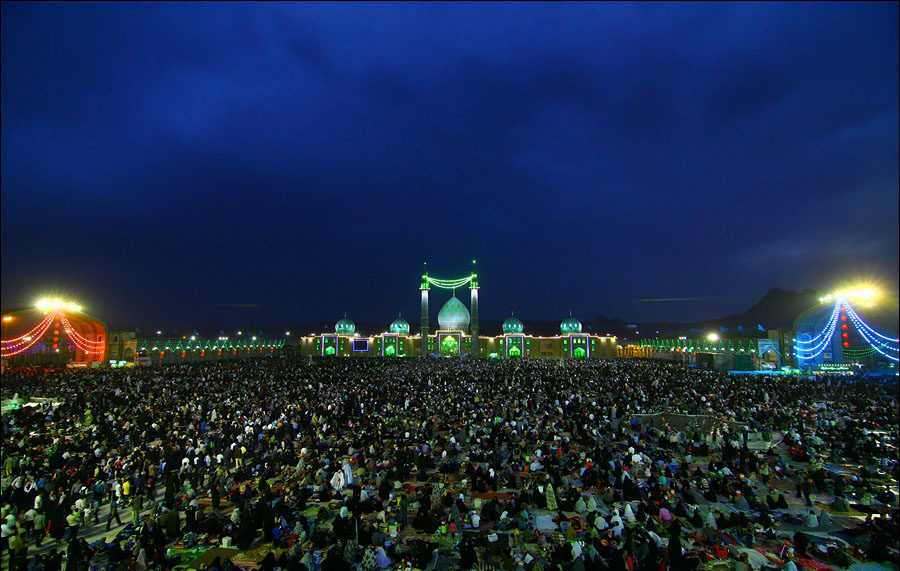
In the days leading up to Lebaran, city workers receive a mandatory salary bonus known as Tunjangan Hari Raya, introduced in the 1950s. People flock to markets and shopping malls to purchase new clothing, footwear, and festive biscuits. Then begins mudik, or pulang kampung, when tens of millions leave urban hubs such as Jakarta or Surabaya to return to rural hometowns. On the eve of the holiday, known as takbiran, mosques resound with bedug drums and vocal chants praising God. Streets fill with vehicles, torchlit parades, and illuminated floats in cities like Yogyakarta, while oil lamps brighten homes.
Feasting and visiting
Celebrations begin on Lebaran morning with communal prayers and the distribution of zakat charity to the poor. Friends and relatives greet one another with wishes for a blessed holiday and request mutual pardon for emotional and physical wrongdoings. Younger generations visit older relatives during silaturrahmi gatherings, where elders give children small cash gifts called uang lebaran in bright envelopes. Homes serve substantial meals featuring ketupat, lemang rice cooked in bamboo, opor ayam, rendang, sayur lodeh, and fried liver sambal. Snack tables offer roasted peanuts, dodol, and sweet cookies such as nastar, kaasstengels, and putri salju alongside fruit syrups.
Festive attire
Indonesians typically celebrate dressed in new or traditional clothing. Men frequently wear the baju koko, an embroidered collarless shirt, paired with trousers or a patterned sarung made of songket or ikat weaving, along with a songkok or peci cap. In Malay-influenced regions and neighbouring countries like Malaysia and Singapore, men wear the Baju Melayu with a kain samping. Women often wear a loose kebaya kurung blouse with a batik or woven skirt, sometimes accompanied by a headscarf such as a jilbab or stiffened kerudung veil. Even non-Muslim friends may wear cultural or festive garments when visiting during the holidays.
How Lebaran is kept
The celebration starts on takbiran eve with drum beats, prayers, and torchlit processions. On the holiday morning, Muslims attend special congregational prayers and hand out zakat alms to those in need. Families then gather at home in fresh or traditional attire to exchange greetings and ask one another for forgiveness. Younger members perform the deep sungkem bow before their elders, who hand out pocket money to children in colourful envelopes. Throughout the day, people visit neighbouring houses to eat ketupat, rendang, and festive cookies, listening to devotional music while renewing social ties.
When and where
Lebaran is celebrated on the first day of Shawwal for Eid al-Fitr, marking the conclusion of the Ramadan fast. An additional Lebaran observance takes place on the tenth of Dhu al-Hijjah during Eid al-Adha. Because the Islamic calendar is lunar, its dates shift each year in the solar calendar.
Lebaran is a nationwide public holiday across Indonesia, celebrated in both major urban centers like Jakarta and rural villages. Related customs and traditional attire are also observed by Malay Muslim communities in neighbouring Malaysia, Singapore, Brunei, and southern Thailand.
What Lebaran means
Lebaran represents spiritual cleansing, humility, and moral renewal. By asking for forgiveness with the phrase 'mohon maaf lahir dan batin', people seek to wipe away both visible and inward misdeeds committed over the preceding year. The custom of sungkem expresses deep respect and dedication toward parents. Additionally, woven ketupat cases symbolize human sins, while the white rice inside represents the pure state achieved through prayer and fasting.
On the table
- Ketupat
- Opor ayam
- Rendang
- Sayur lodeh
- Sambal goreng ati
- Lemang
- Nastar
- Kaasstengels


Days Lebaran is marked
Questions people ask about Lebaran
When is Lebaran marked?
Lebaran is kept as part of Eid al-Fitr, which runs from 9 to 11 March 2027.
What is Lebaran?
Lebaran is the Indonesian term for the major Islamic holidays, primarily Eid al-Fitr following the month of Ramadan, and informally Eid al-Adha. It is a festive season dedicated to communal prayer, family visits, gift giving, and seeking forgiveness for past wrongdoings.
Where and when is Lebaran observed?
It is observed throughout Indonesia and among Malay communities in nearby countries like Malaysia and Singapore. The celebration takes place annually at the beginning of Shawwal on the Islamic lunar calendar, as well as on the tenth day of Dhu al-Hijjah.
What is the tradition of mudik?
Mudik, also known as pulang kampung, is the massive annual homecoming where millions of workers travel from large cities like Jakarta back to their home towns and villages. They return to celebrate the holiday, visit parents, and ask elders for their blessings.
What traditional foods are served during Lebaran?
Festive meals commonly center on ketupat, a compressed rice cake boiled in woven palm leaves. Families serve it with dishes such as opor ayam chicken, rich rendang, sayur lodeh vegetables, and lemang, alongside sweet cookies like nastar and kaasstengels.
See also


Good reading and sources
- Lebaran on WikipediaEncyclopedia
- More photos on Wikimedia CommonsPhotos and video
- Wikidata recordOpen data
The facts on this page come from the Wikipedia article "Lebaran", written by its contributors and used under the CC BY-SA 4.0 licence, and from its Wikidata record (CC0). EveryParampara rewrote the text in its own words, with AI assistance, and compares every page with the article to make sure no passage is copied. It may be reused under the same CC BY-SA 4.0 licence with a link back.
It may contain mistakes. Traditions differ from one family, village and community to the next, and the people who keep them know them best. If something is wrong, tell us. Last refreshed 2026-10-04.
More from Indonesia
All the traditions of Indonesia 🇹🇷 Turkey and 5 moreEid al-Fitrعيد الفطر
The feast that ends Ramadan, opened with morning prayers, sweets and visits homeFestival · Feasts and festival meals
🇹🇷 Turkey and 5 moreEid al-Fitrعيد الفطر
The feast that ends Ramadan, opened with morning prayers, sweets and visits homeFestival · Feasts and festival meals
 🇪🇬 Egypt and 5 moreMawlidمولد (Mawlid)
An annual festival marking the birth of the Prophet Muhammad, marked by poetry, processions and feasts.Festival · Feasts and festival meals
🇪🇬 Egypt and 5 moreMawlidمولد (Mawlid)
An annual festival marking the birth of the Prophet Muhammad, marked by poetry, processions and feasts.Festival · Feasts and festival meals
 🇮🇩 IndonesiaOgoh-ogohᬳᭀᬕᭀᬄᬳᭀᬕᭀᬄ
Giant handcrafted statues paraded and burned on the eve of the Balinese Saka New YearFestival
🇮🇩 IndonesiaOgoh-ogohᬳᭀᬕᭀᬄᬳᭀᬕᭀᬄ
Giant handcrafted statues paraded and burned on the eve of the Balinese Saka New YearFestival
 🇮🇳 Varanasi, India and 2 moreKartika Purnimaकार्त्तिकपूर्णिमा (Kārttikapūrṇimā)
A full moon festival of lights and holy baths celebrated by Hindus, Sikhs, and Jains across South Asia.Festival
🇮🇳 Varanasi, India and 2 moreKartika Purnimaकार्त्तिकपूर्णिमा (Kārttikapūrṇimā)
A full moon festival of lights and holy baths celebrated by Hindus, Sikhs, and Jains across South Asia.Festival
The same idea elsewhere
Fasting and feasting compared 🇧🇪 Belgium and 5 moreSaint Nicholas Day
The feast day of Saint Nicholas, kept in Advent with gifts, shoes and church servicesSpiritual
🇧🇪 Belgium and 5 moreSaint Nicholas Day
The feast day of Saint Nicholas, kept in Advent with gifts, shoes and church servicesSpiritual
 🇷🇸 SerbiaSlavaСлава
An annual Serbian family feast honouring their patron saint with blessed bread and wineSpiritual · Feasts and festival meals
🇷🇸 SerbiaSlavaСлава
An annual Serbian family feast honouring their patron saint with blessed bread and wineSpiritual · Feasts and festival meals
 🇷🇸 Serbia and 5 moreSerbian ChristmasБожић
A three-day midwinter observance focused on oak logs, floor straw and family gatheringsSpiritual · Dinner
🇧🇩 Bangladesh and 3 moreAs-salamu alaykumسَلَامٌ عَلَيْكُمْ
A traditional Arabic greeting of peace exchanged in daily life and prayerEtiquette
🇷🇸 Serbia and 5 moreSerbian ChristmasБожић
A three-day midwinter observance focused on oak logs, floor straw and family gatheringsSpiritual · Dinner
🇧🇩 Bangladesh and 3 moreAs-salamu alaykumسَلَامٌ عَلَيْكُمْ
A traditional Arabic greeting of peace exchanged in daily life and prayerEtiquette