Spiritual and religiousEuropeChristian
Slava
In its own language: Слава
An annual Serbian family feast honouring their patron saint with blessed bread and wine

Slava is an annual patron saint feast kept by Serbian Orthodox Christians at home, passed down through generations from father to son. Families mark the day by breaking a consecrated ceremonial loaf, sharing sweetened boiled wheat and wine, and hosting relatives and neighbours for a multi-course festive meal.
When is Slava kept?
Slava is kept on annually on the family patron saint's feast day.
Slava is an annual gathering among Serbian Orthodox families to honour their household patron saint. Handed down from father to son across generations, the observance unites religious devotions with home hospitality. Families gather around a lit candle, blessed wheat, wine, and a decorative loaf of bread, welcoming relatives, friends, and neighbours into their homes for meals, toasts, and communal prayer.
Origins and church roots
Historical accounts link the custom to the baptism of the Serbs during the ninth century, when individual clans embraced Christian guardians in place of earlier beliefs. In the early thirteenth century, Archbishop Sava shaped the ritual into its modern form by removing ancient animal sacrifices and focusing the observance on household blessings and offerings of grain and wine. State rulers from the Nemanjić dynasty adopted Saint Stephen as their protector, embedding the tradition into national memory. Over centuries of Venetian and Habsburg governance, imperial rulers placed restrictions on the holiday, yet households preserved the feast as a vital marker of identity.
Ritual items and bread breaking
A proper slava requires several symbolic objects: an icon of the guardian saint, an incense burner, a tall beeswax candle, red wine, and koljivo, which is sweetened boiled wheat often blended with crushed walnuts. Central to the observance is the slavski kolač, a round yeast loaf decorated with Christian symbols like the Serbian cross or doves. Before the feast begins, a priest or the family blesses the house with holy water. The loaf is ritually turned, sliced with a cross, and broken among participants while blessings and songs are shared, accompanied by sips of red wine or fruit brandy.
Feasting and hospitality
Welcoming guests stands at the heart of the celebration, which typically spans one to three days. Hosts greet arrivals with three kisses on the cheek and offer each person a spoonful of koljivo along with wine or rakija. The banquet follows liturgical rules, serving meatless dishes with fish on fasting dates and hearty meats on standard days. Meals begin with small appetizers like pickled vegetables or cheeses, proceed to rich dishes such as sarma rolls, stuffed peppers, or roasted meats, and finish with gibanica pastry. The gathering later transitions into relaxed visiting, storytelling, and singing.
Inheritance and family bonds
Unlike personal birthdays or name days, slava belongs to the entire household. It passes patrilineally from father to son, preserving a direct connection across ancestral lines. When a woman marries, she usually adopts the saint of her husband, though she may also commemorate her birth family's saint through a smaller secondary gathering called preslava. Historically, sharing the same patron saint indicated shared kinship, guiding marriage choices within rural communities. Even during periods of socialist rule when public religious practice was restricted, families maintained the tradition behind closed curtains to sustain their heritage.
How Slava is kept
Celebrations begin at home or in church, where a priest blesses the household with holy water, prayers, and incense. Family members light a ceremonial candle beside the saint's icon. The household cuts and breaks the decorated slavski kolač loaf in a circle, pouring red wine over it and offering prayers for health and departed ancestors. Arriving guests receive a three-fold kiss, a spoonful of sweetened wheat, and a sip of wine or rakija. The day unfolds with a large banquet of traditional dishes, followed by toasts, songs, and lively socialising that can last up to three days.
When and where
Each family celebrates on the specific feast day of their inherited saint according to the Orthodox liturgical calendar. Around one hundred and fifty days in the year feature slava saints, with most falling during autumn and winter. Frequent dates include Saint Nicholas in December and Saint George in May.
The tradition is celebrated throughout Serbia and across Serbian communities worldwide. Celebrations take place primarily inside the family home, though blessings and consecrations of ritual breads may also occur inside local Orthodox churches.
What Slava means
Slava represents the dedicated bond between a household and its heavenly patron, who acts as an intercessor before God. Breaking the bread and sharing wheat honours the memory of deceased ancestors while asking for health and divine grace for living relatives. The open door reflects traditional hospitality, treating every guest as a blessing to the home.
On the table
- Slavski kolač
- Koljivo
- Red wine
- Rakija
- Sarma
- Gibanica
- Stuffed peppers
- Goulash


Questions people ask about Slava
When is Slava kept?
Slava is kept on annually on the family patron saint's feast day.
What is Slava?
Slava is an annual Serbian Orthodox tradition where families gather at home to venerate their inherited patron saint. The occasion combines religious rituals, including bread breaking and blessing boiled wheat, with generous hospitality for relatives and guests.
How is the patron saint passed down?
The patron saint is inherited patrilineally from father to son through generations. Upon marriage, women typically adopt the saint of their husband, while sometimes keeping a smaller secondary observance for their birth family's saint.
What foods are served during the feast?
Hosts prepare a ceremonial yeast bread called slavski kolač and sweetened wheat called koljivo, along with wine and rakija. The multi-course meal includes appetizers, savory pies like gibanica, and main dishes such as sarma, fish, or roast meat depending on fasting rules.
See also
 PysankaA wax-resist egg decorating tradition kept by Slavic communities for Easter and spring renewal.
 Eid al-FitrThe feast that ends Ramadan, opened with morning prayers, sweets and visits home
 Good FridayA solemn Christian holy day commemorating the crucifixion and death of Jesus Christ.
 Isra and Mi'rajAn Islamic observance marking the prophet Muhammad’s night journey and ascent through the heavens.
Good reading and sources
- Encyclopaedia BritannicaArticle
- Slava, celebration of family saint patron’s dayUNESCO, Heritage listing
- Serb families honour their saintsBBC, Article
- Slava, celebration of family saint patron’s dayUNESCO, Article
- Serb families honour their saintsBBC, Article
- Slava (tradition) on WikipediaEncyclopedia
- More photos on Wikimedia CommonsPhotos and video
- Wikidata recordOpen data
The facts on this page come from the Wikipedia article "Slava (tradition)", written by its contributors and used under the CC BY-SA 4.0 licence, and from its Wikidata record (CC0). EveryParampara rewrote the text in its own words, with AI assistance, and compares every page with the article to make sure no passage is copied. It may be reused under the same CC BY-SA 4.0 licence with a link back.
It may contain mistakes. Traditions differ from one family, village and community to the next, and the people who keep them know them best. If something is wrong, tell us. Last refreshed 2026-10-04.
More from Serbia
All the traditions of Serbia 🇷🇸 Serbia and 1 moreVidovdanВидовдан
A Serbian church feast on 28 June, kept in memory of those who died at KosovoSpiritual
🇷🇸 Serbia and 1 moreVidovdanВидовдан
A Serbian church feast on 28 June, kept in memory of those who died at KosovoSpiritual
 🇪🇹 Ethiopia and 5 moreNativity Fast
A forty-day Christian period of abstinence and prayer observed in preparation for Christmas.Spiritual
🇪🇹 Ethiopia and 5 moreNativity Fast
A forty-day Christian period of abstinence and prayer observed in preparation for Christmas.Spiritual
 🇵🇱 Poland and 5 moreZaduszkiZaduszki, Dzień Zaduszny
A Polish day of prayer for the dead on 2 November, kept with candles at the gravesSpiritual
🇵🇱 Poland and 5 moreZaduszkiZaduszki, Dzień Zaduszny
A Polish day of prayer for the dead on 2 November, kept with candles at the gravesSpiritual
 🇷🇸 Serbia and 5 moreSerbian ChristmasБожић
A three-day midwinter observance focused on oak logs, floor straw and family gatheringsSpiritual · Dinner
🇷🇸 Serbia and 5 moreSerbian ChristmasБожић
A three-day midwinter observance focused on oak logs, floor straw and family gatheringsSpiritual · Dinner
The same idea elsewhere
Remembering the ancestors compared 🇳🇿 Auckland, New ZealandWharenui
A Māori carved communal meeting house at the centre of tribal life in New ZealandHome
🇳🇿 Auckland, New ZealandWharenui
A Māori carved communal meeting house at the centre of tribal life in New ZealandHome
 🇳🇿 New Zealand and 2 moreMarae
A cleared, sacred gathering place at the heart of Māori and Polynesian community lifeSpiritual
🇳🇿 New Zealand and 2 moreMarae
A cleared, sacred gathering place at the heart of Māori and Polynesian community lifeSpiritual
 🇮🇩 Indonesia and 4 moreLebaranHari Raya Lebaran
Indonesia's festive season of homecoming, seeking forgiveness and shared feastsFestival · Breakfast
🇮🇩 Indonesia and 4 moreLebaranHari Raya Lebaran
Indonesia's festive season of homecoming, seeking forgiveness and shared feastsFestival · Breakfast
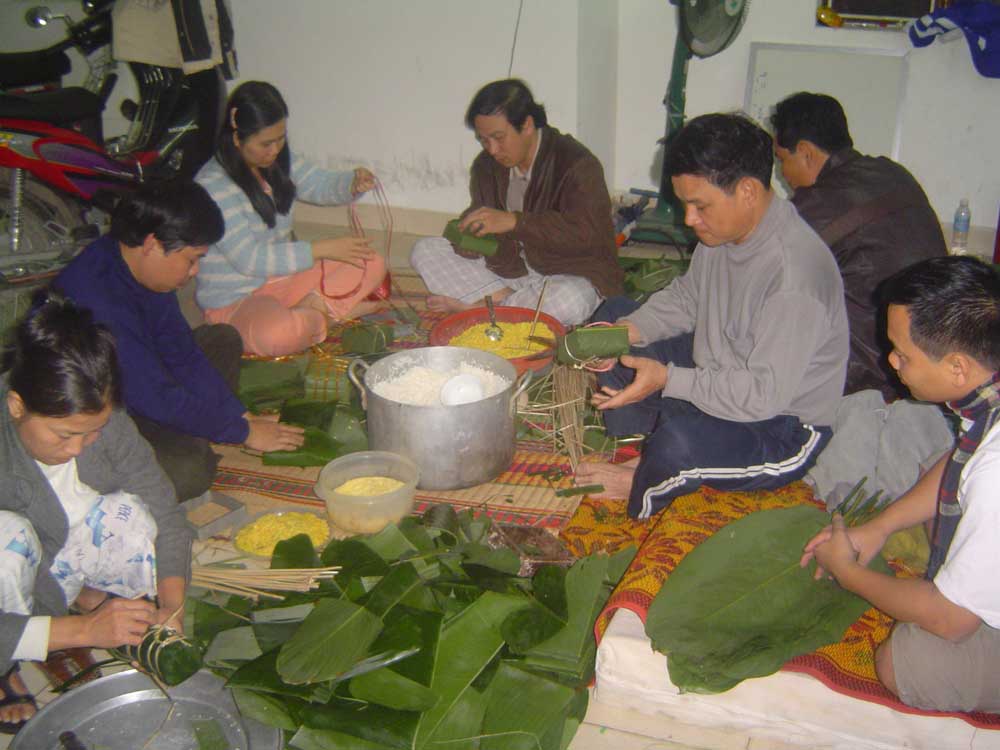 🇻🇳 VietnamTếtTết Nguyên Đán
The Vietnamese festival of the lunar new year, welcoming spring with family gatheringsFestival · Feasts and festival meals
🇻🇳 VietnamTếtTết Nguyên Đán
The Vietnamese festival of the lunar new year, welcoming spring with family gatheringsFestival · Feasts and festival meals