Puttee
A cloth leg wrap worn by soldiers, from the Himalayas to the armies of two world wars
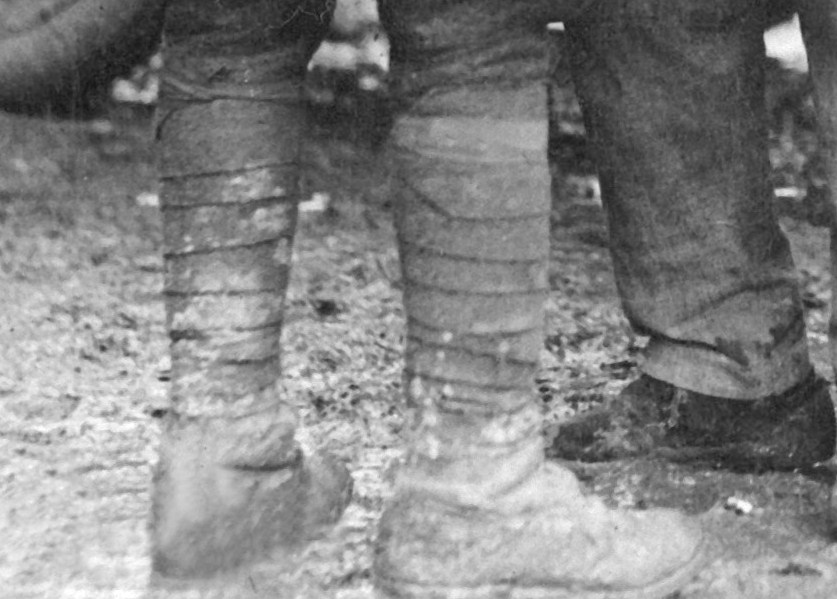
A puttee is a strip of cloth wrapped around the lower leg, from the ankle to the knee, for support and protection. Soldiers in British India adopted it in the 1800s from a legging worn in the Himalayas, and armies around the world used it through the two world wars before it faded from service.
When is Puttee kept?
Puttee is kept on with service uniform, in the British Army from 1902 to 1938, and in some armies into the 1940s.
A puttee is cloth wound around the lower leg, covering the ankle up to the knee. It supports the limb and shields it, doing the job of a gaiter. Armies liked it because cloth was cheap and easy to get, and soldiers in British India were the first to take it into service uniform. For a while it was one of the most common pieces of military kit.
What it is
A puttee is a wrapping for the lower leg, made from a single length of cloth wound round the limb in overlapping turns from the ankle to the knee. It holds the leg firm, works like a compression bandage, and shields the trousers and boots beneath. The name reaches English through Hindi paṭṭī, which means bandage. Other names have been used for the same garment, among them legwraps, leg bindings, winingas and Wickelbänder. Foot soldiers and mounted soldiers both wore puttees, and they usually took the place of the leather or cloth gaiter that had been worn before.
From the Himalayas
The wrapping is old; something like it has been worn since ancient times. Its military life began in British India. Long strips of cloth had long been worn as a legging by communities in the Himalayas, and soldiers serving there in the second half of the nineteenth century took the idea into their uniform. The British Indian Army found the puttee comfortable and cheap to supply, though officers thought it looked less smart than the gaiter it replaced. Where the winding started, and which way it went, depended on the arm of service. The writer and soldier Patrick Leigh Fermor recorded that infantry wound upward from ankle to knee, while cavalrymen wound downward, finishing at the ankle.
Armies and world wars
Other armies took the puttee into their uniforms. British Commonwealth forces did so, as did the Belgian, Dutch, French, German, Italian, Ottoman, Portuguese, Japanese, Chinese, Ethiopian, Austro-Hungarian and United States armies. Most of them did it during, or a little before, the First World War. German soldiers switched to puttees when there was not enough leather for tall marching boots. In the British Army they belonged to khaki service dress from 1902 until 1938. Much of the cloth was made by Fox Brothers at Tonedale Mill in Somerset. The Second World War ended the practice in most places: winding each leg took time, and there were medical doubts about hygiene and about varicose veins.
Blue puttees
Two Canadian regiments carry blue leg wear in their stories. Newfoundland raised a regiment in 1914 with no militia, garrison or military stores, so everything had to be made from scratch. With no khaki broadcloth to hand, the puttees were cut from blue cloth. The unit was nicknamed The Blue Puttees, and the colour stayed for several months, until standard British uniform reached it in England. In the Second World War the 48th Highlanders, short of khaki leggings, wore blue ones from regimental stores; the difference also earned them the nickname The Glamour Boys. King George VI saw it during an inspection. When told of the shortage, he said he liked the blue puttees better and that the regiment should keep them. It did, until its battledress was phased out.
Later use and memory
Puttees did not vanish at once. Cloth was inexpensive and always available, so the Italian, French and Japanese armies carried on with them until dates somewhere between 1941 and 1945, and Soviet soldiers often used them with laced ankle boots when their lower legs needed cover, though tall leather boots were more common. In the British Army the story ran longer still. When battledress gave way to the 1960 Pattern Combat Dress, short puttees that stopped at the ankle took the place of the buckled webbing gaiters, and they remained in service into the 1980s. In 2013 the remains of two teenage Austrian soldiers were found on the Presena glacier, and one of them had a spoon tucked into his puttees.
How Puttee is kept
The old pattern was broadly the same everywhere. A soldier began at one end of the cloth and wound it round the lower leg in overlapping turns until the limb was covered, either upward from the ankle to just below the knee or, in cavalry regiments, downward from the knee to the ankle. The loose end was tucked in. Patrick Leigh Fermor, who served in the British Army and wrote about it, is the source for the two directions. An even, careful winding took time, which is one reason the puttee later gave way to gaiters fastened with buckles.
When and where
The puttee has no date of its own. It belongs to the years when the British Army wore khaki service dress, from 1902 to 1938, and to the period around the First World War, when most of the armies that used it took it up. Some forces carried on into the 1940s, and a short ankle version stayed with British troops until the 1980s.
It began as a wrapping worn in the Himalayas and became standard in British India before travelling with the armies that copied it through Europe, Asia, North America and Africa. It is remembered most clearly in Canada, where two regiments still carry blue puttees in their names and their histories.
What Puttee means
Blue puttees began as a shortage and turned into a badge. For Newfoundland's regiment, short of everything in 1914, the colour marked a unit that had outfitted itself from nothing. For the 48th Highlanders, blue was not regulation, yet the king said he preferred it, and a difference that was once an exception became something to hold on to. The spoon found in a soldier's puttee on a glacier is a quieter trace: an ordinary object kept close, still there long after the fighting stopped.



Questions people ask about Puttee
When is Puttee kept?
Puttee is kept on with service uniform, in the British Army from 1902 to 1938, and in some armies into the 1940s.
What is a puttee?
A puttee is cloth wound around the lower leg, covering the ankle up to the knee. It gave support and protection and stood in for the leather or cloth gaiter in many armies. The English word comes from the Hindi paṭṭī, which means bandage.
Why did armies stop using it?
From the Second World War onward it fell out of use. Winding cloth carefully around each leg took time, and there were medical reservations about hygiene and varicose veins. Cloth was cheap, though, so the Italian, French and Japanese armies kept puttees until some point between 1941 and 1945.
What are blue puttees?
Two Canadian regiments are known for blue leg wear. Newfoundland's regiment, lacking khaki broadcloth in 1914, cut its puttees from blue cloth and became The Blue Puttees. The 48th Highlanders wore unofficial blue leggings in the Second World War and kept them after the king said he preferred them.
Is it spelled puttee or puttie?
Both spellings appear in English. The word was adapted from Hindi paṭṭī, meaning bandage. The same kind of leg wrap has also been called legwraps, leg bindings, winingas and Wickelbänder in different places and languages.
See also
 TurbanCloth wound around the head, worn for faith, rank, shade and identity
 MianfuThe most formal dress of China's emperors, worn at coronations and court rites
 SherwaniA long buttoned coat for men, worn at weddings and state occasions in South Asia
 Wedding dressThe dress a bride wears at her wedding, white in the West and often red in the East
Good reading and sources
- Encyclopaedia BritannicaArticle
- BBC - World War One At Home, Tonedale Mill, Somerset: Weaving Puttees For Worldwide SoldiersBBC, Article
- BBC - World War One At Home, Tonedale Mill, Somerset: Weaving Puttees For Worldwide SoldiersBBC, Article
- Puttee on WikipediaEncyclopedia
- More photos on Wikimedia CommonsPhotos and video
- Wikidata recordOpen data
The facts on this page come from the Wikipedia article "Puttee", written by its contributors and used under the CC BY-SA 4.0 licence, and from its Wikidata record (CC0). EveryParampara rewrote the text in its own words, with AI assistance, and compares every page with the article to make sure no passage is copied. It may be reused under the same CC BY-SA 4.0 licence with a link back.
It may contain mistakes. Traditions differ from one family, village and community to the next, and the people who keep them know them best. If something is wrong, tell us. Last refreshed 2026-10-11.
More from India
All the traditions of India 🇮🇳 Srinagar, India and 3 morePashmina
Ultra-fine wool of Himalayan goats, hand-woven in Kashmir into shawls of rankDress
🇮🇳 Pune, India and 5 moreTurbanدولبند (dolband)
Cloth wound around the head, worn for faith, rank, shade and identityDress
🇮🇳 Lucknow, India and 3 moreSherwani
A long buttoned coat for men, worn at weddings and state occasions in South AsiaDress
🇮🇳 India and 1 moreWedding dress
The dress a bride wears at her wedding, white in the West and often red in the EastDress
🇮🇳 Srinagar, India and 3 morePashmina
Ultra-fine wool of Himalayan goats, hand-woven in Kashmir into shawls of rankDress
🇮🇳 Pune, India and 5 moreTurbanدولبند (dolband)
Cloth wound around the head, worn for faith, rank, shade and identityDress
🇮🇳 Lucknow, India and 3 moreSherwani
A long buttoned coat for men, worn at weddings and state occasions in South AsiaDress
🇮🇳 India and 1 moreWedding dress
The dress a bride wears at her wedding, white in the West and often red in the EastDress
The same idea elsewhere
Royalty and coronation compared 🇮🇱 IsraelRosh Hashanahרֹאשׁ הַשָּׁנָה
The Jewish New Year marked by shofar horn blasts, prayer and sweet foodsSpiritual
🇮🇱 IsraelRosh Hashanahרֹאשׁ הַשָּׁנָה
The Jewish New Year marked by shofar horn blasts, prayer and sweet foodsSpiritual
 🇸🇪 Mora, SwedenVasaloppet
A 90 km cross-country ski race from Sälen to Mora, run every March since 1922Game
🇸🇪 Mora, SwedenVasaloppet
A 90 km cross-country ski race from Sälen to Mora, run every March since 1922Game
 🇵🇪 Cusco, Peru and 4 moreIntiinti (Quechua)
The Inca sun deity, honoured with temples, offerings and the June festival Inti RaymiSpiritual
🇹🇭 ThailandThai solar calendarปฏิทินสุริยคติไทย
The official solar calendar of Thailand, numbered in the Buddhist EraSeasonal
🇵🇪 Cusco, Peru and 4 moreIntiinti (Quechua)
The Inca sun deity, honoured with temples, offerings and the June festival Inti RaymiSpiritual
🇹🇭 ThailandThai solar calendarปฏิทินสุริยคติไทย
The official solar calendar of Thailand, numbered in the Buddhist EraSeasonal