Mianfu
In its own language: 冕服
The most formal dress of China's emperors, worn at coronations and court rites

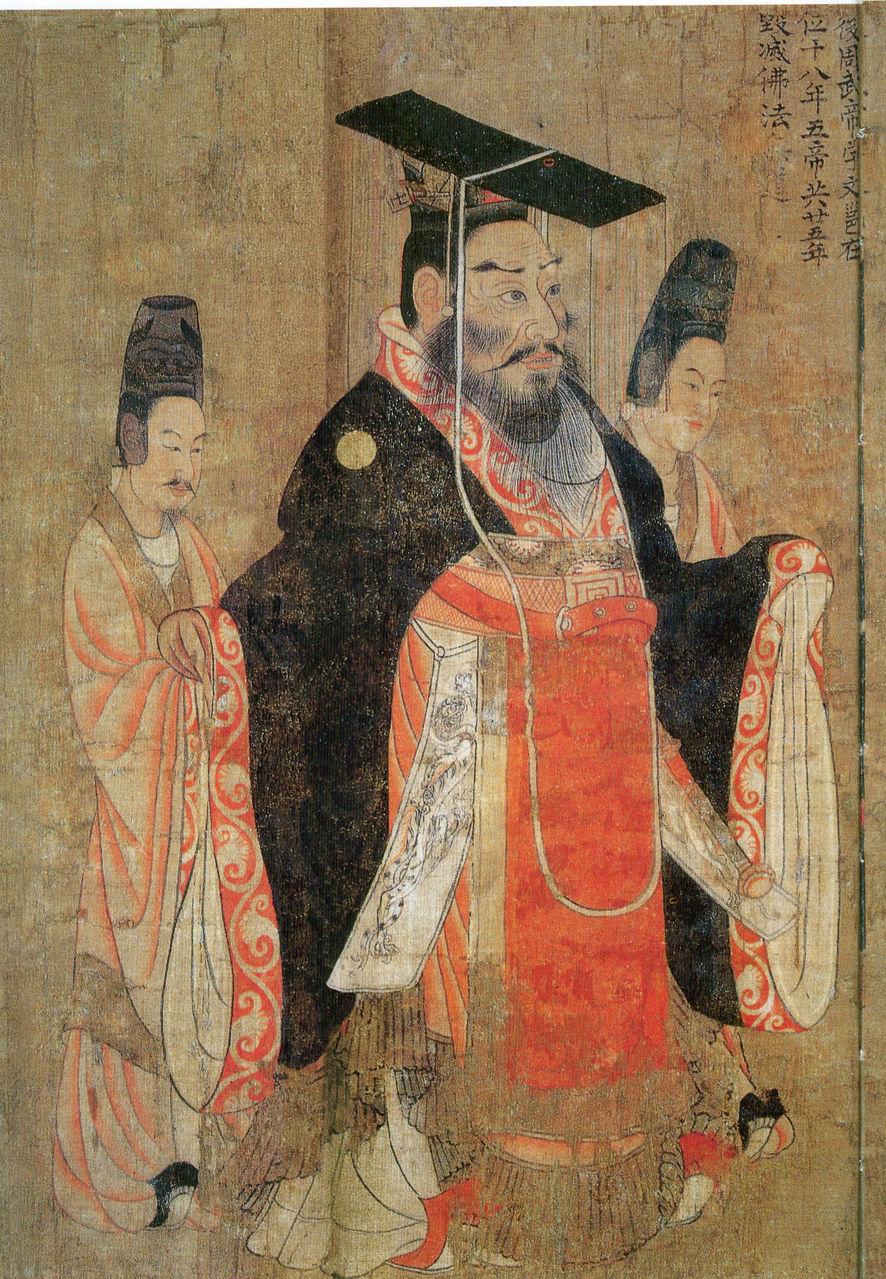
Mianfu is the most formal ceremonial dress of China's imperial rulers and their families, a piece of hanfu worn from the Shang dynasty to the Ming. Coronations, morning audiences, ancestral rites and New Year audiences called for it, and forms of it were also kept by rulers in Korea, Japan and Vietnam.
When is Mianfu kept?
Mianfu is kept at court ceremonies such as coronations, morning audiences, ancestral rites and New Year audiences.
Mianfu is the ceremonial dress of China's emperors, the most formal clothing they owned. It is part of hanfu, and every dynasty from the Zhou to the Ming kept it. A ruler put it on to be crowned, to meet his ancestors, to hold a morning audience or to greet a new year. Rank decided which grade and how many ornaments a wearer received.
What it is
Mianfu is the Chinese name for the ceremonial dress that the rulers of China once wore. Its two characters mean something like coronation clothing. It belongs to hanfu, the older Chinese way of dressing, and it stood at the top of the formal wardrobe. Monarchs and their families put it on for the most solemn moments of court life: coronations, morning audiences, ancestral rites, worship and New Year audiences. Emperors wore it, and so did kings, princes and, now and then, nobles. It was not one fixed design; many versions existed, and a whole system of dress grew up around it by the Western Zhou. A Ming painting shows the Wanli Emperor wearing it.
Crown and robes
More went into the set than the robe. A crown called mianguan sat on the head, a board tilted forward with strings of beads at the front and back. Twelve strings were usual; nine, seven, five or three appeared for lesser occasions or ranks. Hairpins held it in place. To the robe the wearer added a leather belt (gedai), a wide silk belt (dadai), a ribbon ornament (peishou) and wooden-soled clogs (xi). The emperor's shoes were silk over double wooden soles, worn red, then white, then black as importance fell. A robe with all twelve ornaments was shíèrzhāngfú; with nine, jiǔzhāngfú. The whole set is said to have grown out of the clothing of ancient Chinese shamans.
Grades and ranks
Not every wearer dressed alike. Five grades of mianfu existed for the nobility, and the cut, the symbols and the tassels on the crown showed where a man stood. The named forms were daqiumian, gunmian, bimian, cuimian, ximian and xuanmian. The Zhouli, a classical text on ritual, set out who could wear what. Dukes came closest to the emperor and could go as high as gunmian. Marques and earls ranked below them, at bimian or lower. Viscounts and barons followed at cuimian. Solitaries were limited to ximian, and ministers and grand masters to xuanmian. Dress was thus a public statement of rank.
Origins and history
The dress appeared first in the Shang dynasty, then was improved and standardised under the Zhou, and the Western Zhou gave it its system of rules. The Qin set it aside in favour of a black shenyi, junxuan, with a tongtianguan cap, and the Western Han kept that practice going. Emperor Ming of Han restored mianfu and mianguan in the Eastern Han, drawing on the Rites of Zhou and the Confucian Classic of Rites. Song emperors wore daqiumian and gunmian, as did the crown prince. The Jurchen Jin rulers copied Han dress and their emperors wore gunmian. A record in the Yuanshi says the gunmian was worn by Möngke in 1252. After the Manchus founded the Qing, hanfu was banned and mianfu dropped out of official use.
Across East Asia
China's neighbours took up the dress as well, and the twelve ornaments travelled with it. Khitan rulers adopted them in 946 and Jurchen rulers in 1140. Korea received a nine-symbol robe, jiǔzhāngfú, when the Liao emperor gave one to King Munjong in 1043. From 1065 Korean kings wore garments carrying nine of the twelve ornaments, and the dress became known there as gujangbok, or myeonbok. In Japan the same kind of imperial dress was called Kon'e, and in Vietnam Cổn Miện. All these lands lay inside the cultural sphere that looked towards China.
How Mianfu is kept
At a ceremony the wearer was dressed in order. The black upper garment went on first, over the crimson lower garment, and a belt held the two together. The crown followed, fixed with hairpins, with its strings of beads hanging front and back. Then came the accessories: a red bixi below the belt, leather and silk belts, a ribbon ornament, and shoes of silk on double wooden soles. Which of the five grades a man received depended on his rank and on the event. Emperors, kings, princes and, at times, nobles took part.
When and where
The mianfu belonged to no single date. It was put on for set ceremonies: a coronation, a morning audience, ancestral rites, worship and the New Year audience. Rules tied each grade to the rank of the wearer and to the event. The dress itself lasted from the Shang dynasty to the fall of the Ming, and Korean kings wore theirs from 1065 onward.
It belongs to China, where it began in the Shang dynasty and where every dynasty from Zhou to Ming used it. It was strongest at the imperial court. Forms of it were also kept in Korea, as myeonbok, in Japan, as Kon'e, and in Vietnam, as Cổn Miện, and Khitan and Jurchen rulers took up its twelve ornaments.
What Mianfu means
The dress carried meaning in its colours and its counting. A black upper garment above a crimson lower one stood for the order of heaven and earth, and the wearer's place inside that order. The number of ornaments and the number of crown strings told onlookers how high he stood: dukes nearest the emperor, ministers and grand masters far below. The twelve ornaments, with dragons, marked the fullest form. To those who used it, the mianfu was not display for its own sake but the proper clothing for the most binding acts of rule and worship.


Questions people ask about Mianfu
When is Mianfu kept?
Mianfu is kept at court ceremonies such as coronations, morning audiences, ancestral rites and New Year audiences.
What is mianfu?
It is the most formal ceremonial dress of Chinese rulers, part of hanfu. The name means coronation clothing. Emperors, kings and princes wore it from the Shang dynasty to the Ming for occasions such as coronations, ancestral rites and New Year audiences.
Where was it kept?
In China, at the imperial court, from the Shang to the Ming dynasty. Rulers in Korea, Japan and Vietnam also wore versions of it during their imperial eras, and Khitan and Jurchen rulers adopted its twelve ornaments.
What was the crown like?
It was called mianguan, a board tilted forward, with strings of beads hanging at the front and back. Twelve strings were usual, but nine, seven, five or three appeared for lesser occasions or ranks. Hairpins fixed it to the wearer's hair.
Why did it disappear?
After the Manchu conquest and the founding of the Qing dynasty, the government banned Han Chinese from wearing hanfu. Qing emperors did not take up mianfu as their official dress, and in time the style fell out of use.
See also
 Traditional tattooingThe ancient custom of marking the skin for protection, healing, status and sacred rites
 HanfuThe dress of the Han Chinese, named for the Han dynasty and worn again today
 DahuA cross-collar jacket worn in the Ming dynasty, blending Chinese and Mongol styles.
 HuadianA forehead ornament of Chinese women, painted or fixed on, still worn with hanfu
Good reading and sources
- Mianfu on WikipediaEncyclopedia
- More photos on Wikimedia CommonsPhotos and video
- Wikidata recordOpen data
The facts on this page come from the Wikipedia article "Mianfu", written by its contributors and used under the CC BY-SA 4.0 licence, and from its Wikidata record (CC0). EveryParampara rewrote the text in its own words, with AI assistance, and compares every page with the article to make sure no passage is copied. It may be reused under the same CC BY-SA 4.0 licence with a link back.
It may contain mistakes. Traditions differ from one family, village and community to the next, and the people who keep them know them best. If something is wrong, tell us. Last refreshed 2026-10-11.
More from China
All the traditions of China
🇪🇬 Egypt and 5 moreTraditional tattooing
The ancient custom of marking the skin for protection, healing, status and sacred ritesDress
🇨🇳 Beijing, ChinaHanfu漢服
The dress of the Han Chinese, named for the Han dynasty and worn again todayDress
 🇨🇳 China and 2 moreDiyi翟衣 (Díyī)
A formal ceremonial robe worn by empresses and royal women in China, Korea, and Vietnam.Dress
🇨🇳 China and 1 moreDahu褡护 (Dāhù)
A cross-collar jacket worn in the Ming dynasty, blending Chinese and Mongol styles.Dress
🇨🇳 China and 2 moreDiyi翟衣 (Díyī)
A formal ceremonial robe worn by empresses and royal women in China, Korea, and Vietnam.Dress
🇨🇳 China and 1 moreDahu褡护 (Dāhù)
A cross-collar jacket worn in the Ming dynasty, blending Chinese and Mongol styles.Dress
The same idea elsewhere
Royalty and coronation compared 🇲🇱 Bamako, Mali and 5 moreGriotjeli, ߖߋ߬ߟߌ in N'Ko script
West Africa's hereditary keepers of spoken history, praise and musicPerformance
🇲🇱 Bamako, Mali and 5 moreGriotjeli, ߖߋ߬ߟߌ in N'Ko script
West Africa's hereditary keepers of spoken history, praise and musicPerformance
 🇲🇲 Bagan, MyanmarNat worshipနတ်
Veneration of guardian spirits and nature deities alongside Buddhism in MyanmarSpiritual
🇲🇲 Bagan, MyanmarNat worshipနတ်
Veneration of guardian spirits and nature deities alongside Buddhism in MyanmarSpiritual
 🇵🇪 Cusco, Peru and 4 moreIntiinti (Quechua)
The Inca sun deity, honoured with temples, offerings and the June festival Inti RaymiSpiritual
🇵🇪 Cusco, Peru and 4 moreIntiinti (Quechua)
The Inca sun deity, honoured with temples, offerings and the June festival Inti RaymiSpiritual
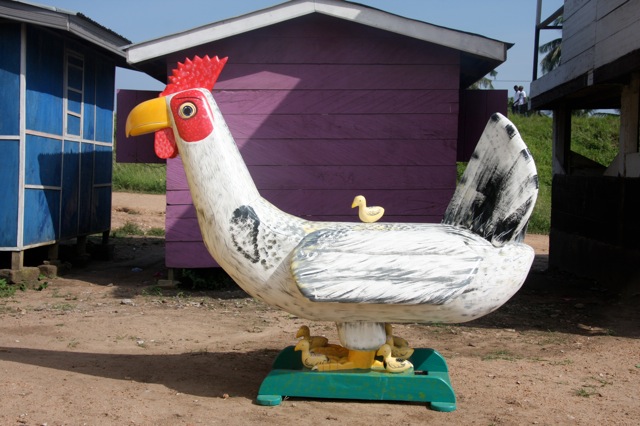 🇬🇭 Accra, GhanaFantasy coffinsAbebuu adekai
Custom hand-carved burial caskets shaped as animals, tools and symbols in southern GhanaRite of passage
🇬🇭 Accra, GhanaFantasy coffinsAbebuu adekai
Custom hand-carved burial caskets shaped as animals, tools and symbols in southern GhanaRite of passage