Wedding dress
The dress a bride wears at her wedding, white in the West and often red in the East

A bridal gown is what a bride wears for her wedding ceremony. In the West most brides choose white, a fashion that grew after Queen Victoria married in 1840, while brides in China, India and Kurdish communities have worn red.
When is Wedding dress kept?
Wedding dress is kept on the wedding day, during the ceremony.
A wedding dress, also called a bridal gown, is the garment a bride puts on for her marriage ceremony. What it looks like depends on where the wedding happens: white has long been expected in the West, while red carries good fortune in Chinese and Indian weddings and among Kurdish brides. The dress marks the bride on the day her family and guests gather to see her married.
What it is
A wedding dress, or bridal gown, is worn by the bride at a wedding ceremony. In Western countries white is the usual colour, though a dress can be an off-white shade, including what is called eggshell, ecru or ivory. Elsewhere other colours are traditional: Chinese and Indian brides commonly wear red, because red is thought to bring good fortune. In India the bridal garment is a sari, usually red with gold brocade, red being linked with married women. A few regions and castes use other colours, such as red and white checks in Tamil Nadu.
How white became usual
White did not begin as the ordinary colour. Brides once dressed to match their family's standing: wealthy women wore furs, velvet and silk in strong colours, while poorer brides put on their best church dress. The earliest royal bride recorded in white was Philippa of England, whose white silk tunic and cloak, edged with squirrel and ermine, were worn at her 1406 marriage to Eric of Pomerania. Mary, Queen of Scots, also married in white in 1559. Neither started a general fashion. Then in 1840 Queen Victoria married Albert of Saxe-Coburg and Gotha in a white gown trimmed with Honiton lace.
Styles through time
Queen Victoria's wedding was drawn and printed in many papers, and well-off brides began to copy her. Black had been a common choice in Finland, and any colour was acceptable, but the white gown took hold among Victorian elites and then spread further. Dress styles followed ordinary fashion. By the early 1900s bridal clothes carried plenty of trim, lace and frills. In the 1920s a dress was often short at the front with a longer train behind, worn with a cloche-style veil. That habit of copying the day's fashions lasted into the late 1960s, when long, full skirts like Victorian ones came back.
Around the world
Not every bride wears white. In India the wedding sari is usually red with gold brocade, and red is the colour linked with married women there; some regions and castes choose differently, as with the red and white checks worn in Tamil Nadu. Kurdish brides followed their own rules: a first-time bride wore red, connected in Kurdish tradition to the bleeding of first intercourse, while a woman who had married before wore pink. Many Kurds now associate red dresses with poor rural life, and the practice is uncommon. Chinese brides, too, have favoured red, the colour of good fortune. In the West white is still the expected choice.
How Wedding dress is kept
A wedding dress is worn by the bride on her wedding day. It is chosen before the ceremony; in the past a bride was expected to dress according to her family's standing, and women from wealthy homes wore costly fabrics such as silk, velvet and fur, while poorer brides wore their best church dress. She puts the gown on for the ceremony and wears it while the marriage takes place, in front of the guests who have gathered. Colour and shape follow the custom of her community or country.
When and where
It is worn on the wedding day, during the ceremony itself. There is no season or fixed date attached to the dress: the bride wears it whenever her wedding is held, and the colour and shape follow the customs of her community at that time.
Wedding dresses are worn wherever marriages are held. The white gown is strongest in Western countries and in places shaped by Western fashion. Red bridal dress is well established in India, where the sari is usual, and in Chinese weddings. Kurdish communities have their own colour rules. In Finland black was once a common bridal colour.
What Wedding dress means
What a bride wears carries meaning. White in the West has stood for a formal, dignified wedding since Queen Victoria's day. Red in India and China is a colour of good fortune, and in India it is tied to married women, so a red sari announces that the bride is entering married life. In Kurdish custom the colour once spoke about a woman's history: red for a first marriage, pink for a bride who had married before. Dress also marked rank, since rich fabrics showed family standing.


Questions people ask about Wedding dress
When is Wedding dress kept?
Wedding dress is kept on the wedding day, during the ceremony.
What is a wedding dress?
It is the garment a bride wears during her wedding ceremony. Another name for it is a bridal gown. In Western countries it is usually white, while in Chinese and Indian weddings red is the traditional colour, since red is associated with good fortune.
Where does the white wedding dress come from?
Royal brides wore white before Victoria: Philippa of England in 1406 and Mary, Queen of Scots in 1559. Their choices did not become a general fashion. Victoria's wedding to Albert in 1840 was widely illustrated, and elite brides copied her, which is how white became the expected Western colour.
Do all brides wear white?
No. Indian brides usually wear a red sari with gold brocade, and Chinese brides have also favoured red. Kurdish brides once wore red for a first marriage and pink if they had been married before. In Finland black was a popular choice before the Victorian period.
See also
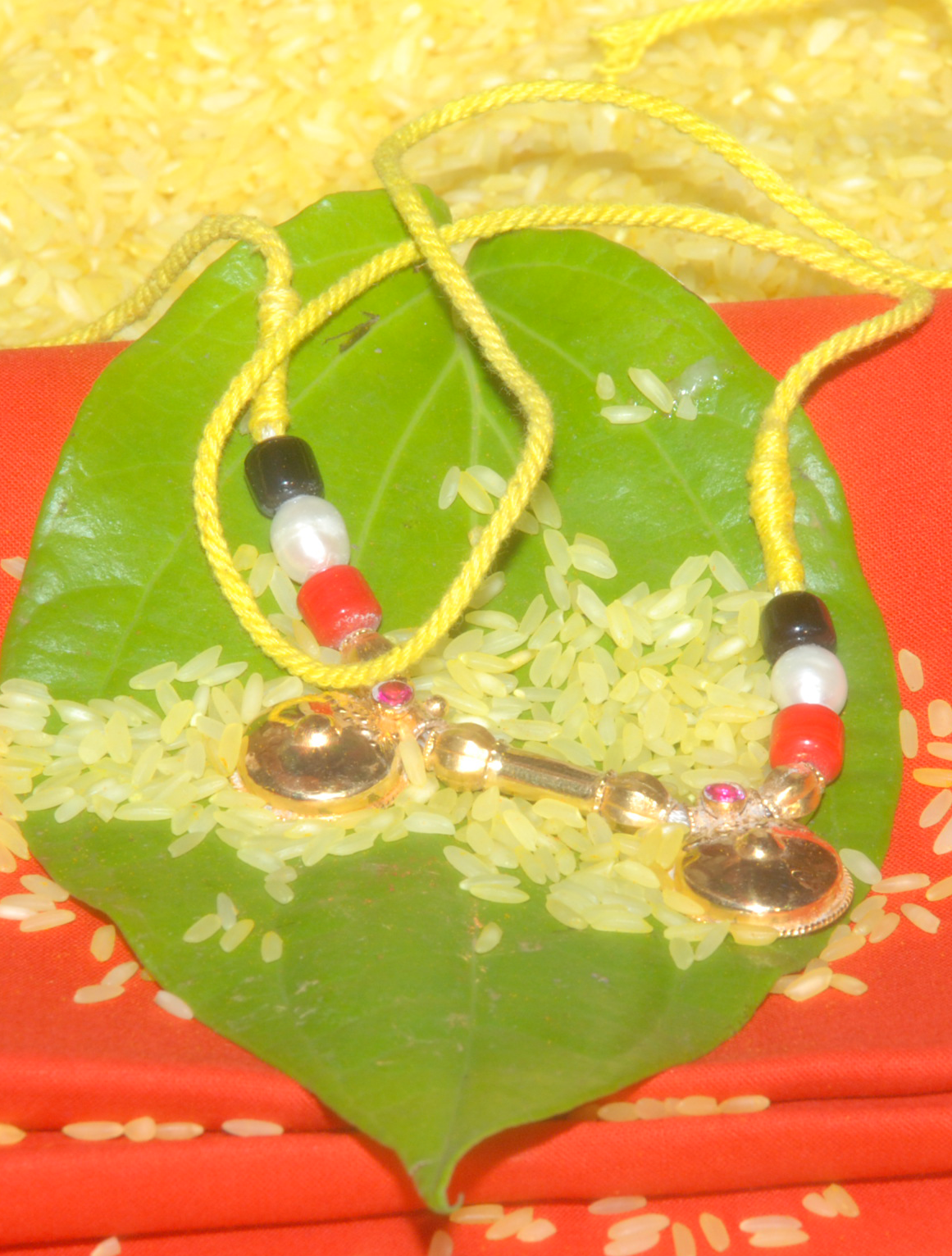 MangalasutraA necklace tied by the groom at a wedding, worn through married life
 SherwaniA long buttoned coat for men, worn at weddings and state occasions in South Asia
 TurbanCloth wound around the head, worn for faith, rank, shade and identity
Good reading and sources
- Traditional Mexican dress · V&AV&A, Article
- Traditional Mexican dress · V&AV&A, Article
- Wedding dress on WikipediaEncyclopedia
- More photos on Wikimedia CommonsPhotos and video
- Wikidata recordOpen data
The facts on this page come from the Wikipedia article "Wedding dress", written by its contributors and used under the CC BY-SA 4.0 licence, and from its Wikidata record (CC0). EveryParampara rewrote the text in its own words, with AI assistance, and compares every page with the article to make sure no passage is copied. It may be reused under the same CC BY-SA 4.0 licence with a link back.
It may contain mistakes. Traditions differ from one family, village and community to the next, and the people who keep them know them best. If something is wrong, tell us. Last refreshed 2026-10-11.
More from India
All the traditions of India
🇮🇳 Pune, India and 5 moreTurbanدولبند (dolband)
Cloth wound around the head, worn for faith, rank, shade and identityDress
🇮🇳 India and 2 moreMangalasutraमङ्गलसूत्रम् (maṅgalasūtram)
A necklace tied by the groom at a wedding, worn through married lifeDress
🇮🇳 Lucknow, India and 3 moreSherwani
A long buttoned coat for men, worn at weddings and state occasions in South AsiaDress
 🇮🇳 Mumbai, India and 1 moreDhoti
A long unstitched cloth men wrap like trousers, for worship and formal daysDress
🇮🇳 Mumbai, India and 1 moreDhoti
A long unstitched cloth men wrap like trousers, for worship and formal daysDress
The same idea elsewhere
Weddings compared 🇮🇩 Bali, Indonesia and 5 moreIkat
A resist-dyeing craft from Southeast Asia, where yarns are tied and dyed before weavingCraft
🇮🇩 Bali, Indonesia and 5 moreIkat
A resist-dyeing craft from Southeast Asia, where yarns are tied and dyed before weavingCraft
 🇮🇷 Isfahan, Iran and 3 morePersian gardenباغ ایرانی
An ancient tradition of creating walled, geometric sanctuaries of shade and flowing waterCraft
🇮🇷 Isfahan, Iran and 3 morePersian gardenباغ ایرانی
An ancient tradition of creating walled, geometric sanctuaries of shade and flowing waterCraft
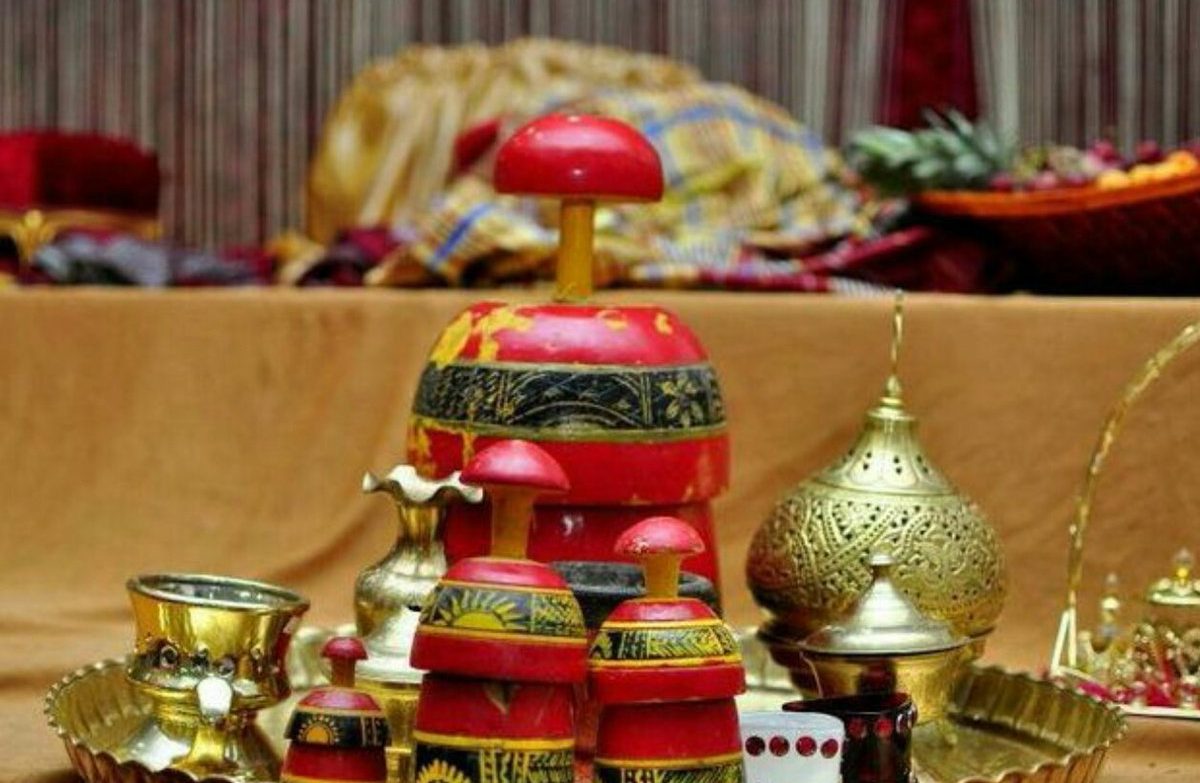 🇸🇩 SudanJirtigالجَرْتِقْ
A Sudanese wedding ritual of regal adornment, protection, and blessings of fertilityRite of passage
🇸🇩 SudanJirtigالجَرْتِقْ
A Sudanese wedding ritual of regal adornment, protection, and blessings of fertilityRite of passage
 🇮🇷 Iran and 4 moreZardoziزردوزی (zarduzi)
Heavy gold and silver embroidery on silk or velvet, worked in Iran, India and beyondCraft
🇮🇷 Iran and 4 moreZardoziزردوزی (zarduzi)
Heavy gold and silver embroidery on silk or velvet, worked in Iran, India and beyondCraft