Festivals and celebrationsEast AsiaShinto, Taoist and folk Chinese
Qixi Festival
In its own language: 七夕
A Chinese night of romance, needlecraft wishes and stargazing for two mythic lovers

Marked across China and Vietnam on the seventh evening of the seventh lunar cycle, the Qixi Festival honours two separated mythological sweethearts. People look to the heavens for Vega and Altair, make temple offerings, fry sweet dough pastries and pray for craft skill.
When is Qixi Festival in 2027?
Qixi Festival 2027 is on Sunday, 8 August 2027. Other years: 2026, Wednesday, 19 August 2026; 2028, Saturday, 26 August 2028.
The Qixi Festival is an evening observance rooted in Chinese folklore, marking the yearly reunion of two celestial lovers. According to ancient lore, a heavenly weaver fairy and an earthly cowherd were divided by the Silver River and meet only once a year across a bridge of magpies. Today, people celebrate this romantic legend by gazing at the stars, offering prayers for wisdom and needlecraft dexterity, and sharing crisp pastries.
The myth of the lovers
The festival centers on Zhinü, the heavenly weaver associated with the star Vega, and Niulang, an earthly cowherd linked to Altair. Cast out by his sister-in-law, Niulang owned only an old ox. The ox spoke, directing him to a spring where celestial maidens bathed. Niulang hid Zhinü's robes so she could not return to heaven. They wed and had two children. When the Jade Emperor learned of this, he dispatched attendants to bring her back. Niulang chased them using a cloak fashioned from the ox's hide, but the Queen Mother of the West traced the Silver River across the heavens to block his path. Touched by their grief, magpies formed a bridge so the pair could briefly meet.
Rituals and needlework prayers
Rituals began as formal imperial rites in the Han dynasty before spreading into popular culture. Unmarried women visit local temples to burn paper tributes and pray to Zhinü for domestic talents and keen minds. Because needlework represented an important marital virtue, participants historically held contests to thread needles in faint lighting, such as under a half moon or beside glowing coals. Women also made wishes for loving husbands or practiced divination to test their future dexterity. Modern customs include setting out toiletries in honour of the seven maidens, while newlyweds traditionally paid their final respects to the celestial pair to secure marital happiness.
Stargazing and festive foods
Families step outside to locate Vega and Altair shining across the Milky Way, with Deneb linking them like a bridge between the stars. Folk belief holds that rain falling on this evening represents either tears shed by the sweethearts or a swollen river washing their magpie crossing away. People also gather to share traditional treats known as Qiao food. The central delicacy is Qiao Guo, a fried pastry with Song dynasty roots prepared from flour, oil, and honey. Cooks often mix in sesame seeds, peanuts, rose petals, and fruit kernels. Along with crunchy sweets and fresh fruit, these snacks convey wishes for ingenuity and family health.
How Qixi Festival is kept
In the evening, people observe rituals honoring the heavenly weaver. Girls visit temples to burn paper offerings and ask for needlework dexterity and a caring husband. Traditionally, participants tested their skill by threading needles under the dim glow of embers or the moon. Newly married couples give thanks to the celestial pair for marital happiness. Families watch the night sky to find Altair and Vega on either side of the Milky Way, eating deep-fried honey pastries called Qiao Guo, crisp candies, and fruit.
When and where
The timing follows the traditional lunisolar calendar, falling on the seventh evening of the seventh lunar cycle. Because the reckoning relies on the moon and sun, the festival lands at different points in late summer on the Western Gregorian calendar.
The observance originated in China and spread across East and Southeast Asia. It is kept by Chinese communities worldwide and observed in Vietnam under the name Thất Tịch. It also served as the model for Japan's Tanabata and Korea's Chilseok celebrations.
What Qixi Festival means
The festival highlights romantic devotion, marital loyalty, and personal ingenuity. A pair of magpies represents faithful love and wedded joy. The Weaver Girl stands for female craft, wisdom, and needlecraft skill, which were valued domestic virtues in ancient Chinese households. Rainfall on this evening is viewed as the weeping of the parted lovers.
On the table
- Qiao Guo
- Crunchy candy
- Fruit
Flavours: Sesame


Days Qixi Festival is marked
Qixi Festival dates: 2026, 2027, 2028
| Year | Qixi Festival date |
|---|---|
| 2026 | Wednesday, 19 August 2026 |
| 2027 | Sunday, 8 August 2027 |
| 2028 | Saturday, 26 August 2028 |
Questions people ask about Qixi Festival
When is Qixi Festival in 2027?
Qixi Festival 2027 is on Sunday, 8 August 2027. Other years: 2026, Wednesday, 19 August 2026; 2028, Saturday, 26 August 2028.
What is the Qixi Festival?
It is a traditional Chinese festival that marks the legendary yearly meeting of two celestial lovers, the Weaver Girl and the Cowherd. People celebrate romance, pray for craft skills, and gaze at the stars.
What do people eat during the celebration?
Participants eat festive items called Qiao food. The most prominent is Qiao Guo, a fried pastry made of flour, oil, and honey, often blended with sesame, peanuts, or rose petals.
Why are magpies important to the story?
In the legend, a flock of magpies forms a bridge across the Milky Way so the separated lovers can cross and embrace. Because of this, pairs of magpies symbolize fidelity and marital happiness.
See also
 HalloweenAn annual observance on 31 October marking the eve of All Saints' Day, rooted in Christian tradition and Celtic heritage
 NowruzThe Iranian new year at the March equinox, kept with fire, greenery and picnics
 VesakA day to honor the birth, awakening, and passing of the Buddha, kept by Buddhists across Asia.
 Mid-Autumn FestivalAn annual harvest festival celebrating family reunions, full moons and mooncakes
Good reading and sources
- Qixi Festival on WikipediaEncyclopedia
- More photos on Wikimedia CommonsPhotos and video
- Wikidata recordOpen data
The facts on this page come from the Wikipedia article "Qixi Festival", written by its contributors and used under the CC BY-SA 4.0 licence, and from its Wikidata record (CC0). EveryParampara rewrote the text in its own words, with AI assistance, and compares every page with the article to make sure no passage is copied. It may be reused under the same CC BY-SA 4.0 licence with a link back.
It may contain mistakes. Traditions differ from one family, village and community to the next, and the people who keep them know them best. If something is wrong, tell us. Last refreshed 2026-10-04.
More from China
All the traditions of China 🇮🇳 India and 4 moreWater lantern
Small lamps floated on water to honour the dead and ask for good fortuneFestival
🇨🇳 China and 5 moreMid-Autumn Festival中秋節
An annual harvest festival celebrating family reunions, full moons and mooncakesFestival · Sweets given and shared
🇮🇳 India and 4 moreWater lantern
Small lamps floated on water to honour the dead and ask for good fortuneFestival
🇨🇳 China and 5 moreMid-Autumn Festival中秋節
An annual harvest festival celebrating family reunions, full moons and mooncakesFestival · Sweets given and shared
 🇷🇺 Kazan, Russia and 2 moreSabantuyСабан туе (Saban tuyı)
A summer festival of folk sports and feasting celebrated by Tatar, Bashkir, Chuvash, and Kazakh communities.Festival · Feasts and festival meals
🇷🇺 Kazan, Russia and 2 moreSabantuyСабан туе (Saban tuyı)
A summer festival of folk sports and feasting celebrated by Tatar, Bashkir, Chuvash, and Kazakh communities.Festival · Feasts and festival meals
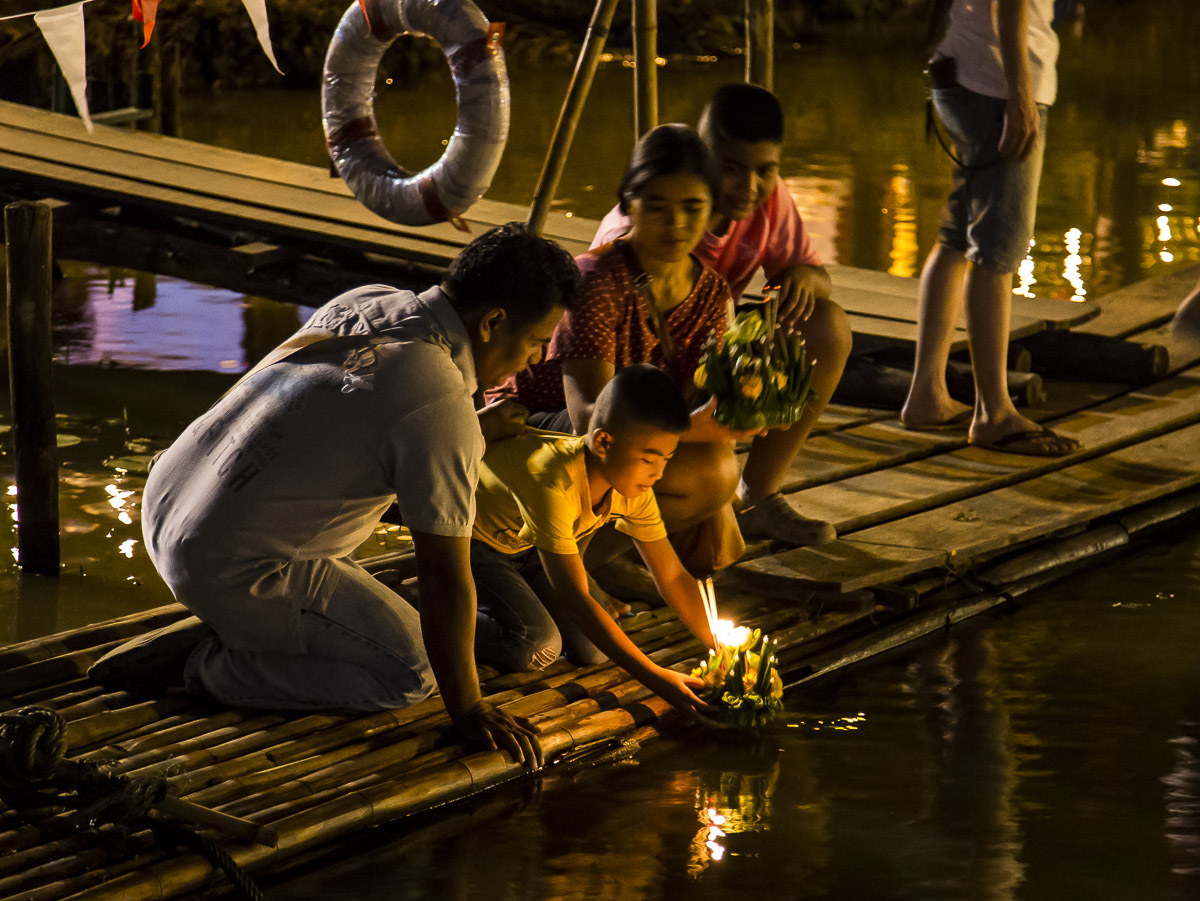 🇹🇭 Chiang Mai, Thailand and 5 moreLoy Krathongลอยกระทง
A Thai festival of floating leaf baskets on rivers to honor water and release negativity.Festival
🇹🇭 Chiang Mai, Thailand and 5 moreLoy Krathongลอยกระทง
A Thai festival of floating leaf baskets on rivers to honor water and release negativity.Festival
The same idea elsewhere
Weddings compared 🇼🇸 Samoa and 1 moreʻIe tōga
Precious woven mats exchanged in Samoan ceremonies to honor family ties and chiefly status.Dress
🇼🇸 Samoa and 1 moreʻIe tōga
Precious woven mats exchanged in Samoan ceremonies to honor family ties and chiefly status.Dress
 🇹🇱 Timor-LesteUma Lulik
Sacred ancestral clan houses and ritual shrines in East TimorSpiritual
🇹🇱 Timor-LesteUma Lulik
Sacred ancestral clan houses and ritual shrines in East TimorSpiritual
 🇮🇩 Indonesia and 2 moreKenduri
A communal prayer meal and gathering shared across Indonesia, Malaysia and BruneiSpiritual · Feasts and festival meals
🇺🇬 UgandaKwanjula
A formal marriage introduction ritual of the Baganda people in Uganda, where families meet to exchange gifts and seek blRite of passage
🇮🇩 Indonesia and 2 moreKenduri
A communal prayer meal and gathering shared across Indonesia, Malaysia and BruneiSpiritual · Feasts and festival meals
🇺🇬 UgandaKwanjula
A formal marriage introduction ritual of the Baganda people in Uganda, where families meet to exchange gifts and seek blRite of passage