Life-cycle ritesEuropeSecular and civic
Russefeiring
A spring graduation rite of passage for Norwegian secondary school students
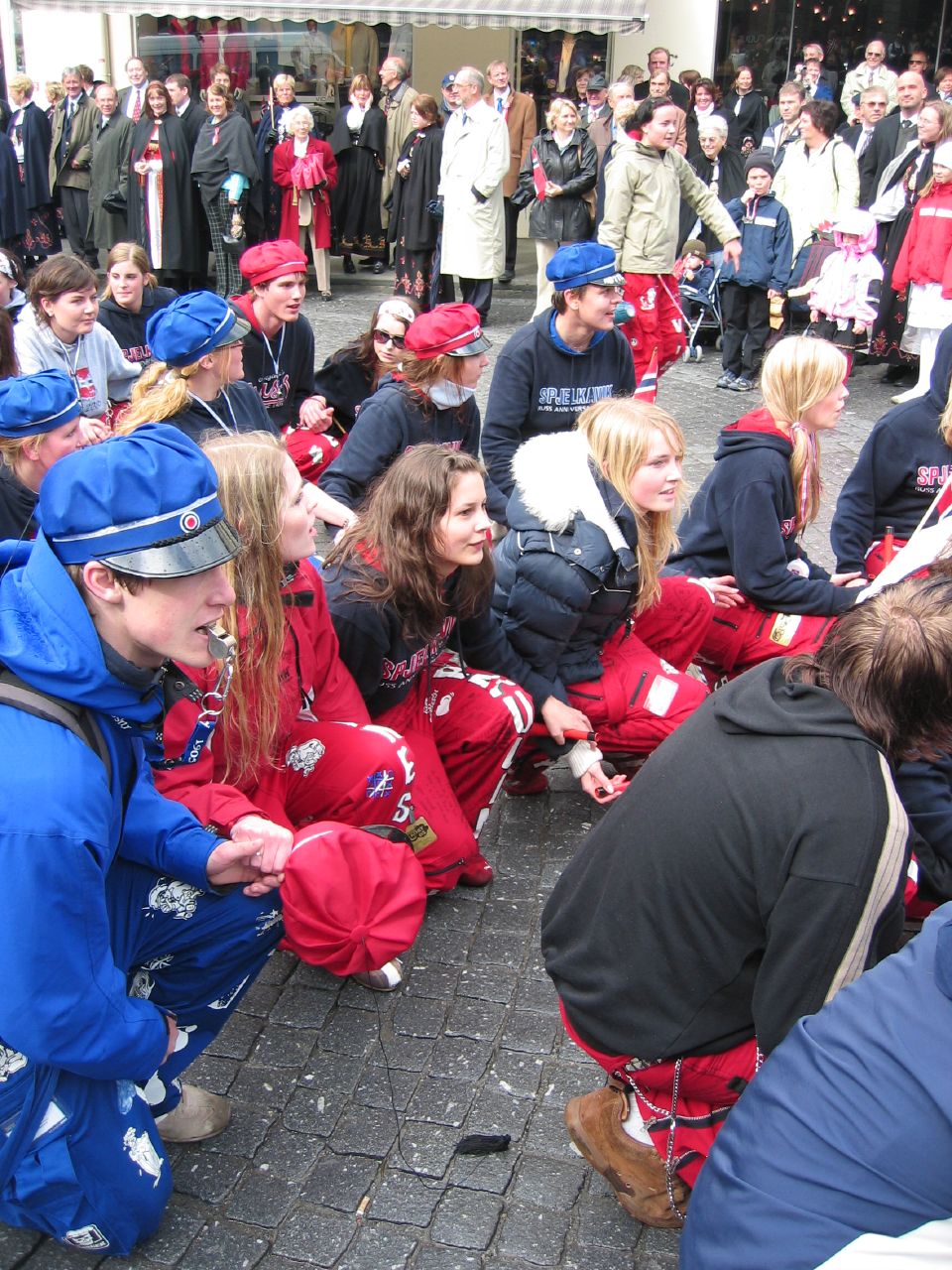
Russefeiring is a graduation tradition across Norway where final-year high school students celebrate the end of their schooling. From mid-April until Constitution Day on 17 May, participants wear bright overalls, ride decorated buses, and take part in challenges and gatherings.
When is Russefeiring marked?
Russefeiring is kept as part of Syttende Mai, which is on Monday, 17 May 2027.
Russefeiring is a multi-week rite of passage held every spring across Norway for students finishing upper secondary school. Known as russ, the youths mark the close of their school years and their step into adulthood before taking final examinations. Wearing uniform overalls and traveling in custom party vehicles, students take part in lively rallies, themed dress days, and playful community dares before joining national parades on Constitution Day.
Overalls and caps
The uniform worn during the festivities reflects each student's branch of study. Red overalls and caps, the most widespread colour, belong to pupils in general academics, arts, media, and athletics. Blue uniforms are worn by business and administration students, a custom begun at Oslo Commerce School in 1916. Vocational apprentices wear black, while agricultural students choose green, and healthcare students often wear white. The tradition of wearing red caps dates back to 1905, when Norwegian boys took inspiration from visiting German scholars. Over the decades, the practice broadened from elite academic circles to include every secondary graduate, turning the clothing into a shared badge of their impending graduation.
Party vehicles and gatherings
A defining part of the celebration involves modifying vehicles into moving party hubs. Groups of students pool resources to buy vans, buses, or older cars, decorating them with elaborate paint jobs, name logos, lighting fixtures, and powerful sound equipment. These vehicles travel between impromptu gatherings and large organised festivals known as russetreff, where thousands of youths gather for concerts and competitions judging the finest vehicle designs. Strict safety rules require each vehicle to use a designated non-student driver who must remain completely sober, a policy that significantly improved safety after lorry-bed modifications were outlawed in the early 1990s.
Knots and traditions
Participants organise activities through elected student councils, which assign roles such as president, party planner, and newspaper editor. During a special week in late April called Ståkuka, students dress in daily themed costumes ranging from pyjamas to business attire. A central pastime involves earning knots on cap strings by completing specific tasks published on annual lists. These deeds range from spending the night in a tree to harmless pranks. Festivities culminate on 16 May, followed by Constitution Day on 17 May, when students don their caps and march through their home towns in official civic parades.
How Russefeiring is kept
Between mid-April and early May, graduating students put on their colourful overalls to launch the festivities. Working in groups, they prepare painted vans or buses and elect a student committee to oversee events. Over several weeks, participants attend outdoor rallies, dress according to daily costume themes, and carry out humorous dares to tie token knots onto their cap strings. On 1 May, students receive their honorary names written on their caps. The period peaks with major night parties before Constitution Day on 17 May, when students wear their caps and join town parades.
When and where
The festivities begin between mid-April and 1 May depending on the district, running continuously until 17 May. The heaviest celebration nights occur on 30 April leading into May Day, when students are christened with festive names, and on the evening of 16 May ahead of Norwegian Constitution Day.
Russefeiring is observed throughout Norway in both urban centres and rural counties. Major rallies and impromptu car meetups happen on school campuses, parking grounds, and festival arenas, with prominent local celebrations in cities such as Oslo and Stavanger.
What Russefeiring means
Russefeiring marks a crucial transition from compulsory schooling to independent adult life. It provides classmates with a shared final experience to celebrate twelve or thirteen years of education before dispersing toward universities or employment. The overalls and cap tokens reflect both individual academic pathways and a collective release before adult responsibilities begin.

Days Russefeiring is marked
Questions people ask about Russefeiring
When is Russefeiring marked?
Russefeiring is kept as part of Syttende Mai, which is on Monday, 17 May 2027.
What is the meaning of the word russ?
The term comes from the Latin word depositurus, meaning one who is about to lay aside past habits, referencing students preparing to leave school behind for higher education.
Why do students wear different colours?
The colour of the uniform generally corresponds to a student's course of study. Red is used for general academics and arts, blue for economics, black for vocational trades, green for agriculture, and white for healthcare or athletics.
What are russ knots?
Russ knots are tokens and knots tied onto the strings of graduation caps. Students earn them by carrying out specific tasks or playful challenges listed by student committees.
How does russefeiring end?
The celebrations conclude on 17 May, Norway's Constitution Day. Students receive their official caps and march in the traditional community parades held across the country.
See also
 Mother's DayA worldwide annual celebration dedicated to mothers, maternal bonds and family care
 NowruzThe Iranian new year at the March equinox, kept with fire, greenery and picnics
 PassoverA Jewish spring festival celebrating freedom from slavery with ritual meals
 HanamiA Japanese spring custom of gathering under blooming cherry trees to eat, drink, and celebrate the fleeting beauty of th
Good reading and sources
- Russefeiring on WikipediaEncyclopedia
- More photos on Wikimedia CommonsPhotos and video
- Wikidata recordOpen data
The facts on this page come from the Wikipedia article "Russefeiring", written by its contributors and used under the CC BY-SA 4.0 licence, and from its Wikidata record (CC0). EveryParampara rewrote the text in its own words, with AI assistance, and compares every page with the article to make sure no passage is copied. It may be reused under the same CC BY-SA 4.0 licence with a link back.
It may contain mistakes. Traditions differ from one family, village and community to the next, and the people who keep them know them best. If something is wrong, tell us. Last refreshed 2026-10-04.
More from Norway
All the traditions of Norway 🇺🇸 United States and 5 moreRite of passage
A ceremony that marks leaving one group and entering another, with a new statusRite of passage
🇺🇸 United States and 5 moreRite of passage
A ceremony that marks leaving one group and entering another, with a new statusRite of passage
 🇩🇪 Germany and 5 moreSecular coming-of-age ceremony
A non-religious rite of passage for adolescents in Europe and North America, marking the transition to adulthood throughRite of passage
🇺🇸 New York, United States and 5 moreBundling
A traditional courtship practice where a couple shares a bed under supervision to ensure compatibility and accountabilitRite of passage
🇩🇪 Germany and 5 moreSecular coming-of-age ceremony
A non-religious rite of passage for adolescents in Europe and North America, marking the transition to adulthood throughRite of passage
🇺🇸 New York, United States and 5 moreBundling
A traditional courtship practice where a couple shares a bed under supervision to ensure compatibility and accountabilitRite of passage
 🇬🇧 United Kingdom and 5 moreBridesmaid
The companions and attendants who support a bride during a weddingRite of passage
🇬🇧 United Kingdom and 5 moreBridesmaid
The companions and attendants who support a bride during a weddingRite of passage
The same idea elsewhere
Coming of age compared
🇺🇸 United States and 5 moreMother's Day
A worldwide annual celebration dedicated to mothers, maternal bonds and family careHome
🇮🇷 Iran and 7 moreNowruzنوروز
The Iranian new year at the March equinox, kept with fire, greenery and picnicsSeasonal
🇮🇱 Jerusalem, IsraelPassoverפסח
A Jewish spring festival celebrating freedom from slavery with ritual mealsSpiritual · Dinner
 🇮🇳 Mathura, India and 5 moreHoliहोली (Hindi)
A spring festival of colours and bonfires that marks the end of winter and the triumph of good over evil.Festival
🇮🇳 Mathura, India and 5 moreHoliहोली (Hindi)
A spring festival of colours and bonfires that marks the end of winter and the triumph of good over evil.Festival